Executive Overview
Cloud computing has evolved from a novel paradigm of outsourced infrastructure into the foundational bedrock of modern enterprise technology, artificial intelligence, and global digital infrastructure. At the heart of this massive technological ecosystem are not just the software platforms and data centers, but the vibrant, highly specialized communities of developers, architects, and visionaries who build upon them.
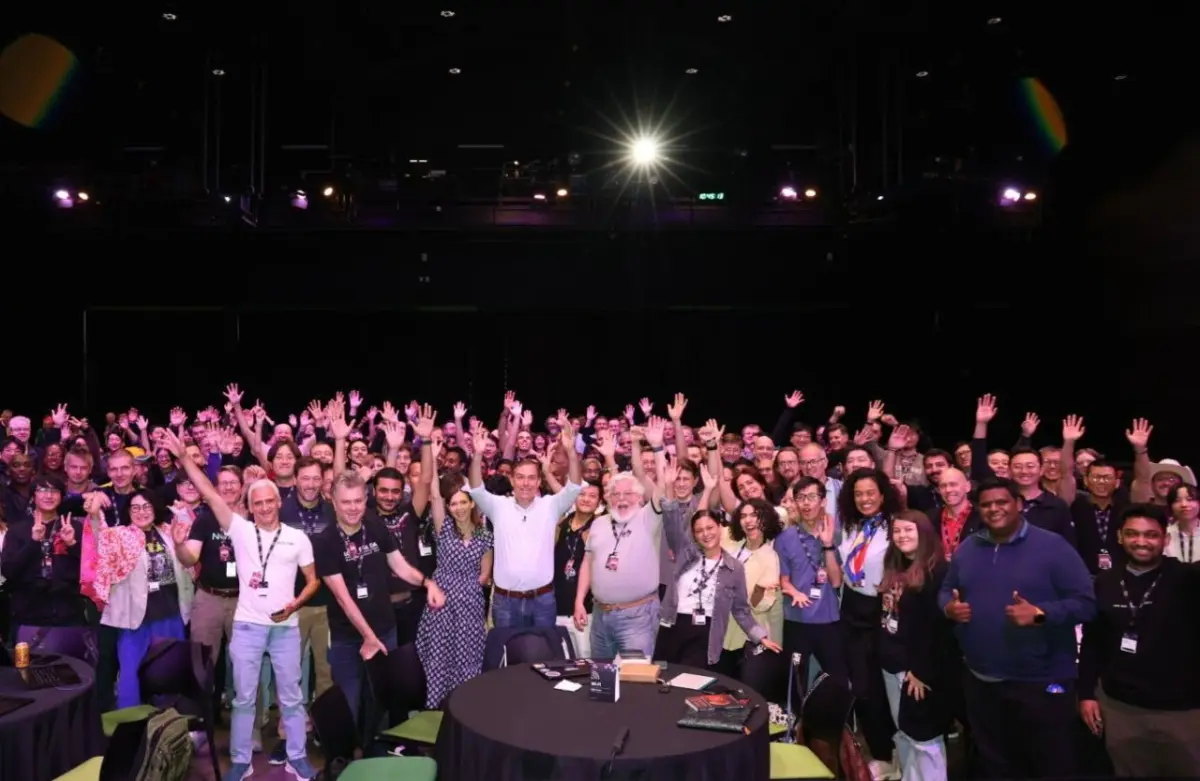
Last week, Amazon Web Services (AWS) convened its most influential community members for the annual, invite-only AWS Heroes Summit. Bringing together elite global experts specializing in cutting-edge domains such as artificial intelligence (AI), machine learning (ML), serverless architectures, and containerization, the summit served as an intensive melting pot of technical collaboration, architectural feedback, and strategic alignment.
Designed to bridge the gap between frontline cloud practitioners and internal AWS product engineering teams, the exclusive multi-day gathering featured high-level keynotes, candid Ask-Me-Anything (AMA) sessions, and rigorous breakout workshops. Headlined by AWS CEO Matt Garman and distinguished cloud luminary James Hamilton, the 2026 summit underscored AWS’s ongoing commitment to listening directly to its community, refining its product roadmaps based on real-world telemetry, and empowering the builders who evangelize cloud technology across the globe.
This report provides a comprehensive examination of the 2026 AWS Heroes Summit, analyzing its core events, the cultural and technical significance of the AWS Heroes program, the broader implications for enterprise architecture, and a look ahead at where the cloud computing landscape is heading.
Detailed Chronology: A Play-by-Play of the Summit
The AWS Heroes Summit is structured to maximize high-bandwidth knowledge exchange, balancing macro-level strategic visions with micro-level technical critiques. Over the course of the multi-day event, attendees participated in a carefully curated itinerary designed to challenge assumptions, spark innovation, and foster deep professional bonds.
Day 1: Setting the Vision with AWS CEO Matt Garman
The summit kicked off with an eagerly anticipated fireside chat featuring AWS CEO Matt Garman. Stepping up to address the world’s foremost AWS experts, Garman focused his remarks on the shifting paradigm of cloud computing, particularly the rapid acceleration of generative AI, autonomous systems, and the increasing responsibility placed on cloud architects to build secure, scalable, and cost-effective infrastructure.
Garman emphasized that the exponential growth of artificial intelligence is fundamentally rewriting the relationship between developers and underlying compute infrastructure. Rather than merely provisioning virtual machines or managing Kubernetes clusters, today’s builders are orchestrating complex, multi-modal AI pipelines that require unprecedented levels of low-latency data access and specialized silicon optimization.
During the interactive Q&A portion of the session, AWS Heroes—many of whom manage massive enterprise workloads or lead prominent open-source communities—pressed Garman on topics ranging from multi-region resilience strategies to the democratization of advanced machine learning tooling. Garman acknowledged the critical role that Heroes play as a vital feedback loop for AWS engineering. By acting as a bridge between the grass-roots developer community and AWS product managers, Heroes help ensure that enterprise feedback directly influences service roadmaps long before features hit general availability.
Day 2: Architectural Realities and Deep Dives with James Hamilton
If Day 1 was about high-level corporate vision and strategic direction, Day 2 brought attendees down to the metal with an insightful Ask-Me-Anything (AMA) session featuring James Hamilton, AWS Vice President and Distinguished Engineer.
Hamilton, a legendary figure in the world of cloud infrastructure and distributed systems, offered a masterclass in the realities of operating hyperscale infrastructure at a global scale. Discussions spanned the intricacies of modern data center design, power grid resilience, hardware-software co-design, and the relentless pursuit of energy efficiency in an era dominated by power-hungry AI workloads.
Attendees—many of whom deal with enterprise scale on a daily basis—engaged Hamilton in rigorous technical debates regarding network virtualization overhead, the physical limitations of silicon scaling, and the architectural patterns required to achieve true five-nines (99.999%) availability in distributed systems. Hamilton’s pragmatic, engineering-first philosophy resonated deeply with the audience, reinforcing the notion that AWS’s long-term success relies on relentless simplification and uncompromising operational rigor.
Breakout Sessions and Collaborative Workshops
Following the morning keynotes and AMAs, the summit transitioned into a series of specialized, highly collaborative breakout sessions. Led by internal AWS product and service teams, these workshops were structured not as passive listening sessions, but as active feedback loops.
Product teams presented early-stage prototypes, experimental APIs, and architectural concepts across key domains:
- Generative AI & Machine Learning: Deep dives into optimizing Large Language Model (LLM) inference costs, fine-tuning methodologies on AWS Trainium and Inferentia chips, and securing agentic AI workflows.
- Serverless & Event-Driven Architectures: Exploring new frontiers in reducing cold-start latencies, improving state management in AWS Lambda, and scaling asynchronous event buses across multi-tenant environments.
- Containers & Modern Orchestration: Examining advanced multi-cluster management strategies, service mesh optimizations, and security hardening for containerized microservices running on Amazon ECS and EKS.
Throughout these sessions, AWS Heroes provided unfiltered, real-world feedback based on their daily experiences managing production environments for global enterprises, startups, and open-source projects. The resulting discussions frequently sparked new feature requests, identification of edge-case bugs, and collaborative hypotheses that product teams took back to their respective development labs.
Supporting Context & Metrics: The Anatomy of the AWS Hero Program
To fully understand the weight of the AWS Heroes Summit, one must examine the structure and exclusivity of the program itself. Launched to formally recognize and honor individuals who have demonstrated a profound commitment to sharing their knowledge and supporting the AWS community, the AWS Hero program is strictly invite-only.
Categories of Expertise
AWS Heroes are divided into specialized categories, reflecting the diverse and expanding scope of modern cloud computing:
- AI/ML Heroes: Experts who specialize in machine learning operations (MLOps), generative AI implementation, data engineering, and the deployment of intelligent applications.
- Serverless Heroes: Pioneers of event-driven architectures, function-as-a-service (FaaS) optimization, and stateless application design.
- Container Heroes: Masters of Kubernetes, Docker, microservices orchestration, and cloud-native infrastructure scaling.
- Community Heroes: Organizers of global AWS User Groups, community days, and foundational educators who tirelessly mentor the next generation of cloud builders.
- Data Heroes: Specialists in relational and non-relational databases, analytics lakes, data warehousing, and high-throughput streaming systems.
The Global Impact of Community Leadership
While cloud vendors provide the foundational tools, the actual adoption, troubleshooting, and cultural normalization of these technologies happen within communities. AWS Heroes are instrumental in writing whitepapers, speaking at international conferences, maintaining critical open-source tooling, and moderating technical forums where developers seek solutions to complex engineering challenges.
The annual summit serves as a vital reward and recharging station for these individuals. Because Heroes often operate in high-pressure consulting, enterprise architecture, or entrepreneurial roles, the summit provides rare, uninterrupted peer-to-peer networking. The organic knowledge sharing that occurs between a Hero from Tokyo discussing serverless migration patterns with a Hero from São Paulo often yields innovations that ripple across the global tech ecosystem.
Official Statements and Industry Reception
The success of the 2026 AWS Heroes Summit extended far beyond the physical walls of the venue, generating significant buzz across professional networks and developer forums.
Attendees took to LinkedIn and other technical platforms under the hashtag #AWSHeroesSummit to share their takeaways, express gratitude, and highlight the collaborative spirit of the event. Common themes in attendee reflections included the unprecedented access to executive leadership, the depth of technical transparency provided by AWS engineers, and the sense of camaraderie among peers tackling similar large-scale infrastructure challenges.

"The ability to sit down face-to-face with the product managers and engineers building the core services we rely on every day is invaluable," noted one participating Hero on social media. "It’s not just about giving feedback; it’s about feeling heard and seeing our real-world operational pain points directly influence the future roadmap of cloud technology."
AWS leadership similarly emphasized the indispensable nature of the Hero community. In internal briefings and public statements, executives frequently credit the Hero network with serving as an early warning system for market shifts, ensuring that AWS remains agile and responsive in an intensely competitive cloud landscape dominated by multi-cloud strategies and rapid AI proliferation.
Future Outlook: Where the Cloud is Heading
As the 2026 AWS Heroes Summit concluded, the discussions and alignments forged during the event pointed toward several major inflection points for the future of cloud computing:
1. The Autonomous Cloud and Agentic AI
The conversation around AI is rapidly shifting from basic chat interfaces and API wrappers to autonomous, agentic systems capable of executing complex, multi-step business workflows. Future cloud architectures will need to support continuous reasoning loops, real-time tool use, and highly secure inter-agent communication. AWS product teams and Heroes are already collaborating on the foundational infrastructure required to run these autonomous systems securely, efficiently, and at scale.
2. Sustainable and Energy-Efficient Computing
With the massive computational demands of generative AI placing unprecedented strain on global power grids, sustainability is no longer merely a corporate social responsibility metric—it is an engineering imperative. Discussions at the summit highlighted the critical need for hardware-software co-design, optimized silicon (such as AWS Trainium and Graviton processors), and intelligent workload scheduling designed to minimize carbon footprints without sacrificing performance.
3. Hyper-Resilience and Distributed Simplicity
As global digital infrastructure becomes increasingly interconnected, the complexity of managing distributed systems continues to grow. The overarching philosophy championed by leaders like James Hamilton and echoed throughout the summit is a relentless focus on simplification. The future of AWS services will likely focus on abstracting away undifferentiated heavy lifting while granting architects granular control over security, isolation, and high availability.
Conclusion
The 2026 AWS Heroes Summit was far more than an annual corporate gathering; it was a powerful demonstration of the symbiotic relationship between a major technology provider and its most dedicated practitioners. By fostering an environment of radical transparency, direct technical collaboration, and mutual respect, AWS continues to cultivate an ecosystem where innovation is driven not from the top down, but from the collaborative intersection of engineering vision and real-world execution.
As the cloud landscape enters its next transformative era defined by artificial intelligence, autonomous agents, and hyperscale sustainability, the insights gathered at this year’s summit will undoubtedly shape the tools, architectures, and strategies deployed by enterprises worldwide for years to come.