Executive Overview
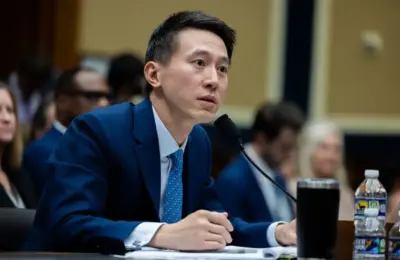
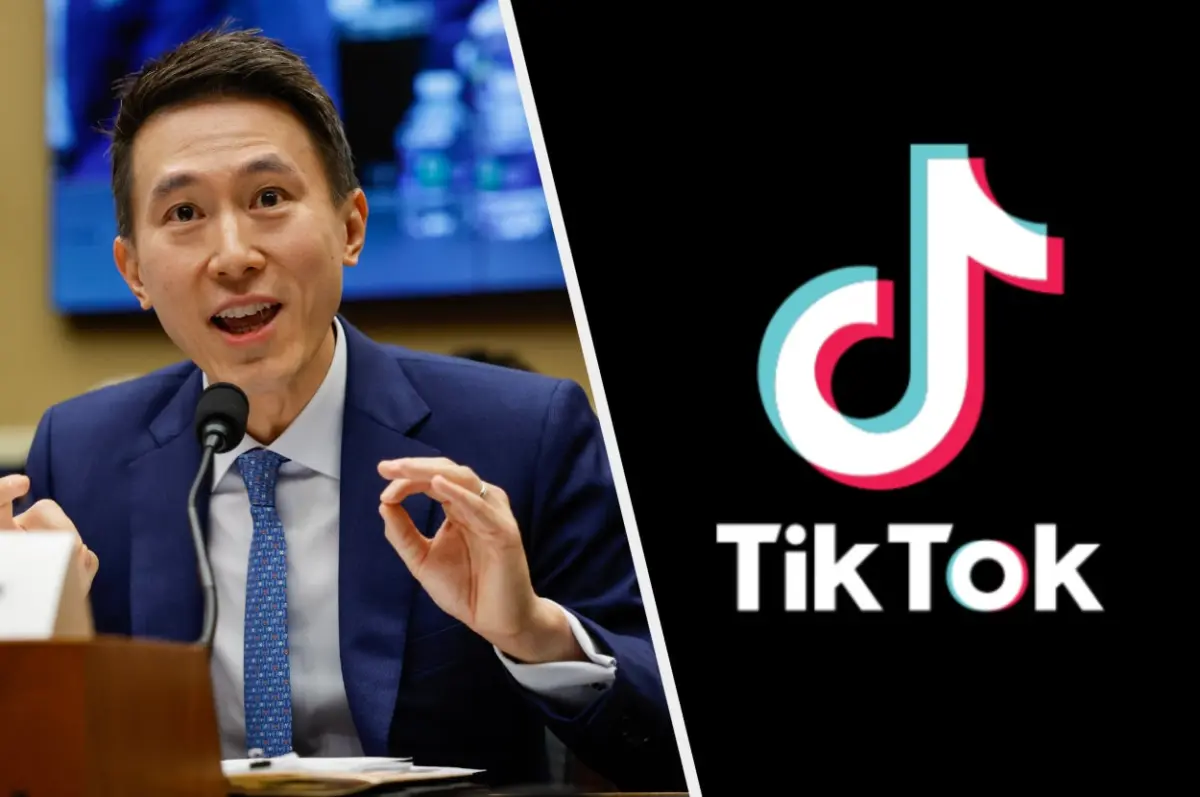
In a rare display of legislative alignment, Washington lawmakers from both sides of the political aisle delivered a blistering, five-hour bipartisan grilling to TikTok CEO Shou Zi Chew during a high-stakes hearing before the House Energy and Commerce Committee. The focal point of the intense scrutiny was the wildly popular video-sharing platform’s relationship with its Beijing-based parent company, ByteDance, and the persistent, unyielding national security concerns regarding the potential exposure of data belonging to TikTok’s 150 million active American users to the Chinese government.
From the opening gavel, committee leadership made it clear that the platform’s structural ties to foreign ownership render it fundamentally incompatible with American standards of data privacy, civil liberties, and democratic values. Despite Chew’s repeated assertions that ByteDance operates independently and that the platform poses no unique threat relative to its domestic social media peers, lawmakers remained unconvinced. The contentious hearing has catalyzed legislative momentum on Capitol Hill, supercharging multiple bills aimed at either forcing an immediate corporate divestiture of the app or enacting a total nationwide ban.
As geopolitical tensions between the United States and China reach a fever pitch, the future of the world’s most dynamic short-form video ecosystem hangs in the balance. With the Biden administration reportedly demanding that ByteDance sell its stake or face an outright prohibition, and Beijing vowing fierce opposition to any forced sale, the unfolding standoff represents a watershed moment for global digital sovereignty, cross-border data governance, and the regulatory future of Big Tech.
Detailed Chronology of the Congressional Hearing
The confrontation on Capitol Hill unfolded through a grueling series of pointed questions, defensive maneuvers, and sharp rhetorical exchanges that tested the diplomatic mettle of the 40-year-old Singaporean executive.
The Opening Salvos and Bipartisan Unity
The tone of the proceedings was established immediately by House Energy and Commerce Committee Chair Cathy McMorris Rodgers (R-WA). In her scathing opening statement, Rodgers did not mince words, delivering a direct indictment of the platform’s operational ethos.
"We do not trust TikTok will ever embrace American values, values for freedom, human rights, and innovation," Rodgers declared. "TikTok has repeatedly chosen the path for more control, more surveillance, and more manipulation. Your platform should be banned."
As the hearing progressed, lawmakers from across the political spectrum echoed these sentiments, frequently marveling at the unique nature of the proceeding. In a hyper-polarized political environment where bipartisan consensus is historically difficult to achieve, TikTok emerged as a singular unifier.
"You have unified Republicans and Democrats and, if only for a day, we’re actually unified because we have serious concerns," remarked Rep. August Pfluger (R-TX), capturing the prevailing mood of the committee room.
Project Texas and the Credibility Gap
Throughout the marathon session, Chew’s primary defense against allegations of data vulnerability was "Project Texas"—an ongoing, multi-billion-dollar corporate initiative designed to wall off American user data on domestic servers managed by U.S.-based personnel. Chew maintained that upon the project’s completion, no foreign employees would retain access to U.S. user information, effectively building an internal firewall against external interference.
However, committee members aggressively interrogated the mechanics and reliability of the initiative, arguing that corporate restructuring cannot override the legal realities of Chinese national intelligence laws.
"What you’re saying about Project Texas just doesn’t pass the smell test," asserted Rep. Angie Craig (D-MN). "My constituents are concerned that TikTok and the Chinese Communist Party are controlling their data and seeing our own vulnerabilities… What you’re doing down in Texas is all well and good, but it is not enough to be convinced that our privacy is not at risk."
Skepticism was further fueled by past revelations regarding corporate misconduct. Lawmakers repeatedly brought up investigative reports—notably those published by BuzzFeed News—revealing that between September 2021 and January 2022, China-based employees of ByteDance had accessed nonpublic U.S. user data on multiple occasions. Furthermore, internal corporate admissions confirmed that the data of specific journalists covering the company had been improperly accessed, leading to the termination of the offending employees.
When pressed by Rep. Neal Dunn (R-FL) on whether ByteDance had ever engaged in espionage against American citizens, Chew demurred, stating, "I don’t think that ‘spying’ is the right way to describe it"—a semantic pivot that drew sharp rebukes from the panel.
Supporting Context & Metrics: The Scale of the Controversy
To fully understand the gravity of the congressional pushback, one must examine the staggering scale of TikTok’s footprint in the United States and the complex regulatory machinery moving against it.
The U.S. Footprint
- 150 Million Active Users: Nearly half of the entire United States population actively engages with the platform on a regular basis, making it a critical hub for entertainment, cultural discourse, digital commerce, and political communication.
- Economic Impact: Millions of American small businesses, creators, and independent entrepreneurs rely on TikTok’s algorithmic reach for their livelihoods, adding immense economic complexity to any potential ban.
- Government Device Bans: Recognizing the perceived threat, the federal government—alongside Canada and numerous state administrations—enacted sweeping bans prohibiting the use of TikTok on all government-issued mobile devices, citing theoretical and hypothetical national security risks.
Legislative and Executive Pressures
The pressure campaign against ByteDance is multifaceted, involving both the legislative and executive branches of the U.S. government:
- The RESTRICT Act and Companion Bills: Congress is currently evaluating three major legislative proposals. Two bills seek an outright, statutory ban of the platform, while the third (the RESTRICT Act, sponsored by Senators Mark Warner and John Thune) grants the executive branch sweeping authority to review, restrict, or ban foreign technologies deemed to pose an unacceptable national security risk.
- The White House Ultimatum: Reports indicate that the Biden administration has issued a strict ultimatum to ByteDance: divest its U.S. operations or face a complete federal ban.
- Beijing’s Retaliatory Stance: Complicating matters further, a spokesperson for the Chinese Ministry of Commerce publicly stated that Beijing would staunchly oppose any forced sale of the company, citing cross-border trade regulations and national sovereignty interests.
Official Statements and Reactions
The fallout from Shou Zi Chew’s testimony reverberated far beyond the committee room, drawing definitive statements from congressional leaders and legislative architects.
House Speaker Kevin McCarthy (R-CA) weighed in immediately following the testimony, signaling his full support for legislative action. "I think you see a bipartisan concern here with what’s happening on TikTok, especially what’s happening to the data for Americans," McCarthy told CNN.
In the Senate, bipartisan sponsors of the RESTRICT Act, Senators Mark Warner (D-VA) and John Thune (R-SD), released a blistering joint statement reaffirming their skepticism.
"Under People’s Republic of China law, all Chinese companies, including TikTok, whose parent company is based in Beijing, are ultimately required to do the bidding of Chinese intelligence services, should they be called upon to do so," the senators stated. "Nothing we heard from Mr. Chew today assuaged those concerns. It is vital for Congress to establish a process to review and mitigate the harms posed by foreign technology products that come from places like China and Russia. We are encouraged by the quick momentum and strong bipartisan support for our legislation and expect that it will only grow following today’s testimony."
For his part, Chew maintained a resolute posture, repeatedly emphasizing in his written and verbal testimony: "Let me state this unequivocally: ByteDance is not an agent of China or any other country." He also argued that many of the systemic issues raised during the hearing—ranging from algorithmic content moderation challenges to the broader mental health crisis among young people—are industry-wide maladies that plague American-owned social media giants like Meta, Google, and Snap just as severely.
Future Outlook: What Lies Ahead for TikTok and U.S. Tech Policy
The congressional grilling of Shou Zi Chew marks a definitive turning point in how democratic governments evaluate the intersection of global technology platforms, national security, and sovereign data protection.
As the dust settles on Capitol Hill, several critical trajectories are beginning to emerge:
1. Accelerated Legislative Momentum
The high degree of bipartisan unity witnessed during the hearing has dramatically accelerated the timeline for potential congressional action. Lawmakers who previously hesitated to support sweeping technological restrictions are now emboldened by public and political consensus. The passage of the RESTRICT Act or a dedicated TikTok-specific prohibition is no longer a distant theoretical possibility; it is a live legislative priority.
2. The Divestiture Deadlock
If the Biden administration moves forward with its demand for a forced sale, ByteDance will face an unprecedented geopolitical dilemma. Caught between aggressive U.S. legislative mandates and strict Chinese export-control and national security laws—which strictly prohibit the unauthorized transfer of core algorithmic technologies—a voluntary divestiture appears increasingly complicated, if not legally impossible under current Chinese jurisdiction.
3. A New Paradigm for Global Data Governance
Regardless of whether TikTok is ultimately banned, sold, or permitted to operate under the heavily monitored confines of Project Texas, the 2023 congressional hearing has permanently altered the regulatory landscape. The event serves as a harbinger for a more balkanized internet, where cross-border data flows are subjected to rigorous national security audits, and foreign-owned technology platforms operating within Western democracies face unprecedented levels of structural scrutiny.
Ultimately, the battle over TikTok is emblematic of a broader 21st-century struggle: defining the boundaries where global digital commerce intersects with national sovereignty. As lawmakers, executives, and diplomats spar over the fate of 150 million users, the outcome of this historic clash will set the global precedent for digital oversight for decades to come.