Executive Overview
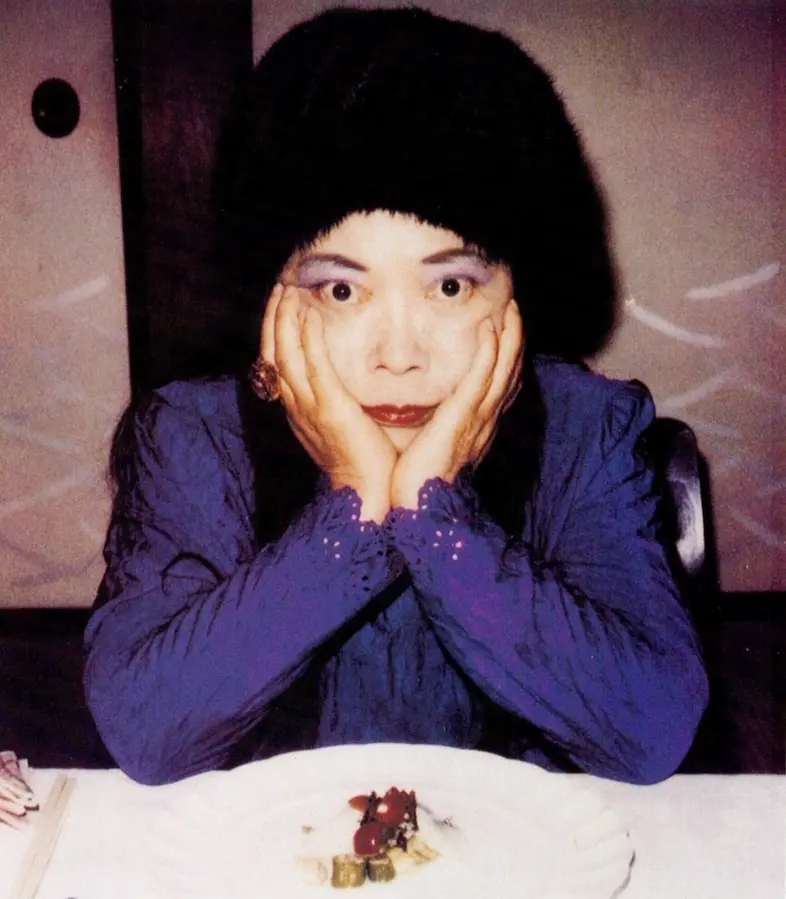
For over seven decades, the visionary Japanese artist Yayoi Kusama has navigated an existence suspended between profound psychological torment and transcendent creative genius. Best known for her mesmerizing Infinity Nets, immersive mirror rooms, and ubiquitous polka-dot motifs, Kusama’s biography is as monumental as it is harrowing.
Long before she achieved her status as a global pop-culture phenomenon and one of the highest-selling living female artists in history, Kusama was an avant-garde pioneer battling debilitating hallucinations in post-war Japan, before launching a radical, disruptive takeover of the 1960s New York art scene.
This retrospective—adapted from an archival 2000 interview with Dazed & Confused—explores the inner machinery of Kusama’s mind, tracing her journey from an isolated childhood defined by terrifying visions to her self-imposed residency at a Tokyo psychiatric hospital. It examines how her obsessive need for repetition became both her therapy and her artistic signature, rewriting the boundaries of minimalism, performance art, and surrealism.
Detailed Chronology: From Matsumoto to Manhattan and Beyond
1. The Genesis of Illusion: Childhood and Early Ostracism (1929–1950s)
Born in Matsumoto, Nagano, in 1929, into a wealthy but emotionally volatile family, Yayoi Kusama’s artistic impulses were clear from an early age. Yet, these impulses were inseparable from a rare psychiatric condition that subjected her to visceral, terrifying hallucinations.
In a passage from her 1975 autobiography, The Struggle And Wanderings Of My Soul, Kusama described a pivotal childhood episode that cemented her lifelong artistic motifs:
"One day, looking at a red flower-patterned tablecloth on the table, I turned my eyes to the ceiling and saw the same red flower pattern everywhere, even on the window glass and posts. The room, my body, the entire universe was filled with it, my self was eliminated, and I had returned and been reduced to the infinity of eternal time and the absolute of space."
Fleeing the house in panic, she fell down the stairs, sustaining injuries that mirrored the psychological fracturing of her ego. To survive these overwhelming episodes of depersonalization, Kusama turned to art, compulsively sketching the visions in her notebooks—thousands of dots, nets, and proliferating patterns.
Her family dismissed and actively discouraged her creative pursuits, viewing her mental instability as a social liability. Seeking refuge, she studied traditional Nihonga painting in Kyoto. True to her uncompromising ethos, she pushed herself to physical extremes, meditating in freezing mud during heavy downpours just to ground herself against the chaotic excesses of her mind. Realizing that Japan’s rigid, patriarchal society offered no space for her avant-garde sensibilities, Kusama made the bold decision to leave her homeland. In 1960, she boarded a flight to the United States, armed with little more than her dreams and sixty silk kimonos, which she planned to sell to fund her survival.
2. The New York Avant-Garde and the Birth of the Infinity Nets (1960–1966)
Upon arriving in New York City, Kusama plunged headfirst into an exploding downtown art scene. She quickly established herself as a fearless innovator, rubbing shoulders—and forming complex romantic and professional alliances—with luminaries such as Donald Judd, Joseph Cornell, and Lucio Fontana.
Her influence during this period was foundational. As Kusama later recounted regarding her relationship with Minimalist pioneer Donald Judd:
"Judd was a theorist. Simply put, he could not make an ordinary kind of work. In a sense, half his work at that time was my making. He once griped, ‘What shall I do now? I am at a loss.’ I responded, ‘This, this is it,’ kicking a square box that we had picked up somewhere and turned into our table. That gave him a hint for his box pieces."
During the early 1960s, Kusama birthed her defining artistic breakthrough: the Infinity Net paintings. Consisting of massive canvases covered in monochromatic, densely woven networks of repeating arcs and dots, these works were physical manifestations of her obsessive compulsion. Simultaneously, she developed her Accumulation sculptures, covering domestic objects—furniture, high-heeled shoes, and rowboats—with thousands of stuffed, phallic fabric protrusions. These macabre, surrealist assemblages functioned as visceral commentaries on sexuality, fear, and industrial consumerism.
By 1964, her installations grew increasingly ambitious. Her Driving Image Show at the Castellane Gallery featured polka-dotted mannequins, furniture, and rooms strewn with dried macaroni, accompanied by blaring beat music and local news broadcasts. Reviewers were baffled and spellbound, describing the immersive environments as objects suffering from "the measles."
3. Radical Performance, "The Priestess of Nudity," and Political Protest (1966–1970)
By the mid-to-late 1960s, Kusama had transitioned from gallery walls into the public sphere, staging radical happenings and performance art that captured the volatile countercultural spirit of the era.
In 1966, she made waves at the Venice Biennale with Narcissus Garden. Without official invitation, she arranged 1,500 mirrored spheres on a lawn outside the pavilion and began selling them to visitors for 1,200 lira (roughly $2) each, before security intervened and shut down her unauthorized enterprise.
Her conceptual performances quickly escalated into large-scale public spectacles. In 1967, she staged "Atomic Explosions" and body-painting happenings in New York parks and iconic landmarks, including the New York Stock Exchange and the Statue of Liberty. Inviting participants to strip off their clothes and paint each other with polka dots, Kusama earned sensationalized monikers from the tabloid press, such as "The Priestess of Nudity" and "Dotty." At the height of this period, she commanded more column inches in the American press than Andy Warhol.
Kusama’s activism also extended into the political arena. In 1968, she penned an open letter to President Richard Nixon, offering a radical plea for peace in the Vietnam War:
"As we soar through the heavens, we’ll paint each other with polka dots, lose our egos in timeless eternity and finally discover the naked truth: you can’t eradicate violence by using more violence."
Despite her immense cultural footprint, the commercial pressures of running her own fashion house and poster studio, combined with exhaustion and shifting cultural tides, took a heavy toll. By 1970, her media presence had evaporated. Battered, broke, and mentally depleted, Kusama returned to Japan.
Supporting Context & Metrics
- The Power of Repetition: Kusama’s artistic output is predicated on "self-obliteration"—the concept that by repeating a motif infinitely across a surface, the boundaries of the ego dissolve, uniting the individual with the cosmos.
- Medical Realities: Since 1977, Kusama has resided voluntarily at the Seiwa Institute for the Mentally Ill in Tokyo. Despite her confinement, she maintains a rigorous daily studio practice, walking to her nearby studio every morning at 9:00 AM and returning at 9:00 PM.
- Literary Pursuits: In addition to her visual art, Kusama is an accomplished author. Since publishing her debut novel Manhattan Suicide Addict in 1978, she has penned over a dozen books of fiction and poetry.
- Global Recognition: In 1993, Kusama achieved historic validation when she became the first female artist to represent Japan as a solo artist at the Venice Biennale, exhibiting her iconic Mirror Room (Pumpkin) installation to international acclaim.
Official Statements & Archival Perspectives
Reflecting on her tumultuous relationship with her homeland, the institutional art world, and her mental health, Kusama offered candid insights during her 2000 interview with Dazed & Confused:
-
On her unwavering artistic path:
"I am still walking the same path. Still the same. It is just that my work has become larger in scale… I see thousands of cows in the pink sky and I quickly draw them in my notebooks so that I never forget an image."
-
On her psychiatric treatment and independence:
"Only when I take the drugs prescribed for me by my doctors [do I feel at ease]… Doctors at hospitals are too academic. By removing my originality from me, they try to proclaim their triumph over my desire."
-
On Japan’s cultural climate and historical ostracization:
"I used to be ostracised but I still kept on painting. Last year [1999] I was finally accepted… Because [Japanese society] is authoritarian. They suddenly started respecting me after I had a major retrospective… [Japanese society] is 50 years behind."
Future Outlook and Enduring Legacy
Today, Yayoi Kusama stands as a towering titan of contemporary culture. Her Infinity Mirror Rooms command multi-hour queues across the globe’s most prestigious institutions, from the Tate Modern to the Museum of Modern Art, captivating millions of visitors seeking to experience the dizzying, transcendent vastness of her imagination.
Yet, despite her stratospheric commercial success and universal cultural adoration, Kusama remains anchored to the quiet discipline of her Tokyo studio and the structured safety of her psychiatric care. Her life is a testament to the idea that art can be an absolute necessity—a literal life-raft forged in the fires of psychological trauma.
As the art world continues to unpack the layers of her 70-year career, Kusama’s message remains as urgent and radical as it was in the streets of 1960s New York: through the boundless proliferation of art, we can dissolve our individual pain, connect with the infinite cosmos, and find a shared, luminous humanity.