Executive Overview
While technology conglomerates in Silicon Valley grapple with integrating artificial intelligence into enterprise software, century-old industrial giant Caterpillar Inc. is tackling a significantly more complex operational barrier: deploying physical AI across dynamic, harsh, and unpredictable physical environments.
For decades, Caterpillar has systematically automated heavy machinery within controlled industrial environments, particularly open-pit and underground mining operations. Today, the manufacturing leader is executing a strategic pivot, adapting its autonomous algorithms, machine learning models, and edge computing architectures to more complex settings—such as urban construction sites, commercial quarries, and active infrastructure projects.
Caterpillar’s digital transformation strategy relies on a massive proprietary data flywheel. With over 1.6 million connected assets worldwide feeding more than 16 petabytes of structured telematics and operational data into its systems, the company is building a highly defensible platform ecosystem. This strategy encompasses on-machine autonomy, generative repair assistants powered by edge AI, enterprise code modernization, digital twin site modeling, and a massive $100 million workforce training campaign for its 118,000 employees.
Simultaneously, Caterpillar is capitalizing on the broader artificial intelligence infrastructure boom. As hyperscalers race to build out computational capacity for generative AI models, Caterpillar’s power-generation segment has seen unprecedented demand, propelling total quarterly revenues to an all-time record of $20.5 billion. By solving the operational bottlenecks of physical AI while powering the energy infrastructure behind virtual AI, Caterpillar has positioned itself at the center of the modern industrial ecosystem.
Detailed Chronology of Caterpillar’s Autonomous Evolution
+-------------------------------------------------------------------------------+
|                    CATERPILLAR'S AUTONOMY & AI TIMELINE                       |
+-------------------------------------------------------------------------------+
| PHASE 1: MINING AUTOMATION PROVING GROUND                                    |
| • Deployment of autonomous haul trucks, drills, and underground loaders.       |
| • Establishment of closed-loop site software and fleet command centers.       |
+-------------------------------------------------------------------------------+
                                       │
                                       ▼
+-------------------------------------------------------------------------------+
| PHASE 2: FLEET CONNECTIVITY & DATA SCALING                                   |
| • Scaling connected machinery to 1.6 million operational assets globally.     |
| • Accumulation of over 16 petabytes of structured telemetry data.             |
+-------------------------------------------------------------------------------+
                                       │
                                       ▼
+-------------------------------------------------------------------------------+
| PHASE 3: EXPANSION TO DYNAMIC JOBSITES & ENTERPRISE AI                        |
| • Launch of Cat AI Assistant (NVIDIA partnership) for voice repair guidance.   |
| • Rollout of site digital twins, terrain intelligence, and AI coding agents.  |
| • Announcement of $100M workforce training initiative across 118,000 staff.  |
+-------------------------------------------------------------------------------+
Phase 1: Mining as the Automated Proving Ground
Caterpillar’s journey into physical autonomy did not start with recent generative AI developments. Instead, it began in the heavy mining sector—a market plagued by chronic labor shortages, extreme environmental hazards, and immense operational costs.
In deep pit mines and remote subterranean networks, Caterpillar deployed its early iterations of:
- Autonomous Haul Trucks: Multi-ton vehicles navigating pre-mapped haul roads without human intervention.
- Autonomous Drilling Rigs: Automated precision drilling setups designed to optimize blast hole placement.
- Underground Loaders & Dozers: Heavy machinery equipped with remote line-of-sight and off-site teleoperation capabilities.
- Fleet Management Command Centers: Centralized software hubs integrating vehicle tracking, fuel optimization, and collision avoidance systems.
These controlled environments allowed Caterpillar to refine its localized positioning, obstacle detection, edge processing, and safety protocols, proving that heavy machinery could operate reliably without human intervention.
Phase 2: Transitioning to Dynamic, Unstructured Workspaces
Having mastered closed-loop mining operations, Caterpillar is now moving its autonomous systems into open, unpredictable environments. Unlike mining roads, construction jobsites and commercial quarries present constantly shifting topography, variable pedestrian traffic, non-standardized workflows, and transient subcontractor teams.
Speaking at the Ai4 conference in Las Vegas, Caterpillar Chief Technology Officer Jaime Mineart outlined this pivotal operational shift:
"Now we’re in this super exciting time where we can take all of that learning from mining and bring it into much more dynamic environments, jobsites, quarries, and construction sites."
To manage this transition, Caterpillar expanded its technical suite to include remote terrain intelligence, real-time spatial mapping, and adaptive machine control systems capable of adjusting to site changes on the fly.
Phase 3: Edge AI, Industrial Copilots, and Enterprise Modernization
To complement physical autonomy, Caterpillar integrated artificial intelligence directly into field maintenance and corporate operations:
- The Cat AI Assistant: Developed in collaboration with chipmaker NVIDIA, this multimodal field tool allows service technicians standing beside heavy machinery to interact via voice commands. The assistant diagnoses mechanical faults, pulls relevant technical manuals, outlines repair procedures, and identifies necessary replacement parts before work begins.
- Digital Twins and Site Scanning: Utilizing spatial data, Caterpillar generates live digital twins of manufacturing plants and customer jobsites to model workflow efficiency, simulate material movements, and spot operational bottlenecks.
- Enterprise Software Optimization: Internal engineering teams deploy autonomous software agents to analyze and refactor legacy codebases, automate unit testing, and detect software bugs early in the development cycle.
Supporting Context, Financial Metrics, and Technological Infrastructure
Caterpillar’s AI push relies on a combination of hardware deployment, high-volume telemetry, software integrations, and financial performance.
+-------------------------------------------------------------------------------+
|                  CATERPILLAR DIGITAL & FINANCIAL METRICS                      |
+-------------------------------------------------------------------------------+
| Metric                                    | Value                             |
+-------------------------------------------+-----------------------------------+
| Global Connected Assets                   | 1.6 Million Units                 |
| Proprietary Telematics Data Repository    | 16+ Petabytes (Structured)        |
| Five-Year AI & Robotics Training Pledge   | $100 Million                      |
| Total Global Workforce Size               | 118,000 Employees                 |
| Record Q2 Consolidated Revenue            | $20.5 Billion                     |
| Q2 Power Generation Segment Revenue       | $3.10 Billion (+72% YoY)          |
+-------------------------------------------------------------------------------+
The Data Advantage
The effectiveness of Caterpillar’s predictive maintenance algorithms and autonomous navigation models stems from its global machine telemetry network:
- 1.6 Million Connected Assets: Heavy equipment deployed globally transmits real-time telemetry regarding engine load, hydraulic pressure, operational thermal limits, fuel consumption, and geographic positioning.
- 16+ Petabytes of Data: This structured dataset provides Caterpillar with an unmatched baseline of real-world operational profiles, allowing its AI models to train on physical scenarios that software-only competitors cannot replicate.
                   ┌──────────────────────────────────────┐
                   │    1.6 Million Connected Assets      │
                   └──────────────────┬───────────────────┘
                                      │ Telemetry & Sensor Data
                                      ▼
                   ┌──────────────────────────────────────┐
                   │  16+ Petabytes Proprietary Data Pool │
                   └──────────────────┬───────────────────┘
                                      │ Training Input
                                      ▼
                   ┌──────────────────────────────────────┐
                   │ Neural Nets & Predictive Algorithms  │
                   └──────────────────┬───────────────────┘
                                      │ Real-Time Edge Insights
                                      ▼
┌─────────────────────────────────────┼─────────────────────────────────────┐
│                                     │                                     │
▼                                     ▼                                     ▼
┌───────────────────────────┐ ┌───────────────────────────┐ ┌───────────────────────────┐
│ Autonomous Fleets &       │ │ Cat AI Assistant & Voice  │ │ Digital Twins & Site      │
│ Dynamic Machinery         │ │ Field Diagnostics         │ │ Workflow Optimization     │
└───────────────────────────┘ └───────────────────────────┘ └───────────────────────────┘
Powering the Compute Infrastructure Boom
While Caterpillar applies AI internally, its financial performance is getting a major boost from the power demands of the broader AI industry:
- Record Revenue: Caterpillar reported a record second-quarter consolidated revenue of $20.5 billion.
- Power-Generation Surge: The company’s power-generation division recorded $3.10 billion in quarterly sales—a 72% year-over-year surge.
- Data Center Demand: This growth is largely driven by hyperscalers ordering Caterpillar’s large-scale diesel and natural gas generator sets to provide primary and backup power for massive generative AI data center developments.
Official Statements and Executive Perspectives
Caterpillar’s executive leadership views the physical deployment of AI not as a simple software installation, but as a deep structural transformation of blue-collar job environments.
On the Realities of Physical AI Integration
CTO Jaime Mineart emphasized that deploying autonomous equipment requires completely redesigning operational workflows rather than just adding tech to legacy sites:
"The hard part about autonomy and about physical AI is incorporating that technology into the customer jobsite and into the workflows."
Mineart noted that bridging this gap relies on human domain expertise, with experienced machine operators working directly alongside machine learning engineers:
"We lean on experienced operators to help train AI systems, leveraging institutional knowledge built over decades. As machines become more autonomous, some operators may shift from controlling a single machine to overseeing multiple machines from a remote command center."
TRADITIONAL OPERATIONAL MODEL
┌───────────┐       ┌───────────┐       ┌───────────┐
│ Operator  │ ────> │ Heavy     │ ────> │ Single    │
│ (In Cab)  │       │ Machinery │       │ Task      │
└───────────┘       └───────────┘       └───────────┘

AUTONOMOUS / PHYSICAL AI MODEL
                    ┌───────────┐ ────> Asset 1
┌───────────┐       │ Remote    │ ────> Asset 2
│ Operator  │ ────> │ Command   │ ────> Asset 3
│ (Overseer)│       │ Center    │ ────> Asset 4
└───────────┘       └───────────┘ ────> Asset 5
On Enterprise Reskilling
To support this structural shift across its industrial network, Caterpillar is committing significant capital toward workforce development. Mineart confirmed that the enterprise is allocating $100 million over the next five years specifically to upskill its 118,000 employees in artificial intelligence, physical autonomy, and industrial robotics.
On Computing Power Demand
Regarding the macroeconomic forces driving the surge in Caterpillar’s power division, Chief Executive Officer Joe Creed underscored the sustained momentum behind AI hardware infrastructure:
"No one is slowing down when it comes to demand for cloud computing and generative AI infrastructure."
Future Outlook: Overcoming the Physical AI Bottleneck
As the broader industrial sector pushes toward automation, Caterpillar’s dual approach—powering computational data centers while deploying physical AI—offers a clear roadmap for legacy capital goods manufacturers.
Reskilling the Industrial Workforce
The transition from human-in-the-cab operations to centralized command operations fundamentally alters heavy industry labor dynamics. By training equipment operators to become fleet managers supervising autonomous machine clusters from remote centers, Caterpillar addresses two persistent industry challenges: deep blue-collar labor shortages and high-risk field safety conditions. The company’s $100 million internal training pledge serves as a blueprint for upskilling industrial labor forces during an era of rapid technological disruption.
Mitigating Edge Risks in High-Consequence Environments
Unlike pure software applications where an AI hallucination leads to minor text errors, an algorithmic failure in a 100-ton autonomous dozer presents real safety and financial risks.
Caterpillar’s edge infrastructure relies on:
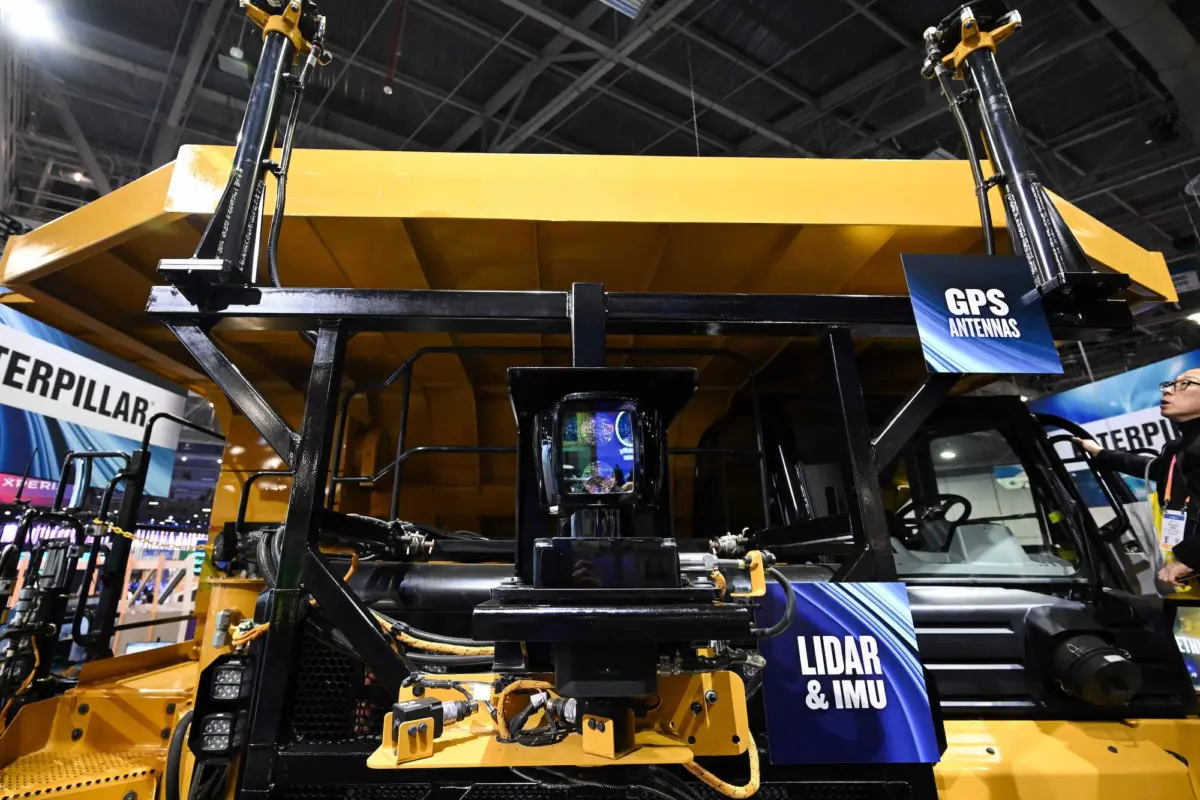
- Multi-Layer Redundancy: Combining LiDAR, radar, camera sensors, and GPS data with fallback mechanical kill switches.
- Proprietary Fine-Tuning: Leveraging 16+ petabytes of field telemetry to validate navigation models under extreme real-world operating conditions before site deployment.
- Human-In-The-Loop Supervisory Control: Ensuring human site managers retain ultimate override authority via local and cloud-linked software command systems.
A Dual Engine for Long-Term Growth
Caterpillar’s strategic positioning creates a reinforcing growth flywheel:
┌────────────────────────────────────────────────────────────────────────┐
│                      CATERPILLAR DUAL-ENGINE FLYWHEEL                  │
└────────────────────────────────────────────────────────────────────────┘
                                   │
                                   ▼
┌────────────────────────────────────────────────────────────────────────┐
│ ENGINE 1: INFRASTRUCTURE & DATA CENTER POWER                           │
│ High-margin power-generation sales to AI data center builders drive   │
│ record revenues and fund internal tech investments.                    │
└────────────────────────────────────────────────────────────────────────┘
                                   │
                                   ▼
┌────────────────────────────────────────────────────────────────────────┐
│ ENGINE 2: PHYSICAL AUTONOMY & SITE SOFTWARE                            │
│ 1.6M connected assets yield 16+ PB of data, continuously improving     │
│ autonomous equipment, diagnostic copilots, and jobsite AI software.   │
└────────────────────────────────────────────────────────────────────────┘
                                   │
                                   ▼
┌────────────────────────────────────────────────────────────────────────┐
│ MARKET DOMINANCE                                                       │
│ High switching costs, safer customer sites, and optimized fleet performance│
│ lock in construction and mining clients globally.                      │
└────────────────────────────────────────────────────────────────────────┘
By supplying the energy infrastructure required to run generative AI models, Caterpillar captures immediate capital expenditures from technology firms. Simultaneously, it applies those advanced computational capabilities directly to its core machinery, transforming heavy iron into an intelligent, autonomous fleet network.
As physical AI moves out of research labs and into open-world dynamic jobsites, Caterpillar’s deep telemetry assets, experienced industrial operator base, and capital resources establish the equipment giant as a primary architect of the modern automated jobsite.