Executive Overview
In the vast, unpredictable landscape of internet culture, viral phenomena often emerge from the unlikeliest of places. While cultural touchstones usually derive from blockbuster films, viral music tracks, or political blunders, a prehistoric jawless fish that lived nearly 450 million years ago has unexpectedly captured the digital zeitgeist. Sacabambaspis—an extinct genus of primitive fish from the Ordovician period—transformed from an obscure fossil into a global internet sensation, spawning thousands of fan art pieces, custom merchandise lines, cosplays, and viral memes across Twitter, Pixiv, and 2chan.
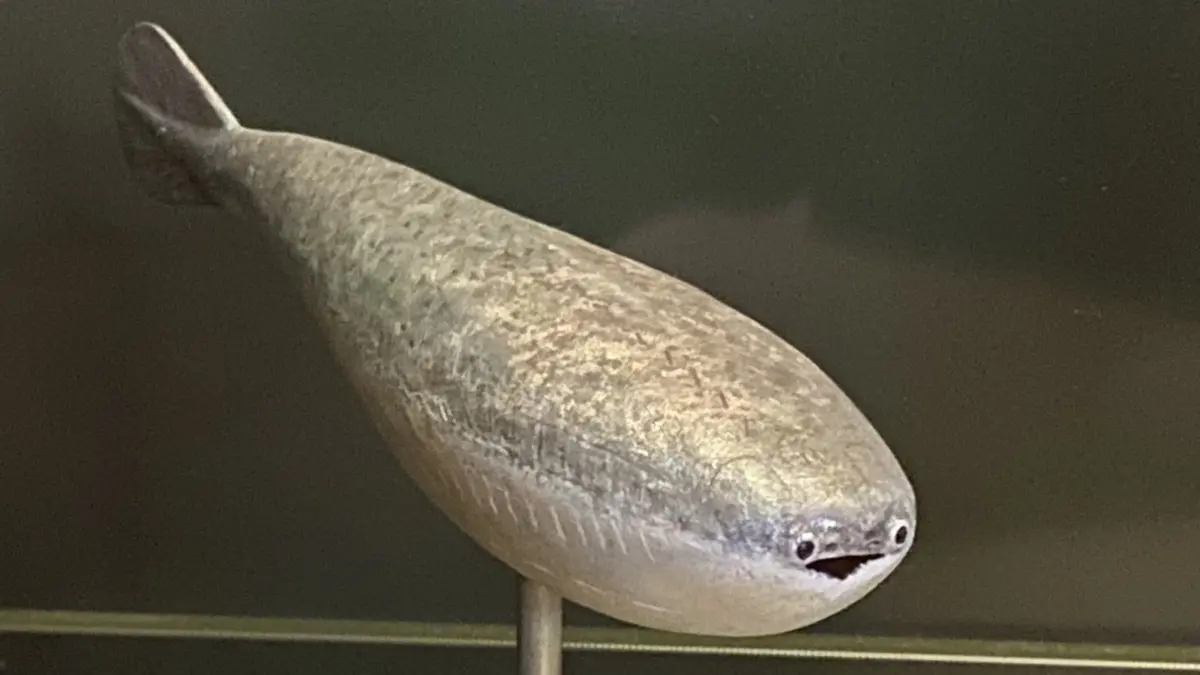
The phenomenon originated in August 2022 when a Twitter user posted photographs of a physical reconstruction of the animal housed at the Natural History Museum of Helsinki, Finland. Featuring a uniquely vacant, wide-eyed expression, a stiff cylindrical body, and an aesthetically "low-quality" or unpolished appearance, the museum model instantly struck a chord with netizens. However, it was not until June 2023—following a massive wave of amplification by Japanese internet communities—that the creature exploded into mainstream internet consciousness.
This deep-dive investigative report explores the chronological rise of the Sacabambaspis meme, tracking its trajectory from an obscure Finnish museum artifact to an international cultural icon. We examine how niche online communities weaponize deadpan aesthetics, the viral mechanics of cross-cultural meme propagation, and the profound economic and creative impacts this prehistoric creature left on digital creators worldwide.
Detailed Chronology: From the Ordovician Seas to the Digital Age
1. The Prehistoric Origins (Sacabambaspis janvieri)
To understand the humor driving the meme, one must first look at the biological reality. Sacabambaspis janvieri is an extinct genus of agnathan (jawless) vertebrates that swam the shallow marine environments of the Ordovician period, roughly 470 to 460 million years ago. Fossilized remains of the creature were first discovered in the Anzaldo Formation of Bolivia, named in honor of French paleontologist Philippe Janvier.
Biologically, Sacabambaspis possessed a heavy head shield composed of large, ornamented plates, a body covered in elongated scales, and a lack of paired fins. Because soft tissue rarely fossilizes cleanly, reconstructing its live appearance requires a significant degree of paleontological interpretation. Enter the exhibition designers at the Natural History Museum of Helsinki, whose physical reconstruction of the creature leaned into a stiff, almost comically simplistic aesthetic. With two unblinking, forward-facing black bead eyes and a permanently agape circular mouth, the model looked less like a fearsome ancient vertebrate and more like a poorly rendered video game asset.
2. The Spark: August 2022
The digital life of the Helsinki Sacabambaspis began quietly on August 30th, 2022. Twitter user Kat Turk (@kat_scans) visited the Finnish museum and posted a series of images capturing the peculiar fish model. Alongside the photographs, Turk tweeted in Finnish: "Ensimmäiset leuattomat kalat kehittyivät jo ordoviikkikaudella. Tämä on rekonstruktio myöhäis-ordoviikkikautisesta Sacabambaspis janvieri -kalasta…" (The first jawless fish evolved back in the Ordovician period. This is a reconstruction of a Late Ordovician Sacabambaspis janvieri fish…).
While the tweet initially gained modest traction among paleontology enthusiasts, it steadily accumulated over 18,000 retweets and 111,000 likes over the course of a year. The seeds of a transnational meme had been planted, waiting for the right creative ecosystem to accelerate its growth.
3. The Japanese Internet Adoption: Spring 2023
The true catalyst for the Sacabambaspis craze occurred in the spring of 2023, when Japanese netizens—particularly users originating from the legendary imageboard Futaba Channel (2chan) and Twitter—stumbled upon @kat_scans’ archival photographs.
Japanese internet culture has a long-standing history of embracing delightfully awkward, uncanny, or strangely cute animals (often referred to as kimokawaii, a portmanteau of "creepy" and "cute"). The vacant expression of the Helsinki model resonated deeply with this aesthetic sensibility.
- March 2023: Suehirogari (すえひろがり), a prolific dōjin circle known for producing novelty goods based on viral 2chan phenomena since the 2000s, released the first commercial garage-kit figure of the Helsinki Sacabambaspis model, solidifying its physical presence in the otaku market.
- Early May 2023: The creature made a prominent appearance at the annual Futaba School Festival, an offline convention celebrating Japanese imageboard culture. Attendees flooded physical message boards with hand-drawn illustrations of the fish and engaged in impromptu cosplays.
- May 9th, 2023: Digital artist Basupisu (@baspis_snt) launched a series of custom LINE messaging stickers featuring the fish, quickly followed by merchandising campaigns on SUZURI, a Japanese independent artist e-commerce platform, in early June.
4. The June 2023 Explosion and Western Resurgence
The tipping point arrived on June 8th, 2023, when Japanese natural science blog Epinesis published a dedicated post highlighting the viral nature of the Helsinki museum model. Titled "It’s a hot topic that a reconstructed model of Sakavambaspis displayed at the Museum of Natural History in Helsinki, Finland looks so poor," the article was paired with a promotional tweet that went stratospheric. Within its first week, the Epinesis tweet amassed over 83,000 retweets and 300,000 likes.

This massive wave of mainstream attention broke down the linguistic barriers. Artists across Twitter, Pixiv, and Nico Nico Seiga flooded the digital landscape with fan art under the dedicated hashtag #Sacabambaspis (#サカバンバスピス). Curation platforms like Togetter published breakdown articles on June 11th, while prominent Japanese digital media outlets such as ITmedia Netlab and KAI-YOU published features analyzing why an extinct jawless fish had suddenly captured the national consciousness.
By mid-June, the wave circled back to Western social media spheres. On June 13th, 2023, Twitter user @sketchy_raptor posted a meme utilizing the character, racking up thousands of interactions in hours. Concurrently, user @_kerjacomot posted stylized digital illustrations of the fish accompanied by ironic, hyper-relaxed captions like "unbothered. moisturized. happy. in my lane. focused. flourishing."
Supporting Context & Metrics
To quantify the sheer scale of the Sacabambaspis phenomenon, one must look at the engagement metrics and cross-platform distribution channels that fueled its ascent:
- Twitter/X Virality: The foundational post by @kat_scans eventually surpassed 111,000 likes, while the promotional signal-boost by Epinesis secured over 300,000 likes within seven days.
- Multidisciplinary Art Platforms: On Pixiv and Twitter, creators generated thousands of distinct illustrations, ranging from hyper-realistic paleo-art to chibi anthropomorphic anime variants ("Sacabambaspis-chan").
- Merchandising & Economy: Independent creators capitalized on the trend immediately. Platforms like SUZURI saw an influx of "Life with Sacabambaspis" apparel, plushies, phone cases, and acrylic keychains. Physical modeling circles like Suehirogari reported high demand for garage kits, proving that the meme possessed tangible economic viability.
- Cross-Media Crossovers: Illustrators quickly integrated the fish into preexisting anime and gaming fandoms. Notable viral crossovers included fan art depicting characters from Bocchi the Rock! (such as Kikuri Hiroi) "fishing" for or interacting with the vacant-eyed vertebrate, bridging the gap between paleontology and otaku subculture.
Official Statements and Institutional Reactions
The sudden, bizarre transformation of a scientific exhibit into a global internet icon did not go unnoticed by the keepers of the artifact itself. Representatives from the Natural History Museum of Helsinki found themselves at the center of an unexpected international spotlight.
While historical museum exhibits are typically curated with strict adherence to academic solemnity, museum staff embraced the internet’s affection for their stiff, wide-eyed specimen with good humor. Curators noted that the model, constructed years prior based on the prevailing scientific consensus of the time, reflects the inherent challenges of rendering soft-tissue anatomy from fragmented Ordovician fossil records.
Rather than commissioning a modern, sleek redesign to correct the model’s "low-quality" aesthetic, the museum recognized the educational byproduct of the meme. Millions of internet users who otherwise would never have engaged with Paleozoic marine biology suddenly found themselves researching agnathans, the Ordovician extinction events, and early vertebrate evolution. The meme effectively transformed a static museum display into a dynamic, global educational hook.
Future Outlook: The Longevity of Paleo-Memes
As the initial shockwave of the June 2023 viral surge settles, the question remains: Will Sacabambaspis endure as a permanent fixture of internet lore, or will it fade into obscurity like countless micro-trends before it?
History suggests that animals possessing a distinct, non-threatening, and slightly foolish physical appearance—such as the blobfish or the axolotl—possess remarkable staying power within digital spaces. By transitioning from a raw photographic artifact into an infinitely customizable artistic template, Sacabambaspis has secured its place in the pantheon of internet fauna.
Furthermore, the phenomenon highlights a shift in how modern audiences engage with scientific history. By humanizing (and often absurdly exaggerating) prehistoric organisms, internet communities bridge the gap between rigorous academic study and accessible pop-culture humor. Whether through plushie manufacturing, custom LINE stickers, or ironic motivational macros, the Ordovician fish has achieved a form of digital immortality that its 450-million-year-old biological ancestors could never have anticipated.