In the fast-moving landscape of contemporary fashion, where seasonal collections are routinely drowned out by algorithmic trends, viral stunts, and the relentless noise of celebrity endorsements, one house remains an absolute bastion of unyielding artistic integrity: Comme des Garçons.
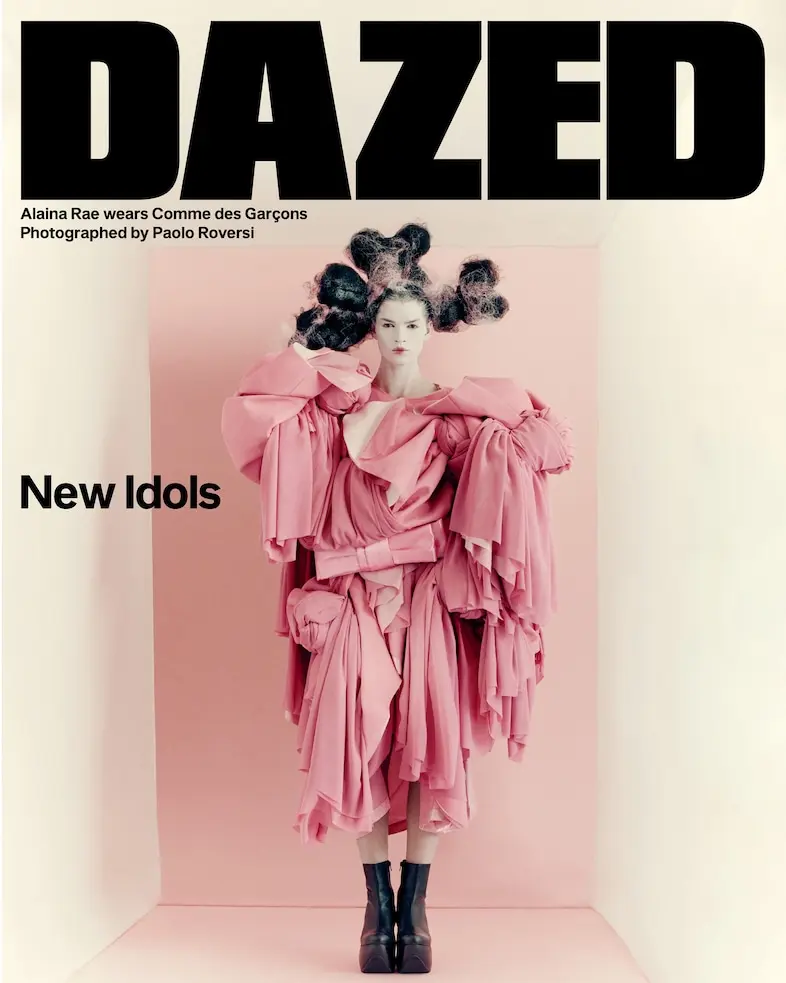
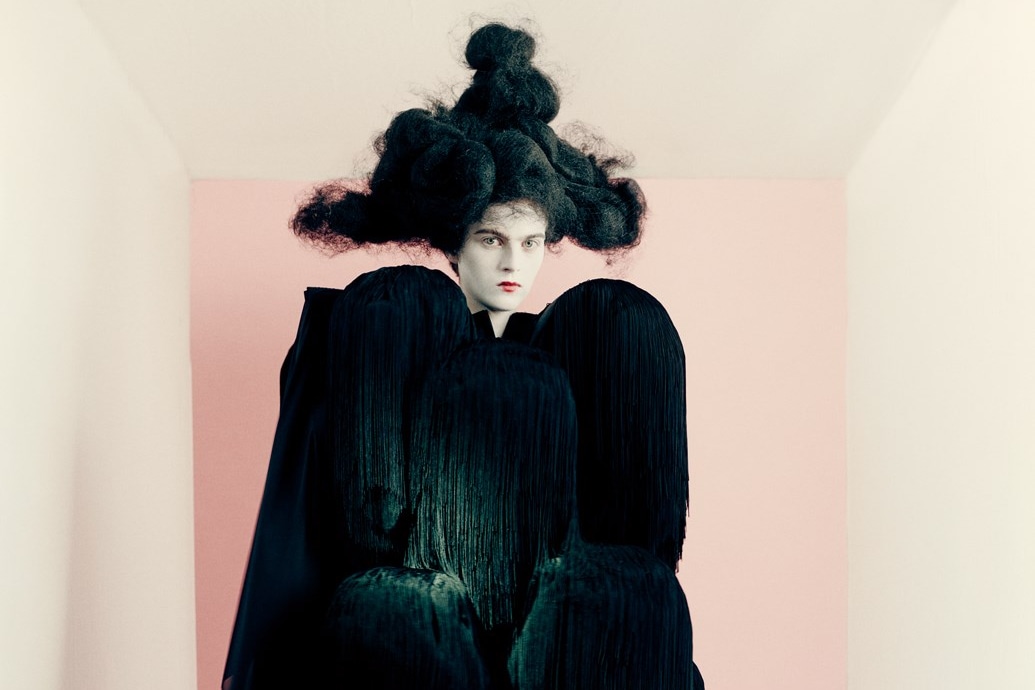
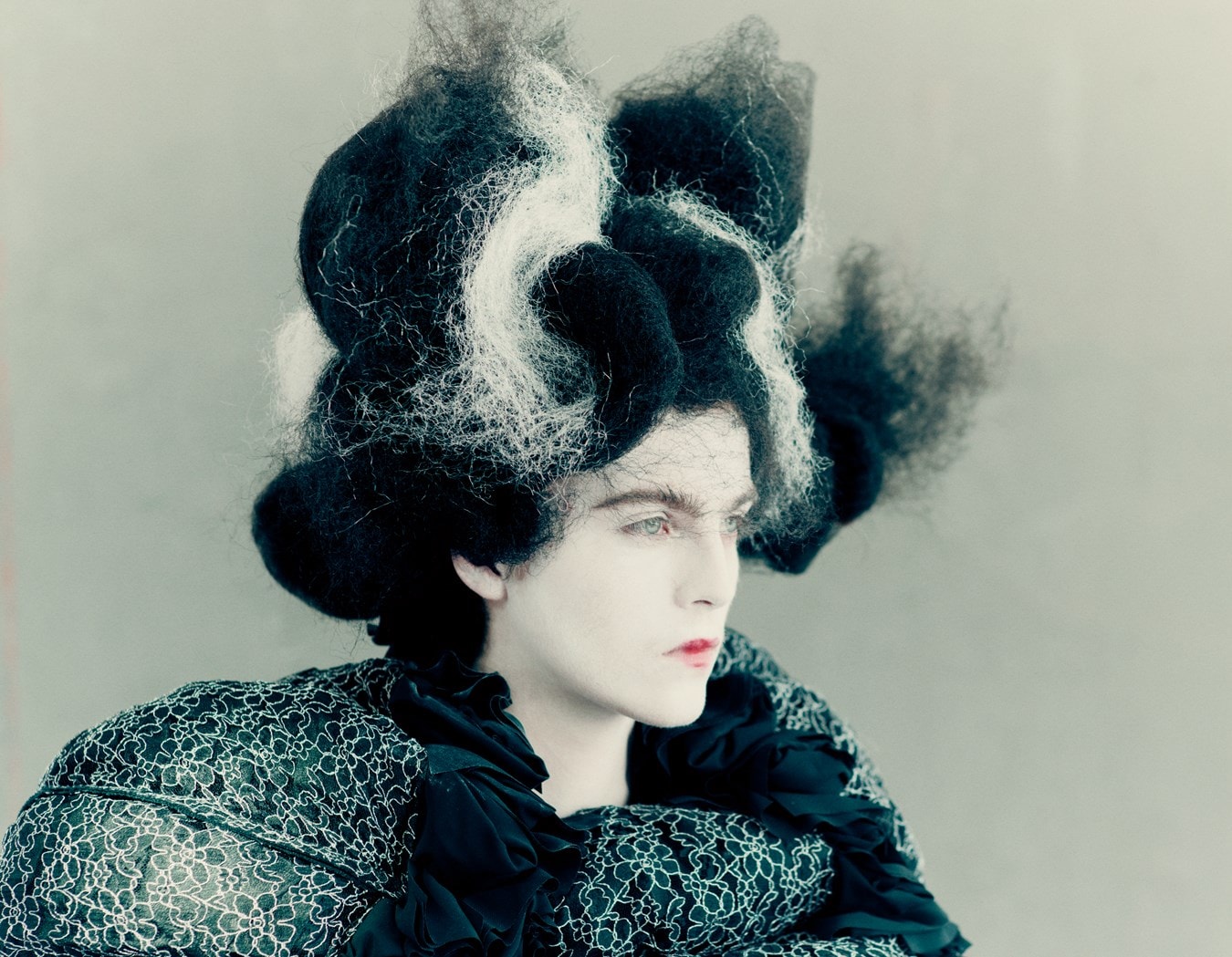
As captured in the Autumn 2026 issue of Dazed, Rei Kawakubo continues to operate entirely on her own terms, shunning industry conventions in favor of visceral, uncompromising creation. The Autumn/Winter 2026 collection, aptly titled Ultimately Black, served as yet another masterclass in avant-garde storytelling. Composed of 20 imposing black looks punctuated by a mere six bursts of vibrant, bubblegum pink, the collection evoked a stark, poetic form of modern mourning. It deployed Victorian silhouettes—corsets, crinolines, bustles, lace, tulle, velvet, and silk—manipulated with the emotional gravity of an old master’s canvas.
What sets Kawakubo apart, nearly five decades into her legendary career, is her steadfast refusal to pander to the commercial expectations of the modern fashion machine. Comme des Garçons presentations are famously devoid of influencers, celebrity cameos, and superfluous set design. There is only a stark, silent runway, an intimate and often stiflingly hot room, and clothes that challenge, move, and upend our fundamental conceptions of garment-making.
This comprehensive feature explores the enduring mystique of Rei Kawakubo through rare historical anecdotes from industry insiders, a deep dive into the philosophy of the Ultimately Black collection, and a rare, direct Q&A with the visionary designer herself—covering everything from the emotional resonance of color to her sharp critique of artificial intelligence in modern creativity.
Detailed Chronology: Encounters with an Icon
To understand Rei Kawakubo is to understand a mythology built entirely on silence, precision, and an intimidating aura of absolute authority. Over the decades, those who have crossed paths with the designer carry away indelible memories that reinforce her status as fashion’s ultimate enigma.
The Place Vendôme Legend: Susannah Frankel’s Encounter
The first piece of fashion lore belongs to Susannah Frankel, editor of AnOther Magazine. Early in her career, fresh from taking on the role of fashion editor at The Guardian, Frankel was escorted to the Comme des Garçons showroom on Place Vendôme in Paris.
Intimidated by Kawakubo’s quiet, modest, yet towering presence—and feeling profoundly underdressed—Frankel committed the ultimate journalistic faux pas. Standing before a white buying table strewn with A4 paper, she asked the quintessential, uninspired question: "What were you thinking about when you were designing this collection?"
Kawakubo’s response has since become the stuff of legend. Without a word, she picked up a pencil, drew a single circle on a blank sheet of paper, and walked away. Believing she would return, Frankel waited. She never did. Looking back, Frankel recognizes it as the most brilliant response she ever received: "It said nothing—and everything. It was perfect."
The Casting Room Stare: A Model’s Perspective
Years later, in June 2011, another young fashion professional experienced Kawakubo’s magnetic authority first-hand during preparations for the Comme des Garçons Homme Plus show. Summoned to the Place Vendôme headquarters, the aspiring model entered a long, narrow room packed with similarly lanky hopefuls.
Unlike the chaotic, high-energy backstage environments of other major houses, this casting was characterized by a deathly, reverent silence. Models clutched their portfolios, shuffling nervously as they awaited their turn. Stationed quietly at the side of the room stood a diminutive figure dressed entirely in black, observing every movement with an impassive, piercing gaze, framed by a blunt, severe bob. Though the model was ultimately optioned and later dropped just hours before the show—a routine casualty of the industry—the encounter left an indelible psychological imprint, radiating an aura of uncompromising power.
Judy Blame and the Pink Panther S/S05 Commission
The late, great stylist, punk icon, and accessories designer Judy Blame shared a similarly nerve-racking yet exhilarating history with the house. Commissioned to create jewelry for the Spring/Summer 2005 collection, Blame recounted arriving at Kawakubo’s hotel three minutes late, sweating under the weight of his equipment bags.
Surrounded by her staff like a military commander, Kawakubo surveyed the room, pointed directly at a piece crafted from gold chains and fluorescent pink toy soldiers, and declared, "I want that."
When Blame checked in with Adrian Joffe—Kawakubo’s husband and business partner—to clarify parameters, he was informed that Kawakubo had only one rule: everything must be executed in pink and gold. The resulting collection leaned heavily into Pink Panther motifs and deconstructed furniture fabrics, locking Blame into a six-month creative sprint of gold chains and fluorescent soldiers. It was, in his words, "nerve-racking, but brilliant."
Supporting Context & Metrics: The Philosophy of Ultimately Black
The Autumn/Winter 2026 collection, Ultimately Black, manifested as a monumental exploration of texture, form, and emotion. The presentation relied heavily on a solemn, almost funereal aesthetic, breaking up 20 pitch-black silhouettes with six jolts of vivid, unapologetic pink.
+-------------------------------------------------------------------------+
                     COMME DES GARÇONS A/W 26 BREAKDOWN
+-------------------------------------------------------------------------+
  Total Looks Presented: 26

  +-- Black Looks (20):    Victorian mourning aesthetics, corsetry, crinolines,
                           bustles, cascading lace, heavy velvet, and silk.
                           Representing resistance, justice, and independence.

  +-- Pink Looks (6):      Vivid, bubblegum tones. Used as a structural spice
                           to reinforce, sharpen, and contrast the black.
+-------------------------------------------------------------------------+
In the hands of Kawakubo, fabrics behave less like commercial textiles and more like oil paint on an old master’s canvas. Silhouettes ballooned, cocooned the human form, coiled tightly with complex ruches and ruffles, and were knotted and blown out into radical, abstracted proportions.
Crucially, Comme des Garçons operates in direct defiance of modern fashion week metrics. Eschewing the digital-first economy of influencer seating charts, sponsored VIP arrivals, and algorithmic spectacle, the house proves that clothes alone—when pushed to the level of high art—possess the gravity to move seasoned professionals to tears.
Official Statements: A Rare Interview with Rei Kawakubo
In this rare and illuminating exchange, Rei Kawakubo breaks her legendary silence to discuss the imperatives behind Ultimately Black, her views on the encroachment of artificial intelligence in design, and her advice for the next generation of creators.
"Black is the colour of resistance, of justice and of independence." – Rei Kawakubo
This collection is titled Ultimately Black and is composed predominantly of black looks. What does black mean to you in this collection? What is it a response to? Rei Kawakubo: This collection was born from the realisation that once again, when all is said and done, black is an essential colour for my artistic expression, because black is the colour of resistance, of justice and of independence.
Among the predominantly black looks were six vivid pink ones. People often associate pink with femininity. Is that true for you? Rei Kawakubo: The pink in this collection has no particular meaning; it exists solely to enhance or reinforce the black, like a spice.
Your latest show made one of my colleagues cry—do you consciously try and evoke emotion in people who experience your work? Rei Kawakubo: There is no specific purpose — it is not always "for something". I seek something new, but what the result brings about is something I do not know.
How do you think about the relationship between your clothes and the body? What do you hope your clothes allow the body to do—or become? Rei Kawakubo: The relationship between clothing and the body is not the theme.
We are living in very dark times. How do you see fashion’s role in responding to that darkness—or to the hopelessness it can inspire? Rei Kawakubo: I believe the role of fashion is that, by expressing oneself through what one wears, one’s spirits are lifted — in other words, it has a positive effect.
There is a great deal of discussion about the role of AI in creativity at the moment. What is your perspective on this? Rei Kawakubo: If there are 100 people, all 100 will be different. In the case of AI, all 100 would more than likely give almost the same answer.
What advice would you give to young designers who are just starting out? Rei Kawakubo: To the younger generation: just keep going, keep going.
Future Outlook
As the fashion industry grows increasingly homogenized by corporate conglomerates, trend forecasting algorithms, and generative AI, the philosophy of Rei Kawakubo stands as an essential counterweight. Her dismissal of artificial intelligence—rooted in the belief that true human creativity thrives on individuality rather than consensus-driven data—serves as a vital manifesto for the future.
For emerging designers entering an uncertain creative landscape, Kawakubo’s simple directive—"just keep going, keep going"—is both a challenge and a lifeline. Comme des Garçons continues to prove that fashion does not need to compromise its artistic soul to remain relevant. By prioritizing emotional depth, radical structural experimentation, and absolute independence, Kawakubo ensures that her house will remain the undisputed north star of avant-garde design for generations to come.