Executive Overview
The intersection of mainstream media and cutting-edge artificial intelligence has once again sparked intense scrutiny within the tech community. Following a high-profile segment on CBS’s 60 Minutes featuring Google CEO Sundar Pichai, prominent AI researchers, ethicists, and linguists have openly accused both the network and the tech giant of inflating the capabilities of modern language models.
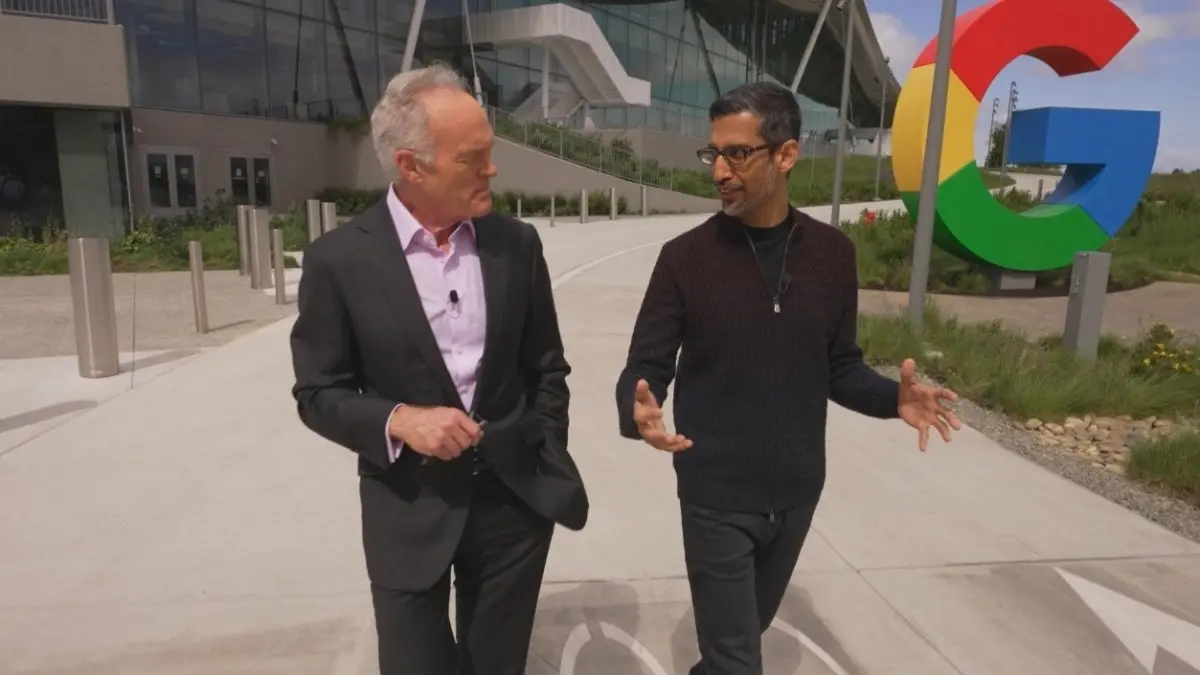
During the broadcast, correspondent Scott Pelley highlighted what he termed "emergent properties"—mysterious phenomena wherein artificial intelligence systems allegedly teach themselves skills they were never expected to acquire. Central to the segment was Google’s Pathways Language Model (PaLM), the foundational technology driving the company’s Bard chatbot. Pelley and Google executives, including senior vice president James Manyika, claimed that PaLM had spontaneously learned to understand, translate, and converse in Bengali—a language they implied the system had never been trained to process.
However, this narrative was swiftly dismantled on social media by leading industry voices. Critics, notably Margaret Mitchell, former co-lead of Google’s AI ethics team, and University of Washington linguistics professor Emily M. Bender, pointed out a glaring contradiction: Google’s own technical documentation explicitly confirms that Bengali data was included in PaLM’s training corpus.
Experts argue that framing standard machine-learning processes as spontaneous, near-magical "emergence" serves corporate PR goals while misleading millions of viewers. This controversy highlights a broader, growing tension in the tech industry: the delicate balance between effective marketing and responsible public science communication. As generative AI becomes a dominant cultural force, the pressure on media outlets to accurately contextualize these technologies—without slipping into sensationalism—has never been higher.
Detailed Chronology: How the Controversy Unfolded
The Broadcast: Sunday Night on 60 Minutes
On a Sunday evening broadcast, 60 Minutes aired a sweeping feature on the rapid advancement of artificial intelligence, focusing heavily on Google and its leadership. In the segment, Sundar Pichai described contemporary AI architecture as a "black box," suggesting that even the engineers and researchers who build and deploy these systems do not fully understand how they operate under the hood.
Corroborating this narrative, correspondent Scott Pelley introduced viewers to the concept of "emergent properties." To illustrate this, the segment showcased an interaction with an unnamed Google AI program—later identified as PaLM. A user prompted the system in Bengali, and the model responded fluently in both Bengali and English. Pelley told millions of viewers that the software had "adapted on its own" to a language it had never been trained to know.
The Immediate Online Backlash
Almost immediately after the broadcast, AI researchers and ethicists took to Twitter to challenge the claims made on national television.
Margaret Mitchell, co-founder of Hugging Face’s AI ethics division and a former Google researcher, was among the first to sound the alarm. Citing the original research paper published by Google developers detailing PaLM’s architecture, Mitchell noted that Bengali was indeed part of the model’s training data, accounting for roughly 0.026% of the overall corpus.
"By prompting a model trained on Bengali with Bengali, it will quite easily slide into what it knows of Bengali: This is how prompting works," Mitchell tweeted. She emphasized that an AI model cannot magically generate or comprehend a language to which it has never been exposed.
The Amplification of Skepticism
As Mitchell’s thread gained traction, other prominent academics and tech commentators amplified the critique. Emily M. Bender, a respected computational linguist at the University of Washington, joined the chorus, specifically targeting statements made by Google’s James Manyika during the broadcast. Manyika had asserted that PaLM’s newfound abilities meant the system could now "translate all of Bengali."
Bender labeled this an "unscoped, unsubstantiated claim," questioning how "all of Bengali" was measured or tested. Furthermore, Bender argued that the language used in the segment—specifically the casual invocation of "emergent properties" to imply near-autonomous awakening—was functionally equivalent to hyping Artificial General Intelligence (AGI).
"It’s still bullshit," Bender remarked bluntly, criticizing the segment for masking basic data-processing mechanics as unexplained marvels.
Supporting Context & Metrics: Decoding PaLM and Training Data
To understand the friction between Google’s framing and the researchers’ criticisms, one must examine the technical mechanics of Large Language Models (LLMs).
What is PaLM?
Pathways Language Model (PaLM) is a dense transformer-based autoregressive language model with 540 billion parameters, developed by Google Research. First introduced in a technical paper titled "PaLM: Scaling Language Modeling with Pathways" in April 2022, the model was designed to demonstrate high-scale training efficiency across multiple TPU v4 Pods.
During its development, Google fed PaLM an enormous, highly diverse multilingual corpus comprising web pages, books, Wikipedia articles, news, and source code.
The Bengali Data Breakdown
Google’s own published research paper explicitly breaks down the linguistic composition of the training dataset. While English dominated the dataset (making up the vast majority of the tokens), the multilingual portion included dozens of languages.
- Bengali Representation: Bengali accounted for approximately 0.026% of the total training tokens.
- Model Exposure: While 0.026% is a small fraction of a multi-terabyte dataset, it still equates to hundreds of millions of words of Bengali text.
- The Distinction: While PaLM was primarily optimized for standard next-token prediction (sentence completion) rather than explicit bilingual translation or task-specific question-answering, exposure to the language during pre-training established the statistical weights necessary for processing Bengali prompts.
When a user prompts a model containing Bengali tokens with Bengali text, the underlying neural network activates the pathways formed during training. To AI researchers, the model responding in Bengali is not a miracle of spontaneous self-teaching; it is a textbook demonstration of associative retrieval and transfer learning.
Official Statements and Corporate Defense
Faced with a rising tide of public criticism from the scientific community, both Google and representatives involved in the broadcast offered clarifications, though neither network nor company issued a formal retraction.
Google’s Stance
When contacted for comment, Google spokesperson Jason Post defended the framing used by executives during the interview, arguing that the company never claimed Bengali was entirely absent from the training set.
"While the PaLM model was trained on basic sentence completion in a wide variety of languages (including English and Bengali), it was not trained to know how to 1) translate between languages, 2) answer questions in Q&A format, or 3) translate information across languages while answering questions," Post stated. "It learned these emergent capabilities on its own, and that is an impressive achievement."
This perspective was mirrored by Sundar Pichai’s previous remarks at Google I/O, where he emphasized that the model had never seen "parallel sentences" (direct translation pairs) between English and Bengali, yet managed to bridge the two tasks together based on its generalized semantic representations.
The Media Silence
CBS News and the production team behind 60 Minutes faced intense pressure to address the scientific inaccuracies pointed out by Mitchell, Bender, and other specialists. However, a CBS spokesperson declined to provide an on-the-record response to press inquiries regarding the segment’s editorial choices.
Critics argue that this silence points to a systemic issue in mainstream journalism: when complex technological subjects are condensed for mass-market consumption, nuance is frequently sacrificed in favor of sensationalism that drives ratings and public engagement.
Future Outlook: The Growing Chasm Between PR and Scientific Reality
The fallout from the 60 Minutes interview highlights a critical inflection point in the public discourse surrounding artificial intelligence. As the commercial race between tech titans—including Google, Microsoft, OpenAI, and Meta—intensifies, the narrative surrounding AI capabilities has high financial stakes.
The Danger of Myth-Making
Ethicists and researchers warn that framing AI models as mysterious, quasi-conscious entities with autonomous emergent superpowers carries real-world risks:
- Regulatory Misguidance: Policymakers who rely on mainstream media to understand AI may draft legislation based on inflated fears or exaggerated capabilities (such as imminent AGI), rather than addressing tangible harms like algorithmic bias, data privacy violations, and copyright infringement.
- Accountability Shield: When tech executives describe AI systems as impenetrable "black boxes" that act unpredictably on their own, it creates a convenient defense against corporate liability for system errors, hallucinations, or discriminatory outputs.
- Public Deception: As Margaret Mitchell noted, propagating the myth of "magic" capabilities acts as disinformation, alienating everyday users from developing a realistic, critical understanding of how software tools actually function.
A Call for Rigorous Science Communication
Moving forward, the tech industry and science journalists face an urgent mandate to bridge the communication gap. Translating advanced computational mathematics into accessible narratives requires precision, humility, and a willingness to consult independent experts who are free from corporate promotional incentives.
Until a more balanced standard of reporting is established, controversies like the 60 Minutes PaLM segment will continue to serve as cautionary tales about the dangers of prioritizing hype over scientific truth.