Executive Overview
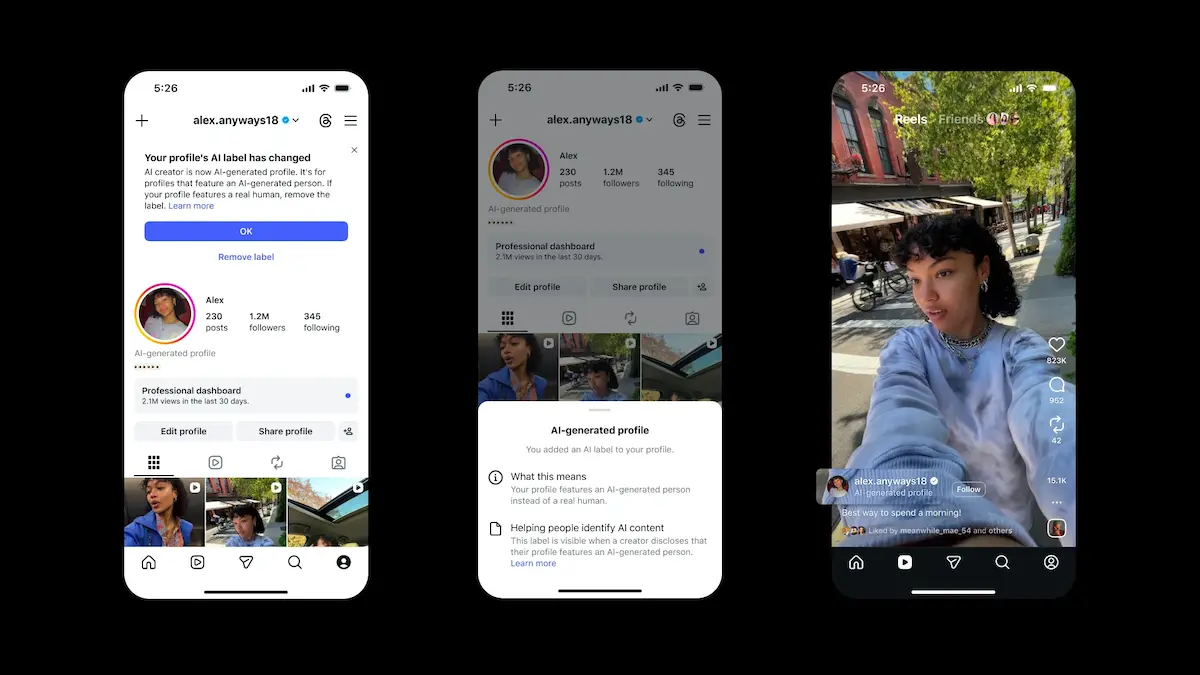
In an era where the boundary between biological reality and algorithmic generation is rapidly dissolving, Instagram has fired a significant regulatory shot. On Monday, the Meta-owned social media giant announced a sweeping overhaul of how it identifies, labels, and algorithmically treats accounts featuring artificial intelligence-generated personas. Under the newly minted policy, Instagram is rebranding its legacy “AI creator” tag to a more direct and explicit label: “AI-generated profile.”
More importantly, the platform is introducing aggressive enforcement mechanisms. Accounts that present synthetic human beings as real people without clear disclosure will face severe algorithmic penalties, including a dramatic reduction in content reach and distribution. Conversely, creators who proactively use the new label will remain unpenalized, preserving their standing in the platform’s recommendation engines.
This policy shift is not merely a bureaucratic adjustment; it is a defensive maneuver in a rapidly escalating war for platform integrity. Over the past year, social media ecosystems have been flooded with hyper-realistic, AI-generated human personas. These virtual entities are no longer just harmless digital novelties; they are increasingly being weaponized to execute deceptive marketing campaigns, spread medical misinformation, and manipulate lonely users.
By targeting the visibility of unlabeled synthetic profiles, Instagram is attempting to establish a new baseline of digital transparency. However, the policy opens up profound questions about enforcement, the technological feasibility of detecting highly polished deepfakes, and the future of the creator economy in an age of automated humanity.
Detailed Chronology: The Path to Synthetic Deception
The implementation of the "AI-generated profile" label is the culmination of a multi-month escalation in synthetic media exploitation. To understand why Instagram was forced to act, one must trace the rapid evolution of virtual influencers from niche marketing experiments to coordinated influence networks.
[Late 2025 - Early 2026]
Rise of Coordinated AI Persona Networks (e.g., Goose App Campaign)
       │
       ▼
[July 2026]
NYT Exposes AI-Generated Doctors & Wellness Scams / Backlash over Meta "Muse" Likeness Tool
       │
       ▼
[August 2026]
Meta Settles Youth Harm Lawsuit ($18B) / High Regulatory Pressure
       │
       ▼
[Late August 2026]
Instagram Officially Implements "AI-Generated Profile" Label & Algorithmic Penalties
The Rise of the Synthetic Network
For years, digital avatars like Lil Miquela operated transparently as fictional characters. However, by late 2025 and early 2026, generative AI tools became sufficiently advanced to allow bad actors to mass-produce hyper-realistic human likenesses at near-zero cost.
A critical turning point occurred earlier this year when a Wired investigation exposed a sophisticated network of synthetic profiles promoting "Goose," a gay dating app. The investigation revealed more than two dozen highly polished, ostensibly real male influencers on Instagram who were entirely AI-generated. These synthetic personas did not merely post photos; they actively engaged with real users, sliding into direct messages (DMs) to build artificial rapport and coerce targets into downloading the dating application. This marked a dangerous transition from static advertising to active, conversational deception.
The Medical Misinformation Epidemic
By mid-summer, the threat vector shifted from deceptive app promotion to public health. In July, a damning investigation by The New York Times revealed hundreds of AI-generated profiles masquerading as licensed medical doctors, holistic healers, and wellness experts. These virtual authorities—complete with generated stethoscopes, pristine white coats, and soothing, AI-synthesized voices—were used to bypass traditional advertising restrictions. They promoted unverified dietary supplements, peddled dangerous medical advice, and made fraudulent health claims to millions of unsuspecting users, exploiting the inherent trust people place in medical professionals.
The Meta "Muse" Likeness Backlash
Compounding these external threats, Meta found itself in the crosshairs of its own user base in July. The company rolled out "Muse," an AI image generator that allowed users to generate images utilizing the likenesses of real Instagram creators without an explicit opt-in mechanism. The backlash from the creative community was immediate and fierce. Photographers, models, and everyday users objected to having their public digital identities harvested to train and generate synthetic replicas. Recognizing the severe reputational damage, Meta quietly withdrew the feature days later, but the episode highlighted a growing systemic anxiety over digital identity theft and synthetic impersonation.
Against this backdrop of rising public distrust and regulatory scrutiny—including a historic $18 billion settlement in late August with 29 U.S. states over platform harms to children—Instagram’s new labeling policy emerged as an essential step to reclaim control over its platform’s authenticity.
Supporting Context & Metrics: The Mechanics of Deception
To understand the necessity of Instagram’s intervention, it is essential to analyze the structural advantages that make AI-generated profiles so appealing to malicious actors, and so damaging to the social ecosystem.
The Economics of Synthetic Influence
Traditional influencer marketing is expensive, logistically complex, and bound by physical limitations. In contrast, synthetic profiles offer unprecedented operational efficiencies:
- Zero Marginal Cost: Once a base model is trained, generating infinite lifestyle imagery, video clips, and captions costs fractions of a cent.
- 24/7 Availability: AI personas do not sleep, age, or experience burnout. They can engage in thousands of simultaneous direct-message conversations globally.
- Complete Brand Control: Synthetic influencers never go off-script, get embroiled in real-world scandals, or demand royalty increases.
| Metric / Attribute | Traditional Human Influencer | Synthetic AI Persona |
|---|---|---|
| Content Generation Cost | High (Travel, photography, editing) | Extremely Low (Compute power only) |
| Scalability | Limited by physical time and energy | Infinite (Mass-produced variations) |
| User Interaction Capacity | Low (Manual DMs, limited comments) | High (Automated, LLM-driven chat) |
| Regulatory Risk | Individual compliance errors | Systemic platform ban or shadowban |
| Trust Factor | High, but vulnerable to human error | Volatile; drops sharply upon discovery |
The Psychological Cost of Disillusionment
The primary driver behind Instagram’s policy shift is user frustration. Social media platforms rely on a delicate psychological contract of perceived authenticity. When users discover that a profile they have been following, admiring, or conversing with is entirely synthetic, it triggers a profound sense of betrayal.

According to platform feedback cited by Instagram, users expressed deep discomfort with the "uncanny valley" of modern social media, where a profile appears entirely human only for the illusion to shatter upon closer inspection. This erosion of trust threatens the core commodity of Instagram: user engagement. If users begin to assume that every attractive or interesting account is merely a marketing bot, overall interaction with the platform is projected to decline.
Official Statements and Policy Boundaries
In its official communication, Instagram sought to frame the update as a pro-consumer move designed to foster clarity rather than suppress creative expression.
“As generative AI becomes a bigger part of how people create, we’ve heard that people don’t like seeing a profile that seems human, only to find out later that the person featured is AI-generated,” Meta wrote on its official creators blog. “They want to know when a profile features an AI-generated person.”
What Requires a Label?
The policy establishes a clear distinction between synthetic identities and creative assistance. The "AI-generated profile" label is specifically reserved for accounts where the core subject of the profile—the person being featured—is generated or substantially created with AI.
┌─────────────────────────────────────────────────────────┐
│              DOES THE PROFILE REQUIRE A LABEL?          │
└────────────────────────────┬────────────────────────────┘
                             │
              Is the main subject of the profile
             an AI-generated human or persona?
                             │
              ┌──────────────┴──────────────┐
              │                             │
             YES                            NO
              │                             │
     [Label Required]             Is AI used for editing,
  "AI-generated profile"         captions, or graphics?
              │                             │
              │                      ┌──────┴──────┐
              ▼                      │             │
     Failure to label               YES            NO
   results in restricted             │             │
     algorithmic reach.       [No Label Needed] [No Label]
To prevent over-labeling and preserve utility for mainstream creators, Instagram clarified that the following activities do not require the "AI-generated profile" tag:
- Post-processing edits: Utilizing AI tools to remove background objects, adjust lighting, or upscale image resolution.
- Textual assistance: Employing large language models (LLMs) to draft, polish, or translate captions and hashtags.
- Graphic design elements: Incorporating AI-generated background graphics, stickers, or abstract visual elements while keeping a real human as the primary focus.
The Penalty Mechanism
The enforcement strategy centers on algorithmic suppression rather than outright account bans. Creators who operate synthetic personas and fail to self-label will find their content quietly restricted. Their posts, Reels, and stories will be excluded from recommendation surfaces such as the Explore page, the Reels tab, and home-feed suggestions.
This "shadowban" mechanism effectively cuts off the organic growth of deceptive accounts, destroying their commercial viability. Conversely, creators who comply with the disclosure mandate will not face algorithmic penalties, allowing legitimate digital artists and transparent virtual influencers to maintain their reach.
Future Outlook: The Cat-and-Mouse Game of Enforcement
As Instagram rolls out the "AI-generated profile" label, the tech industry will closely watch how the platform intends to enforce these rules. The policy relies heavily on voluntary disclosure, but the actors who pose the greatest threat—scammers, deepfake networks, and state-sponsored influence operations—are precisely the ones least likely to comply.
The Detection Bottleneck
To catch non-compliant creators, Meta must rely on a combination of user reporting, metadata analysis, and automated AI detection tools. However, automated detection is a notoriously fragile science.
- Metadata Manipulation: While standards like the C2PA (Coalition for Content Provenance and Authenticity) embed cryptographic watermarks into AI-generated files, these metadata tags can easily be stripped by taking screenshots, re-saving files, or running them through compression algorithms.
- Generative Advancements: As generative adversarial networks (GANs) and diffusion models continue to improve, the visual artifacts that currently give away AI images (such as unnatural hand structures, inconsistent lighting, or blurred earlobes) are rapidly disappearing.
- The Resource Strain: Relying on human moderation teams to manually review millions of disputed profiles is financially and logistically unsustainable, meaning Meta will likely deploy imperfect automated classification systems that risk falsely flagging real human creators who use heavy filters or stylized makeup.
Regulatory and Global Implications
Instagram’s policy update arrives at a moment of intense regulatory pressure on parent company Meta. Having just agreed to an $18 billion settlement with U.S. states over the psychological impacts of its platforms on minors, Meta is under immense pressure to prove it can maintain a safe, transparent, and age-appropriate digital environment.
Furthermore, with the European Union’s AI Act introducing strict transparency obligations for synthetic content, and the U.S. Federal Trade Commission (FTC) cracking down on deceptive AI-enabled commercial practices, Instagram’s proactive self-regulation is a strategic attempt to head off even harsher government-mandated restrictions.
Ultimately, the "AI-generated profile" label is a crucial first step toward preserving the integrity of digital spaces. Yet, as synthetic humans become indistinguishable from biological ones, the battle for authenticity on social media will not be won with a simple label. It will require an ongoing, highly complex technological and cultural effort to redefine what it means to connect in a simulated world.