Executive Overview
For modern entrepreneurs and business owners, the daily reality is a relentless battle against operational drag. Between managing client workflows, processing meeting follow-ups, and coordinating cross-departmental tasks, up to 60% of a founder’s schedule is routinely consumed by administrative friction. While the internet is saturated with simplistic, six-step tutorials promising instant automation through one-size-fits-all AI models, the hard truth is that these generic tools rarely deliver sustainable results.
True operational transformation requires a bespoke architecture. In a recent episode of the AI Explored podcast, L2 Digital founder and CEO Keith Moehring sat down with Michael Stelzner to reveal how he successfully automated 60% of his professional workload using a custom-built system of AI agents. By shifting away from borrowed templates and embracing a structured, bottom-up framework built on clear organisational contexts, Moehring compressed a two-week monthly administrative cycle into a single, highly streamlined hour.
This report explores the architectural methodology, strategic foundations, and technical execution behind Moehring’s system. It provides a comprehensive blueprint for business leaders looking to transition from passive AI experimentation to deploying deeply integrated, autonomous agent networks.
Detailed Chronology: The Evolution of Moehring’s AI Infrastructure
The journey toward a 60% workload reduction was not an overnight success; it required a systematic, phased implementation that evolved from basic manual task execution to sophisticated multi-agent orchestration.
Phase 1: Identifying the Pain Points and the "Second Brain" Phenomenon
Moehring’s automation journey began with his most glaring operational bottleneck: post-meeting follow-through. Like many executives, he routinely jumped from client strategy sessions straight into the next item on his calendar, losing track of vital action items, strategic decisions, and execution timelines.
To solve this, he engineered his first functional AI agent to manage meeting documentation automatically. By integrating the meeting-notetaking tool Granola with the AI code editor Cursor via Model Context Protocol (MCP) connectors, Moehring established a pipeline where every client interaction is captured, categorised, and routed without manual intervention.
Beyond saving time, this infrastructure inadvertently solved a secondary, high-value problem: it acted as an infallible "second brain." Because every operational step, client note, and historical project file was logged, consolidated, and made queryable through natural language, Moehring could instantly retrieve project histories and decision trails without combing through emails or project management boards.
Phase 2: Developing Task-Level and Orchestration Agents
Once the foundational agents were performing reliably, Moehring scaled the architecture from isolated task execution to interconnected workflows. The maturation of his system can be broken down into three distinct operational tiers:
- Entry Level (Task-Specific Agents): Purpose-built agents designed to execute isolated, time-consuming actions repeatedly and reliably (e.g., formatting meeting transcripts, drafting client emails).
- Intermediate Level (Coordinated Workflows): Agents that coordinate task-level components, stringing multiple outputs together to manage broader operational pipelines.
- Advanced Level (Orchestration): The apex of the system, represented by Moehring’s primary orchestration agent, "Leo."
At the start of every month, Moehring triggers Leo with a single high-level command: "Set up all client tasks and start executing on the work for all distributor clients this month." Leo autonomously activates the necessary sub-agents in precise sequence, populating ClickUp with client tasks, drafting baseline communications, and initializing project boards. What historically required two weeks of exhaustive manual setup is now executed in approximately 60 minutes.
Supporting Context & Metrics: The Anatomy of a Custom Agent System
Building an effective AI agent ecosystem requires mapping out business processes before writing a single line of prompt code. Moehring’s methodology relies on three foundational pillars: an accountability chart, a robust tech stack, and a rigorous context layer.
1. The Accountability Chart: Structuring Business Responsibilities
Before designing agents to handle tasks, entrepreneurs must map out how their business actually operates. Moehring advocates for an accountability chart framework:
- Top Tier: CEO or Visionary.
- Second Tier: Integrator or Operations Lead.
- Third Tier: Core functional departments (Sales & Marketing, Operations, Finance).
- Base Tier: Specific roles, recurring daily/weekly/monthly tasks, and Key Performance Indicators (KPIs).
For entrepreneurs wearing multiple hats, platforms like Ninety.io or generative AI tools like Claude can be leveraged to visualize this structure. By prompting Claude with a detailed description of business functions and recurring duties, leaders can generate clean, printable organizational frameworks to hang on their office walls, establishing clear operational targets for automation.
2. The Technological Foundation
Moehring’s architecture relies on a triad of essential components:
| Component | Tool Utilized | Function |
|---|---|---|
| AI Model | Claude (Anthropic), Cursor AI | Executes natural language processing, reasoning, and code generation. Selected dynamically based on task complexity. |
| User Interface | Cursor ($99/mo) | A code editor that connects AI directly to local file structures, allowing natural language interaction with local directories securely. |
| Context Layer | Local Desktop Directories (L2 Ops) |
A structured hierarchical folder system containing company SOPs, playbooks, client references, and templates. |
3. The Context Layer and Playbooks
The true differentiator in Moehring’s system is the context layer. His local directory contains specialized subfolders that the AI continuously references. When an agent executes a task, it builds a mental map of this structure, knowing precisely which file to check without requiring explicit, repetitive instructions.
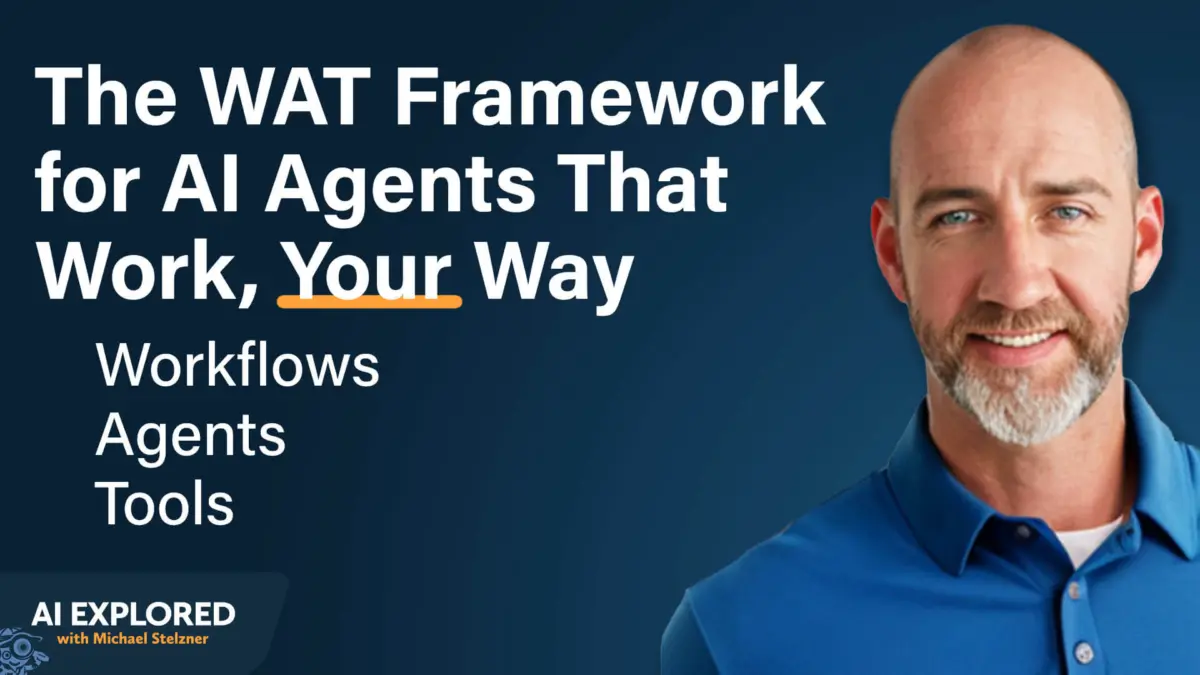
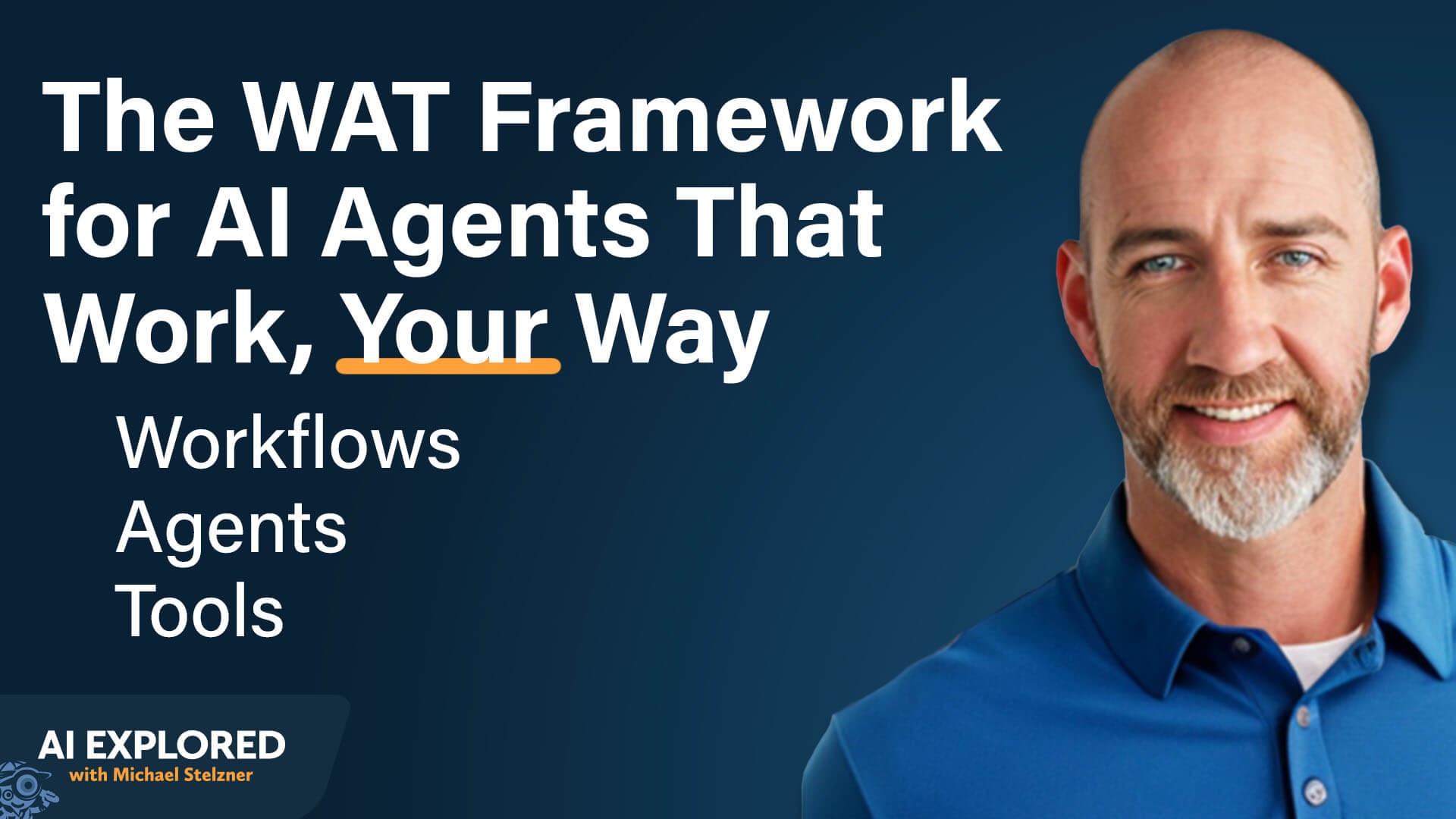
To guide these agents, Moehring writes operational "playbooks"—standard operating procedures (SOPs) written specifically as instructions for artificial intelligence. Using the WAT framework (Workflows, Agents, and Tools), these playbooks outline the exact sequence of steps, required API integrations, and output templates necessary for the agent to complete its mission autonomously.
Official Statements and Industry Insights
The insights shared by Keith Moehring during his appearance on the AI Explored podcast highlight a broader cultural and operational shift in how modern entrepreneurs approach technology.
"The internet is full of ‘spin up an agent in six steps’ tutorials that make the whole thing sound simple," Moehring cautions. "Building an AI agent that reliably performs a specific task in the specific way you do requires real work. You have to provide context. You have to define the process. You have to iterate until the output matches what you actually want."
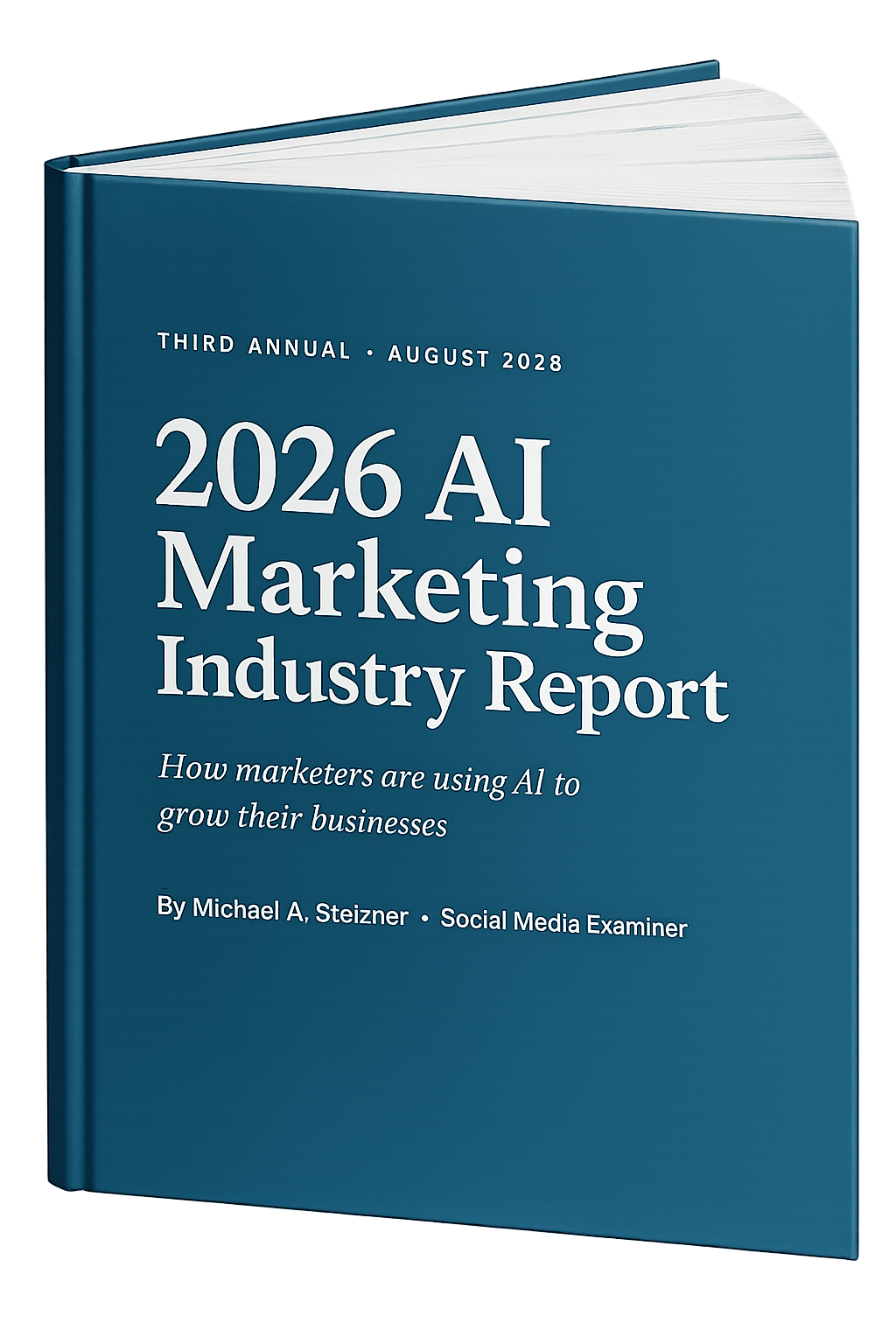
Industry data underscores the urgency of this approach. According to recent findings from the AI Marketing Industry Report, 85% of professionals learn AI by experimenting on their own, with only 7% receiving formal corporate training, and more than half financing their AI exploration out of pocket. This DIY approach often leads to frustration when generic, one-size-fits-all agents fail to align with unique business workflows.

Moehring emphasizes that overcoming this friction requires a disciplined, bottom-up engineering mindset:
"Start with your simplest, most repetitive task, not your most complex one. Starting with a broad ask like ‘build me a content marketing agent’ will almost always produce something you can’t use. The AI will build what it thinks you want rather than what you actually do."
Future Outlook: The Next Wave of Autonomous Enterprise
As artificial intelligence models become increasingly multimodal and autonomous, the blueprint outlined by Keith Moehring points toward a definitive evolution in entrepreneurship. The days of founders acting as human glue—manually transferring data between isolated software applications—are rapidly giving way to localized, agent-driven orchestration layers.
Several critical trends will shape the future of custom agent implementation:
- Mainstream Adoption of Code Editors for Non-Developers: Tools like Cursor are lowering the barrier to entry, enabling non-technical founders to leverage developer-grade environments to build, test, and deploy localized AI agents securely.
- Shift Toward Autonomous Scheduling and Event-Driven Triggers: Moving beyond manual prompts, future agent systems will rely increasingly on scheduled cron jobs and event-driven automation (via Cursor Automations or GitHub integrations), executing complex operational reviews dynamically in the background.
- The Rise of the "AI-First" Org Chart: As accountability charts become codified into machine-readable context layers, businesses will scale not by linearly adding human headcounts for administrative tasks, but by expanding their fleet of specialized, context-aware sub-agents supervised by centralized orchestrators.
For business leaders willing to invest the upfront effort into documenting their processes, structuring their data layers, and building iterative AI agents from the ground up, the reward is substantial: a resilient, scalable operation where the founder is finally free to focus on visionary strategy rather than administrative maintenance.