Executive Overview
For six decades, the streets of West London have transformed annually into a pulsating, kaleidoscopic epicentre of Caribbean culture, resistance, and community resilience. What began in 1965 as a modest, localized attempt to heal racial divisions and foster solidarity has blossomed into Europe’s largest street festival. Today, the Notting Hill Carnival draws a staggering crowd of over two million people every August bank holiday weekend, turning the Victorian avenues of Kensington and Chelsea into a thumping amphitheatre of soca, calypso, reggae, dub, and the unmistakable aroma of curry goat and roti.
Beyond its foundational music and cuisine, the modern incarnation of the Carnival has firmly cemented its status as a high-stakes runway for contemporary Caribbean diaspora style. From traditional Mas bands and the glistening, oil-slicked limbs of Jab Jab revellers to retro “rude boy” tailoring and avant-garde street fashion, the sartorial landscape of Carnival is an active, living archive of heritage and self-expression.
This comprehensive report examines the diamond jubilee of the Notting Hill Carnival, exploring its historical genesis through the lens of social justice, the socio-economic and cultural metrics that define its modern footprint, and an intimate look at the fashion captured on the ground by contemporary documentarians like photographer Ollie Tikare. As the event looks toward its next chapter, we analyze the delicate balance between commercial pressures, grassroots preservation, and the enduring spirit of West London’s Caribbean community.
Detailed Chronology: From Local Fayre to Global Phenomenon
To understand the magnitude of the modern Notting Hill Carnival, one must trace its origins back to the deeply troubled racial and socio-political landscape of mid-20th-century Britain. The timeline of this iconic institution is characterized by grassroots activism, civil unrest, artistic innovation, and institutional adaptation.
1958–1964: The Crucible of West London
Following the Second World War, significant numbers of migrants from the Caribbean—part of the Windrush generation—settled in areas like Notting Hill, seeking economic opportunity. However, they faced systemic discrimination, substandard housing conditions, and severe racial hostility. This tension culminated in the infamous Notting Hill race riots of August/September 1958, during which white supremacist gangs terrorized the West Indian community.
In the wake of this violence, Trinidadian human rights activist Claudia Jones—often hailed as the "Mother of Carnival"—organized an indoor Caribbean carnival in St Pancras Town Hall in January 1959. Broadcast by the BBC, this event was an early effort to showcase West Indian culture and foster unity. Tragically, Jones passed away in 1964, but the seeds for a street-level manifestation of her vision had already been planted.
1965: Rhaune Laslett and the First Local Fayre
In 1965, social worker and community activist Rhaune Laslett, alongside local radicals and artists, sought to bring together the disparate and fractured ethnic groups living in Notting Hill. Inspired by Trinidadian and African traditions, Laslett organized a small local fayre. It featured a children’s street parade, impromptu musical performances, and multicultural food stalls.
Crucially, this early iteration was designed to promote social cohesion. As folklore records, the legendary local musician Russell Henderson and his steel band led an impromptu march down the streets, shifting the static fayre into a moving celebration.
1970s–1980s: The Sound System Era and Police Tensions
Through the 1970s, the Carnival grew organically, heavily influenced by the arrival of British-born Black youth who infused the event with Black Power politics and the heavyweight bass of Jamaican sound systems. Reggae, dub, and roots culture became the heartbeat of the festival.
However, this period was also fraught with systemic friction. The Metropolitan Police viewed the growing crowds with deep suspicion, leading to heavy-handed policing tactics, aggressive stop-and-search operations, and major clashes—most notably the 1976 riots, which served as the subject of reggae group The Clash’s track "White Riot" and inspired novelist Linton Kwesi Johnson’s poetry. Despite the hostility, the community held firm, asserting their right to occupy public space.
1990s–2010s: Institutionalization and Global Prominence
By the close of the 20th century, the Carnival had transitioned from a counter-cultural flashpoint to a globally recognized institution. Authorities, recognizing its immense cultural and economic value, began collaborating more closely with organizers. The introduction of static sound systems—such as Channel One, Gladdy Wax, and Aba Shanti-I—gave the festival its signature multi-zone acoustic identity.
The 2000s and 2010s saw the event balloon into a multi-million-pound tourist attraction, drawing international visitors, global media outlets, and high-profile celebrities, while simultaneously navigating ongoing debates over crowd control, sanitation, and gentrification.
2024 and Beyond: The Diamond Jubilee
Marking 60 years since Laslett’s initial vision, the contemporary Carnival stands as a resilient pillar of multicultural Britain. Even as the neighborhoods surrounding Notting Hill have gentrified drastically—shifting from working-class immigrant enclaves to some of the most expensive real estate on the planet—the Carnival remains an unapologetic assertion of working-class Afro-Caribbean presence, joy, and historical memory.
Supporting Context & Metrics: The Scale of Modern Carnival
To quantify the sheer impact of the Notting Hill Carnival is to understand it as a temporary megacity operating within the boundaries of West London over a single bank holiday weekend.
Economic and Logistical Footprint
- Attendance: Over 2 million attendees descend upon the narrow streets of W11 and W10 annually, making it one of the largest street festivals in the world, eclipsing many traditional music festivals in raw numbers.
- Economic Impact: Independent studies commissioned by the Mayor of London and local authorities estimate that the Carnival contributes upwards of £100 million to the UK economy, particularly benefiting hospitality, transport, and local independent vendors.
- Public Services Mobilization: The event requires a massive logistical undertaking, involving thousands of Metropolitan Police officers, hundreds of St John Ambulance personnel, and specialized cleansing teams deployed by Westminster and Kensington & Chelsea councils to clear tons of debris post-event.
- Acoustic Infrastructure: Dozens of licensed static sound systems and live music stages operate simultaneously, utilizing custom-built, wall-shaking speaker stacks that trace their lineage directly to the dancehalls of Kingston, Jamaica.
The Sartorial Ecosystem: Style as Archive
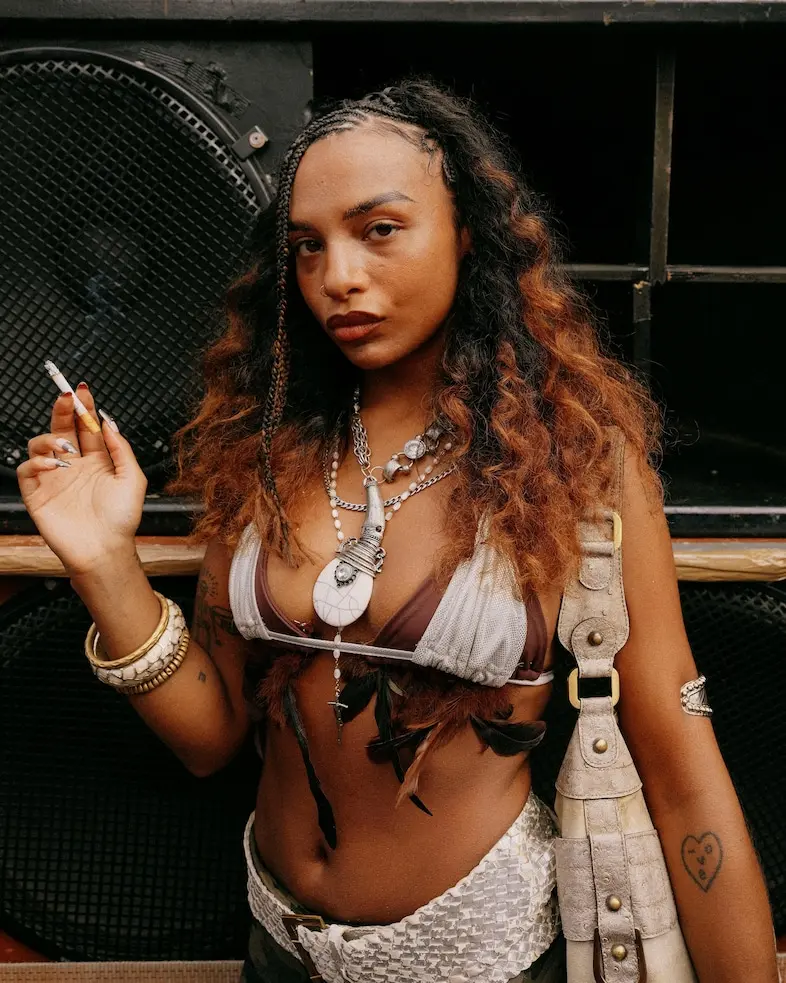
While the music forms the auditory architecture of Carnival, fashion provides its visual language. For photographer Ollie Tikare, who documented the diamond jubilee for Dazed, the fashion on display is a deliberate act of ancestral homage.
"From Jab Jab to Mas, as well as the Caribbean nation flags, the streets are filled with carnival-affiliated attire," Tikare observes. "For many, it’s an opportunity to honour their ancestry and celebrate the vibrancy and colour that glitters throughout much of Afro-Caribbean style."
Unlike fashion week runways dictated by corporate houses, Carnival style is organic, democratic, and fiercely individualistic. Tikare’s lens captured a cross-section of this sartorial subversion:
- Traditional and Transformed Mas: Traditional elements—such as the molasses-covered bodies of Jab Jab revellers—are juxtaposed with contemporary streetwear silhouettes.
- Eclectic Textures and Prints: Multi-striped string t-shirts, high-visibility yellow zebra leggings, and crocheted beanies reflect a seamless blending of 1970s retro aesthetics with modern streetwear trends.
- Subcultural Signifiers: Retro "rude boy" porkpie hats nod to the Windrush generation and early ska/rocksteady subcultures, while Jamaican, Trinidadian, and Barbadian flags are creatively repurposed as headbands, capes, and sashes.
- Synchronized Expression: Groups of friends and family members, such as twins spotted in matching neon-yellow ensembles, utilize coordinated dress codes to build solidarity and visual impact within the crushing crowds.
Official Statements and Stakeholder Perspectives
As the Carnival navigates its seventh decade, its caretakers, organizers, and cultural commentators face the perennial challenge of safeguarding its authenticity against commercial co-optation and bureaucratic red tape.
Matthew Phillip, CEO of Notting Hill Carnival Ltd.
Reflecting on the milestone 60-year legacy, Matthew Phillip has consistently emphasized the grassroots origins of the festival. In various statements addressing the press, Phillip noted:
"Notting Hill Carnival is fundamentally a manifestation of community strength. It was born out of a need for people to reclaim their dignity and their space in a society that tried to marginalize them. Sixty years on, that core message remains unchanged, even as the world around us shifts. Our primary responsibility is to ensure that the heritage of the Caribbean pioneers who built this event is respected, protected, and passed down to the next generation without losing its soul to corporate interests."
Cultural Historians and Sociologists
Dr. Michael McMillan, a prominent playwright, academic, and cultural historian specializing in Caribbean diaspora experiences in the UK, highlights the transformative power of Carnival space:
"When the sound systems fire up on Sunday morning, the spatial politics of London are radically inverted. For two days, Black and brown working-class communities claim the most affluent postcodes in the metropolis. The music, the food, and crucially, the elaborate costumery of Mas are not just entertainment; they are embodied acts of decolonization. You cannot walk through Notting Hill during Carnival and remain passive; you are enveloped in a living history of resistance and joy."
The Law Enforcement and Local Authority Perspective
The Metropolitan Police and local borough councils maintain a complex relationship with Carnival organizers. In recent years, policing strategies have shifted toward a community-first approach, prioritizing cooperation over confrontation. A spokesperson for the Metropolitan Police’s Carnival planning unit stated:
"Our goal is to work hand-in-glove with Notting Hill Carnival Ltd, local residents, and stewards to ensure a safe, secure environment for the millions who attend. We recognize the profound cultural significance of this event, and our operations are designed to support the celebration while maintaining public safety as our top priority."
Future Outlook: Preserving the Soul of Carnival in the 21st Century
As the Notting Hill Carnival looks toward the future, it stands at a critical historical crossroads. The challenges facing the event are multifaceted, touching upon issues of gentrification, rising operational costs, environmental sustainability, and generational handover.
1. Navigating Gentrification and Housing Pressures
The neighborhoods of Notting Hill and North Kensington have undergone radical demographic shifts over the past thirty years. Long-term working-class residents have frequently been priced out by affluent newcomers, some of whom view the annual influx of two million people as a disruption rather than a cultural birthright. Ensuring the continued support of the hyper-local community is vital to the festival’s survival. Organizers must continuously engage with local residents to mitigate disruption while reinforcing that the Carnival predates the current wave of luxury development.
2. Financial and Logistical Sustainability
Mounting expenses related to policing, sanitation, crowd management, and traffic controls place a heavy financial burden on organizers. Unlike state-funded European cultural festivals, Notting Hill Carnival relies heavily on grants, sponsorships, and self-generated revenue. Securing long-term, sustainable funding models that do not compromise the event’s grassroots integrity is an ongoing operational hurdle.
3. Environmental and Waste Management
With over two million attendees consuming food, drink, and novelties across two square miles, the ecological footprint of Carnival is substantial. Modern organizers are increasingly pressured to implement green initiatives—ranging from biodegradable food packaging and zero-waste sound system zones to enhanced recycling infrastructures. Preserving the physical environment of West London without stifling the spontaneity of the street party is a delicate balancing act.
4. Passing the Torch to the Next Generation
Perhaps the most crucial pillar of the Carnival’s future lies in youth engagement. The children of the original founders and Windrush pioneers are now elders, making the transmission of technical skills—such as steelpan tuning, Mas costume construction, sound system engineering, and Caribbean culinary traditions—to Gen Z and Millennial participants an absolute necessity.
As photographer Ollie Tikare’s documentation proves, the youth are more than ready to step into this lineage. By fusing traditional motifs with contemporary street style, modern revellers ensure that the visual and auditory vocabulary of Carnival remains fresh, relevant, and fiercely alive.
Conclusion
For sixty years, the Notting Hill Carnival has survived state hostility, social upheaval, economic recessions, and rapid urban transformation. It endures not merely as a weekend party, but as a monumental testament to the endurance, creativity, and joy of the Caribbean diaspora in Britain. As the heavy basslines echo down the Victorian terraces of West London for decades to come, the Carnival will continue to serve as a vibrant, breathing monument to community power—reminding the world that culture, when rooted in resistance and love, is truly unshakeable.