Executive Overview
The landscape of modern journalism is experiencing a paradigm shift, moving away from traditional, studio-bound broadcasts toward raw, unfiltered, and deeply immersive digital reporting. At the epicenter of this transformation stands Rémy Buisine, a 32-year-old video journalist for the French online media outlet Brut. During the height of the tumultuous French pension reform protests—sparked by President Emmanuel Macron’s decision to bypass a parliamentary vote and raise the retirement age from 62 to 64—Buisine became an indispensable window into the chaos for millions worldwide.
Operating primarily through long-form livestreams on TikTok, Facebook, and the Brut app, Buisine has redefined what it means to cover civil unrest. His boots-on-the-ground approach combines the endurance of an ultra-marathoner with the digital savvy of a native internet creator. Eschewing the safety of press desks and heavily produced packages, Buisine plunges headfirst into teargas-choked frontlines, documenting clashes between protesters and the gendarmerie. This comprehensive report examines Buisine’s pivotal role in covering the Paris protests, tracing his unique journalistic origins, the operational mechanics of his viral livestreams, the inherent physical and psychological tolls of the profession, and the broader implications of real-time social media reporting on the future of global news media.
Detailed Chronology: Anatomy of a Frontline Protest Shift
To understand the mechanics of modern digital reporting, one must examine a day in the life of a frontline livestreamer. The events of April 6, 2027—a day that encapsulates the volatile nature of contemporary French demonstrations—serve as a prime case study.
The Buildup and the Gathering
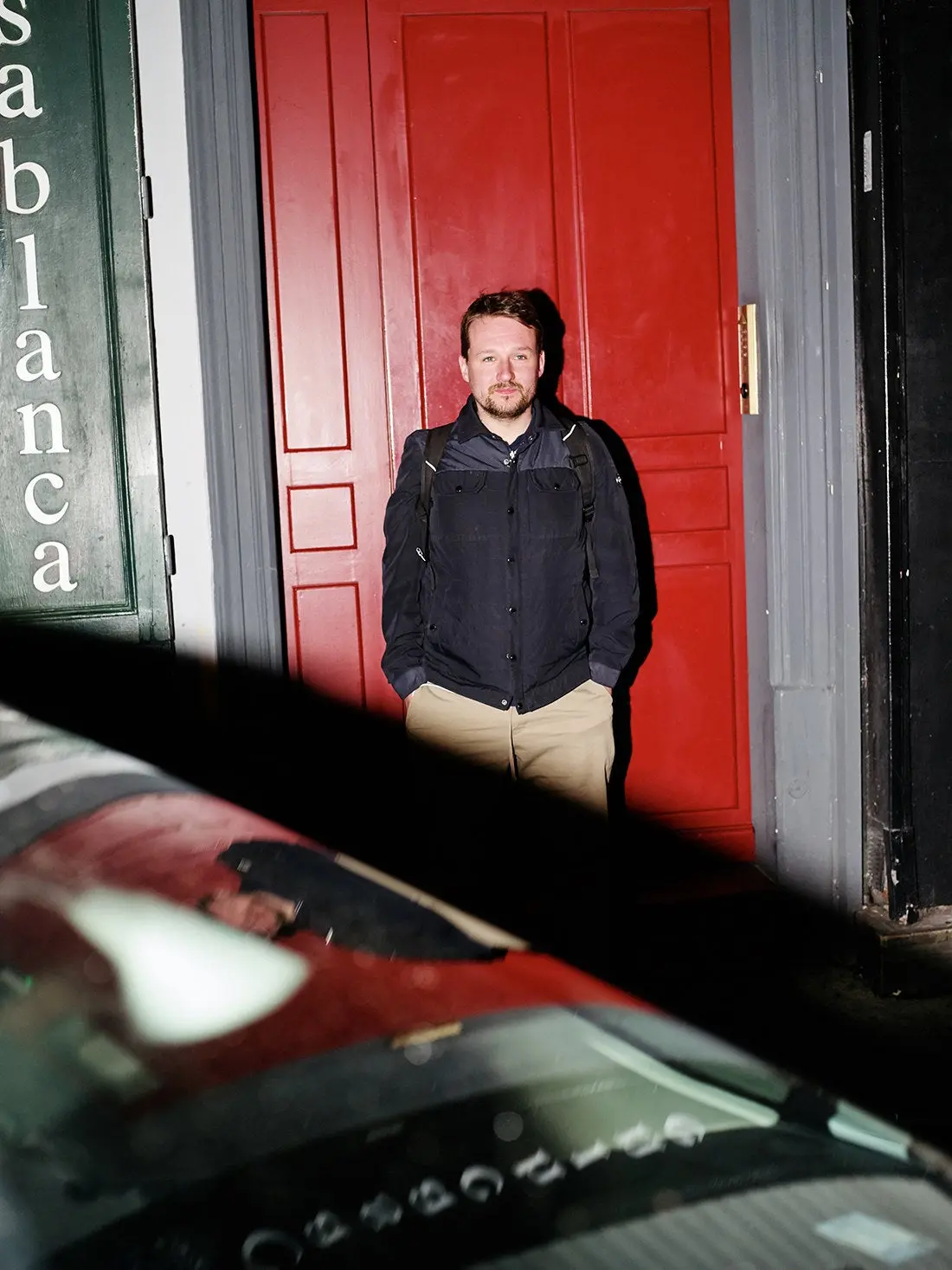
The day’s protest had been in motion for half a heure by the time contact was made with Buisine near the bustling heart of Paris. Despite managing an online audience that ranged from tens of thousands to hundreds of thousands of concurrent viewers, Buisine blended seamlessly into the crowd. Wearing a light navy puffer jacket and blue jeans, devoid of his neon-yellow press armband initially, he navigated a sea of demonstrators numbering anywhere from 57,000 (according to police estimates) to 400,000 (claimed by union organizers).
Before even stopping to coordinate, Buisine managed multiple tasks simultaneously: directing a colleague to capture the rear of the march, engaging with fans and peer medics who recognized him on sight, and utilizing one of his two smartphones to snap pictures of protest signs for the Brut Instagram account.
Approaching the Frontlines: Montparnasse to Vavin
As the march neared Montparnasse station, the atmosphere shifted perceptibly. Pausing briefly near the Brut offices, Buisine equipped himself for the inevitable escalation: hermetically sealed safety goggles, a gas mask slung over his neck, and a specialized tear gas decontaminant spray secured in his jacket pocket.
At precisely 3:29 p.m., a loud, concussive blast echoed down the boulevard. The crowd erupted into jeers and chants of "ACAB," distorted by heavy French accents into a rhythmic ah-caaaaah-buh. Ahead, near the Café de la Rotonde, a contingent of the gendarmerie—a militarized police force—formed a solid wall across the boulevard with riot shields raised. A group of masked youths dressed entirely in black lingered near the Vavin metro station exit, their tension palpable.
The Escalation and the Stream
At 3:37 p.m., the gendarmerie fired their first unmistakable warning shots. While apprehensive protesters fell back, Buisine instinctively pushed forward, his phone already raised to record the unfolding confrontation. As black-clad youths materialized at the vanguard—one rhythmically banging a metal barricade against the asphalt—the situation crossed the threshold from march to melee.
Within minutes, the first tear gas canisters arched into the crowd. Buisine was already live, his broadcast capturing the searing sparks of pyrotechnics against the gathering dusk. For the next seven and a half hours, he walked more than 28,000 steps, dodging projectiles, navigating police kettles at the Place d’Italie, interviewing defiant demonstrators and un-sashed members of parliament alike, and ultimately logging off at 10:54 p.m. after amassing 1.8 million views on TikTok alone. Yet, even after the official stream ended, Buisine remained on the streets, filming until a fresh volley of tear gas finally drove him toward a brief, restless pause at a local kebab shop.
Supporting Context & Metrics: The Rise of Brut and the Digital Generation
The Genesis of a Digital Pioneer
Buisine’s journey to becoming a globally recognized digital journalist is as unconventional as his reporting style. Growing up in a rural village in northeastern France without connections to traditional media networks, Buisine struggled within the conventional academic system. After graduating from a horticultural technical high school, he broke into the media landscape by managing social media accounts for soccer players before transitioning to community management for Parisian radio stations in 2013.
His big break came in 2015 during the El Khomri labor law protests. Capitalizing on the nascent livestreaming app Periscope, Buisine began broadcasting the demonstrations in his spare time. He learned the craft on the ground, gauging audience desires through real-time comment sections and seeking tactical advice from veteran reporters covering the same beats. His gritty, unfiltered livestreams caught the attention of digital executives, leading him to become a founding member of Brut in 2016.
Metrics of Engagement and the TikTok Explosion
Brut’s initial existence purely on social media platforms confounded the traditional French political establishment. Politicians were initially wary of engaging with a medium they neither understood nor controlled. However, the outlet’s influence expanded exponentially; by 2020, Buisine was leading a landmark two-and-a-half-hour livestreamed interview with President Emmanuel Macron.
The pension reform protests served as a massive catalyst for Brut’s digital footprint. During a single month of intense coverage, Brut’s TikTok account gained one million new followers, surging to 4.2 million. Single streams regularly hooked upwards of 70,000 concurrent viewers at their peak, proving that younger generations—often alienated by traditional print and television broadcasts—prefer long-form, real-time digital documentation.
Official Statements and Institutional Perspectives
The intersection of real-time social media streaming, civil unrest, and law enforcement has drawn mixed reactions from institutional authorities and media watchdogs alike.
Government and Law Enforcement Reactions
The French government has walked a fine line regarding digital journalists operating outside traditional press corps hierarchies. While laws exist to protect accredited members of the press, digital creators like Buisine often find themselves caught in the crossfire of police tactics designed to disperse hostile crowds. Law enforcement agencies have repeatedly defended their use of crowd-control measures—including tear gas, flash-bangs, and batons—citing the presence of violent fringe elements, such as the blocs noirs (black bloc protesters), who systematically target property and infrastructure.
Official statements from the Ministry of the Interior emphasize the duty of security forces to maintain public order amidst escalating violence, pointing to incidents such as the burning of the Café de la Rotonde awning and attacks on banking institutions as justifications for aggressive containment strategies like kettling.
The Journalistic Community’s Evolution
Traditional journalism syndicates have been forced to adapt to the reality of independent and platform-native reporters. Veteran journalists have increasingly recognized that creators like Buisine fill a crucial generational gap. Prominent young voices on the ground, such as 18-year-old activist Ritchy Thibault, have noted that traditional media outlets often distill protests into brief, sensationalized soundbites, whereas Buisine offers citizens an uninterrupted platform to articulate their grievances at length.
Future Outlook: The Evolution of Immersive Reporting
As the lines between creator culture and frontline journalism continue to blur, the trajectory of media consumption points decidedly toward hyper-immersive, platform-native reporting. Rémy Buisine’s relentless schedule—transitioning seamlessly from the tear-gassed streets of Paris to a building collapse disaster zone in Marseille—underscores the grueling physical and psychological demands placed upon modern digital correspondents.
Key Trends Shaping the Future of Digital Journalism:
- The Disintermediation of News: Audiences increasingly distrust curated, heavily edited news packages, favoring unedited, real-time livestreams where viewers can witness events as they unfold without editorial filtering.
- Platform Dependency and Algorithm Shifts: Outlets like Brut rely heavily on algorithms dictated by private tech giants (TikTok, Meta). Changes to these algorithms can dramatically alter the reach of critical socio-political reporting overnight.
- The Mental Health Toll of Hyper-Connectivity: Frontline digital journalists working in solitary, always-on environments face severe risks of burnout, adrenaline exhaustion, and secondary trauma—challenges that traditional newsrooms are only beginning to address.
- Interactive Accountability: The direct dialogue between streamer and audience—facilitated by live comment feeds—creates an unprecedented feedback loop, transforming passive viewers into active participants in the journalistic process.
Ultimately, the phenomenon surrounding Rémy Buisine demonstrates that the future of journalism does not lie within the sterile confines of a television studio, but in the chaotic, unpredictable, and deeply human crucible of the streets. As social media platforms continue to mature as primary news sources, the demand for authentic, courageous, and transparent reporting will only continue to accelerate.