Executive Overview
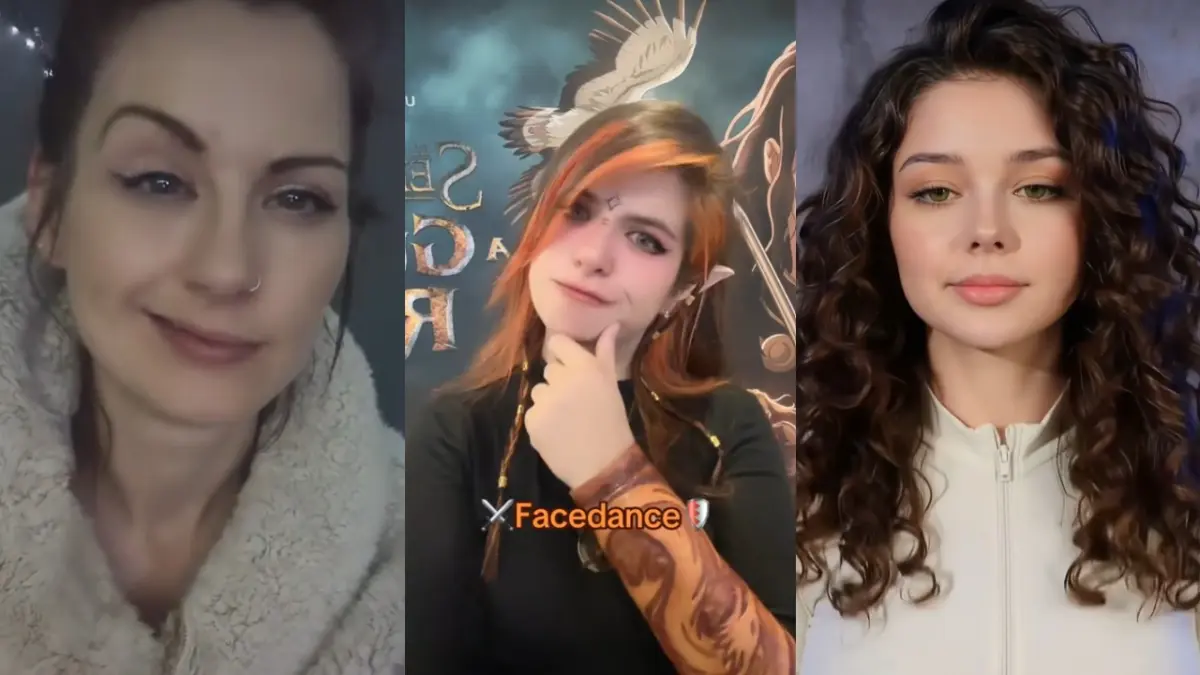
In the continuously shifting landscape of internet culture, where micro-trends emerge, peak, and fade within a matter of weeks, few phenomena have proven as polarizing or persistent as Face Dancing (alternatively spelled facedancing). Characterized by the deliberate, highly exaggerated, and rhythmic contortion of facial features—often paired with lip-syncing or performed to the beat of an upbeat track—face dancing treats the human face as a standalone instrument of choreography.
What began as a niche mobile gaming trend in mid-2017 has evolved into a multi-platform subculture, closely intertwined with the related internet phenomenon known as "word chewing." From the viral heights achieved by top-tier influencers like Bella Poarch in the early 2020s to the recent polarization sparked by creators like Miny Naranja on TikTok and X, face dancing has cemented its place in the modern digital lexicon.
This deep-dive investigation explores the origins, global spread, cultural reception, and broader implications of face dancing. By examining how this performance art form has navigated the waters of virality, algorithmic amplification, and online critique, we gain insight into the evolving nature of digital self-expression and the fine line between entertainment and discomfort in the social media age.
Detailed Chronology: From Mobile Gaming to Viral Phenomenon
The trajectory of face dancing is a testament to how mobile technology and social media algorithms can elevate a localized novelty into an international sensation.
Phase 1: The Genesis and the App-Driven Spark (2017)
While human beings have historically used facial expressions for comedic and theatrical purposes, the formalized concept of "face dancing" as a synchronized digital activity traces its roots to late 2017. In August of that year, the mobile application market was introduced to the Face Dance Challenge app.
Operating as a facial recognition rhythm game, the application required users to match specific facial expressions—ranging from wide-eyed shock to compressed smirks—in real-time as a musical track played. The app quickly captured the attention of digital creators across Asia. The resulting videos, showcasing users frantically contorting their faces to hit digital visual targets, spread rapidly across regional social networks, establishing the foundational template for what would later become a standalone video format.
Phase 2: The TikTok Explosion and Early Adopters (2020)
As short-form video platforms like TikTok consolidated their dominance over global youth culture, face dancing transitioned from an app-dictated mechanic to a free-form performance art. On May 22, 2020, creator @reitergrace uploaded an early face-dancing video that showcased the comedic and hypnotic potential of rapid, beat-matched expressions. Though modest by modern algorithmic standards at the time, the video laid the groundwork for future experiments.
The tipping point for mainstream recognition occurred on August 17, 2020, when social media influencer Bella Poarch uploaded her iconic "M to the B" video. Though the video was eventually removed from the platform, it had already amassed an estimated 500 million views, making it one of the most-watched TikTok videos in history. Poarch’s signature rhythmic head-bobbing and intensely focused, shifting facial expressions demonstrated the magnetic pull of face dancing, inspiring millions of users to attempt their own variations of the trend.
Phase 3: Institutionalization and Niche Mastery (2022–2025)
As the trend matured through the mid-2020s, a specialized class of creators emerged who dedicated their online personas almost entirely to the craft. Among the most prominent figures of this era is TikToker Miny Naranja, whose October 28, 2022, face-dancing upload pulled in over 43 million views. Naranja’s commitment to hyper-stylized, energetic facial choreography established a high watermark for the genre.
The trend continued to ripple outward into the broader creator ecosystem. On May 2, 2025, prominent lifestyle and comedy creator @abbyvatterott published a face-dancing video set to a classic pop track, generating over 2.2 million views. By this point, face dancing was no longer viewed merely as a passing fad, but as a recognized subgenre of digital performance, maintaining a steady pipeline of content and sustaining dedicated digital communities.
Phase 4: Mainstream Discourse and Cultural Backlash (2026)
By August 2026, face dancing reached a critical inflection point, transitioning from niche digital appreciation to broader cultural debate. On August 24, 2026, X (formerly Twitter) user @ElMichalito shared a clip of Miny Naranja performing her signature routine at a live gathering. Accompanying the video was a critique that resonated with a skeptical segment of the internet: "For God’s sake, how UNCOMFORTABLE this video makes me feel, I don’t understand how there are people who dedicate themselves to doing this."
The post quickly ignited a firestorm of online discussion, generating over 18,000 likes within a week. The discourse highlighted a generational and philosophical divide in how internet users consume performance art. While critics expressed visceral discomfort—frequently citing the "uncanny valley" effect—defenders quickly mobilized. On August 25, 2026, X user @DTM_Woodworks published a counter-statement that garnered widespread support: "I don’t understand the hate for this girl. Apparently ‘face dancing’ is a thing now and she is really good at it. She’s performing for a group of kids and has 1.6 mil followers on Instagram. If it’s not your thing, don’t watch it. Let her do her thing!"
This August 2026 flashpoint cemented face dancing as a permanent fixture of internet sociology—a phenomenon capable of provoking genuine delight among its target demographics while simultaneously triggering profound aesthetic dissonance among casual observers.
Supporting Context & Metrics: The Anatomy of an Algorithmic Trend
To fully understand face dancing, one must analyze the mechanics of its distribution and its structural overlap with adjacent internet subcultures.
The Metrics of Virality
The quantitative footprint of face dancing is marked by exponential engagement metrics across multiple platforms:
- Bella Poarch’s "M to the B" (2020): Surpassed an estimated 500 million views before its deletion, serving as the blueprint for rhythmic facial performance.
- Miny Naranja’s Breakthrough (October 2022): Garnered upwards of 43 million views on TikTok alone, establishing a dedicated multi-million-follower cross-platform audience spanning TikTok and Instagram.
- Abby Vatterott’s Adaptation (May 2025): Secured over 2.2 million views, proving the concept’s ongoing viability among mainstream Western comedy and lifestyle creators.
- The 2026 Discourse Surge: A single critical post on X by @ElMichalito generated 18,000 likes in seven days, immediately countered by supportive commentary capturing thousands of engagements and shifting the narrative toward creator autonomy.
Overlap with "Word Chewing"
Face dancing does not exist in a vacuum. It shares a deeply symbiotic relationship with word chewing (or wordchewing), another performance trend characterized by exaggerated, theatrical articulation and mouth movements synchronized with spoken audio or music lyrics.
The digital infrastructure supporting these communities is robust. The subreddit r/Wordchewing, established in 2022, serves as an archival and discussion hub for content comparable to face dancing. A significant overlap exists between the userbases of face-dancing creators and word-chewing enthusiasts. Both genres rely heavily on close-up camera framing, rapid muscular control of the face, and a hyper-expressive presentation style that breaks traditional social conventions of passive, neutral facial rest.
Official Statements and Social Commentary
The cultural reception of face dancing has been characterized by a sharp dichotomy between participatory enthusiasm and observer dissonance. Industry analysts and digital anthropologists view the trend through several distinct lenses:
The Pro-Creator Perspective: Performance Art and Joy
Defenders of face dancing—such as the viral commentary provided by community members on X and Instagram—argue that the practice requires genuine physical coordination, stamina, and timing. Proponents emphasize that face dancing is often performed in lighthearted, community-oriented settings, such as children’s parties or casual get-togethers, where the goal is direct entertainment rather than high-art solemnity.
As noted by online defenders during the August 2026 discourse:
"She’s performing for a group of kids and has 1.6 mil followers… If it’s not your thing, don’t watch it. Let her do her thing!"
This perspective frames face dancing as an innocent extension of physical comedy, pantomime, and dance choreography adapted specifically for the vertical, close-up framing of modern mobile screens.
The Skeptical Perspective: The "Uncanny Valley" and Parasocial Fatigue
Conversely, critics frequently articulate a sense of profound unease when exposed to face-dancing content. This reaction is often rooted in the psychological phenomenon of the uncanny valley—the hypothesis that human replicas which appear almost, but not quite, like real human beings elicit feelings of eeriness and revulsion.
Because face dancing deliberately subverts natural facial micro-expressions in favor of rapid, robotic, or hyper-exaggerated contractions, it can trigger cognitive dissonance in viewers accustomed to reading human faces for emotional authenticity. Furthermore, the close-up nature of the performance eliminates standard personal space boundaries, creating a sense of forced intimacy that some users find overwhelming or irritating.
Future Outlook: Where is Face Dancing Headed?
As social media algorithms continue to favor high-stimulation, visually arresting content that captures attention within the first second of playback, the underlying incentives driving face dancing remain firmly in place.
- Platform Diversification: While TikTok and Instagram Reels have served as the primary incubators for face dancing, emerging short-form video ecosystems and live-streaming platforms are increasingly integrating these micro-performances into interactive fan engagement.
- Technological Integration: With the rapid advancement of augmented reality (AR) filters, AI-driven facial tracking, and real-time digital avatars, the line between biological face dancing and digital face swapping is beginning to blur. Future iterations of the trend may see creators augmenting their physical face dances with real-time digital effects, pushing the boundaries of visual rhythm games first established in 2017.
- Persistent Cultural Polarization: As long as creators continue to push the limits of facial expressiveness, face dancing will likely remain a cultural lightning rod. It serves as a living laboratory for digital self-expression—simultaneously celebrated as a joyous, kinetic art form and critiqued as a symptom of the increasingly theatrical nature of online existence.
Ultimately, face dancing challenges our collective understanding of communication, performance, and personal presentation. Whether viewed as an impressive feat of facial choreography or an exercise in digital absurdity, the phenomenon has permanently altered how millions of people around the world interact with the rhythm of the modern media landscape.