Executive Overview
The rapid democratization of artificial intelligence has fundamentally altered the digital knowledge economy. Tools like ChatGPT and Claude have commoditized basic information, making it possible for virtually anyone to generate a passable marketing pitch, draft a foundational content strategy, or analyze market data within seconds. However, this proliferation of generic output has created a secondary crisis: the validation problem. While anyone can prompt an LLM to generate a first draft, users lack the empirical frameworks to know whether that output is actually effective.
Enter the era of expert-backed AI. By embedding a seasoned professional’s hard-won frameworks, proprietary decision-making patterns, and tested methodologies directly into AI tools, creators are shifting the digital business model from passive education to active implementation.
According to insights shared by brand and marketing strategist Kelly Sinclair on the AI Explored podcast—co-created with Michael Stelzner—this evolution is yielding dramatic results. While traditional digital courses suffer from notoriously low completion rates—averaging between 10% and 20%—integrating AI implementation tools into the learning experience catapults completion rates to an impressive 70% to 80%.
By organizing these tools into connected workflows known as "bot squads," modern experts are replacing one-time digital courses with recurring revenue subscription models. This in-depth report explores the diagnostic framework for identifying productization opportunities, the structural mechanics of building user-agnostic tools that yield user-specific results, and the technical pathways available for bringing these assets to market.
Detailed Chronology: The Evolution from Passive Courses to Active AI Implementation
The transition from selling static educational content to dynamic AI workflows represents a structural maturation in how knowledge is packaged, sold, and consumed online.
The Commoditization of Knowledge and the Validation Gap
For years, digital creators packaged their expertise into e-books, video courses, and masterclasses. The core value proposition was simple: teach people how to think. Yet, this educational model ignored a persistent behavioral bottleneck—the execution phase.
When a customer finishes a traditional course, they are routinely met with a blank page. They understand the theory, but translating abstract frameworks into bespoke, real-world execution requires high cognitive load. Generic AI models exacerbated this issue. While a user could ask a general-purpose LLM for marketing advice, the resulting output lacked context, nuance, and structural rigor.
Sinclair identifies expert-backed AI as the direct antidote to this friction. By baking an expert’s proprietary methodologies into a tailored AI tool, creators bridge the chasm between education and implementation. The tool does not merely offer general best practices; it executes the expert’s specific, tested process on behalf of the user.
The Rise of "Bot Squads" and the Subscription Revolution
Rather than deploying isolated, single-prompt chat interfaces, pioneering experts are constructing "bot squads"—interconnected suites of AI tools designed to guide clients through complex, multi-step business processes.
This architectural shift enables a profound business model transformation. Historically, digital course creators relied on launch-dependent, one-time sales. Because course completion rates languished below 20%, customer lifetime value was difficult to sustain, and refund rates remained a constant operational drag.
By wrapping bot squads in a subscription model, experts create sticky, high-retention software-like experiences. Clients maintain their subscriptions because the tools continually reduce daily operational friction. Meanwhile, the expert transitions from an exhausted educator answering repetitive foundational questions to a high-level strategist leading office hours, group coaching, and strategic oversight.
Supporting Context & Metrics: Diagnosing Friction and Structuring Success
Before building an AI-powered tool, creators must pinpoint exactly where automation will deliver the highest return on investment for their client base. Sinclair outlines four critical diagnostic questions—surfaceable through a strategic dialogue with any large language model—that target distinct psychological and operational friction points in the client journey.

The Four Diagnostic Friction Points
- Repetition: This targets areas where clients repeatedly ask the same baseline questions. Automating these inquiries frees up human capital while delivering immediate, customized answers tailored to each client’s specific context.
- The Implementation Gap: This surfaces the exact juncture where clients receive a strategic blueprint but fail to execute. AI tools provide the necessary momentum to guide clients step-by-step through execution rather than abandoning them with a static PDF.
- The Skip Zone: Every expert encounters essential steps that clients treat as optional because they perceive them as burdensome. By removing "blank-page syndrome" and generating an instant first draft, AI tools drastically lower perceived effort and eliminate avoidance behaviors.
- The Confidence Gap: Some clients possess the intellectual grasp of a process but lack the self-assurance to execute it. Timely validation, feedback, and interactive guidance from an AI tool bridge this psychological divide.
The IPO Framework: Input, Process, Output
Once an opportunity is diagnosed, the tool must be architected using the IPO framework (Input, Process, Output). This methodology ensures that the resulting software is user-agnostic in its operational mechanics while remaining strictly user-specific in its deliverables.
- Input: The variable data provided by the customer—such as business descriptions, target audience parameters, raw data sets, or intake survey responses. This input personalizes the resulting interaction.
- Process: The core repository of the expert’s proprietary value. It consists of three pillars:
- The Goal: A clearly defined objective establishing the tool’s singular job.
- Instructions: Granular, explicit operational guidelines directing how the tool should behave.
- Training Resources: Exemplar assets used to train the tool, including coaching call transcripts, foundational course materials, templates, worksheets, and examples of high-performing outputs. The rigor of these training materials dictates the reliability of the tool.
- Output: The final, tangible deliverable handed to the customer—whether a refined messaging document, a targeted pitch draft, an operational audit report, or a comprehensive content plan. Defining this deliverable upfront dictates what inputs must be collected and how the process must be engineered.
Official Case Studies: Real-World Applications of Expert AI
To understand how the IPO framework and bot squads operate in practice, consider three distinct implementations from industry professionals:
- Michelle’s "Moxie" Bot (Messaging Strategy): Holding a doctorate in communications, messaging strategist Michelle faced a recurring client objection: comprehensive messaging work takes months. To solve this, she built "Moxie." Clients conduct voice-of-customer research and input their findings into the tool. Moxie analyzes the raw data using Michelle’s specialized methodology, extracting core behavioral patterns and transforming them into immediate, actionable marketing copy without requiring the client to learn complex qualitative research analysis.
- Kelly’s "Valerie the Visibility Auditor" (Visibility Strategy): Recognizing that clients continually defaulted to low-ROI daily social media posting over high-impact activities like podcast guesting and strategic collaborations, Kelly built Valerie. The tool reviews a client’s weekly activities, evaluates them against an expert ROI framework, and actively redirects their efforts toward higher-leverage visibility strategies.
- Nicole’s Multi-Step PR Bot Suite (Public Relations): PR coach and journalist Nicole engineered a three-bot workflow. The first bot conducts an intake sequence to generate a customized media messaging document. This document feeds directly into a second bot, which searches and verifies podcast opportunities uniquely aligned with the client’s niche topics rather than relying on generic popularity metrics. Finally, a third bot drafts personalized pitches in the client’s authentic voice, drawing directly from the initial messaging guide.
Future Outlook: Building, Testing, and Scaling AI Infrastructure
Choosing the correct technical delivery method is the final hurdle in bringing an expert-backed AI tool to market. Creators generally navigate three primary pathways, each carrying distinct operational tradeoffs.
1. Custom GPTs
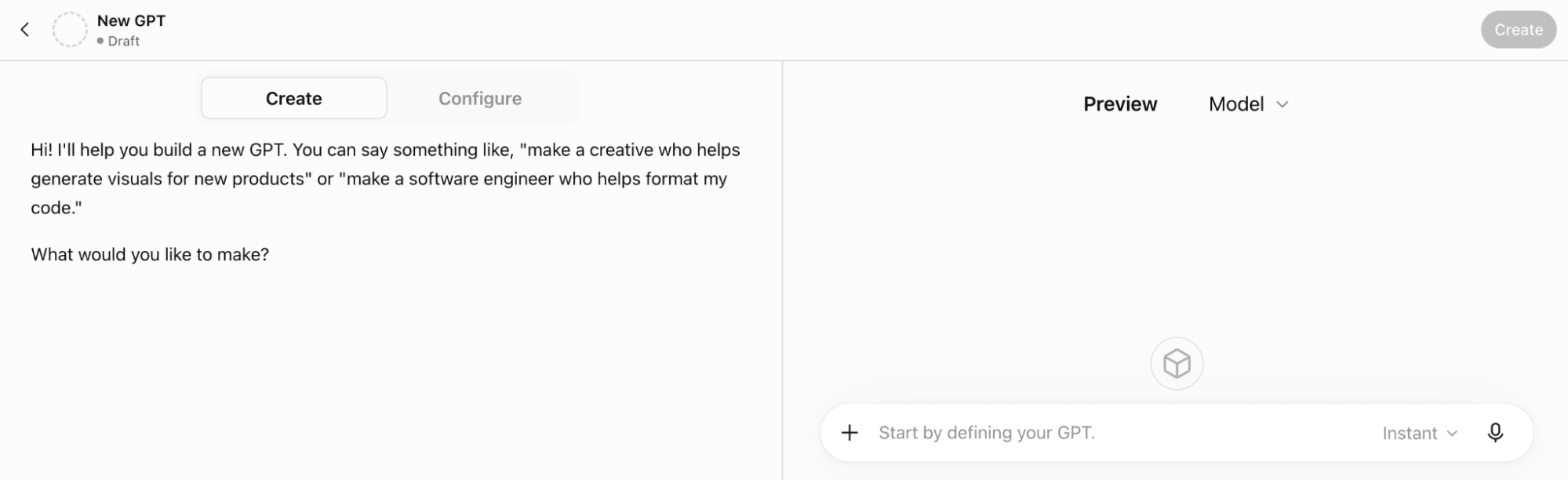
Built directly within ChatGPT, Custom GPTs offer the lowest barrier to entry. Creators can spin them up conversationally using the IPO framework. However, their limitations are pronounced: they function as siloed, single-job units. Multi-step processes require users to manually copy and paste outputs between different GPT links. Furthermore, managing intellectual property access, preventing unauthorized link sharing, and insulating tools against OpenAI’s underlying model updates introduce ongoing maintenance overhead. They serve best as low-stakes proofs of concept.
2. Claude Skills
Claude Skills represent a significant technical upgrade, enabling multi-agent orchestration where several automated steps occur within a single connected workflow. Furthermore, skills are increasingly portable across multiple major AI platforms (such as ChatGPT and Gemini). While this model allows creators to update their methodology dynamically for subscribers, it does involve handing over a structured package of intellectual property, requiring creators to evaluate their comfort level regarding framework distribution.
3. Custom Software & "Vibe Coding"
For creators seeking complete intellectual property protection and advanced user management, standalone software platforms built via "vibe coding" tools (such as Lovable, Claude Code, and OpenAI Codex) offer a robust alternative. These platforms handle hosting, multi-tenancy (isolating individual client data securely), and access control. Platforms purpose-built for creators—such as wAIv by Gravia Studio—allow experts to construct multi-step bot squads, manage subscriber dashboards, revoke access for churned users, and dynamically route tasks to cost-effective AI models (like utilizing lighter models for intake steps and advanced models for complex analysis).
The Imperative of Non-Deterministic Testing
Regardless of the chosen technical infrastructure, creators must prioritize exhaustive testing. Because large language models are inherently non-deterministic—meaning identical prompts can yield varying results—multiplying user inputs across a diverse client base magnifies output variability. Experts must build rigorous guardrails into the process layer, testing the tool against dozens of edge-case inputs to ensure the resulting outputs consistently meet professional standards.
As the digital knowledge economy continues to mature, experts who successfully bridge the gap between static education and automated, expert-backed implementation will capture outsized market share, transforming their hard-earned insights into scalable, recurring-revenue digital assets.