Executive Overview
Every August bank holiday weekend, the tarmac of West London undergoes a staggering metamorphosis. The quiet, pastel-hued Victorian terraces of Notting Hill are abruptly swallowed by an ocean of kaleidoscopic color, the seismic vibrations of heavyweight sound systems, and a sartorial display that effortlessly fuses Caribbean heritage with contemporary youth culture. This year marked a momentous milestone in the storied history of this global cultural phenomenon: the 60th anniversary of the Notting Hill Carnival.
Despite six decades of institutional friction, gentrification pressures, and shifting socio-political landscapes, the 2024 iteration proved that the festival remains as defiantly vibrant, culturally vital, and aesthetically boundary-pushing as ever. As Europe’s largest street festival, the Carnival is far more than a weekend-long party; it is a living, breathing archive of Black British resilience, an acoustic cathedral of Caribbean pride, and an unrivaled runway for grassroots street style.
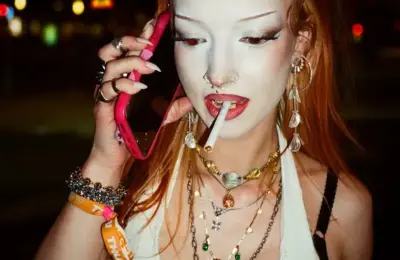
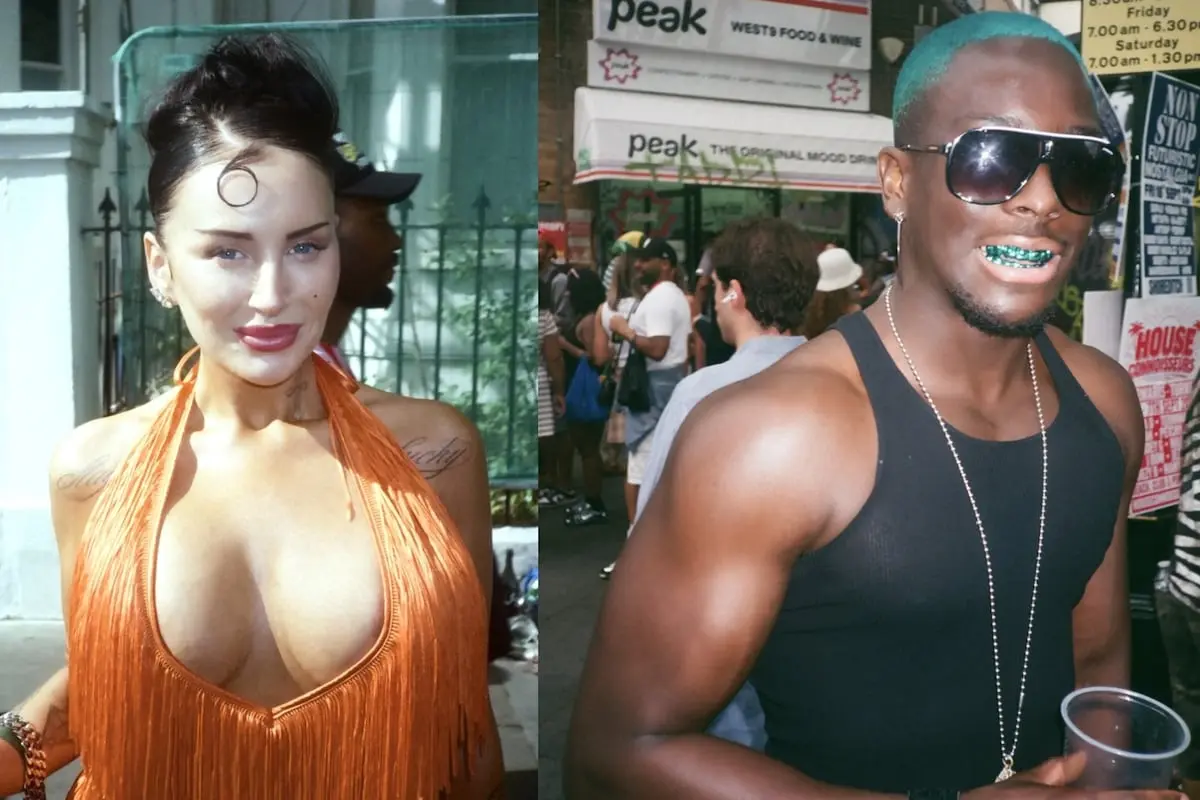
Amidst the sea of revellers navigating the legendary routes between the Deviation and Rampage sound systems, a sharp-eyed street-style delegation—including photographer Rae Martins Ashton—was on the ground to document the vanguard of modern Carnival fashion. From avant-garde grooming and Gen Z micro-trends to timeless expressions of natural Black hair artistry, the aesthetic landscape of Carnival 2024 offered a fascinating sociological blueprint of contemporary identity.
This comprehensive report explores the anatomy of the diamond anniversary of Notting Hill Carnival. Through detailed chronological tracking, rigorous cultural context, deep-dive sociological metrics, first-hand commentary, and an analytical look toward the future, we examine how a community-led protest against racial injustice evolved into an international beacon of joy, style, and cultural autonomy.
Detailed Chronology: The Evolution of a Weekend
To truly understand the magnitude of the 60th anniversary, one must trace the architectural rhythm of the weekend itself—a carefully choreographed dance of history, sound, and endurance that unfolds over three distinct phases.
Saturday: The Prelude and Panorama
While the official street parades occur on Sunday and Monday, the modern Carnival experience has increasingly embraced the Saturday as a vital historical bridge. The weekend kicked off with the annual Panorama steel band competition, held at Emslie Horniman’s Pleasance park. Here, the sheer auditory mastery of the steel pan—an instrument born out of ingenuity and political resistance in Trinidad and Tobago—set a high artistic bar for the weekend.
As dusk settled, the streets hummed with anticipation. Sound system operators finalized their towering wall-of-sound speaker stacks, testing frequencies that would soon rattle the foundations of local Georgian townhouses. For the fashion-forward crowd, Saturday served as the quiet before the storm: a time for low-key arrivals, intimate sound system pre-parties, and the strategic planning of weekend wardrobes designed to withstand miles of walking, unpredictable British weather, and intense physical dancing.
Sunday: Family Day and the Vanguard Arrives
Traditionally designated as "Family Day," Sunday offers a more accessible, community-focused entry point into the Carnival labyrinth. The morning air was filled with the scent of jerk chicken, roasting corn, and sweet plantain long before the first percussionist struck a drum.
As families, children, and elders lined the streets in coordinated bright outfits, the vanguard of the London creative scene began to infiltrate the crowds. Spotted amongst the shifting tides of revellers were prominent figures from the cultural zeitgeist, including rising music sensation Sekou, avant-garde designer and tastemaker C.FRIM, I Kissed a Girl star Fiorenza Cocozza, and style icon TJ Sawyerr.
Down on the asphalt, positioned strategically between the historic hubs of the Deviation and Rampage sound systems, street-style documentarians captured the raw, unfiltered aesthetic of the crowd. Sunday’s fashion was defined by a fearless juxtaposition: elders draped in traditional Caribbean flags and crochet garments walking shoulder-to-shoulder with Gen Z youth sporting cyber-futuristic accessories, face piercings, and meticulously engineered natural hair architectures.
Monday: The Grand Finale and the Road
Monday is the beating heart of the beast—the Grand Finale where Notting Hill reaches absolute saturation. By midday, the air was thick with talcum powder, smoke from barbecue grills, and the rhythmic percussion of mas bands covered in feathers, beads, and body paint.
The energy on Monday is historically relentless. Navigating the gridlock of revellers requires both physical stamina and spatial awareness, yet the crowd’s collective euphoria transforms the narrow residential streets into an egalitarian utopia. As the sun began to dip below the West London skyline, casting a golden hue over the sweat-slicked, glittering crowds, the sound systems pushed their decibel limits higher. The final hours of Carnival Monday encapsulated the spirit of the 60-year milestone: an unbroken chain of generational revelry that refused to fade quietly into the night.
Supporting Context & Metrics: The Anatomy of a 60-Year Legacy
Historical Roots: From Resistance to Revelry
The genesis of Notting Hill Carnival is inextricably linked to the struggle against racial hostility in post-war Britain. In the wake of the 1958 race riots—when fascist gangs terrorized the Caribbean immigrant community in Notting Hill—activists and visionaries sought a powerful antidote to state-sponsored and societal racism.
Pioneers like Claudia Jones, often celebrated as the "Mother of Notting Hill Carnival," organized indoor indoor Caribbean art and culture symposiums in the late 1950s to foster solidarity. This evolved in the mid-1960s into the outdoor street celebrations spearheaded by social worker Rhaune Laslett, who envisioned a festival that would "let the people blow off steam" and celebrate multi-ethnic unity. Over the decades, the event transitioned from a localized West Indian community festival into a global tourist attraction, weathering political pushback, heavy-handed policing, and bureaucratic hurdles to retain its radical soul.
Sartorial Sociology: The Aesthetics of Carnival 2024
Fashion at Notting Hill Carnival is not merely decorative; it is a profound visual language. The street style documented during the 60th anniversary showcased a fascinating dialogue between subcultural preservation and hyper-modern youth aesthetics.
Hair culture stood out as a primary canvas for artistic expression. Eschewing European grooming standards entirely, creative natural hairstyles dominated the landscape. Monumental mohawks, intricate layered braids, gravity-defying afros, edgy rat tails, and blinding neon hair dyes transformed heads into walking sculptures.
Accessorizing took on a distinct Gen Z twist. Alongside traditional Caribbean-inspired body gems, bold grillz, and dramatic facial piercings, photographers noted an explosion of brow modifications—specifically sharp brow slits and bleached brows that lent revellers an ethereal, sci-fi edge. Most uniquely, the humble pimple patch—typically used as a functional skincare item among Gen Z—was repurposed as a high-fashion cosmetic accessory, arranged in constellation patterns across cheeks and noses.
As photographer Rae Martins Ashton eloquently observed during a previous retrospective that rings just as true today:
"Notting Hill Carnival has been, and likely will always be, the biggest showcase of Black British culture, fashion and beauty in the UK. Somewhere for us to celebrate our identity, while being able to compare it to our parents, grandparents and others that came before us – a cross-generational celebration of cultures typically lacking authentic representation for the additional 363 days of the year."
Quantitative Metrics of the 2024 Event
To comprehend the sheer scale of the 60th anniversary, one must look at the data underpinning the logistical behemoth:
- Duration: A 3-day cultural immersion (including Panorama and the 2 main parade days).
- Footfall: An estimated two million attendees converge on West London over the weekend, making it one of the largest public street events in the world.
- Sound Systems: Over 30 static sound systems, ranging from legendary reggae and dancehall setups like Rampage and Channel One to cutting-edge afrobeats, house, and hip-hop rigs.
- Economic Impact: The festival injects an estimated £100 million into the London economy, supporting local hospitality, travel, and creative industries.
- Security & Infrastructure: Thousands of Metropolitan Police officers, St John Ambulance personnel, and private stewards work around the clock to manage crowd control and public health across a multi-mile radius.
Official Statements and Cultural Commentary
The milestone 60th anniversary prompted an outpouring of reflections from organizers, cultural historians, artists, and civic leaders regarding the past, present, and future of the institution.
The Organizers and Mas Bands
Representatives from London Notting Hill Carnival Enterprises Trust (LNHCET) emphasized the immense labor required to keep the tradition alive against the backdrop of modern urban development. In an official briefing leading up to the bank holiday, organizers highlighted the crucial role of mas (masquerade) bands and sound system operators who pass down technical and artistic knowledge through family lines.
"Carnival is an ancestral inheritance," noted a senior LNHCET spokesperson. "For sixty years, governments have tried to institutionalize it, corporate entities have tried to sponsor it into submission, and gentrifiers have tried to price us out of the neighborhood. Yet, every single August, the people reclaim these streets. We are not just throwing a party; we are asserting our permanent right to exist, to create joy, and to occupy space in a city that often tries to render us invisible."
Artists and Style Vanguard
For the contemporary creatives spotted wandering the route—such as musician Sekou and designer C.FRIM—Carnival represents an irreplaceable masterclass in style inspiration. Speaking to culture press on-site, participants noted how global runway trends frequently trace their lineage back to the spontaneous styling choices made by Black youth on the streets of London, Kingston, and Port of Spain.
"You can’t manufacture this energy in a brand boardroom," remarked one participating designer. "What you see here—the mix of vintage sportswear, handmade crochet, high-end jewellery, and raw body modification—is pure, unadulterated instinct. London street style doesn’t follow a seasonal calendar; it is dictated by the bassline."
Future Outlook: Safeguarding the Next 60 Years
As the dust settles on the diamond anniversary, the conversation within the Black British community and municipal governance pivots naturally toward the future. While the 60th anniversary was an undeniable triumph of joy and endurance, it also underscored several systemic vulnerabilities that threaten the long-term sustainability of Notting Hill Carnival.
1. Gentrification and Housing Pressures
The most pressing existential threat to Carnival is the relentless gentrification of Notting Hill and North Kensington. As property values skyrocket and luxury developments replace affordable housing, new incoming residents frequently clash with the historic sound systems and street parties over noise pollution and crowd management. Ensuring the legal protections of these historic sound locations—similar to the "agent of change" principle applied to music venues—will be critical in safeguarding the festival’s spatial footprint.
2. Sustainable Funding and Infrastructure
Despite generating hundreds of millions of dollars for the local economy, Carnival has historically struggled with equitable public funding and infrastructure support compared to state-backed arts festivals. Securing long-term, ring-fenced government and municipal subsidies will be essential to cover rising policing, sanitation, and safety costs without placing an undue financial burden on the volunteer-led mas bands and sound system crews.
3. Preserving Cross-Generational Transmission
Perhaps the greatest victory of the 60th anniversary was the visible, thriving presence of multi-generational participation. Grandparents dancing alongside grandchildren, passing down the history of Windrush-generation struggles while learning modern Gen Z aesthetic trends, proved that the cultural transmission line is unbroken. Ensuring that younger generations continue to see Carnival as a living canvas for self-expression—rather than a sanitized tourist commodity—will guarantee its cultural integrity for decades to come.
Conclusion
The 60th anniversary of Notting Hill Carnival was a masterclass in cultural persistence. It demonstrated that sixty years on, the spirit ignited by Claudia Jones, Rhaune Laslett, and the pioneers of the Caribbean diaspora burns brighter than ever. Through the booming bass of sound systems, the blinding flash of street-style cameras capturing avant-garde Gen Z aesthetics, and the thunderous beat of marching drums, Carnival 2024 reaffirmed a timeless truth: as long as there are streets to walk and music to play, Black British culture will continue to paint West London in strokes of indelible, unapologetic brilliance.