Executive Overview
To the uninitiated, Olympic weightlifting appears to be a study in unadulterated, brute physical force. Across television screens every four years, audiences watch athletes hoist staggering loads of iron far exceeding their own body weight overhead, reducing the complex discipline to a raw contest of who can lift the most. Yet, beneath the veneer of raw power lies a deeply intricate sport governed by exacting biomechanics, blistering speed, intricate psychological gamesmanship, and razor-thin margins of error.
Comprising only two movements—the snatch and the clean and jerk—Olympic weightlifting demands a symbiotic harmony of human anatomy and physics. Unlike general strength training or powerlifting, which emphasize absolute muscular output across movements like the squat, bench press, and deadlift, Olympic weightlifting tests the athlete’s ability to accelerate an external mass from a dead stop to high velocities in fractions of a second, all while transitioning underneath it with astonishing mobility and precision.
To decode the hidden layers of this demanding discipline, this report explores the mechanics of the sport through the expertise of Matthew Tung, a competitive weightlifter who represents Hong Kong on the international stage. By examining the tactical nuances of competition—such as mid-event weight declarations and the paradoxical scenario where an athlete can fail the majority of their attempts and still secure a gold medal—we uncover what it truly takes to compete at the elite level. Furthermore, this investigation highlights the broader lessons that everyday fitness enthusiasts and strength athletes can extract from those who have pushed human physical conditioning to its absolute frontier.
Detailed Chronology: Anatomy of a Weightlifting Competition
Understanding elite weightlifting requires tracing the precise architecture of a competition. A modern international weightlifting meet is not merely a sequence of isolated lifts; it is a meticulously structured, high-stakes psychological drama played out on the platform under the glare of stadium lights and the watchful eyes of technical controllers.
Phase I: Weigh-Ins and Tactical Categorization
Long before the first plate is loaded onto the barbell, the competition begins in the privacy of the weigh-in room. Two hours prior to the commencement of the session, athletes step onto the scale. Weight classes—rigidly defined by international governing bodies—dictate the competitive landscape. Managing body weight is an exercise in extreme physiological discipline; athletes often manipulate water, glycogen, and sodium levels in the days leading up to the event to maximize their strength-to-weight ratio while remaining within their designated division.
During this weigh-in window, coaches and athletes submit their initial opening attempts for both the snatch and the clean and jerk. These numbers are strategic masterclasses in forecasting. Open too light, and an athlete risks ceding an insurmountable psychological and scoreboard advantage to rivals; open too heavy, and a missed first attempt can destabilize the entire competition trajectory, introducing catastrophic panic into the warm-up room.
Phase II: The Snatch Rotation
The competition formally opens with the snatch, an explosive single-movement lift where the barbell is hoisted from the floor to an arms-length overhead position in one continuous, fluid motion.
- The Warm-Up Hall Dynamics: While the lowest-requested openers are being contested on the competition platform, the warm-up area resembles a kinetic war zone. Athletes and their coaches calculate the exact minute their lifter must take their opening warm-up, factoring in the progression of the bar on the main stage.
- The Progression of the Bar: By competition rule, the barbell can only increase in weight; it can never decrease. Furthermore, the minimum increment between successful attempts is generally one kilogram, though tactical jumps of several kilograms are commonplace as athletes attempt to leapfrog opponents on the scoreboard.
- The Psychological Chess Match: As the snatch rotation unfolds, coaches watch their competitors’ body language and warm-up room performance. If a primary rival struggles with a warm-up weight, tactical adjustments are made in real-time. Athletes may alter their declared weights on the competition card—a permissible rule within specific time windows—to force opponents to lift sooner than desired or to respond to a newly established benchmark.
Phase III: The Clean and Jerk Transition
Following a brief intermission, the athletes return for the clean and jerk, the second and final discipline of the total. Here, the mechanics shift dramatically. The lift is executed in two distinct phases: first, the "clean," where the bar is pulled from the floor to the shoulders; second, the "jerk," where the athlete drives the weight overhead using a split or squat jerk technique.
The clean and jerk traditionally allows for significantly heavier loads than the snatch due to the mechanical advantage of resting the barbell across the clavicles and deltoids during the transitional pause. Consequently, the tactical stakes reach their zenith during this phase. Because the final standings are determined by the combined total of the best successful snatch and the best successful clean and jerk, the cumulative fatigue, mental fortitude, and strategic gambits deployed in the final rotation dictate who ascends the podium.
Supporting Context & Metrics: The Science of the Lift
To appreciate the insights shared by international competitor Matthew Tung, one must examine the quantifiable metrics and biomechanical principles that govern elite weightlifting.
Biomechanical Breakdown: The Snatch vs. The Clean and Jerk
Biomechanical analyses of Olympic weightlifters reveal that peak power output during a successful snatch or clean far exceeds that produced by elite sprinters or high jumpers. When an athlete pulls a barbell weighing over 200 kilograms, the vertical force exerted against the platform can reach upwards of three times the athlete’s body weight.
- First Pull: The movement initiates from the floor. The lifter extends the knees and hips simultaneously, keeping the bar path as close to the shins as possible. Efficiency here preserves energy and ensures optimal positioning for the subsequent phase.
- The Triple Extension: This is the engine of the lift. The ankles, knees, and hips extend violently in a coordinated sequence, imparting maximal vertical momentum to the barbell. At this precise moment, the athlete is rising onto their toes, generating upward acceleration that allows the body to pull under the bar rather than muscle it upward with the arms.
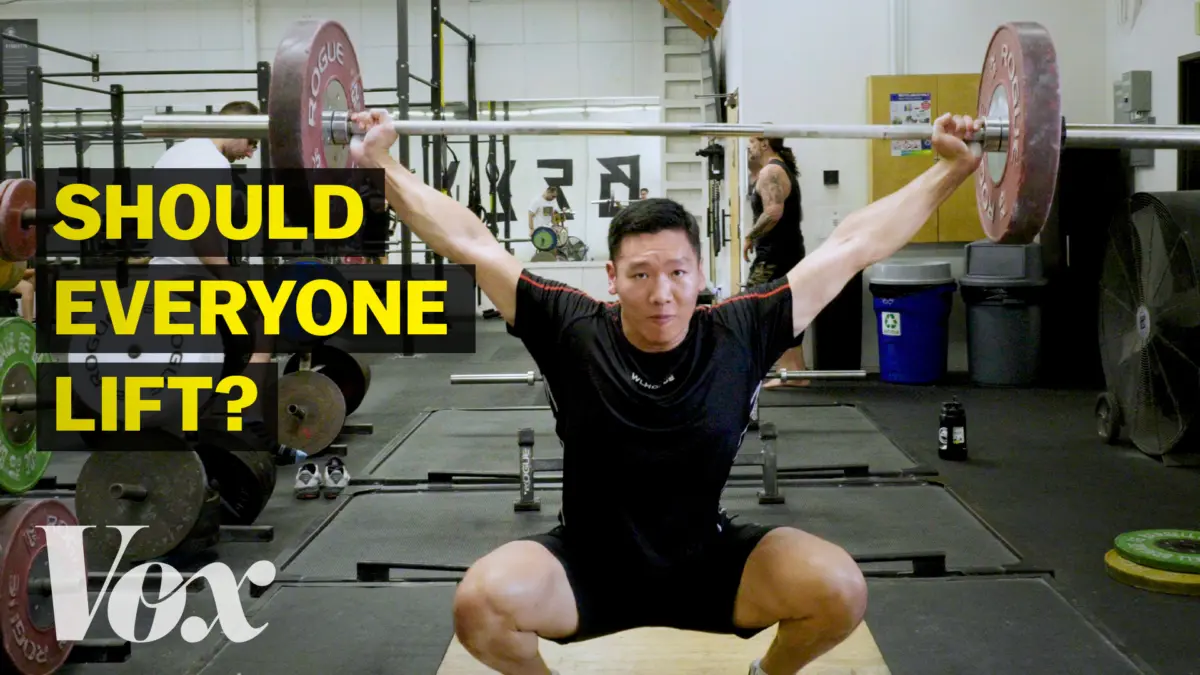
- The Turnover and Catch: As the bar reaches its apex of flight, the lifter drops into a deep overhead squat (in the snatch) or a front squat (in the clean). This requires extraordinary thoracic mobility, ankle dorsiflexion, and core stability. The margin for error is measured in millimeters; an offset of even a fraction of an inch can cause a multi-hundred-kilogram load to collapse the structure.
The Mathematics of Risk: Missing Four and Winning Gold
One of the most counterintuitive aspects of Olympic weightlifting—and a focal point of analysis in discussions with elite competitors—is the statistical reality that an athlete can fail four out of their six total attempts and still capture the gold medal.
How is this mathematically and strategically possible? A weightlifting competition permits each athlete three attempts in the snatch and three attempts in the clean and jerk. Only the single heaviest successful lift from each discipline counts toward the final total.
Consider a hypothetical scenario in a fiercely contested international session:
- Lifter A plays a conservative game. They successfully make their first two lighter attempts in the snatch and clean and jerk, securing a respectable total early on, but fail their final, heavier attempts as they push their absolute limits. Their record: 4 makes, 2 misses.
- Lifter B (and their coach) adopts a high-risk, high-reward strategy. Recognizing that the gold medal requires a world-class total, they deliberately pass or fail early, speculative attempts while dialing in their grip and timing, or they aggressively jump straight to a weight that exceeds everyone else’s established total. Lifter B misses their first two snatches. Under immense pressure, they successfully hit their third snatch. In the clean and jerk, they miss their first two attempts again. Their record stands at 4 misses and only 2 makes. However, because that single successful clean and jerk, combined with their lone successful snatch, yields a cumulative total higher than anyone else’s, Lifter B takes home the gold medal.
This dynamic transforms weightlifting from a simple exhibition of physical capacity into an intense game of poker. Athletes must constantly calculate risk-versus-reward parameters based on their current physical state, their competitors’ performance, and the psychological climate of the venue.
Official Statements & Expert Perspectives
To bridge the gap between abstract physics and lived athletic experience, we turn to Matthew Tung, whose perspective as an international representative for Hong Kong illuminates the hidden realities of the sport.
"People look at weightlifting and see muscles moving heavy iron," Tung explains, breaking down the fundamental misconception surrounding the discipline. "What they don’t see is the chess match happening inside the athlete’s head before they even touch the knurling on the bar. Every millimeter matters. Every millisecond of timing decides whether you walk away with a medal or drop two hundred kilograms on your back."
Tung emphasizes that the physical conditioning required for Olympic weightlifting is inextricably linked to cognitive endurance. The ability to reset one’s nervous system following a missed attempt—a scenario where an athlete has less than two minutes to recover, adjust their strategy, and step back onto the platform—separates elite competitors from the rest of the field.
"When you miss an attempt on the international stage, the psychological weight is heavier than the barbell," Tung notes. "You have to detach your ego from the failure immediately. Your coach is feeding you numbers, the clock is ticking down from two minutes, and your body is flooded with adrenaline. Managing that physiological spike while maintaining pristine technical form is the true test of an Olympic lifter."
Furthermore, Tung addresses the tactical utilization of weight changes mid-competition: "Changing your declared weight isn’t just about ego; it’s about weaponizing the scoreboard. If you force a competitor to follow themselves—meaning they have to lift back-to-back without adequate rest because you jumped your weight past theirs—you tilt the physiological odds heavily in your favor."
Future Outlook: Evolution of the Sport and Lessons for General Fitness
As Olympic weightlifting continues to evolve through advancements in sports science, biomechanical tracking, and coaching methodologies, the boundary between elite performance and general physical culture is shifting.
Technological and Scientific Integration
Modern elite training centers now employ high-speed motion capture cameras, force plates embedded in lifting platforms, and wearable velocity-based training devices. These tools allow coaches to measure barbell velocity down to the centimeter per second, identifying micro-flaws in an athlete’s pull long before they manifest as missed lifts on the competition stage. As these diagnostic technologies become more refined, we can expect to see world records pushed to unprecedented heights, particularly as sports scientists optimize the recovery protocols and nutritional strategies of athletes.
Translating Elite Principles to Everyday Strength Training
For the broader fitness community, the rigorous methodologies of Olympic weightlifters offer profound lessons in human movement and longevity. While not every individual needs to snatch or clean and jerk maximal loads, the underlying principles of the sport are universally applicable:
- Prioritizing Movement Quality Over Load: Weightlifters do not build strength by compromising positions; they build strength by refining mechanics under load. Everyday trainees can adopt this mindset by prioritizing range of motion, joint stability, and movement efficiency before adding weight.
- Developing Explosive Power: As we age, the ability to produce force rapidly (rate of force development) declines faster than absolute strength. Incorporating modified, low-load explosive movements—such as medicine ball tosses, jumps, or light power variations—helps preserve neuromuscular health and functional agility.
- Resilience and Adaptability: The psychological resilience forged on the weightlifting platform—learning to analyze failure objectively, recalibrate under pressure, and execute with singular focus—serves as a powerful blueprint for challenges encountered both inside and outside the gym.
In conclusion, Olympic weightlifting transcends the simplistic pursuit of lifting heavy objects. It is a sophisticated synthesis of art and science, where gravity is temporarily defeated through discipline, strategy, and relentless execution. Through the insights of athletes like Matthew Tung, we are reminded that the true beauty of the sport lies not just in the iron that is moved, but in the extraordinary human potential required to move it.
This journalistic report is presented in partnership with Colgate. Colgate maintains strict editorial independence and exerts no influence over our investigative reporting, yet makes in-depth features of this caliber possible.