Executive Overview
In November 2022, the intersection of corporate hubris, flawed social media architecture, and grassroots digital activism created one of the most remarkable viral moments in internet history. What began as a chaotic rollout of Elon Musk’s paid verification system on the platform formerly known as Twitter quickly escalated into a high-stakes corporate nightmare for pharmaceutical giant Eli Lilly and Co.
At the heart of this digital storm was a single, brilliantly subversive tweet claiming that the $300 billion pharmaceutical titan was making its life-saving insulin free of charge. Posted by 34-year-old Queens resident and writer Sean Morrow, the fake announcement exposed the fragile vulnerability of modern corporate reputation management, laid bare the catastrophic flaws of the newly minted "Twitter Blue" subscription model, and temporarily wiped billions of dollars in market value off the pharmaceutical company’s valuation.
More importantly, the viral prank thrust the predatory pricing of insulin—a decades-long crisis that has forced countless diabetic Americans into rationing vital medication—back into the global spotlight. While analysts and executives debated the precise market mechanisms behind Eli Lilly’s subsequent stock dip and policy shifts, the incident served as a watershed moment for internet culture and consumer advocacy. Public shaming, weaponized through the absurd loopholes of a poorly planned software update, had momentarily humbled corporate America.
This in-depth investigative report examines the chronology of the digital hoax, the systemic failures of Twitter’s verification rollout, the severe economic and ethical fallout for Eli Lilly, and the broader implications for corporate accountability in the age of decentralized social media.
Detailed Chronology: The Anatomy of a Digital Prank
The Catalyst: Twitter’s Disastrous Blue Rollout
To understand how a joke could trigger a multi-billion-dollar market tremor, one must look back at the chaotic early days of November 2022. Following his acquisition of Twitter, Elon Musk moved swiftly to overhaul the platform’s verification system. Under the previous administration, the iconic blue checkmark had served as a crucial trust indicator, verifying the identity of public figures, journalists, politicians, and major institutions to prevent impersonation and misinformation.
Musk dismantled this system in favor of a subscription model: for $8 a month, anyone could purchase a blue checkmark, granting their account immediate visual legitimacy. Cybersecurity experts, brand safety advocates, and tech analysts immediately warned that the policy was an invitation for bad actors, spoofing accounts, and corporate sabotage. Their warnings were swiftly validated.
Within days of the rollout, the platform’s timeline descended into absolute lawlessness. Verified impersonators ran roughshod across the digital landscape. A fake "Lockheed Martin" account tweeted that it was halting weapons sales to Saudi Arabia, Israel, and the United States. A counterfeit "LeBron James" demanded a trade. Most infamously, a verified imposter account posing as consumer goods giant "Nintendo" tweeted a high-resolution image of Mario extending his middle finger to the world.
Enter Sean Morrow and the @EliLillyandCo Hoax
Amid this digital theater of the absurd, Sean Morrow, a 34-year-old writer for the progressive media outlet More Perfect Union, saw an opportunity to make a satirical point about corporate greed and platform negligence.
Morrow did not have diabetes, but he had long harbored a deep-seated fury regarding the exorbitant cost of insulin in the United States. "I always saw it as one of the worst corporate exploitations of everyone else in a world of terrible corporate exploitations of everyone else," Morrow revealed in an interview.
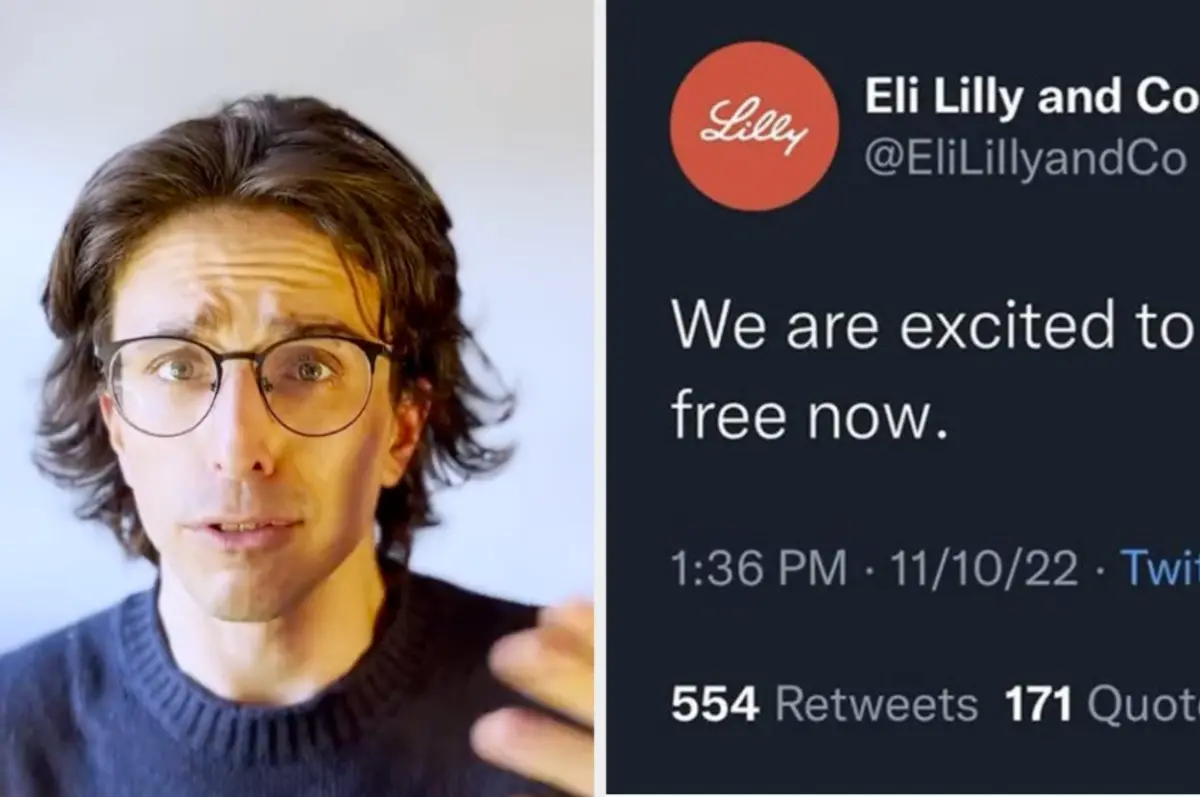
Using an abandoned novelty account he already owned, Morrow hastily changed the handle to @EliLillyandCo. Capitalizing on the newly minted blue checkmark that viewers naturally associated with authenticity, he crafted a message that millions of Americans had spent decades dreaming of reading:
"We are excited to announce insulin is free now."
The tweet struck a nerve with atomic force. Amplified simultaneously by well-meaning users who desperately wanted the news to be true and digital cynics who immediately recognized the biting satire, the post went viral at breakneck speed. Morrow had successfully executed a brilliant, dual-layered dunk: he exposed the profound moral failure of Eli Lilly—a corporation valued at nearly $300 billion charging exorbitant sums for a molecule discovered a century ago—while simultaneously exposing the reckless incompetence of Twitter’s new verification infrastructure.
For two weeks, Morrow maintained radio silence, watching the digital firestorm unfold from the sidelines while the identity of the mastermind behind the account remained a mystery to the corporate world.
Supporting Context & Metrics: The Fallout and Market Impact
While internet users shared the tweet as a masterclass in trolling, the real-world consequences riounded quickly through Wall Street and the pharmaceutical industry’s public relations departments.
The Stock Market Tremor
Within hours of the viral post, Eli Lilly’s stock price began to slide. By the end of the trading session, the company’s valuation had dropped by over 4.37%. While financial analysts and market defenders quickly pointed out that broader market fluctuations and concurrent downward trends among other pharmaceutical competitors that day played a role in the dip, the timing was undeniable.
For a brief, glittering moment, digital activists and internet satirists felt they had single-handedly carved billions of dollars out of a predatory corporation’s market cap using nothing more than a $8 subscription fee and a clever bio change. The incident triggered frantic calls from investors, panicked internal emergency meetings at Eli Lilly’s corporate headquarters in Indianapolis, and a sudden, urgent realization among Fortune 500 executives that their brand protections on social media were virtually non-existent.
The Insulin Crisis and Public Pressure
Beyond the stock ticker, the fake tweet achieved something that grassroots advocacy groups, patient coalitions, and affected families had been fighting for through traditional channels for years: it forced mainstream, inescapable public attention onto the humanitarian crisis of insulin pricing in the United States.
In the U.S., the price of insulin had skyrocketed over the preceding decades, forcing an estimated one in four diabetic patients to ration their medication—a life-threatening practice that frequently results in diabetic ketoacidosis, organ failure, or death. The absurdity of a nation where the foundational discovery of insulin was sold for a symbolic $1 in 1923, only for modern pharmaceutical conglomerates to price-gouge vulnerable populations, became the central dinner-table conversation across the country.
When Morrow finally stepped forward two weeks after the incident to publicly take credit for the stunt, he acknowledged the complex reality behind the ensuing corporate shifts. While he conceded that major corporate policy changes within a behemoth like Eli Lilly are rarely reactionary spur-of-the-moment decisions—and that price cuts were likely already under internal discussion—he noted that the unbearable heat of public pressure undoubtedly accelerated their timeline.
Reflecting on the moment Eli Lilly eventually announced adjustments to its pricing models, Morrow experienced a deeply emotional reaction. "I did have an emotional reaction to this news," he admitted. "I haven’t really cried since the season finale of The Leftovers, but I felt some welling up, even if I don’t trust Lilly’s motivations here."
Official Statements and Corporate Repercussions
The fallout from the incident forced an immediate about-face in how major corporations manage their digital footprints, while also shifting the public discourse surrounding pharmaceutical pricing transparency.
Eli Lilly’s Damage Control
In the immediate aftermath of the tweet, Eli Lilly’s official corporate communications team went into overdrive. They scrambled to issue corrections, coordinate with Twitter support to get the fraudulent account suspended, and reassure jittery investors that the company had no immediate plans to make all insulin entirely free—a corporate clarification that, ironically, generated even worse public relations backlash by confirming that they chose to keep life-saving medication artificially expensive.
The incident served as a severe wake-up call for corporate legal and PR departments worldwide. Within days, hundreds of major brands paused their advertising campaigns on Twitter, citing brand safety concerns and the imminent danger of market-moving impersonation accounts operating with official-looking credentials.
Twitter’s Retreat
The chaos forced Elon Musk’s engineering team to rapidly retreat from the initial unvetted rollout of Twitter Blue. The platform temporarily suspended the subscription service entirely, rolling out a revised verification tier system that introduced distinct checkmark colors (gold for verified businesses, gray for government entities, and blue for individuals) and instituted manual identity reviews before badges could be granted.
However, the damage to the platform’s institutional credibility was profound. The "Eli Lilly incident" became the definitive case study in business schools and tech conferences worldwide regarding how not to manage platform governance, digital identity, and product iteration.
Future Outlook: The Enduring Legacy of an $8 Joke
As the dust settled on the November 2022 Twitter verification debacle, the long-term ripple effects of Sean Morrow’s viral prank continued to reverberate across multiple industries.
The Evolution of Social Media Governance
The incident fundamentally altered the relationship between social media platforms and enterprise clients. Today, corporate verification requires rigorous, multi-factor authentication protocols, cryptographic identity proofs, and dedicated enterprise support channels. The era of casually changing a display name and purchasing a checkmark to impersonate a multi-billion-dollar enterprise has been replaced by heavily guarded digital perimeters.
A Turning Point for Pharmaceutical Accountability
More importantly, the stunt permanently altered the cultural conversation around healthcare access and corporate responsibility. By weaponizing internet humor against institutional greed, digital activists proved that the invisible walls protecting corporate behemoths from public wrath can be breached by creative, decentralized resistance.
While the fight for universal healthcare and affordable pharmaceuticals remains an ongoing, uphill battle in legislative halls and boardrooms across the globe, the day a Queens writer used an $8 Twitter subscription to make Big Pharma sweat remains a legendary milestone. It was a rare, undeniable victory for the internet age—a moment where collective public shaming exposed the absurdities of corporate power, reminding the world that even the most untouchable corporate giants are dangerously vulnerable to the collective voice, and collective wit, of ordinary people.