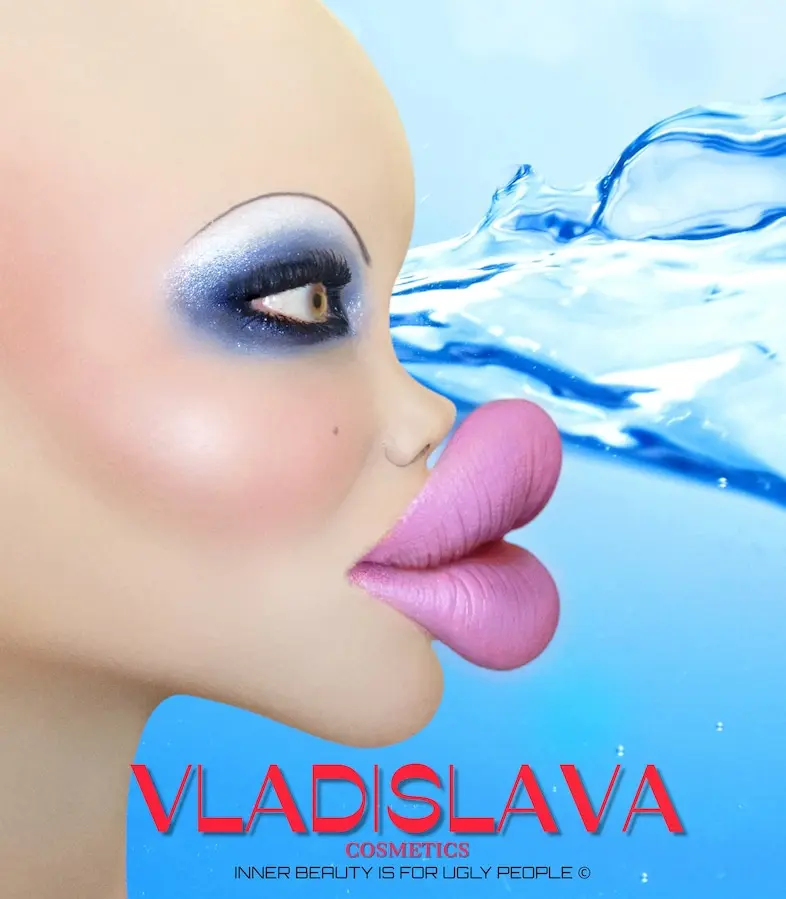
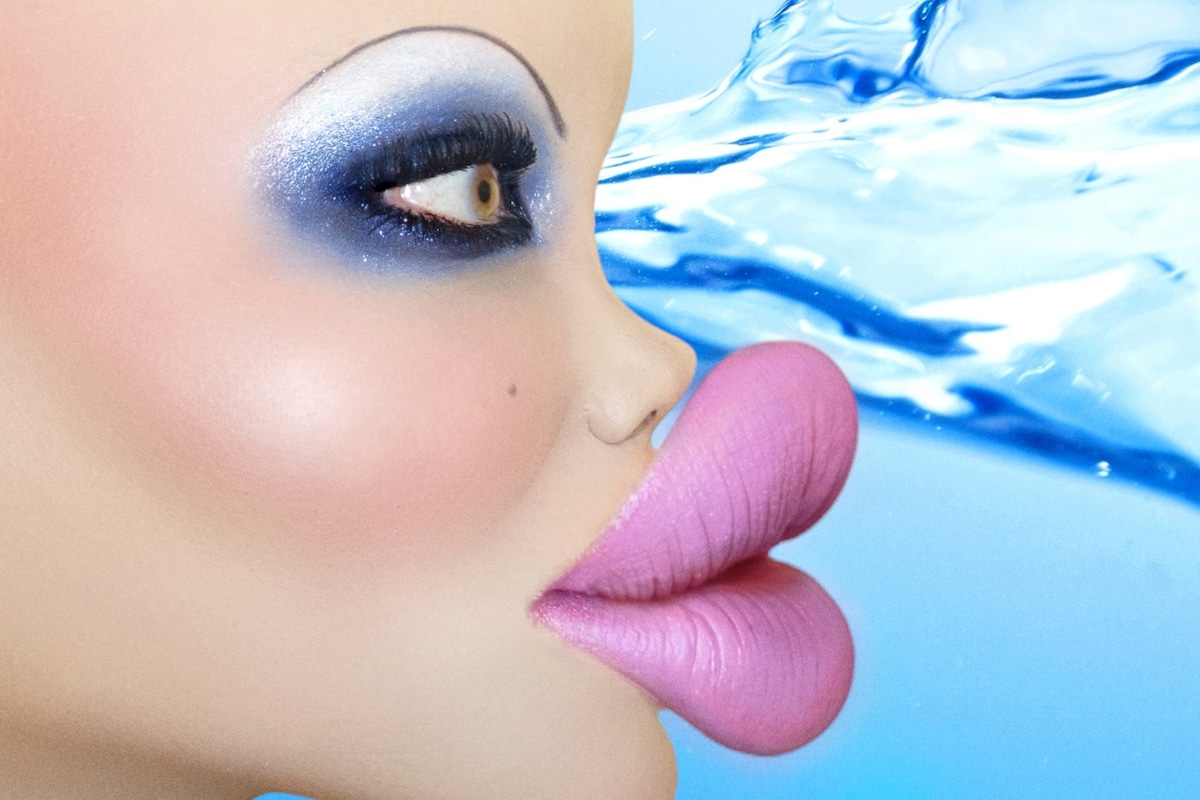
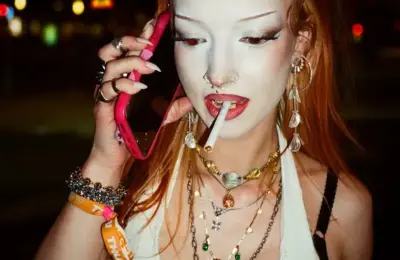
In an era dominated by algorithmic perfection, filtered identities, and the relentless commodification of self-improvement, artist Ivana Vladislava has launched a searing, provocative counter-offensive. Her latest exhibition, Inner Beauty is for Ugly People, currently on view at Berlin’s Robert Grunenberg Gallery through September 3, confronts the multi-billion-dollar global beauty industry not with a gentle plea for self-love, but with a mirror reflecting its most grotesque systemic contradictions.
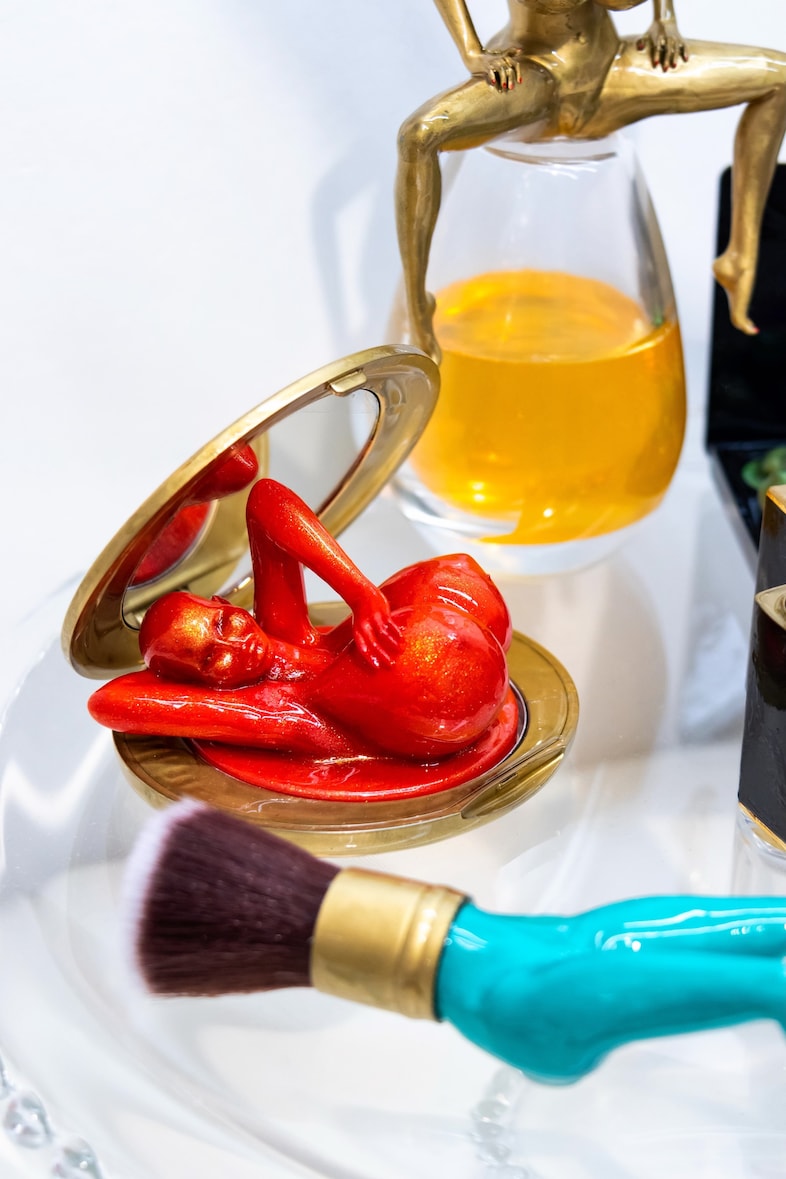
At the center of the exhibition is a meticulously fabricated, hyper-convincing beauty brand complete with an arsenal of absurd, satirical products. From the "Looksmaxxing Hammer"—anatomically engineered for bone-smashing comfort to achieve the ultimate jawline—to the "Marlbotox Ashtray," designed to cradle a syringe during a high-end botox party, Vladislava’s creations weaponize the language of wellness and luxury.
Born in Poland and raised amid the turbulent socio-political shifts of post-communist 1990s Europe, Vladislava migrated to Berlin at the age of fourteen. Over the ensuing decades, she evolved into a muse, a fixture of the city’s underground queer scene, and an artist whose primary canvas has always been her own physical form. Having pushed her own aesthetic transformations to what she describes as a state of "complete disfigurement," Vladislava’s artistic inquiry transcends conceptual theory; it is lived, physical, and painfully intimate. Through Inner Beauty is for Ugly People, she poses an urgent question to a saturated culture: When the pursuit of perfection renders us prisoners of our own design, how much corporate fabrication are we willing to swallow if the packaging is sleek enough?
Detailed Chronology: From Post-Communist Roots to Berlin’s Avant-Garde
To understand the conceptual weight of Inner Beauty is for Ugly People, one must retrace the trajectory of Vladislava’s life and artistic evolution. Her early years in post-communist Poland instilled a complex relationship with consumption, aspiration, and the sudden influx of Western capitalistic ideals. For a generation raised amidst the austere grayness of a collapsing political system, Western advertising promised a glittering, technicolor fantasy where identity could be bought, built, and polished.
At fourteen, Vladislava relocated to Berlin—a city historically defined by division, reinvention, and counter-cultural resilience. Immersed in Berlin’s dynamic and uncompromising queer nightlife, she found a canvas for self-determination. Here, she began her prolonged experiment with physical transformation, an endeavor she tongue-in-cheekly labels "post-communism wealth"—the psychological imperative that if the fantasy is available, one must consume the entire thing without reservation.
Over the years, Vladislava engaged deeply with the modern cosmetic enhancement industry. She chased the shifting goalposts of the ideal feminine form, undergoing successive rounds of plastic surgery, enduring countless cosmetic treatments, and filling her features with silicone and lip filler. What began as an artistic and personal reclamation of her body gradually mutated into a cycle of physical dependency. The turning point was not a moment of quiet revelation, but a visceral, physiological awakening. As she wryly notes, the realization that one has gone too far often arrives "when your face is so tightly lifted that your mouth snaps open by itself when you bend over."
Rather than concealing her surgical history or retreating from the public eye, Vladislava pivoted inward. She transformed her physical regret into her medium. Where she once used her body to push the boundaries of what a woman’s appearance could signify, she now uses her lived trauma to critique the structural machinery that manufactured it. Inner Beauty is for Ugly People represents the culmination of this decades-long synthesis between personal bodily history and sharp sociological critique.
Supporting Context & Metrics: The Economics of Aspiration and Modern Class Signaling
Vladislava’s exhibition arrives at a critical juncture in the global economy of beauty. Valued in the hundreds of billions of dollars, the cosmetic enhancement and skincare industries rely fundamentally on manufactured insecurity. Market analysts note that contemporary beauty branding has shifted away from simply selling physical transformation toward selling psychological salvation, emotional regulation, and social mobility.
Historically, cosmetic surgery and high-end aesthetic enhancements functioned as exclusive status symbols accessible only to the economic elite. However, the democratization of credit—facilitated by installment payment plans, promotional discount codes, and medical tourism packages promising "Insta-face" transformations in Istanbul—has fundamentally disrupted this hierarchy.
According to Vladislava, this financial accessibility has inverted traditional class signifiers:
"Once, a surgically altered face was the ultimate status symbol because surgery was only obtainable for the rich. Now, however, since surgery comes in installment payments and promo codes, the hair transplant, lip filler, cat-eye, Istanbul nose, and teeth Insta-face package became a symbol of the ‘proletariat.’ So naturally, the trend shifted back to natural faces for the rich. Plastic faces look cheap—natural faces look rich."
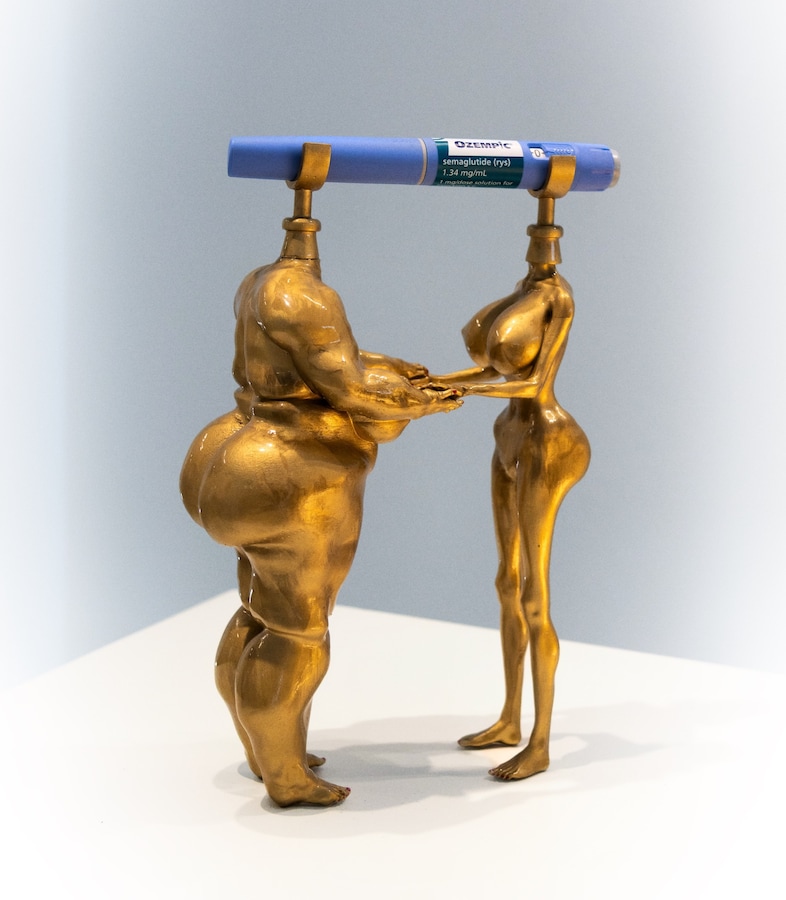
This socio-economic pivot underscores the core thesis of Inner Beauty is for Ugly People: the beauty industry does not sell functional utility; it sells the promise of elevated value within a rigid social hierarchy. By inventing fictitious products that lay bare the absurdity of this commercial ecosystem—such as the Crucifix Shampoo for spiritually cleansing split ends or the Ozempic Stand designed to elevate the storage of weight-loss pens above the refrigeration level of the working class—Vladislava exposes the cynical architecture of modern aspiration.
Official Statements and Excerpts from the Artist
In an exclusive framing of her exhibition, Vladislava spoke candidly about the motivations driving her work, the nature of contemporary consumer psychology, and the heavy toll of vanity.
On the Meaning Behind the Exhibition Title
"Unless you are born pretty, beauty has a price. Being ugly is free."
On Subverting the Consumer Experience
When asked about her decision to launch a fake beauty brand that initially fools gallery-goers into believing it is entirely legitimate, Vladislava emphasizes the sheer potency of perception:
"The power of perception. Some say beauty is a scam. But am I a scammer if my scam is the most honest of them all?… It proves that we never buy a product; we buy a good story. For example, you see a mascara ad with a beautiful nepo baby or supermodel; you convince yourself to buy this mascara because something in you believes it will make you look as good as her. It won’t, but it’s the hope that motivates us to keep pushing."
On Human Nature and the Digital Age
Drawing a line from ancient anxieties to modern technological fixation, Vladislava diagnoses contemporary society as inherently primal:
"That we are still primaeval beings; we just switched witches for plastic surgeons and fortune-tellers for ChatGPT. Beauty is a virus, and it spreads… Humans don’t search far for things they want—desire grows from the immediate environment. We are slowly becoming more like Buffalo Bill, wearing someone else’s skin."
On the Trap of Self-Transformation
Reflecting on her own journey through physical alterations, Vladislava harbors no illusions about her complicity in the system she critiques:
"I’m a consumer myself. I ‘invested’ in my looks. I disfigured myself through excessive surgeries, and now I have to live with it. I’ve been damaged by the system and, funny enough, now I’m depending on it more than ever. I’m a prisoner in a self-made hell of silicone and lip filler… First, I got surgery to look better and use less make-up, but now I need even more to cover my scars. I’m an endless pit of vanity."
Future Outlook: The Commodification of Ugliness
As Inner Beauty is for Ugly People continues its run at the Robert Grunenberg Gallery through September 3, the cultural dialogue surrounding bodily autonomy, cosmetic intervention, and digital distortion continues to intensify. Vladislava’s work forces viewers to confront a paradox: if self-objectification can occasionally serve as a temporary reclamation of power, it risks trapping the individual within an eternal aesthetic prison.
Looking ahead, Vladislava anticipates a fascinating market saturation point. If the beauty industry ever succeeded in its ultimate mission to make everyone conventionally attractive, what would remain to be sold? Her answer points directly to the cyclical nature of fashion and culture:
"Ugliness! It worked very well for fashion; wearing something repelling became a powerful statement. Absolutely, because luxury is rare, and if everyone can be pretty, where’s the fun in being pretty? Beauty is only fun when everyone else is ugly."
Ultimately, Vladislava’s exhibition serves as both a dark comedy and a solemn warning. By holding up a distorted, hyper-exaggerated mirror to our deepest vanities, she challenges us to look past the pristine packaging of contemporary culture and ask ourselves what we are truly buying—and what parts of our humanity we are discarding along the way.