Executive Overview
On a Monday afternoon in April 2023, the media landscape shifted dramatically when Fox News abruptly announced the departure of its flagship right-wing primetime host, Tucker Carlson. While network executives scrambled to manage the fallout and political commentators across the spectrum offered varied prognostications, Katherine Abughazaleh—better known to her hundreds of thousands of followers as "Kat Abu"—was simply glowing.
"I’ve been very joyful today," Abughazaleh said during a video interview just hours after the news broke. "I feel like everyone’s just having a fun day."
For Abughazaleh, the exit of the man whose broadcasts she monitored religiously every weekday felt like a monumental cultural moment. As a 24-year-old senior video producer for Media Matters for America, a progressive media watchdog group based in Washington, D.C., her professional life had revolved around dissecting Carlson’s nightly grievances for the past two years. But outside of her day job, Abughazaleh had successfully carved out a parallel identity: a viral social media commentator who uses humor, sharp intellect, and unapologetic femininity to decode, mock, and dismantle conservative media narratives for a younger, digital-native audience.
Her rise from a behind-the-scenes media researcher to a TikTok sensation with millions of views illustrates a broader generational disconnect. As legacy cable networks continue to rely on grievance politics and culture-war rhetoric to drive ratings, younger demographics are rejecting these strategies, finding solace and entertainment in creators who pull back the curtain on media manipulation. Yet, this digital prominence has come at a steep personal cost, exposing Abughazaleh to intense online harassment, misogyny, and security concerns. This is the story of how one young analyst turned professional monitoring into a blueprint for modern media accountability.
Detailed Chronology: From Dallas Conservative to Media Watchdog
To understand Abughazaleh’s unique perspective on right-wing media, one must look at her upbringing. Born into a well-off family in Dallas, Texas, her early life was steeped in traditional conservative orthodoxy. Her father is a Palestinian immigrant, while her mother’s side can trace its Texan lineage back seven generations. Her household regularly tuned in to Fox News, and her maternal grandmother—a longtime stalwart of the Texas Federation of Republican Women—worked on numerous Grand Old Party campaigns, instilling in her granddaughter a deep familiarity with movement conservatism.
Indeed, Abughazaleh jokingly refers to herself as a born "conservative sleeper agent." Following her grandmother’s passing, she even inherited the mink coat her grandmother wore to President Richard Nixon’s inauguration. Abughazaleh remained a committed conservative through her early teens.
However, her worldview underwent a profound transformation when her family relocated to Tucson, Arizona. Encountering a high school where at least half of the student body came from low-income or undocumented backgrounds, the ideological narratives she had absorbed growing up collided with harsh socio-economic realities. "The bootstrap myth just shattered before my eyes," she recalls.
By the time she enrolled at George Washington University in Washington, D.C., during Donald Trump’s presidency, her political alignment had shifted decisively to the left. Majoring in international security and studying journalism, she graduated in 2020 determined to find work that aligned with her core values. She did not want a mere job; she wanted a mission. She found it at Media Matters for America.
Media Matters describes itself as a progressive research and information center dedicated to monitoring, analyzing, and correcting conservative misinformation in the U.S. media. For Abughazaleh, the role involved long hours in the organization’s Navy Yard office overlooking the Anacostia River, tracking primetime lineups, pulling clips, and transcribing segments to keep colleagues informed of emerging right-wing talking points.
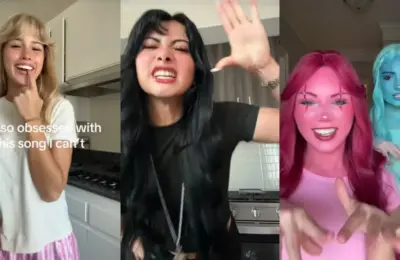
Her breakthrough into independent digital media creation, however, began as an off-hours project driven purely by personal amusement. In January 2023, she uploaded her first TikTok video, targeting Tucker Carlson’s on-air attacks against then-aspiring House Speaker Kevin McCarthy. Using her deep familiarity with Fox News’s production tricks, she began summarizing the network’s wildest segments into digestible, darkly comedic packages. The response was immediate and overwhelming. Within months, her follower count surged past 130,000, with multiple videos cracking the one-million-view milestone.
Supporting Context & Metrics: The Anatomy of a Digital Counter-Offensive
Abughazaleh’s content stands out not only because of its sharp political commentary, but because of its deliberate aesthetic. In an ecosystem where internet trolls frequently attempt to diminish female commentators by attacking their appearance or suggesting they belong in domestic roles, Abughazaleh leans aggressively into her femininity. Before recording, she meticulously applies makeup—often featuring a bold cat-eye—and styles her hair.
"It makes them even more mad," she notes. "They don’t like a woman telling them that everything they believe is bullshit."
This friction has fueled rapid growth across multiple platforms. On TikTok, her videos regularly skewer absurd right-wing media tropes, ranging from breakdowns of Donald Trump’s rambling interviews to deep dives into alternative consumer products like Mammoth Nation, an online marketplace marketed as the "right-wing Amazon." On YouTube, she has expanded her repertoire into long-form video essays, analyzing material such as Mike Huckabee’s conservative Christian homeschooling programs.
On Twitter, where her follower count surpasses 182,000, her presence has frequently sparked viral firestorms. Her transparency regarding online harassment has served as a public case study in the toxic realities female commentators face online. In August 2022, she publicly shared her harrowing experience of being roofied at a bar to warn other women. In November, she posted screenshots from the right-leaning dating app The Right Stuff, which she memorably characterized as "a cesspool of cringe conservative dudes who are desperate to get laid."
The visibility, however, has invited a relentless stream of misogynistic abuse. Trolls frequently bombard her mentions with sexually explicit messages, photoshop her images into pornography, and attempt to "snitch-tag" her employer on Twitter whenever she posts personal content, such as a photograph of herself smoking a cigarette.
Despite the vitriol—which includes numerous graphic threats of sexual violence—Abughazaleh maintains a resilient, almost detached amusement toward her harassers. "If I were a man, I would not get 10% of the comments that I get," she observes. "I can film a normal video wearing a sweater and there will be a litany of comments talking about my face, talking about my body, talking about my womb… People will talk about how I should be breeding white babies and then I have to refer them to my Palestinian grandfather’s obituary again."
Official Statements & Institutional Perspectives
The institutional weight of Media Matters underscores the seriousness with which media organizations view both the impact of misinformation and the security risks faced by their high-profile researchers. While the organization maintains strict privacy protocols regarding employee safety—as evidenced by publicists intervening during interviews to redact throwaway details that might compromise staff locations—the leadership fully recognizes the value of public accountability.
Critics of watchdog organizations often argue that clipping and sharing inflammatory commentary merely amplifies bad actors, giving fringe ideas a wider megaphone. Abughazaleh rejects this premise entirely.
"Fox is the most-watched cable news channel in the country," she argues. "They already had the platform. And just letting them get by scot-free does more damage than it helps."
Furthermore, the personal feedback she receives from everyday viewers validates her approach. Beyond the trolls and threats, she frequently receives messages from young people whose parents were radicalized by cable news. Viewers write to tell her that her videos provided the exact comedic bridge needed to prompt constructive conversations with their families, successfully steering older relatives away from extremist programming toward relatively milder broadcasts.
"It’s been great seeing people say that my videos are helping them connect with their parents and get them off Fox News," she reflects. "I see comments from people on TikTok saying, ‘I sent these to my mom, and now she’s decided to only watch Special Report With Bret Baier instead of Tucker Carlson Tonight.’ And that’s really great."
Future Outlook: The Post-Carlson Media Landscape
The ouster of Tucker Carlson in April 2023 marked the end of an era for cable news, yet Abughazaleh views the development through a pragmatic lens. In her assessment, the immense cultural power wielded by Fox News primetime is structural rather than individual; it is the 8 p.m. timeslot itself that commands influence, not necessarily the person sitting in the anchor chair.
Drawing historical parallels to the forced departure of Bill O’Reilly in 2017, she believes that individual anchors quickly fade from cultural prominence once removed from the institutional machinery of the network. As Fox News cycles through interim hosts and searches for a permanent successor, Abughazaleh remains focused on the broader, ongoing battle against media misinformation.
For a generation raised on short-form video, irony, and digital literacy, traditional media gatekeepers hold diminishing sway. Creators like Kat Abu demonstrate that dismantling political propaganda does not require dry, academic rebuttals; it can be achieved through digital fluency, uncompromising humor, and a refusal to be intimidated by institutional or digital intimidation.
"It feels like I’m doing something—it’s so easy to feel powerless," Abughazaleh concludes. "Being angry and passionate and wanting to push forward because you want to make things better for other people makes it worth it."