Executive Overview
The portable power accessory market is undergoing a quiet revolution, driven by breakthroughs in battery chemistry, thermal management, and material science. Belkin, a globally recognized leader in consumer electronics and accessories, has officially entered this new era with the launch of its latest line of iPhone power solutions. Departing from traditional lithium-ion liquid electrolyte architectures, Belkin’s new offerings leverage semi-solid-state battery technology to deliver unprecedented energy density, significantly reduced weight, and enhanced safety profiles.
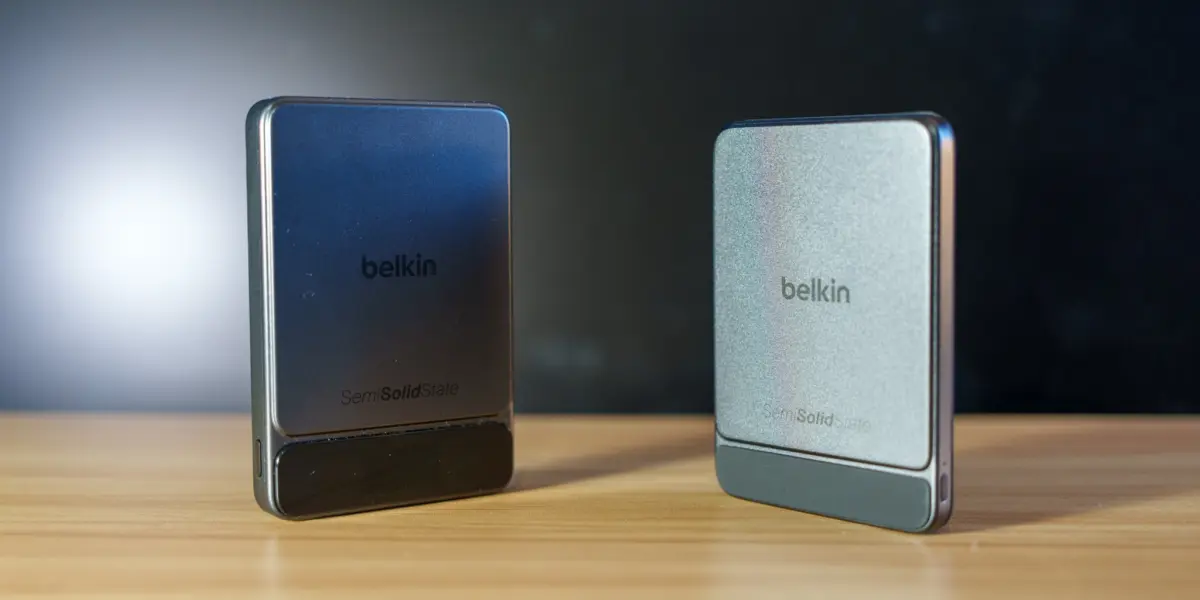
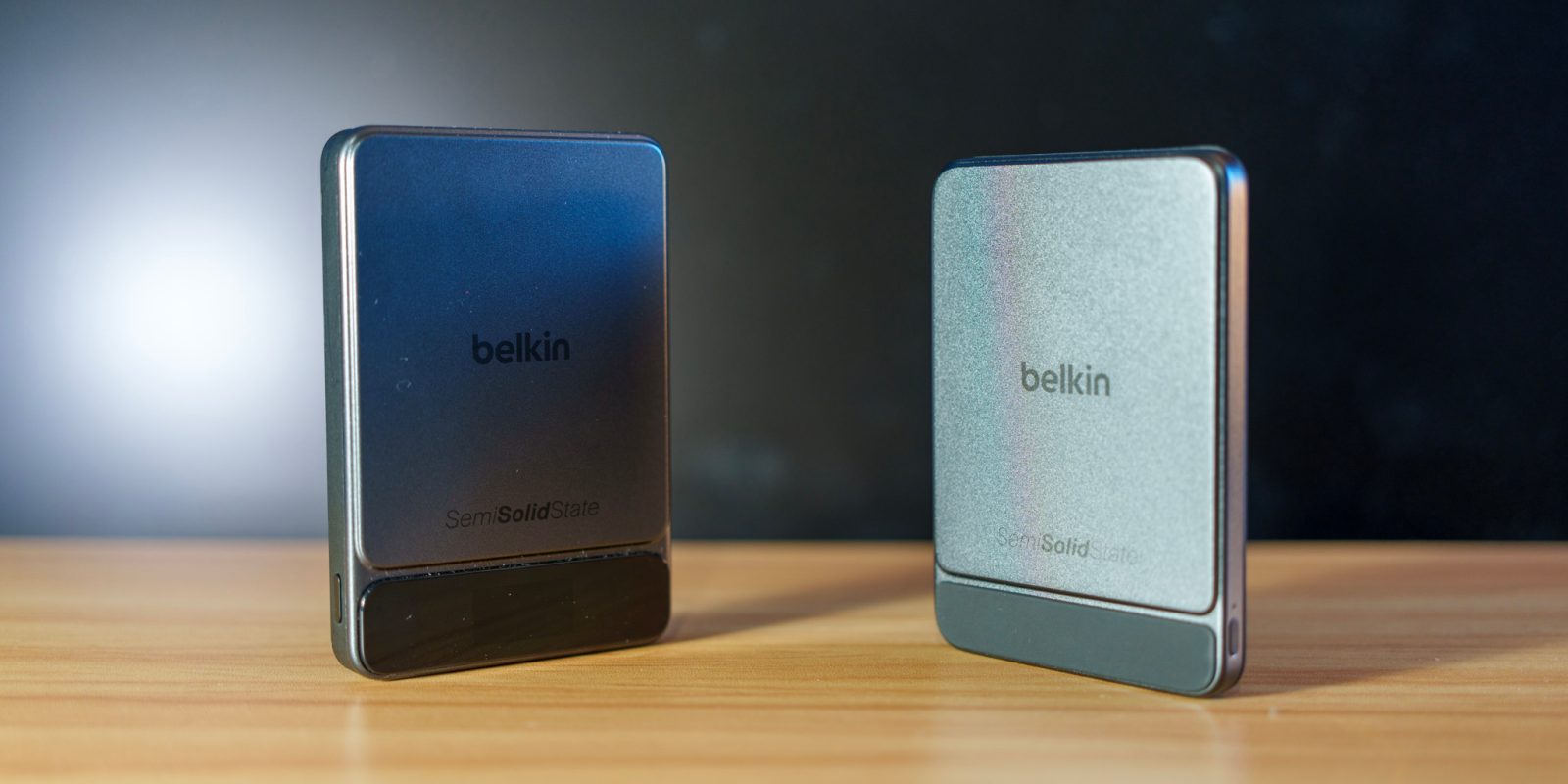
The newly unveiled lineup comprises two distinct models tailored to different mobile power philosophies: a high-capacity 10,000mAh (10K) USB-C power bank designed for rapid, heavy-duty recharging, and a sleek, ultra-thin 5,000mAh (5K) MagSafe-compatible battery optimized for seamless, wire-free daily carry. Both units are encased in premium anodized aluminum chassis that provide a distinctively cold-to-the-touch, luxury feel while improving passive thermal dissipation.
As smartphones continue to push performance boundaries with resource-intensive mobile gaming, generative AI workloads, and high-refresh-rate displays, user demand for portable power has never been higher. However, consumers have long tolerated the primary trade-offs of portable power banks: excessive weight, bulky form factors, and thermal degradation. Belkin’s semi-solid-state initiative directly targets these friction points. By marrying advanced solid-state chemistry with thoughtful industrial design, Belkin is not merely iterating on existing hardware; it is establishing a new benchmark for what mobile power accessories should look, feel, and perform like in the mid-2020s.
Detailed Chronology: The Evolution to Semi-Solid-State Power
To understand the significance of Belkin’s latest release, one must examine the developmental trajectory of portable power technology over the past decade. For years, lithium-ion batteries relying on liquid organic electrolytes have served as the undisputed industry standard. While cost-effective and mature, liquid-electrolyte batteries face inherent physical limitations. They require thick protective housings to prevent swelling, carry minor risks of thermal runaway under extreme duress, and add substantial dead weight to everyday carry (EDC) setups.
The quest for solid-state and semi-solid-state batteries—where the liquid or gel electrolyte is replaced by a solid or semi-solid polymer/ceramic composite—has long been hailed as the Holy Grail of energy storage. While full solid-state batteries are still scaling up for mass adoption in the electric vehicle (EV) sector, semi-solid-state implementations have matured rapidly, making their way into consumer electronics.
The Engineering Timeline
- Late 2023 to 2024: Early commercial applications of semi-solid-state cells begin appearing in niche drone and high-end flashlight markets, proving their superiority in energy density and sub-zero temperature performance.
- 2025: Component manufacturers successfully lower production costs for semi-solid-state pouch cells, allowing tier-one accessory manufacturers like Belkin to conceptualize consumer-facing products that can compete on price while drastically outperforming legacy tech.
- October 2026: Belkin officially announces its twin semi-solid-state battery portfolio for the iPhone ecosystem. The launch marks one of the first mainstream commercial deployments of semi-solid-state batteries in Apple-centric mobile accessories, bridging the gap between experimental laboratory chemistry and consumer retail shelves.
The introduction of these two units signals a pivotal transition phase for the accessory industry. By adopting semi-solid-state cells, Belkin has managed to strip away the traditional bulk associated with power banks, delivering hardware that feels profoundly futuristic the moment it is lifted from the box.
Supporting Context & Metrics: Breaking Down the Hardware
Belkin’s new portfolio is divided into two distinct use cases, each engineered to address specific consumer demands. A granular examination of the specifications reveals how semi-solid-state architecture transforms the user experience.
The 10K USB-C Power Bank: High Capacity, Minimal Mass
Traditional 10,000mAh power banks have historically suffered from a predictable physical penalty: they are heavy, boxy, and awkward to slide into a pocket alongside a smartphone. Legacy units typically weigh anywhere from 240 grams to over 300 grams due to the dense metallic shielding and thick casing required to house liquid electrolyte cells safely.
- Weight Reduction: The new Belkin 10K semi-solid-state battery drops the scales to an astonishing 220 grams. This noticeable reduction in mass makes a tangible difference when carried in a pocket or a lightweight sling bag all day.
- Power Delivery: Despite its featherlight profile, the unit does not compromise on output. It supports up to 60W of power delivery, making it capable of fast-charging not just an iPhone, but also iPads and even demanding USB-C powered MacBooks in a pinch.
- Smart Integration: The exterior features an integrated, low-profile smart display that provides precise, real-time battery percentage readouts, replacing vague multi-LED indicator lights with exact data.
- Pricing & Availability: The 10K model is currently available on Amazon with an MSRP of $89.95.
The 5K MagSafe Power Bank: Wire-Free Minimalism
For users prioritizing seamless integration and absolute cable-free convenience, the 5,000mAh MagSafe offering represents a masterclass in minimalist accessory design.
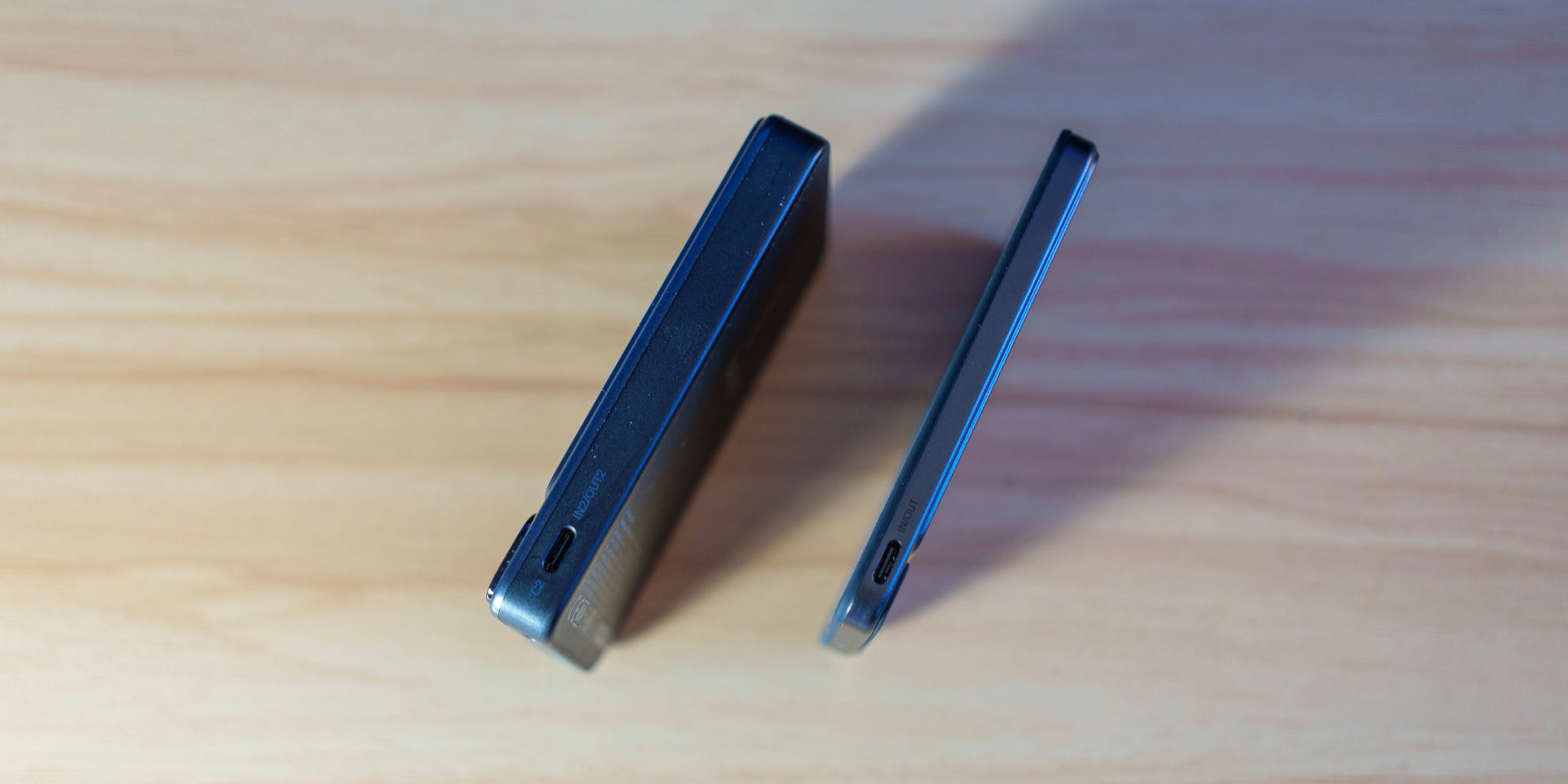
- Form Factor: This unit is exceptionally thin and lightweight, making it arguably the most ergonomic MagSafe battery bank designed for modern iPhones. When snapped onto the back of a compatible device, it forms a cohesive, unified package rather than feeling like an unwieldy brick attached to the phone.
- Charging Standard: It fully embraces the Qi2 wireless charging standard, delivering a robust 15W of magnetic wireless power that matches Apple’s native MagSafe speeds without generating the aggressive waste heat often associated with older wireless power banks.
- Aesthetics & Build: Like its larger sibling, the 5K variant is encased in a premium aluminum shell. The metal construction is cold to the touch and provides structural rigidity that plastic competitors simply cannot replicate. It intentionally foregoes extraneous gimmicks like built-in kickstands or complex displays to maintain its ultra-slim profile.
- Pricing & Availability: The 5K MagSafe model is retailing on Amazon for $69.99.
Official Statements and Industry Implications
While Belkin has built its reputation on reliability and MFi (Made for iPhone) certification, the shift toward semi-solid-state technology represents a strategic repositioning toward premium material science and next-gen engineering.
Industry analysts point out that the integration of semi-solid-state chemistry solves one of the most persistent complaints among smartphone power users: thermal throttling and weight fatigue. In promotional materials and early reviews, industry insiders have emphasized that the cold-to-the-touch aluminum chassis is not just an aesthetic choice; it works in tandem with the semi-solid-state internal matrix to dissipate heat more efficiently during high-speed charging sessions.
Furthermore, the launch highlights an emerging design challenge within the Apple hardware ecosystem: device dimensions versus accessory compatibility. As noted by early evaluators, when attaching the 5K MagSafe battery to smaller or specialized iPhone form factors (such as hypothetical "iPhone Duo" configurations), the accessory may protrude slightly from the bottom edge of the device. This physical overhang is an inherent byproduct of standardizing battery footprints across varying phone chassis heights. However, industry insiders predict that accessory manufacturers will rapidly adapt, anticipating specialized, ultra-compact MagSafe battery geometries at major tech expos like CES in the coming year.

Future Outlook: The Road Ahead for Mobile Power
Belkin’s entry into semi-solid-state power banks is likely just the opening salvo in a broader industry transformation. As manufacturing yields improve and economies of scale take effect, we can expect the complete phasing out of traditional liquid-electrolyte batteries in premium mobile accessories over the next three to five years.
What to Expect Next:
- Broader Capacity Scaling: Following the successful commercialization of 5K and 10K semi-solid-state units, manufacturers will likely scale these architectures up to 20,000mAh and beyond, finally making high-capacity travel power banks manageable for airline carry-ons and lightweight travel.
- Accelerated Charging Speeds: With improved thermal thresholds inherent to semi-solid-state designs, future iterations will likely push input and output wattage higher while maintaining cooler operating temperatures and extending overall battery lifecycle health.
- Ecosystem Harmonization: As Apple and other smartphone manufacturers refine their device lineups, accessory ecosystems will evolve in lockstep, eliminating edge-case fitting issues like chassis overhang through tighter collaborative design standards.
For consumers currently in the market for an upgrade, Belkin’s new offerings provide a compelling glimpse into the future of mobile energy storage. By combining cutting-edge chemistry, aerospace-grade aluminum builds, and aggressive weight-to-capacity ratios, Belkin has set a high bar that competitors will spend the remainder of the year struggling to clear. Whether opting for the rapid-fire versatility of the 10K USB-C bank or the frictionless daily carry of the 5K MagSafe model, users are being offered a clear upgrade path defined by lighter packs, faster charges, and superior build quality.