Executive Overview
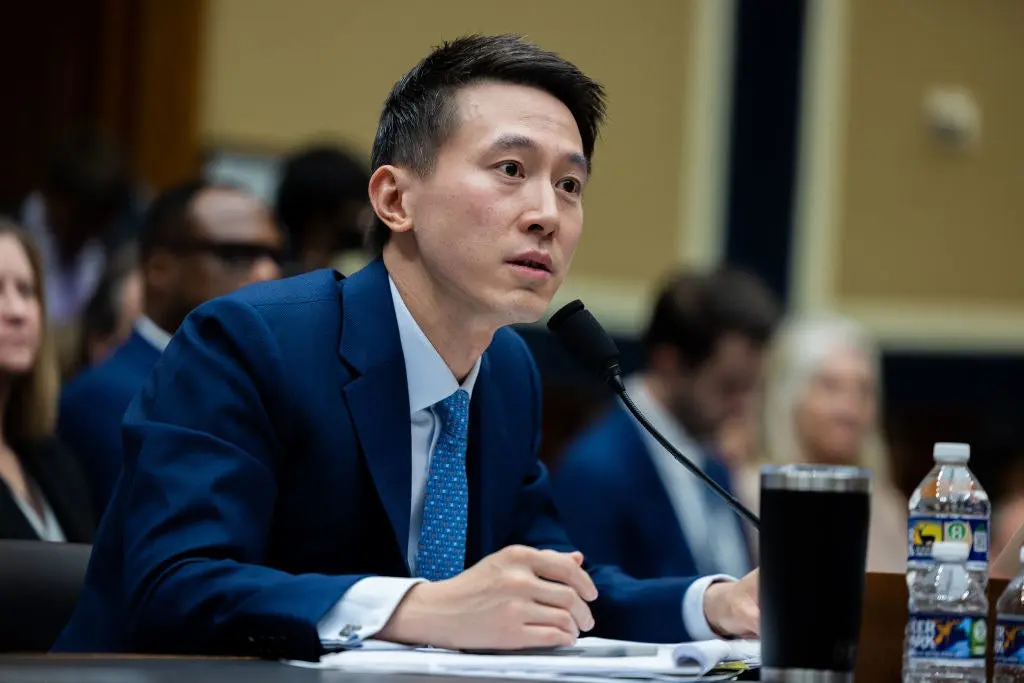
In an era defined by deep political polarization and escalating geopolitical friction, Washington hearings involving tech executives have become routine spectacles. Yet, the high-stakes interrogation of TikTok CEO Shou Zi Chew before the House Energy and Commerce Committee yielded an unprecedented cultural byproduct: the sudden, viral elevation of a 40-year-old corporate executive to the status of a tongue-in-cheek internet icon.
While Chew spent upwards of five grueling hours fending off aggressive, bipartisan inquiries regarding data privacy, algorithmic safety, and the company’s ultimate ties to its Beijing-based parent firm, ByteDance, a parallel digital narrative was quietly unfurling on his own platform. Across millions of feeds, American users—frustrated by what they perceived as technologically illiterate questioning from aging lawmakers—pivoted away from the substance of the hearing to champion Chew himself. Video collages, admiring memes, and viral "fan edits" flooded TikTok, dubbing the executive "TikTok Daddy" and "the finest CEO of our generation."
Beneath the internet levity, however, lies a sobering reality. Chew’s high-profile defense comes at a perilous crossroads for the short-form video application, which boasts over 150 million active monthly users in the United States. Facing a hostile regulatory environment, three active congressional bills that could lead to an outright ban, and intense scrutiny over past data governance failures, TikTok is fighting for its American survival. This report examines the mechanics of Chew’s Capitol Hill appearance, the geopolitical flashpoints driving the regulatory crackdown, the calculated public relations strategies at play, and the startling cultural phenomenon that transformed a low-profile executive into a viral heartthrob overnight.
Detailed Chronology: Five Hours on the Hot Seat
The proceedings before the House Energy and Commerce Committee were designed from the outset to be adversarial. Lawmakers from both sides of the aisle converged on Chew with a singular premise: that TikTok poses an existential threat to American national security due to its corporate linkage to ByteDance.
The Opening Salvo and Unequivocal Denials
The tone was set early by committee leadership. In her opening remarks, House Energy and Commerce Chair Cathy McMorris Rodgers did not mince words, famously declaring, "We do not trust TikTok ever to embrace American values."
Stepping up to the microphone, Chew sought to project calm authority. Reading from his prepared written statement, he attempted to draw a definitive line between the operational independence of the platform and the geopolitical anxieties of Western governments.
"Let me state this unequivocally: ByteDance is not an agent of China or any other country," Chew asserted.
Despite his repeated assurances that user data is shielded and that the Chinese government has never accessed American information, lawmakers remained profoundly skeptical. The line of questioning frequently oscillated between high-level strategic concerns and granular technical inquiries—some of which laid bare a profound disconnect between Capitol Hill and the digital realities of modern tech.
Technical Misunderstandings and Frustrated Viewers
Throughout the five-hour marathon, lawmakers pressed Chew on technical mechanics, asking questions that ranged from complex inquiries regarding server architecture to bafflingly basic queries, such as whether the application could access a user’s home Wi-Fi network.
For the platform’s massive user base watching live, these moments were met with disbelief and ridicule. Comments sections and subsequent video responses skewered the average age and apparent technological illiteracy of the committee.
"All these 80+ year-old government people have never touched this app, let alone are qualified to ask questions about it," one viral video creator remarked. Users expressed frustration that Chew was frequently cut off or prevented from fully explaining complex data security proposals like "Project Texas," an ambitious, multi-billion-dollar corporate restructuring plan designed to firewall American user data within domestic servers overseen by independent monitors.
The Birth of the "TikTok Daddy" Phenomenon
As the grilling wore on, an unexpected tonal shift occurred online. Rather than focusing purely on the geopolitical threat narratives broadcast by news networks, TikTok’s creative class turned its lens toward the CEO’s poised, unflappable demeanor under extreme pressure.
Videos utilizing green-screen technology superimposed Chew’s calm facial expressions alongside tongue-in-cheek captions celebrating his composure. Creators began contrasting Chew’s presentation with historical testimonies from other tech executives, such as Meta CEO Mark Zuckerberg.
Humorous declarations flooded the algorithm:
- "This app is single-handedly keeping the global economy from tanking, so help me understand the problem."
- "The USA Congress just made this man America’s most eligible bachelor, AND HE AINT EVEN AMERICAN."
(Correction to internet lore: Chew is neither single nor an eligible bachelor; he has been married to Vivian Kao since 2008, after meeting her while both were attending Harvard Business School.)
By the time the gavel struck to close the hearing, Chew’s personal TikTok account (@shou.time), which had stagnated at a modest 18,000 followers prior to the event, experienced an astronomical surge, vaulting past tens of thousands of new followers within hours.
Supporting Context & Metrics: The Stakes for ByteDance and U.S. National Security
While the internet churned out memes, Washington policymakers were focused on grave legislative threats. The political momentum behind a ban or forced divestiture of TikTok is driven by a convergence of intelligence concerns, legislative maneuvers, and documented corporate missteps by its parent company.
The Threat of Legislation
Currently, Congress is weighing three distinct legislative vehicles that threaten the platform’s ongoing operations in the United States:
- Direct Prohibition Bills: Two separate proposals aim to enact a federal ban on TikTok outright.
- Broad Security Authorities: A third, broader bill would empower the executive branch to prohibit any foreign-owned technology deemed to present an active risk to national security.
Lawmakers argue that under Chinese national intelligence laws, Beijing could theoretically compel ByteDance to surrender vast troves of American user data or alter content recommendation algorithms to spread foreign propaganda.
Past Data Access Scandals
The skepticism of lawmakers was not manufactured entirely out of thin air; it has been fueled by past admissions from ByteDance itself.
In a series of investigative reports published by BuzzFeed News, it was revealed that employees of ByteDance in China had accessed nonpublic U.S. user data on multiple occasions between 2021 and 2022. This culminated in a December corporate admission from ByteDance confirming an internal investigation. The probe found that personal data—including the location data of journalists covering the company—had been improperly accessed by employees, resulting in their subsequent termination.
These revelations form the bedrock of the government’s distrust, neutralizing arguments that data separation between the U.S. subsidiary and its Chinese parent is already airtight.
The DC Influencer Rally and Grassroots Engineering
Recognizing the hostile political climate, TikTok did not leave its fate entirely to organic defense. Ahead of Chew’s testimony, the company orchestrated a public relations counter-offensive, mobilizing digital creators for a demonstration on Capitol Hill on March 23.
According to reporting by Wired, confirmed by a TikTok spokesperson, the company subsidized travel, lodging, and logistical expenses for more than 30 prominent content creators to travel to Washington, D.C. These influencers held press conferences and shared content highlighting the economic reliance small-business owners place on the platform, framing a potential ban not as a national security victory, but as an assault on American livelihoods and free expression.
Official Statements and Corporate Responses
The war of words extended far beyond the hearing room. Following the adjournment, official channels on both sides fired broadsides summarizing the day’s events.
TikTok’s Critique of "Political Grandstanding"
In a strongly worded post-hearing statement provided to media outlets, a TikTok representative minced no words, characterizing the congressional inquiry as a partisan circus that ignored tangible solutions.
"Shou came prepared to answer questions from Congress, but, unfortunately, the day was dominated by political grandstanding that failed to acknowledge the real solutions already underway through Project Texas or productively address industry-wide issues of youth safety," the spokesperson stated.
The company argued that lawmakers were uninterested in genuine dialogue, preferring instead to utilize the hearing as a theatrical vehicle for soundbites rather than engaging with the complex data-mitigation framework proposed under Project Texas.
Congressional Resolve
Conversely, committee members remained entirely unswayed by the public relations push or Chew’s defensive testimony. Lawmakers emphasized that corporate pledges and architectural firewalls cannot provide adequate long-term security guarantees so long as ownership remains anchored to a corporate entity subject to the legal jurisdictions of the Chinese Communist Party.
Future Outlook: Where Does TikTok Go From Here?
As the dust settles on Capitol Hill, the long-term viability of TikTok in its largest Western market remains intensely precarious.
- The Legal and Legislative Battleground: If the bills advancing through Congress successfully pass and survive inevitable First Amendment legal challenges, ByteDance will be forced into a binary choice: execute a forced divestiture (selling its U.S. operations to an approved American buyer) or face a nationwide ban.
- Shou Zi Chew’s Evolving Role: Once an understated corporate operator who preferred to stay behind the scenes, Chew has inadvertently been thrust into the role of a global corporate frontman. His newfound viral celebrity status has humanized the platform for millions of younger users, giving TikTok an emotional, human face during a regulatory crisis.
- The Precedent for Global Tech Regulation: Regardless of the ultimate outcome, the TikTok hearings represent a watershed moment in the intersection of geopolitics, social media, and national sovereignty. How the U.S. government handles ByteDance will establish a permanent regulatory blueprint for how foreign-owned digital platforms operate within Western democracies for decades to come.
For now, the app continues to operate, millions of Americans continue to scroll, and Shou Zi Chew’s digital transformation from corporate executive to viral pop-culture icon stands as one of the most surreal byproducts of the digital age.