Published: April 12, 2016
Author: Marcel Harmon (Enriched and Adapted for Journalistic Distribution)
Executive Overview
In the lexicon of modern American politics, euphemism has become the preferred dialect of dismantling. Subdivisions bearing verdant names like "Wild Creek Place" routinely pave over the very ecosystems they evoke, leaving behind little more than asphalt and dry retention ponds. According to critics of the Kansas legislative apparatus, this linguistic inversion is nowhere more apparent than in the names of the state’s legislative committees. Under the thumb of an uncompromising ultraconservative leadership, panels bearing titles such as Education, Commerce, Labor and Economic Development, and Local Government function less as champions of their respective domains and more as bureaucratic executioners, presiding over the targeted displacement of public goods.
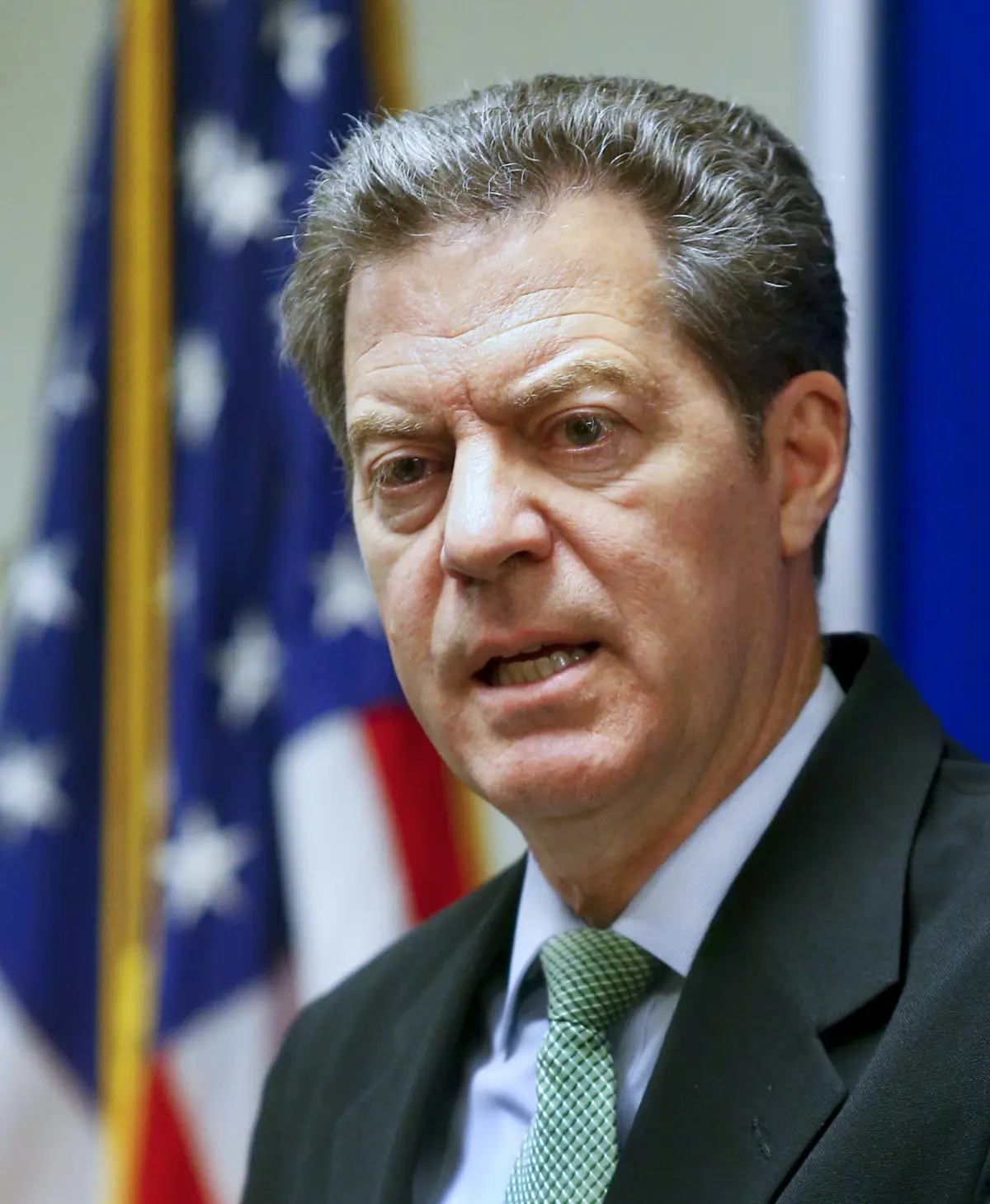
At the epicenter of this shift is Kansas Governor Sam Brownback, whose administration has championed a reckless march toward zero income taxes. To offset self-inflicted revenue shortfalls, the state has systematically starved public services, dismantled local government autonomy, and laid the groundwork for the privatization of public education.
This is not happening in an institutional vacuum. Across the United States, powerful libertarian and ultraconservative networks—most notably the American Legislative Exchange Council (ALEC), Americans for Prosperity (AFP), and local think tanks like the Kansas Policy Institute (KPI)—have supplied statehouses with synchronized model legislation. These templates are meticulously engineered to shrink government footprint, slash public expenditure, and redirect taxpayer dollars toward private, for-profit interests.
In Kansas, this coordinated strategy manifests explicitly in measures like House Bill 2741 (HB 2741), deceptively titled the School District Finance and Student Success Act. By narrowing the legal definition of "instruction," raiding public coffers to fund private and religious school savings accounts, and passing fiscal burdens onto cash-strapped local communities, HB 2741 threatens to deliver a near-fatal blow to the state’s public education system. Yet, as the human and infrastructural costs mount, a galvanized grassroots resistance is beginning to push back, setting the stage for a high-stakes political reckoning.
Detailed Chronology: The Anatomy of a Legislative Takeover
To understand how Kansas arrived at the precipice of public school privatization, one must trace the timeline of fiscal policy and legislative engineering that began with Governor Brownback’s election in 2010.
The Tax Cuts and the Manufactured Crisis (2012–2014)
The foundation of the current crisis was laid by the 2012 tax cuts enacted under Brownback, which eliminated income taxes for roughly 330,000 business owners and drastically reduced rates for individual earners. Promised as an "infusion of adrenaline" for the state economy, the policy instead triggered catastrophic revenue deficits. Rather than reversing course, the administration and its legislative allies doubled down, seeking deep spending cuts to balance the ledger. Public education, representing the largest single block of state expenditures, quickly became the primary target.
The Block Grant Experiment (2015)
During the 2014–2015 legislative session, the state legislature took the radical step of repealing the long-standing school funding formula. In its place, lawmakers implemented a temporary two-year block grant funding mechanism. Framed as a temporary bridge while a new formula could be devised, the block grants effectively severed funding from student enrollment numbers and localized needs. Day-to-day operations in school districts across Kansas were choked of necessary operational funds, setting the stage for permanent structural restructuring.
The Arrival of HB 2741 (Early 2016)
As the block grant mechanism neared its expiration, Republican Representative Ron Highland and Senator Steve Abrams introduced HB 2741 shortly before the 2016 legislative break. Billed as a comprehensive overhaul of public school finance, the bill was quietly routed to the House Appropriations Committee.
Far from solving the inequities exposed by lower courts, HB 2741 introduced the "Kansas Education Freedom Act." This provision created a private school savings program, allowing parents to siphon up to 70 percent of state per-pupil aid away from local public districts and redirect it toward private institutions, religious schools, online academies, or private tutors. Crucially, the bill stripped the Kansas State Department of Education of regulatory oversight, vesting financial and academic control instead in the partisan office of the Kansas State Treasurer—a direct structural nod to ALEC’s Education Savings Account Act model legislation.
Supporting Context & Metrics: The ALEC Playbook and the Starvation of Infrastructure
The architecture of HB 2741 did not emerge organically from the Kansas plains. It is part of a nationwide campaign orchestrated by institutional think tanks. According to data compiled by the Center for Media and Democracy, 2015 alone saw the introduction of 172 ALEC-inspired education measures across 42 states. The overarching objective is clear: to transform public education from an accountable, universal public good into a privatized, market-driven commodity.
Redefining "Instruction" to Defund the Whole Child
A core mechanism of HB 2741 is its aggressive narrowing of what constitutes "instructional" spending. The bill restricts state funding strictly to classroom teaching functions, while explicitly stripping general state aid from essential non-instructional operations:
- Central Office Administration: Already leaner than peer states and chronically underfunded, administrative support faces further cuts.
- Capital Improvements & Maintenance: State aid for facilities is severely restricted or eliminated, shifting the burden entirely onto local bond measures.
- Extracurricular Activities: Programs critical to student retention and holistic development—such as band, choir, debate, student council, and athletics—are disqualified from general state aid, forcing schools to rely exclusively on local funding.
- Food Service Operations: General state aid for food procurement and preparation is wiped out. This move threatens federal matching funds, local farm-to-school pipelines, and the basic nutritional needs of food-insecure students. Decades of public health research demonstrate that hunger directly impairs cognitive function and classroom performance; defunding school nutrition is, by extension, defunding learning.
The Facility Maintenance Deficit
The restrictions placed on capital improvements carry profound long-term consequences. A comprehensive assessment from the USGBC’s Center for Green Schools highlighted that current national and state spending levels are woefully inadequate to meet modern standards. Kansas public schools are already struggling to recover from decades of deferred maintenance. Restricting state-level capital aid exacerbates leaky roofs, outdated HVAC systems, and substandard learning environments, which directly undermine student and teacher productivity and health.
The Illusion of Increased Funding
Proponents of HB 2741 argued that the legislation provided an initial 4 percent increase in state general aid over the block grant system. However, policy analysts at the Kansas Association of School Boards (KASB) revealed this bump to be a temporary illusion. Once "Hold Harmless" stopgap funds expire two years downstream, districts will face a net decrease in revenue. This sleight of hand allowed ultraconservative lawmakers to campaign on increasing "instructional" funding during an election year while quietly baking structural budget cuts into the state’s future.
Official Statements and Justifications
The political justification for HB 2741 relied heavily on outside consulting firms and carefully curated efficiency narratives. Rep. Ron Highland defended the legislation by asserting that its framework incorporated recommendations from a $2.6 million statewide efficiency study conducted by the consulting firm Alvarez and Marsal.
The irony of spending $2.6 million of taxpayer money—in a state facing self-inflicted revenue collapses—on a study designed solely to find government cuts was lost on few observers. More critically, an examination of the Alvarez and Marsal report reveals that while the firm suggested various bureaucratic trims, it did not recommend the wholesale diversion of public funds to private savings accounts, nor did it advocate for the radical narrowing of "instruction" definitions that defined HB 2741. Those provisions originated not from neutral auditing, but from the ideological playbooks of ALEC, AFP, and the Kansas Policy Institute (KPI).
While lawmakers like Highland and Abrams denied formal, active membership in ALEC at the time, their historical attendance at ALEC functions and unwavering alignment with its policy goals left little doubt about their ideological allegiances.
Conversely, legal and educational watchdogs pushed back sharply. The Kansas Supreme Court repeatedly ruled that the state’s funding mechanisms failed to provide equitable education across districts. Wealthier communities can easily raise local property taxes to cover the non-instructional functions abandoned by the state; poorer rural and urban districts cannot. By offloading these costs onto local property taxes, HB 2741 directly violated constitutional mandates for equity.
Future Outlook: The Grassroots Awakening
By 2016, the cumulative impact of Governor Brownback’s tenure had driven public frustration to a boiling point. Yet, the relentless assault on public institutions also served as a powerful catalyst for civic mobilization.
A broad coalition of grassroots organizations emerged across Kansas to counter the ultraconservative legislative agenda. Groups such as Game On for Kansas Schools, Women for Kansas, the Moderate Party of Kansas, and the Mainstream Coalition unified parents, educators, and moderate citizens. These networks successfully shifted public discourse, exposed the true mechanics of ALEC-backed bills, and recruited viable primary and general election challengers to unseat entrenched ideologues.
The ultimate trajectory of Kansas politics hinged on whether voters would successfully translate grassroots energy into legislative power. Observers noted that if the fall elections altered the composition of the Statehouse, Kansas might finally halt its race to zero income taxes, stabilize public school funding, and halt the privatization pipeline.
As Marcel Harmon observed, if the legislative landscape shifts enough to form a bipartisan, veto-proof coalition on public education, committee names in Topeka might finally cease to serve as somber memorials to what has been displaced and destroyed. Until then, bills like HB 2741 remain monuments to a different reality—one where public education is systematically broken, privatization is accelerated, and student success is left to fend for itself.