Executive Overview
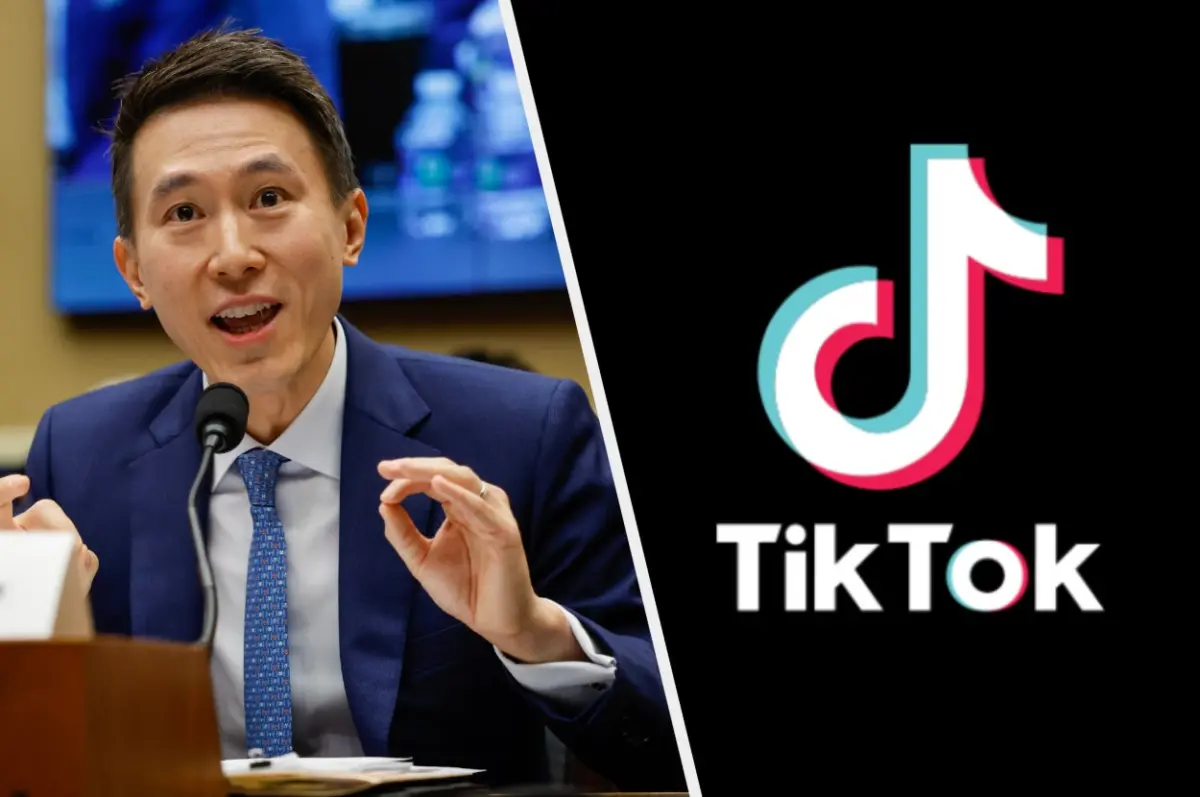
In an era of deep political polarization that has routinely paralyzed the United States Congress, lawmakers from across the aisle found rare, unbroken alignment on Capitol Hill. TikTok CEO Shou Zi Chew faced a blistering, five-hour grilling before the House Energy and Commerce Committee, defending the wildly popular video-sharing application against mounting allegations of foreign espionage, algorithmic manipulation, and national security threats.
Representing an app with over 150 million active American users—nearly half of the United States population—Chew stepped into the political crosshairs to defend the platform from its ultimate existential crisis. At the center of the storm is ByteDance, TikTok’s Beijing-based parent company. Lawmakers argued that ByteDance’s corporate structure leaves it inherently vulnerable to the dictates of the Chinese Communist Party (CCP), transforming a harmless app for dance trends and comedic sketches into a sophisticated instrument of foreign surveillance and political influence.
Despite Chew’s repeated assurances that user data is secure and that ByteDance operates independently of any government, the testimony failed to move the needle among skeptical legislators. The hearing served as a dramatic public theater for an escalating geopolitical tech cold war. With the Biden administration demanding that ByteDance divest its ownership stake or face an outright nationwide ban, and with multiple legislative bills rapidly advancing through Congress, the future of American access to TikTok hangs in the balance. This report breaks down the anatomy of the historic hearing, the core controversies surrounding data privacy, and what lies ahead for one of the world’s most influential media platforms.
Detailed Chronology: The Anatomy of a Five-Hour Grilling
The atmosphere inside the Rayburn House Office Building was electric as the hearing commenced. Committee Chair Cathy McMorris Rodgers (R-WA) wasted no time establishing an aggressive tone, setting the parameters for a grueling afternoon that would test the diplomatic and communicative skills of the 40-year-old Singaporean executive.
Opening Salvos and Foundational Distrust
"We do not trust TikTok will ever embrace American values, values for freedom, human rights, and innovation," Rodgers declared in her opening statement. She escalated her rhetoric further, asserting that "TikTok has repeatedly chosen the path for more control, more surveillance, and more manipulation. Your platform should be banned."
Chew, dressed in a dark suit and maintaining a calm exterior despite the barrage of hostile questioning, delivered a written and verbal defense attempting to decouple TikTok from the geopolitical anxieties of Washington. He stated unequivocally: "Let me state this unequivocally: ByteDance is not an agent of China or any other country."
However, lawmakers quickly dismissed these assurances, pointing to the structural realities of Chinese corporate law. Throughout the session, members of Congress noted the supreme irony of the situation: TikTok had accidentally achieved what no American president or domestic policy initiative had managed to accomplish in years—uniting Republicans and Democrats in total legislative harmony.
"You have unified Republicans and Democrats and, if only for a day, we’re actually unified because we have serious concerns," remarked Rep. August Pfluger (R-TX), capturing the sentiment of the room.
The "Project Texas" Defense and Skepticism
Chew’s primary shield against questions regarding data security was Project Texas, a sweeping, multi-billion-dollar initiative designed to wall off American user data on domestic servers controlled by the software giant Oracle. Under this plan, Chew maintained that all U.S. traffic would be routed through American infrastructure, overseen by a trusted third-party security team, effectively locking out any remote access by China-based employees.
Yet, this firewall failed to convince the committee. Lawmakers relentlessly probed the porous nature of historical data transfers and questioned whether corporate restructuring could ever truly insulate a subsidiary from its foreign parent company.
"What you’re saying about Project Texas just doesn’t pass the smell test," challenged Rep. Angie Craig (D-MN). "My constituents are concerned that TikTok and the Chinese Communist Party are controlling their data and seeing our own vulnerabilities… What you’re doing down in Texas is all well and good, but it is not enough to be convinced that our privacy is not at risk."
The Surveillance Controversy and the "Spook" Debate
The skepticism of lawmakers was not born out of thin air; it was fueled by recent journalistic investigations and admissions regarding corporate governance failures. Last year, reporting by BuzzFeed News revealed that China-based employees of ByteDance had accessed non-public U.S. user data on multiple occasions between September 2021 and January 2022.
Making matters worse, ByteDance admitted in December that this unauthorized access extended to the personal data of the BuzzFeed reporter who broke the story, along with several other journalists covering the company.
When pressed by Rep. Neal Dunn (R-FL) on whether ByteDance had ever spied on American citizens, Chew balked at the terminology, offering a semantic defense that infuriated panel members: "I don’t think that ‘spying’ is the right way to describe it."
Supporting Context & Metrics: The Scale of the Debate
To understand why Washington is willing to risk political blowback from millions of young voters by banning TikTok, one must examine the staggering metrics and the complex legislative machinery currently mobilized against the platform.
The Numbers Behind the Platform
- 150 Million: The number of active monthly American users on TikTok, representing a massive demographic footprint that spans Gen Z, millennials, and an increasing number of older demographics.
- 5 Hours: The grueling duration of Shou Zi Chew’s congressional testimony, marking one of the longest continuous grillings of a tech executive in recent legislative history.
- 3 Major Bills: The number of active legislative proposals moving through Congress aimed at curbing TikTok’s operations or banning foreign-owned technology deemed a national security threat.
- Sep 2021 – Jan 2022: The timeframe during which internal ByteDance audits confirmed that China-based staff repeatedly accessed non-public U.S. user data.
The Legislative Landscape
Congress is currently weighing multiple pathways to neutralize what lawmakers characterize as an unacceptable national security risk:
- Outright Bans: Two distinct bills have been introduced that would outright ban TikTok from app stores and network infrastructure across the United States.
- The RESTRICT Act: Sponsored by Senators Mark Warner (D-VA) and John Thune (R-SD), this comprehensive bipartisan bill would grant the executive branch sweeping authority to review, block, and mitigate transactions involving information and communications technology products linked to foreign adversaries, including China and Russia.
- The Forced Divestiture: Reports indicate that the Committee on Foreign Investment in the United States (CFIUS)—backed by the Biden administration—has issued an ultimatum demanding that ByteDance sell its stake in TikTok, threatening an absolute ban if the parent company refuses. Meanwhile, the Chinese commerce ministry has publicly stated that Beijing would staunchly oppose any forced sale, setting up an intense international standoff.
Official Statements and Institutional Reactions
The fallout from the hearing extended far beyond the walls of the House Energy and Commerce Committee room, prompting swift reactions from top congressional leaders and executive branch officials.
House Speaker Kevin McCarthy (R-CA) weighed in shortly before the conclusion of the proceedings, voicing his unequivocal support for legislative action. "I think you see a bipartisan concern here with what’s happening on TikTok, especially what’s happening to the data for Americans," McCarthy told reporters.
Following the hearing, Senators Mark Warner and John Thune released a joint statement doubling down on their legislative push via the RESTRICT Act. They wrote:
"Under People’s Republic of China law, all Chinese companies, including TikTok, whose parent company is based in Beijing, are ultimately required to do the bidding of Chinese intelligence services, should they be called upon to do so. Nothing we heard from Mr. Chew today assuaged those concerns… We are encouraged by the quick momentum and strong bipartisan support for our legislation and expect that it will only grow following today’s testimony."
On the broader regulatory front, Chew repeatedly reminded lawmakers that many of the vulnerabilities they cited—such as algorithmic addiction, content moderation failures, and severe impacts on the mental health of minors—are systemic problems plaguing all social media ecosystems, from Meta to Alphabet, rather than issues unique to TikTok. However, while domestic platforms face intense scrutiny over privacy and safety, TikTok bears the unique burden of its cross-border ownership structure.
Future Outlook: Where Does TikTok Go From Here?
The congressional hearing was not merely a public relations disaster for TikTok; it was a watershed moment that accelerated the timeline for potential federal intervention. Shou Zi Chew’s performance, while composed, failed to bridge the monumental chasm of distrust separating Silicon Valley/Beijing dynamics from Washington policymakers.
What Lies Ahead?
- Legal and Corporate Standoffs: If ByteDance refuses to sell its U.S. operations—and if Beijing blocks any forced divestiture under Chinese export control laws—the Biden administration will face the unprecedented task of implementing a functional ban on an app embedded in the daily routines of 150 million Americans. Such a ban would undoubtedly trigger immediate, protracted legal battles over First Amendment rights and executive overreach.
- The Fate of Project Texas: TikTok will likely continue investing heavily in its domestic data-isolation strategies, attempting to prove through independent audits that American user data is untouchable. However, given lawmakers’ skepticism that corporate firewalls can survive the heavy hand of authoritarian state security laws, Project Texas may be viewed by Washington as too little, too late.
- Broader Tech Regulation: The intense scrutiny facing TikTok serves as a harbinger for all foreign-developed software operating within Western markets. The precedent set by this battle will redefine how global technology companies handle data sovereignty, cross-border acquisitions, and national security compliance for decades to come.
As the political dust settles on Capitol Hill, one reality remains glaringly clear: TikTok’s days of operating without fierce, existential federal oversight are over. Whether the platform survives through a forced corporate metamorphosis or succumbs to a historic legislative prohibition, the digital bridge between Beijing and Washington has entered its most perilous chapter yet.