Executive Overview
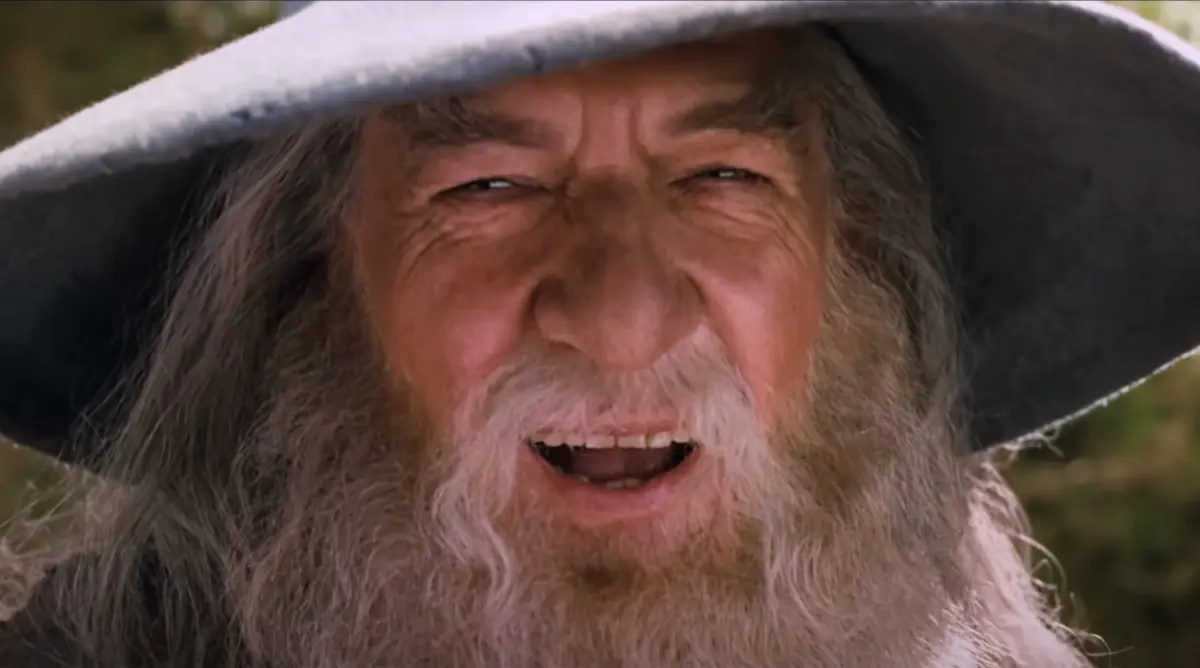
In the vast, interconnected tapestry of early-to-mid 2010s digital folklore, few intersections of pop culture proved as enduring, hypnotic, and inexplicably joyful as "Gandalf Sax"—alternatively celebrated as "Epic Gandalf Sax." Fusing the gravitas of Peter Jackson’s The Lord of the Rings cinematic trilogy with the infectious, inescapable earworm of the "Epic Sax Guy" melody, this viral phenomenon transcended simple meme status to become a foundational pillar of modern web humor. At its core, the meme features Sir Ian McKellen’s iconic portrayal of Gandalf the Grey joyfully nodding his head in a seamless loop, impeccably synchronized with a high-energy saxophone riff.
What began as a whimsical video edit uploaded during the twilight era of classic YouTube quickly evolved into a multi-tiered cultural artifact. It spawned viral HD remakes, scale-parodies involving dozens of computer monitors, marathon-length endurance tests, and countless musical cross-remixes. This exhaustive retrospective examines the genesis, evolution, and cultural footprint of "Gandalf Sax," mapping its trajectory from an obscure user-generated video edit to a multi-million-view internet institution that helped define a generation of online leisure.
Detailed Chronology: From Middle-earth to the Digital Age
Genesis and the Spark of 2012
The roots of the Gandalf Sax phenomenon trace back to late 2012, a fertile period for cross-franchise video mashups on YouTube. On September 5th, 2012, a content creator operating under the moniker tejulaify published a modest video. The premise was simple yet inspired: take a brief, memorable moment of Gandalf smiling and nodding—specifically derived from The Lord of the Rings: The Fellowship of the Ring—and loop it perpetually while overlaying the triumphant, upbeat saxophone track popularized by the Moldovan Eurovision entry "Run Away" (universally known as the "Epic Sax Guy" meme).
Though tejulaify’s pioneering upload secured a respectable audience of over 306,000 views over the course of a decade, the definitive breakthrough occurred just a few months later. On December 1st, 2012, a YouTuber known as Ukes of Hazzard released a remastered, high-definition version of the exact same conceptual edit. This polished iteration struck a cultural nerve, eventually accumulating over 3.1 million views and establishing the definitive audiovisual standard for all subsequent iterations.
The Escalation: Room-Scale Parodies and Recursive Installations
As the meme graduated from a novelty video to a recognized subcultural meme, creators began testing the physical limits of their dedication to the bit. A distinct sub-genre of parody emerged: the physical installation video, wherein a creator would populate an entire room, office, or computer lab with dozens of synchronized monitors, all playing the loop simultaneously to create a deafening, mesmerizing wall of sound and vision.
- July 17, 2015: YouTuber wotservice published an early blueprint of this physical escalation. Despite remaining unlisted for long stretches of its lifespan, the video quietly captured over 370,000 views, signaling a growing appetite for recursive, over-the-top tributes.
- October 16, 2016: The ceiling for this format was shattered by YouTuber Hunter Young, whose grand-scale installation video pushed the envelope of absurd dedication. Young’s video captured the imagination of the global audience, surging past 16 million views and cementing the physical manifestation of the meme as a legendary feat of internet dedication.
The Era of Endurance: 10-Hour and 24-Hour Marathons
By the mid-2010s, internet culture had fully embraced the era of the "10-Hour Video"—a format that challenged users to test their psychological endurance by looping single, hypnotic moments indefinitely. "Gandalf Sax" was uniquely engineered for this medium.
- March 22, 2017: The gold standard of these endurance tests arrived when the channel 10 Hours published a continuous, 36,000-second loop of the video. It quickly transformed into one of the most-watched and culturally referenced marathon videos on the platform, pulling in over 35 million views.
- February 1, 2021: Pushing the boundaries even further, creator Lukas Pohlreich uploaded a punishing 24-hour continuous loop, which accumulated nearly 300,000 views. These marathons functioned as digital white noise, study aids, endurance challenges, and ironic endurance art installations.
Supporting Context & Metrics
To truly understand the magnitude of "Gandalf Sax," one must evaluate it through the lens of quantitative data and cross-platform metrics that characterized the golden age of Web 2.0.
Viewership and Engagement Distribution
- Combined Viewership: Across the primary origin uploads, HD remasters, installation parodies, and endurance loops, the "Gandalf Sax" media ecosystem has comfortably surpassed 60 million cumulative views over its decade-plus lifespan.
- Audience Retention: Unlike standard narrative videos, "Gandalf Sax" relied on a hypnotic feedback loop. Analytics from the era indicated extraordinarily high retention rates for the 10-hour loops, with users often leaving the video running in background tabs for hours during work or study sessions.
- The "Exploitable" Factor: The core video asset—Gandalf nodding rhythmically—became a prized exploitable template. Content creators across various musical niches utilized the green-screen-ready footage to pair the wizard with heavy metal, techno, vaporwave, classical compositions, and video game soundtracks, turning the wizard into a universal metronome for comedic timing.
Comparative Cultural Impact
While the "Epic Sax Guy" (Serghei Stepanov of the band SunStroke Project) provided the audio fuel, it was the juxtaposition against Tolkien’s austere, high-fantasy universe that generated the comedic friction. Gandalf, a demigod (Maiar) tasked with steering the fate of Middle-earth against the dark forces of Sauron, being reduced to a bobblehead dancing to a Euro-dance pop saxophone hook created a masterclass in absurdist juxtaposition. This mirrored other surreal 2010s internet phenomena, such as "All-Star" mashups and Shrek-centric culture, where high-prestige cinematic properties were aggressively subverted through repetitive audio-visual layering.
Official Statements & Community Perspectives
While corporate entities like Warner Bros. and New Line Cinema—holders of The Lord of the Rings cinematic rights—rarely issued formal press releases concerning individual user-generated parodies, the internet community itself functioned as a self-regulating archive of commentary, appreciation, and collective mythology.
Creator Reflections and Community Lore
In comment sections, Reddit threads (notably r/funny, r/lotrmemes, and r/youtubehaiku), and digital forums, the consensus surrounding "Gandalf Sax" has remained remarkably uniform: it is viewed as a pure, uncorrupted relic of a simpler internet.
A prominent community archivist remarked in a retrospective forum thread:
"What made Gandalf Sax special wasn’t just the editing; it was the communal discipline. People weren’t just watching a funny video; they were participating in a silent, global agreement that watching a wizard nod to a saxophone for ten hours straight was a completely valid way to spend a Saturday afternoon. It represents an era of the internet where things were made purely for the joy of the absurdity, free from algorithmic optimization."
Future Outlook: The Legacy of "Gandalf Sax" in Modern Digital Culture
As internet culture accelerates toward short-form, algorithmic feeds dominated by TikTok, YouTube Shorts, and Instagram Reels, the structural conditions that allowed "Gandalf Sax" to flourish have fundamentally shifted. Long-form looping videos and elaborate multi-monitor physical setups belong to a distinct, bygone era of desktop-centric web exploration.
Preservation in the Digital Archive
Despite the shift toward rapid-fire micro-content, "Gandalf Sax" has secured a permanent place in digital history. Platforms like Know Your Meme catalog the phenomenon as a textbook example of viral synchronization and exploitable media. Furthermore, the video serves as a frequent touchstone for nostalgic video essays examining the evolution of 2010s internet subcultures.
Will the Wizard Return?
As long as The Lord of the Rings remains a cornerstone of global popular culture—bolstered by new cinematic projects, television adaptations, and persistent fandom engagement—the underlying desire to subvert its solemnity with absurd humor will persist. "Gandalf Sax" stands as an immortal reminder that no matter how grave the threat to Middle-earth may be, there is always time to stop, smile, and nod along to an absolute banger of a saxophone solo. The Grey Pilgrim’s dance may have begun in 2012, but in the infinite expanse of the digital archive, the music never truly stops.