Executive Overview
In the chaotic aftermath of a major earthquake, building collapse, or industrial disaster, every single second counts. When catastrophic structural failures render environments entirely inaccessible to human emergency responders, rescue operations traditionally rely on bulky mechanical drones, remote-controlled rovers, or specialized tracking canines. While these tools have undoubtedly saved countless lives, they all share a critical physical limitation: scale. Even the smallest mechanical robots frequently find themselves blocked by narrow crevices, tight masonry gaps, and treacherous shifts of internal rubble.
Enter the next evolution of search-and-rescue technology: the cyborg insect.
A collaborative research team comprising bio-robotics engineers from the University of Queensland (UQ) and the University of New South Wales (UNSW) has unveiled a breakthrough development known as the “Paraborg.” Published in the premier scientific journal Advanced Science, this pioneering research details a method that moves beyond simply using insects to scout disaster zones. Instead, the team has engineered cyborg bugs capable of actively administering first aid and emergency medication to trapped survivors.
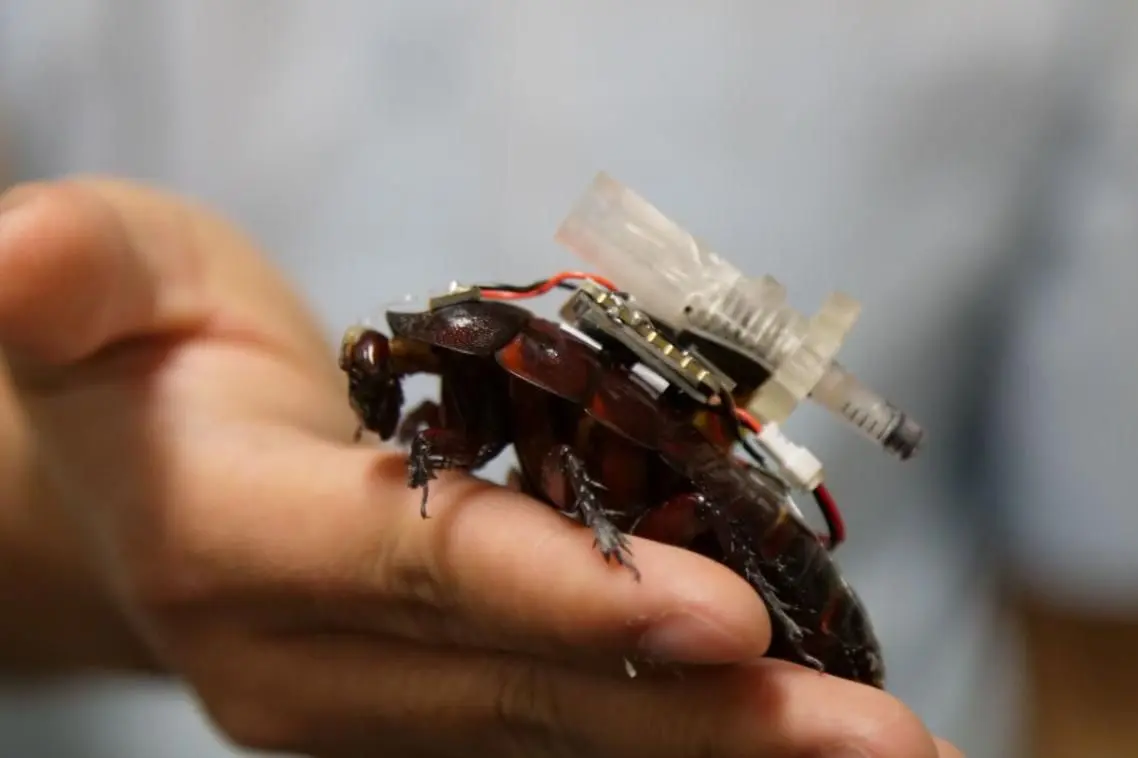
Utilizing the formidable frame of the native Australian giant burrowing cockroach, these bio-bots combine living biological resilience with advanced microelectronics and chemical engineering. While the concept of receiving emergency medical treatment from a cockroach may initially evoke visceral hesitation, the implications of this technology are profound. By leveraging the natural agility and exceptional load-bearing capacity of these armored insects, scientists are designing a first-responder vanguard that can squeeze through millimeter-wide gaps, assess human vital signs via miniature cameras, and deliver life-saving therapeutics long before heavy machinery can clear a path.
Detailed Chronology: The Evolution and Engineering of the Paraborg
Moving Beyond "Search and Explore"
For the past two decades, bio-robotics researchers around the globe have experimented with transforming insects into remote-controlled reconnaissance agents. These early iterations successfully demonstrated that living organisms could be outfitted with microchips and wireless transceivers to map out hazardous, tight spaces. However, their utilities remained largely passive.
Tan Vo Doan, a leading bio-robotics researcher at the University of Queensland, noted the limitations of historical approaches in a press release accompanying the study. "Cyborg insects have been designed for ‘search and explore’ missions for the past couple of decades," Vo Doan explained. "We wanted to take the next step."
That next step involved conceptualizing a multi-functional biological platform that could transition from passive observation to active medical intervention. To realize this vision, the research team turned their attention to a unique biological specimen: the giant burrowing cockroach (Macropanesthia rhinoceros), native to the tropical forests of northern Queensland.
Selecting the Ideal Biological Platform
Unlike the common household pest, the giant burrowing cockroach is an impressive specimen. Armored, wingless, and robust, these creatures can grow up to 87 millimeters (roughly 3.5 inches) in length and weigh up to 40 grams (1.4 ounces). More importantly, their massive size relative to other insects affords them extraordinary strength and load-bearing capacities. Research shows that these resilient bugs can comfortably carry up to 1.5 times their own body weight without experiencing systemic fatigue or mobility failure.
To convert these living organisms into operational Paraborgs, the research team implemented a meticulous surgical and technical integration process:
- Anesthesia and Preparation: The cockroaches were carefully anesthetized using a specialized protocol to ensure humanitarian handling during the installation of electronic hardware.
- Hardware Integration: Researchers attached ultra-lightweight microchips, power sources, and micro-electrode arrays directly to the insects.
- Post-Procedure Recovery: Once the primary equipment configurations were tested, the creatures lived entirely normal biological lives when the temporary external gear was detached.
Remote Guidance via Neural Stimulation
To direct the Paraborgs through complex, dynamic environments, the engineers bypassed traditional mechanical steering in favor of targeted neural manipulation. By implanting microscopic electrodes into specific sensory organs of the cockroach—namely, the antennae and the cerci (a pair of protruding sensory appendages located at the rear of the abdomen)—the team established precise remote-control capabilities.
Steering the cyborg insect requires independent electrical stimulation of each antenna, which tricks the cockroach’s directional instincts and compels it to turn left or right. Meanwhile, pace and acceleration are modulated by administering current to both cerci simultaneously.
Through rigorous trial and error, the researchers calibrated the electrical frequencies delivered to the nervous system, maintaining an optimal window between 10 and 40 hertz. They discovered that sustaining frequencies above 50 hertz resulted in neural habituation, rendering the stimulation ineffective over extended operational windows.
Chemical Engineering Meets Micro-Medicine
The most revolutionary aspect of the Paraborg project is its dual specialization. The UQ and UNSW team successfully developed two distinct operational variants of the cyborg insect:
- The Scout Variant: Outfitted with an ultra-lightweight, high-definition micro-camera capable of streaming visual data concerning the health and physical position of disaster victims.
- The Medic Variant: Equipped with an innovative, automated micro-injection mechanism designed to deliver precise doses of targeted medication.
Because electronic pumps and motorized actuators are excessively heavy and drain battery reserves rapidly, the research team looked to high school chemistry for a brilliantly simple alternative: an acid-base gas generator.

The injection mechanism relies on a compact spring system that breaks a physical seal separating two isolated chambers—one containing citric acid and the other containing baking soda. When the chambers mix, the resulting chemical reaction generates carbon dioxide gas. This expanding gas acts as a pneumatic piston, smoothly pushing the plunger of an integrated syringe to administer the payload.
When fully outfitted with the injection apparatus, the Paraborg’s height increased by roughly 15 millimeters, and its overall weight increased by 17 grams. Despite this added burden, biomechanical analyses confirmed that the cockroach’s natural walking speed and gait remained virtually unimpaired.
Supporting Context & Metrics: Performance and Field Testing
To validate the operational viability of the Paraborg system, the research team constructed a controlled laboratory obstacle course. The testing protocol required a remotely piloted cyborg cockroach to navigate away from an arbitrary starting point, maneuver through three distinct navigational checkpoints, and successfully execute a simulated medical injection on a targeted dummy.
The empirical metrics gathered from these trials illustrate both the immense promise and the current engineering thresholds of the platform:
- Close-Range Injection Accuracy: When the Paraborg was positioned within 150 millimeters of the target, the success rate for the micro-injection deployment peaked at an impressive 95 percent.
- End-to-End Mission Success: The composite success rate for executing the entire multi-stage sequence—spanning departure from the base station, precise multi-checkpoint navigation, and successful completion of the injection protocol—stood at 72 percent.
- Swarm-Style Teamwork: In advanced trials, the research team successfully demonstrated cooperative multi-agent dynamics. One Paraborg deployed its onboard camera to locate and relay the coordinates of a simulated victim, while a secondary Medic-variant Paraborg was dynamically routed to the exact location to deliver the treatment.
While the research team had previously experimented with cyborg beetles capable of scaling vertical walls, the team concluded that larger cockroaches provide a far superior platform. Their broad frames, high weight thresholds, and natural ground-crawling stability make them optimal for carrying specialized diagnostic and therapeutic hardware across uneven subterranean layouts.
Official Statements and Scientific Perspectives
The development of the Paraborg has ignited enthusiastic dialogue within the global bio-robotics and disaster-response communities. Experts point out that the paradigm shift from heavy robotics to bio-integration represents a major leap forward in how humans leverage the natural world.
Tan Vo Doan emphasized the strategic philosophy driving the research in institutional statements:
"Cyborg insects have been designed for ‘search and explore’ missions for the past couple of decades. We wanted to take the next step. Rather than building one robot to do everything, we can harness the natural strengths of different insects and equip them for different missions."
This sentiment underlines a core tenet of modern bio-engineering: evolution has already solved the hardest problems of locomotion in tight spaces. Rather than expending engineering capital trying to design a complex micro-actuator that can crawl under a fallen concrete slab, scientists can co-opt a living organism that has spent millions of years perfecting that exact physical movement.
At the same time, the research team maintains a grounded, objective perspective regarding the limitations of their current trials. In their published paper in Advanced Science, the authors explicitly note that the laboratory tests did not yet replicate the hyper-complex, highly variable environmental conditions found in real-world disaster zones. Actual collapse sites feature sharp debris, caustic chemical spills, shifting rubble landscapes, and unpredictable temperature gradients that could challenge both the electronics and the biology of the Paraborgs.
Future Outlook: The Road to Real-World Deployment
Looking ahead, the path from a university laboratory to active deployment in emergency zones requires overcoming clear developmental milestones. The primary hurdle facing the UQ and UNSW team is securing dedicated funding and institutional resources to accelerate both hardware miniaturization and extensive field-testing in simulated disaster environments.
If these funding and engineering milestones are met on schedule, Vo Doan and his colleagues express confident optimism regarding the timeline for real-world integration. They estimate that a functional, highly coordinated rescue team of cyborg insects could realistically be deployed to actual disaster sites within five to ten years.
As this technology matures, the future of urban search and rescue may look vastly different from what we see today. Heavy machinery and thermal-imaging drones will continue to clear the macro-environment, but beneath the crushed concrete and twisted rebar, an invisible, scuttling vanguard of cyborg insects will quietly navigate the dark. Guided by remote operators and armed with cameras and life-saving medicine, these resilient bio-bots may ultimately bridge the critical gap between life and death in our most vulnerable moments.
This story was originally published in WIRED Japan and has been comprehensively expanded and translated from Japanese.