Executive Overview
As the political cycle barrels toward the upcoming midterms, data centers have transformed from a background hum of the digital economy into one of the most volatile and fiercely contested domestic policy issues in the United States. Once welcomed unconditionally by local authorities and economic development boards for their promised tax revenues and high-tech cachet, massive digital infrastructure projects are now facing an unprecedented wave of public resistance.
Recent polling illustrates a dramatic collapse in public support. Up to 75 percent of Americans now report that they would oppose a major data center being constructed in their local community—a staggering surge from the 42 percent opposition recorded just the previous year. This rapid erosion of public goodwill has forced a remarkable political realignment. Bipartisan politicians who once championed the digital expansion, including prominent governors like Texas Republican Greg Abbott and Pennsylvania Democrat Josh Shapiro, have conspicuously recalibrated their rhetoric. Eager to signal a hardline stance to anxious voters ahead of the midterms, these officials are increasingly distancing themselves from the rapid sprawl of server farms.
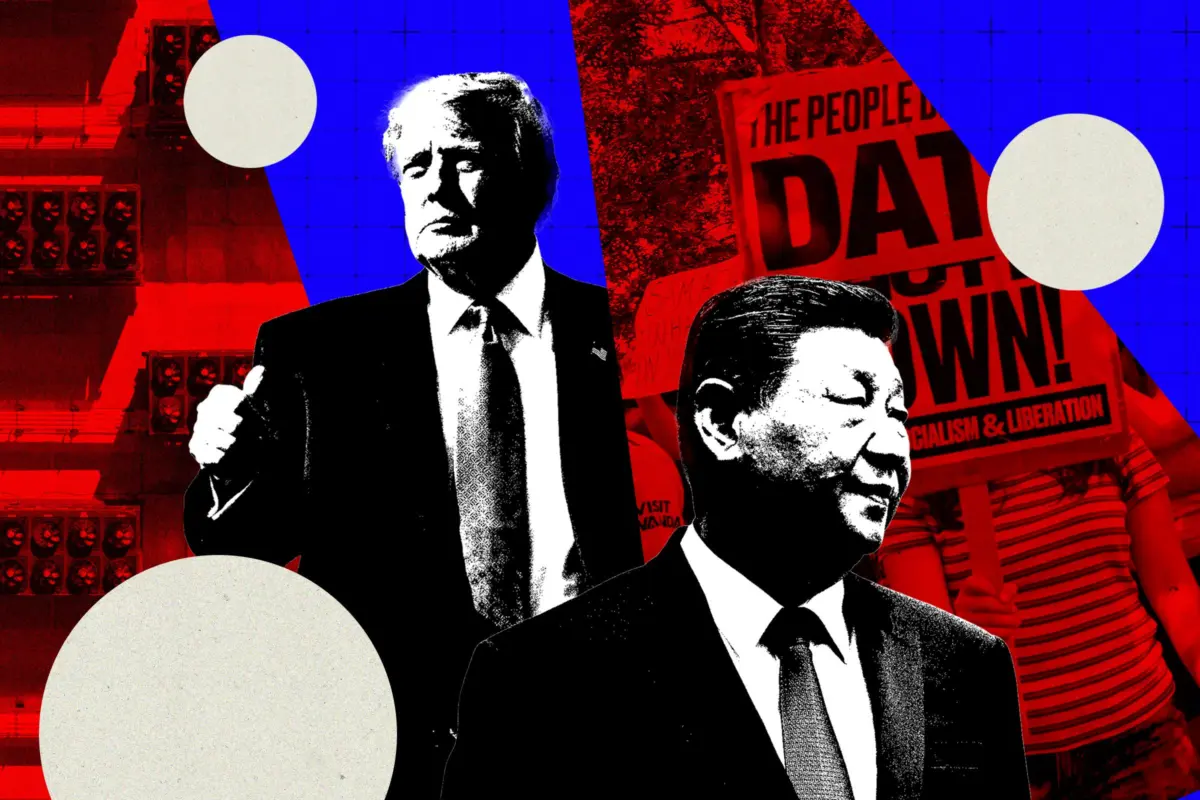
However, the technology industry and its political allies are fighting back not by addressing the root causes of community discontent—such as severe strain on local electrical grids, massive water consumption, noise pollution, and skepticism regarding artificial intelligence—but by leaning on a familiar geopolitical scapegoat. Across Washington think tanks and social media platforms, tech leaders and right-wing figures have aggressively promoted a singular narrative: that foreign interference, specifically from the Chinese Communist Party, is the true engine driving the American backlash against data centers.
This deep dive examines the anatomy of the data center backlash, interrogates the thin evidentiary foundation behind claims of foreign-stoked panic, and explores why shifting the blame to Beijing has become such a convenient reflex for an industry scrambling to protect its bottom line.
Detailed Chronology: The Escalation of the Data Center Controversy
To understand how the data center debate reached its current flashpoint, it is necessary to trace the trajectory of public sentiment and corporate reaction over the past eighteen months.
Spring to Early Summer: The Emergence of the "Foreign Interference" Narrative
As local pushback against server farm proposals began bubbling up across suburban and rural American communities in early 2025, right-wing policy shops and conservative think tanks in Washington began circulating unverified reports. These documents asserted that the Chinese Communist Party was systematically seeding anti-infrastructure narratives to stall American technological dominance.
By June, major tech platforms began reacting to internal security flags. OpenAI announced that it had dismantled a cluster of user accounts linked to the Chinese government. According to OpenAI’s findings, these accounts were actively testing narratives centered around AI infrastructure to gauge public response. However, the company’s internal reports carefully noted that these actors were merely exploiting pre-existing domestic anxieties rather than creating the sentiment from scratch.
Late August: X’s Disclosures and the Media Frenzy
The narrative reached a fever pitch in late August when social media platform X announced it had identified roughly 200 accounts tied to Chinese influence operations that were allegedly amplifying anti-data center talking points. While the network represented a tiny fraction of a broader bot farm operation totaling some 200,000 accounts—many of which shared identical hashtags, imagery, and obscure local news links—the disclosure triggered a cascade of alarmist headlines.
Prominent media outlets amplified the findings, leading to proclamations that foreign actors were secretly driving American anger. Right-wing figures and pro-tech commentators quickly weaponized the reports on social media to dismiss local community organizers as unwitting pawns of Beijing.
The political apex of this campaign arrived days later when the White House weighed in. President Donald Trump took to Truth Social to defend the expansion of digital infrastructure, writing, "China could not be happier with this anti-Data Center movement—let Data Reign!"
Fall Realignment: Politicians Jump Ship
With public polling reaching a dismal 75 percent opposition rate by autumn, the political calculus shifted decisively. Governors and federal lawmakers facing impending midterms realized that championing unrestricted data center construction was a political liability. Even as the administration pushed forward with a pro-infrastructure stance, local representatives from both sides of the aisle began enacting moratoria, stricter zoning laws, and environmental reviews to appease constituents—setting the stage for a tense ideological battle ahead of the elections.
Supporting Context & Metrics: Unpacking the Data and the Skeptics
The assertion that American citizens are primarily protesting data centers because of foreign manipulation rather than lived experience does not withstand close analytical scrutiny. Independent researchers and social media analytics firms have consistently found that the vast majority of opposition is homegrown and organic.
What the Data Shows
- 75 Percent: The proportion of Americans who now express opposition to the construction of a data center in their local neighborhood, according to recent polling data—marking a steep climb from 42 percent the prior year.
- 200 vs. 200,000: The scale of the X (formerly Twitter) bot farm sweep. While media reports focused intensely on the 200 accounts discussing data centers, security researchers noted they were part of a broader, unfocused network of 200,000 automated accounts utilizing boilerplate messaging.
- Graphika’s Assessment: Independent social media analytics firm Graphika tracked sentiment across online platforms throughout the summer and concluded that the vast majority of anti-data center discourse originated from domestic sources, with virtually no hard evidence of orchestrated foreign intervention directing the groundswell of local anger.
The Skeptics Speak Out
Even within pro-tech and libertarian circles, the rush to blame China has raised eyebrows. Andy Masley, a prominent blogger whose writing defending data centers is funded by Coefficient Giving, has openly questioned the narrative embraced by his peers.
"As soon as I start talking China, they get quiet," Masley noted in interviews. "It seems like a very convenient belief. I have my own biases as a Democrat, but I sometimes look at these tech guys and think, ‘Oh, they had to meme themselves into being more right-wing a few years ago. They think right-wing people like it when you talk about China.’"
Masley issued public calls for insider intelligence from the tech community regarding concrete evidence of Chinese interference in domestic zoning or environmental protests and reported receiving nothing of substance.
Furthermore, geopolitical analysts point out a glaring contradiction in the tech sector’s logic. Throughout the year, administration officials and cybersecurity experts have loudly complained that Chinese firms are actively attempting to steal American advances in artificial intelligence. If Beijing’s primary strategic goal is to accelerate its own domestic AI capabilities, experts ask why it would concurrently attempt to sabotage the physical infrastructure—the high-capacity data centers and power grids—upon which those exact models rely.
Official Statements & Expert Analysis
To gain a deeper perspective on how geopolitical blame-shifting operates in the modern media landscape, industry experts emphasize that the current panic is less about foreign threats and more about domestic introspection.
Louise Matsakis, WIRED’s senior business editor and an authority on China’s global influence operations, argues that the entire episode demonstrates a profound misunderstanding of how foreign governments actually operate, coupled with an American political predisposition toward external scapegoating.
"It is endlessly fascinating to me how China becomes a scapegoat," Matsakis observes. "Americans often find it easier to put the blame on a nebulous other, rather than to actually look at themselves."
This sentiment is echoed by Tyler Williams, vice president of intelligence at Graphika. Despite widespread Washington chatter linking local zoning disputes to foreign psychological operations, Williams confirmed that rigorous tracking of digital discourse reveals little to no substantive foreign intervention driving public discontent.
Instead, the backlash is fueled by very real, tangible grievances:
- Resource Strain: Enormous demands on local municipal water supplies used for cooling server racks.
- Energy Grid Pressures: Fears that energy-hungry AI training facilities will drive up household electricity bills and trigger local brownouts.
- Environmental & Quality-of-Life Impacts: Persistent noise pollution from industrial cooling fans, heavy diesel generator testing, and heavy construction traffic in residential or rural communities.
Future Outlook: Automation, Labor, and the Midterm Horizon
As the midterm elections draw closer, the data center debate is bound to intensify rather than abate. Politicians will continue walking a tightrope between catering to powerful corporate donors who view AI infrastructure as essential to national economic competitiveness and listening to irate local voters dealing with the immediate environmental fallout.
Compounding these local anxieties are emerging workforce shifts within the industry itself. Recent reporting by WIRED’s Paresh Dave into Meta’s experimental deployment of robotics within data centers highlights a looming economic paradox for the communities hosting these facilities. While tech companies promise broad economic revitalization, the reality of automated infrastructure points toward a different future.
"I was surprised to learn that some data centers have cafeterias, with full-on kitchen staff," Dave noted regarding his investigative findings. "It’s important to realize that as data centers automate some of the more technical work and reduce on-site jobs, operators could also save money on items such as food and janitorial services—and all those people would also be losing work."
As server farms increasingly transition toward automated maintenance, robotics, and streamlined operations, the long-term local employment benefits promised by developers are shrinking. When combined with the high environmental costs and the persistent deflection toward foreign bogeymen, communities have ample reason to remain deeply skeptical.
Ultimately, until the technology sector and its political defenders address the genuine structural and environmental concerns of everyday citizens—rather than hiding behind convenient geopolitical narratives—the grassroots backlash against America’s digital expansion will only continue to grow.