

Executive Overview
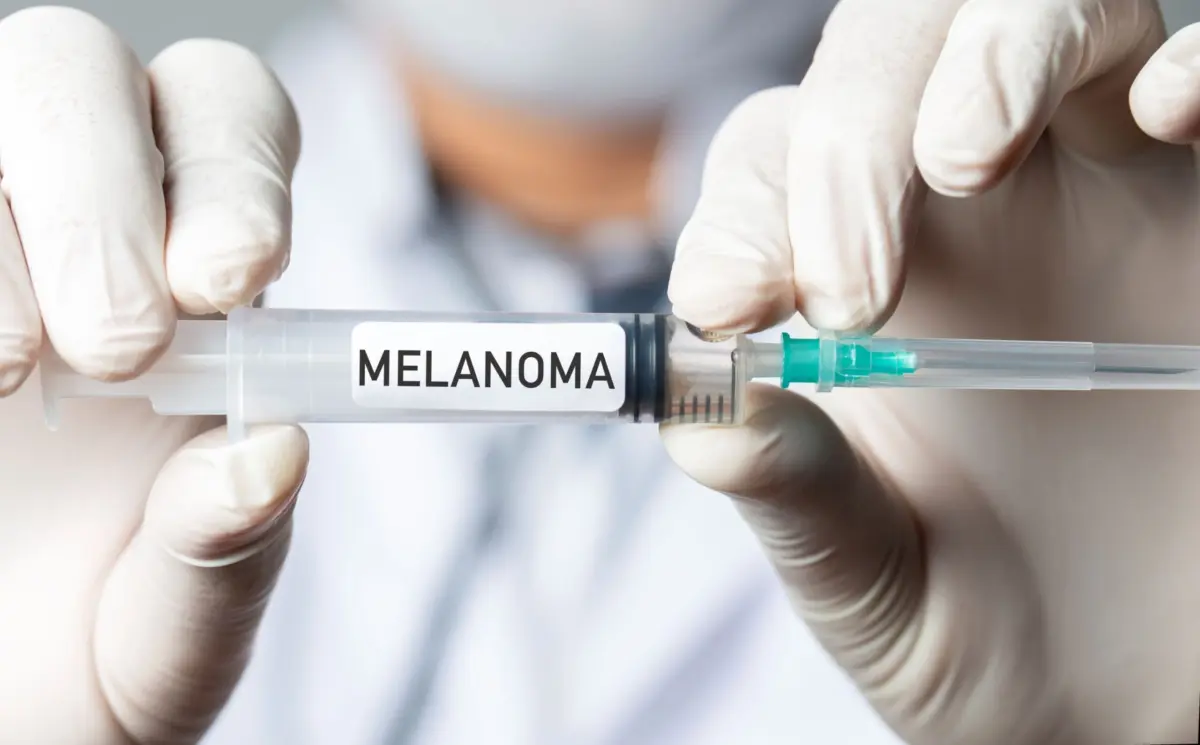
In what oncologists are calling a watershed moment for modern medicine, pharmaceutical giants Merck and Moderna have unveiled the definitive Phase 3 clinical trial results for an experimental, personalized mRNA-based cancer vaccine. Designed to intercept one of the world’s most aggressive and lethal forms of skin cancer—melanoma—the therapy represents a fundamental paradigm shift away from one-size-fits-all treatments toward deeply individualized, patient-specific molecular interventions.
When administered in tandem with standard immunotherapy, the investigational vaccine, known as Intismeran Autogene (alongside the checkpoint inhibitor pembrolizumab, globally marketed as Keytruda), drastically reduced the risk of disease recurrence or death by 42 percent compared to immunotherapy alone. Furthermore, the combination therapy decreased the risk of the cancer metastasizing—spreading to distant organs—by 38 percent over an average follow-up period of nearly 25 months.
While the medical community has celebrated these findings as “transformative,” experts are quick to contextualize the breakthrough: this is not a prophylactic vaccine designed to prevent healthy individuals from contracting skin cancer. Rather, it is a sophisticated therapeutic tool engineered to train a patient’s own immune system to hunt down and destroy microscopic remnants of cancer left behind after surgical resection, fundamentally lowering the probability of relapse.
As regulatory bodies review the data, the success of the landmark INTerpath-001 study opens a thrilling, complex new frontier. It not only heralds a brighter prognosis for melanoma patients globally but also establishes a scalable blueprint for applying personalized mRNA technology to some of the most stubborn and fatal solid tumors known to modern oncology.
Detailed Chronology: The Road to INTerpath-001
The journey toward a personalized melanoma vaccine has been decades in the making, intersecting the fields of immunology, genomics, and rapid-response messenger RNA technology—the very platform that revolutionized global responses to the COVID-19 pandemic.
From Concept to Clinic
For years, immunotherapy drugs like pembrolizumab have transformed cancer treatment by releasing the molecular "brakes" on T-cells, enabling the immune system to recognize and attack foreign malignant cells. However, many patients either fail to respond adequately or eventually suffer a recurrence because their specific tumors possess molecular disguises that evade detection.
Enter the concept of neoantigen targeting. Every tumor accumulates unique genetic mutations as it grows and divides. These mutations produce aberrant proteins, or neoantigens, that do not exist in healthy tissue. If an immune system can be explicitly trained to spot these customized red flags, its response becomes hyper-targeted.
Moderna’s mRNA platform provided the ideal delivery mechanism to encode these neoantigens. By taking a sample of a patient’s surgically removed tumor and sequencing its DNA, scientists could identify up to three distinct mutational signatures unique to that individual. They then engineered a bespoke strand of mRNA encoding those specific targets, encased it in lipid nanoparticles, and injected it back into the patient.
The Phase 3 Milestone (INTerpath-001)
The culmination of this foundational science materialized in the INTerpath-001 trial, a sprawling international study that enrolled 1,137 high-risk melanoma patients. To qualify, participants had already undergone complete surgical excision of their primary tumors, placing them in a high-risk bracket for relapse.
The cohort was divided into two distinct study arms:
- The Control Group: Patients received standard-of-care monotherapy with pembrolizumab alone.
- The Experimental Group: Patients received the combination treatment of pembrolizumab alongside the personalized Intismeran Autogene mRNA vaccine.
Over a median follow-up period of 24.6 months, the trial met its primary and secondary endpoints with resounding success. The data demonstrated a striking divergence in survival and recurrence curves between the two cohorts, prompting international praise when presented at a major medical symposium.
Supporting Context & Metrics: Breaking Down the Data
To fully appreciate the clinical weight of the INTerpath-001 trial, one must examine the hard metrics and statistical improvements recorded by the research teams.
Key Statistical Highlights:
- 42% Reduction in Recurrence or Death: The primary endpoint showed that patients receiving the combination of Intismeran Autogene and pembrolizumab experienced a 42 percent lower hazard of disease return or mortality compared to the monotherapy arm.
- 38% Reduction in Distant Metastasis: A secondary yet vital metric revealed that the vaccine significantly suppressed the cancer’s ability to migrate to secondary organ sites, a phase of the disease that is notoriously difficult to treat.
- Recurrence-Free Survival Rates: At the conclusion of the monitoring period, an impressive 82.2 percent of patients in the combination therapy group remained entirely free of cancer recurrence. By comparison, the recurrence-free survival rate in the pembrolizumab-only group sat at 70 percent.
- Safety and Tolerability: In terms of adverse events, the experimental combination mirrored the known safety profile of immunotherapy alone. Patients experienced mild-to-moderate side effects typical of immune stimulation, including transient fever, fatigue, and localized pain at the injection site. No new safety signals or compounding toxicities emerged.
The Global Toll of Melanoma
While early-stage melanoma boasts high survival rates, the disease remains a formidable global health crisis. According to epidemiological data, melanoma claims the lives of more than 50,000 people worldwide each year. Because it is one of the most aggressive and rapidly mutating forms of skin cancer, finding ways to prevent recurrence in high-risk patients is critical to bending the mortality curve downward.
Official Statements and Expert Analysis
The medical community has responded to the trial data with a mixture of awe and pragmatic cautiousness.
Dr. Georgina Long, medical director of the Australian Melanoma Institute and principal investigator of the study, didn’t mince words when describing the implications of the trial. In an official statement, Long characterized the results as "transformative," adding that they "have the potential to make a foundational shift in how we treat patients with earlier-stage melanoma."
Echoing these sentiments from Europe, Dr. Eva Muñoz Couselo, head of the melanoma research group at the Vall d’Hebron Institute of Oncology in Barcelona (who was not involved in the trial), shared her perspective with SMC Spain:
"The results of the INTerpath-001 study represent a major breakthrough in the treatment of melanoma and, in particular, in the development of personalized medicine. For the first time, a Phase III trial has demonstrated that an individualized therapeutic vaccine, designed on the basis of the molecular characteristics of each patient’s tumor, can significantly improve the outcomes of conventional immunotherapy."
From the corporate leadership side, Stéphane Bancel, CEO of Moderna, emphasized the broader trajectory of the platform:
"These results reinforce our conviction that mRNA has the potential to fundamentally change how we treat cancer."
Despite the enthusiasm, leading researchers remain grounded regarding the immense logistical and economic challenges that lie ahead. Dr. Marisol Soengas, a prominent melanoma researcher at Spain’s National Cancer Research Center (CNIO), noted to SMC Spain that while the conceptual breakthrough is monumental, practical execution will not be simple.
"The challenge is to ensure that this personalization can be scaled up to a large number of patients and that the cost is affordable for health care systems," Soengas explained. "It is logistically complex. It is literally a bespoke vaccine."
Future Outlook: Beyond Melanoma and the Road Ahead
The success of Intismeran Autogene in melanoma is merely the opening salvo in what scientists hope will be a comprehensive rewriting of oncology textbooks. The underlying philosophy—sequencing a tumor, identifying its specific mutations, and rapidly synthesizing an mRNA instruction set to wake up the immune system—is inherently modular.
Expanding into Deadlier Cancers
Researchers are already eyeing other oncology sectors where standard treatments routinely fall short. Earlier this year, separate early-phase clinical trials indicated that personalized mRNA vaccines could drastically improve survival curves in patients with pancreatic cancer, widely regarded as one of the most lethal and treatment-resistant malignancies in existence.
In theory, this technology could be adapted to target any solid tumor where the patient’s immune system can be successfully reactivated and directed against specific neoantigens.
The Hurdles of Scale and Cost
However, transitioning from successful clinical trials to widespread clinical adoption requires clearing substantial hurdles:
- Manufacturing Turnaround Time: Because every vaccine must be custom-manufactured from scratch using a patient’s unique biopsy tissue, the manufacturing pipeline requires rigorous, rapid-fire genomic sequencing, quality control, and lipid nanoparticle encapsulation. Speed is of the essence when treating aggressive cancers, where delays can allow micrometastases to take root.
- Healthcare Economics: Bespoke therapies are inherently expensive to produce. Healthcare systems, insurance providers, and global health organizations will need to negotiate pricing structures that make these life-saving interventions economically sustainable without bankrupting public health budgets.
- Regulatory Approvals: Before physicians can prescribe Intismeran Autogene outside of a clinical trial setting, Merck and Moderna must submit their comprehensive Phase 3 datasets to regulatory agencies such as the US Food and Drug Administration (FDA) and the European Medicines Agency (EMA) for formal review and authorization.
Conclusion
The release of the INTerpath-001 trial results marks a historic milestone in the war against cancer. By marrying the precision of genomics with the nimble delivery of mRNA technology, medicine has taken a decisive step away from generalized carpet-bombing treatments and toward a future of bespoke, highly individualized immunological defense. While clinical validation, regulatory sign-offs, and logistical scaling remain on the horizon, the message from the scientific community is clear: a new era of cancer therapy has officially begun.



