Executive Overview
In the sprawling, often surreal ecosystem of 21st-century internet meme culture, viral phenomena occasionally emerge from the most mundane, baffling, and chaotic corners of domestic life. Among the pantheon of internet lore—sitting comfortably alongside phenomena such as "Loss," "Doge," and "Mom Found My Poop Sock"—lies a particularly infamous cultural artifact known simply as the "Piss Drawer."
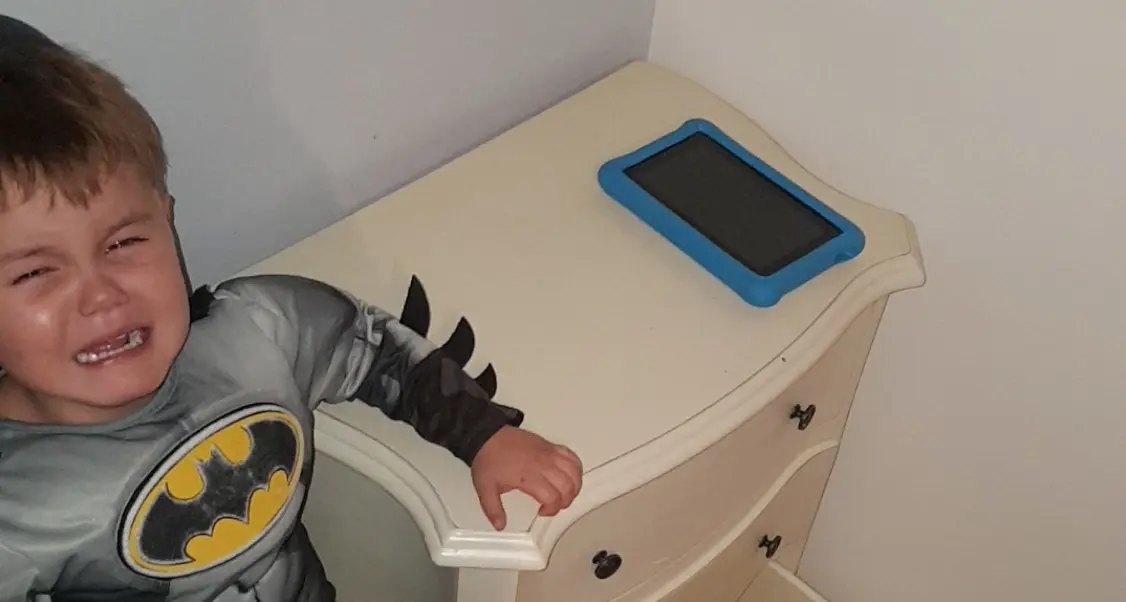
Originating from a single, hastily captured photograph shared on social media in October 2017, the meme depicts an inconsolable three-year-old child wearing a full Batman costume. The boy is weeping because his mother has just uncovered his deeply secretive, unorthodox alternative to a traditional bathroom: a bedroom furniture drawer utilized over an unspecified period as a makeshift urinal. What began as a startlingly bizarre family anecdote shared on Twitter rapidly transcended its humble origins, mutating into a sprawling multi-platform meme format, a touchstone for absurdist internet humor, and a psychological mirror reflecting the surrealism of online subcultures.
This investigative retrospective examines the genesis, evolution, and cultural footprint of the "Piss Drawer" phenomenon. By tracing its trajectory from a localized viral tweet to a staple of imageboard and subreddit satire, this article explores how modern internet communities consume, repurpose, and immortalize visceral shocks of domestic awkwardness. Through the lenses of digital sociology, meme theory, and media analytics, we dissect why this visceral snapshot resonated so deeply with millions across the globe, solidifying its place in the digital folklore of the late 2010s and early 2020s.
Detailed Chronology
Phase 1: The Inciting Incident (October 24, 2017)
The narrative of the "Piss Drawer" began not within the sanitized halls of a corporate marketing agency or a coordinated viral campaign, but in the chaotic reality of everyday domestic parenting. On October 24, 2017, Twitter user @phoebebartlett_ uploaded a photograph that would irrevocably alter her family’s digital footprint.
The image featured her three-year-old brother—clad heroically in a black-and-yellow Batman costume—standing crestfallen and sobbing. The emotional devastation of the toddler was matched only by the sheer audacity of his logistical workaround: according to the accompanying caption, his mother had just discovered that the child had been secretly urinating inside a drawer of his bedroom furniture. In a final, desperate bid to deflect accountability characteristic of early childhood logic, the toddler attempted to blame the household pet.
The tweet struck an immediate, visceral chord with the public. Combining the incongruity of a miniature Dark Knight facing his darkest hour with the repulsive hilarity of the discovery, the post skyrocketed in popularity. Within hours, it accumulated tens of thousands of retweets and hundreds of thousands of likes, transforming a private family embarrassment into a public spectacle.
Phase 2: Mainstream Crossover and Media Pick-Up (October 25, 2017 – Early 2018)
As virality dictates in the modern media landscape, outlying social media posts of exceptional absurdity rarely stay confined to a single platform for long. By October 25, 2017—less than 24 hours after the initial publication—digital publisher BuzzFeed and various content aggregators picked up the story, introducing the anecdote to a broader audience outside of Twitter’s core demographic.

However, the image’s transition from a standard viral news oddity to a self-sustaining meme format took several months to incubate. While mainstream platforms reacted with straightforward amusement or mild horror at the domestic hygiene failure, underground internet communities on platforms like Reddit and 4chan recognized a deeper, more profound comedic potential within the raw materials of the photo.
Phase 3: The Subreddit Mutation and Image Macro Era (Mid-2018 – 2019)
The true lifecycle of the "Piss Drawer" as an internet meme began in earnest during the summer of 2018. On August 11, 2018, a Redditor operating under the username MilkyAurora posted a heavily deep-fried, ironically captioned edit of the original image to the surreal meme subreddit /r/okaybuddyretard. The post garnered hundreds of upvotes, establishing a stylistic template for how the image would subsequently be handled.
Rather than treating the photo as a mere news curiosity, meme creators integrated it into the existing structural lineage of the "Mom Found My Poop Sock" trope—a classic internet archetype centered around adolescent or childhood hygiene failures discovered by parental figures.
On January 30, 2019, another Redditor, PaneRampage, shared a polished image macro variation to the massive /r/memes community, driving engagement even higher. Soon, the image was subjected to every known lever of internet subculture production: deep-frying, surrealist juxtaposition, multi-layered text overlays, and cinematic cross-pollination.
Phase 4: Multimedia Expansion and Video Remixes (Spring 2019)
By early 2019, static image macros were no longer sufficient to contain the cultural momentum of the "Piss Drawer." Creators across YouTube and TikTok began producing dynamic video content riffing on the meme.
- ASMR Parodies: On May 6, 2019, a YouTuber operating under the moniker "Lacrosse devil" published an Autonomous Sensory Meridian Response (ASMR) parody video centered around the narrative of discovering the drawer, blending the tranquil, tingling aesthetic of modern relaxation content with the sheer repulsion of the source material.
- Video Game Crossovers: On March 10, 2019, another content creator merged the visual aesthetic of the boy’s distress with iconic sound effects and stealth-mechanic alerts from Konami’s acclaimed Metal Gear Solid franchise, framing the mother’s discovery of the drawer as an active "Enemy Alert" scenario.
Supporting Context & Metrics
To understand the staying power of the "Piss Drawer," one must examine the socio-technical environment of the platforms that sustained it. The meme’s lifecycle relies heavily on algorithmic amplification and the insular humor styles of Generation Z and younger millennial internet users who frequent boards like 4chan and subreddits dedicated to ironic shitposting.
Quantitative Impact and Engagement Metrics
While individual metrics across decentralized platforms are often fragmented, the historical data tracked by cultural archives such as Know Your Meme illustrate the staggering reach of the phenomenon:

- Initial Reach: The originating tweet by @phoebebartlett_ secured upwards of 52,000 retweets and 160,000 likes, numbers that were exceptionally high for a private user account in late 2017.
- Community Endorsement: Follow-up image macros on Reddit regularly secured hundreds to thousands of upvotes across specialized humor subreddits, signaling deep community engagement and iterative re-creation.
- Database Indexing: The topic was cataloged as a definitive entry on major internet culture databases, housing a growing repository of localized variations, fan art, GIFs, and video derivatives totaling over a dozen distinct archival pages.
Psychological and Sociological Drivers
Why did a toddler urinating in a piece of bedroom furniture capture the collective imagination of millions? According to digital media theorists, the appeal of the "Piss Drawer" meme lies in several key psychological vectors:
- The Incongruity of Innocence and Degradation: The juxtaposition of a child dressed as a universally recognized superhero of justice and grit (Batman) with an act of profound domestic grotesque creates immediate, high-contrast comedic dissonance.
- Universal Childhood Anxiety: The terror of parental discovery—the raw, unfiltered panic of a child caught in a wrongdoing they cannot logically defend (hence blaming the dog)—strikes a chord of universal nostalgic anxiety.
- The Anti-Aesthetic of Shitposting: By embracing themes of poor hygiene and bodily functions through an ironically detached lens, communities on
/r/okaybuddyretardand similar forums use the meme to subvert the hyper-curated, sanitized perfection typically projected on platforms like Instagram.
Official Statements and Archival Recognition
Because the "Piss Drawer" originated from a private citizen’s personal social media account rather than a public-facing corporate entity, institutional responses or official press statements were entirely nonexistent. There were no brand apologies, no crisis management strategies, and no PR campaigns deployed to mitigate the fallout.
Instead, the phenomenon was documented, contextualized, and preserved strictly by digital historians, internet folklorists, and user-driven archival platforms. Major digital culture encyclopedias, including Know Your Meme, verified the authenticity of the originating tweet and mapped its progression through the digital ecosystem. The platform noted that the meme operates as a direct descendant of absurdist shock-humor trends, serving as a case study in how organically generated family mishaps can be weaponized by the collective hive mind of the internet into enduring cultural touchstones.
Future Outlook
As the digital landscape continues to evolve at a breakneck pace, the lifespan of individual internet memes grows increasingly volatile. Yet, artifacts like the "Piss Drawer" occupy a permanent, albeit niche, space in the digital museum of internet history.
Looking forward, the legacy of the "Piss Drawer" is unlikely to manifest as active, daily content creation; rather, it has graduated into the lexicon of internet history—a foundational reference point for millennial and Gen Z digital natives. It stands alongside historical anomalies like "Milhouse is not a meme" or "The Poop Sock" as a testament to the internet’s unique ability to find universal relatability, dark humor, and artistic inspiration in the most unglamorous, bizarre depths of human domestic life.
Ultimately, the "Piss Drawer" serves as an enduring reminder: no matter how orderly, pristine, or heroic (even in a Batman costume) we may attempt to present ourselves to the world, the internet possesses an infallible radar for the chaotic, messy, and profoundly human truths lurking just beneath the surface.