Executive Overview
In an era dominated by hyper-processed computational photography, ultra-high-definition 8K resolution, and algorithmic perfection, a counter-movement is quietly taking root. Users are increasingly fatigued by pristine digital clarity, yearning instead for the tactile imperfections, warmth, and deliberate constraints of analog media. Enter Flipcorder, a brilliantly inventive indie iOS application designed to bridge the gap between futuristic smartphone hardware and the nostalgic aesthetic of vintage camcorders.
Featured this week in the Indie App Spotlight, Flipcorder is more than just another vintage video filter app; it is a fundamental reimagining of how we capture, compile, and cherish daily memories. Optimized particularly for the unique dual-screen architecture of the iPhone Duo while maintaining robust compatibility across the broader iOS ecosystem, Flipcorder forces users to slow down. By restricting recordings to bite-sized, 20-second bursts that compile sequentially onto a single virtual cassette tape—holding up to 30 minutes of cumulative footage—the app rejects modern endless-scroll videography in favor of intentional, unedited storytelling.
Priced as a straightforward $4.99 one-time purchase with no disruptive advertisements or recurring subscription fees, Flipcorder represents a refreshing ethos in modern app development. This report provides an exhaustive investigation into Flipcorder’s core features, its underlying philosophy, the technical nuances of its hardware integration, and what its emergence signifies for the broader landscape of independent iOS software development.
Detailed Chronology: The Evolution of Retro-Capture Software
From Physical Tapes to Algorithmic Nostalgia
To understand the significance of Flipcorder, one must contextualize the trajectory of mobile videography over the past decade and a half. When Apple introduced video recording capabilities to the iPhone with the iPhone 3GS in 2009, the primary objective was democratization: putting a high-definition video camera into everyone’s pocket. Over subsequent iterations, Apple relentlessly pursued technical supremacy—upgrading frame rates, introducing cinematic stabilization, enhancing low-light performance via LiDAR and larger sensors, and eventually enabling professional-grade ProRes encoding.
However, as technical perfection became the baseline, emotional resonance often suffered. Videos shot on modern smartphones frequently feel sterile, clinical, and overwhelmingly abundant. Users began hoarding terabytes of unedited, multi-minute 4K clips that they rarely review.
The software market responded with rudimentary retro filter apps—software that would take pristine digital files and artificially smear them with scanlines, low-bitrate artifacts, and sepia tones. While somewhat popular on social media platforms like TikTok and Instagram, these applications remained superficial. They altered the look of a video without changing the behavior of the videographer.
The Conception and Launch of Flipcorder
Developed by independent creators attuned to this cultural fatigue, Flipcorder breaks the mold by intertwining aesthetic emulation with structural limitation. Rather than treating vintage styles as an afterthought filter, the developers engineered an entire workflow modeled after physical MiniDV and VHS camcorders from the late 1990s and early 2000s.
Released for devices running iOS 26 and later, the application’s development cycle focused heavily on physical metaphors. The software mimics the tactile feedback, sequential storage limitations, and linear workflows of analog hardware. By forcing users to commit to a 20-second window per recording chunk—all converging onto a single 30-minute virtual cassette tape—Flipcorder transformed smartphone videography from an exhausting archiving exercise into an intentional, playful diary-keeping ritual.
Supporting Context & Metrics: The Mechanics of Mindful Videography
Architectural Harmony: Optimizing for the iPhone Duo and Beyond
One of Flipcorder’s most technically impressive achievements is its deep optimization for Apple’s hardware ecosystem, specifically tailored to take advantage of the unique form factor of the iPhone Duo.
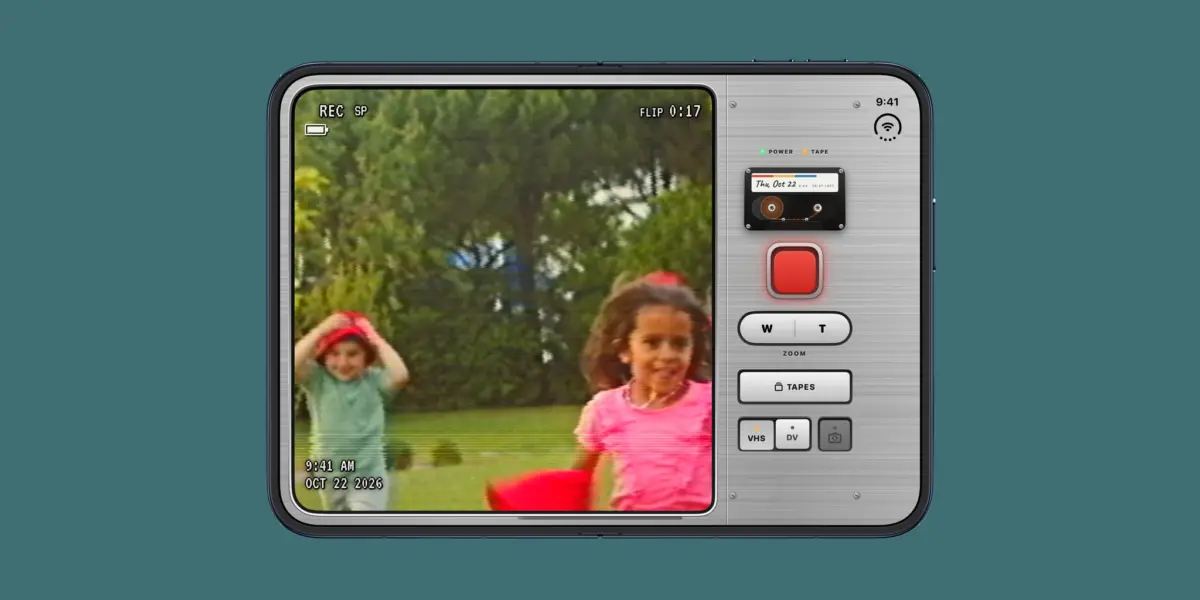
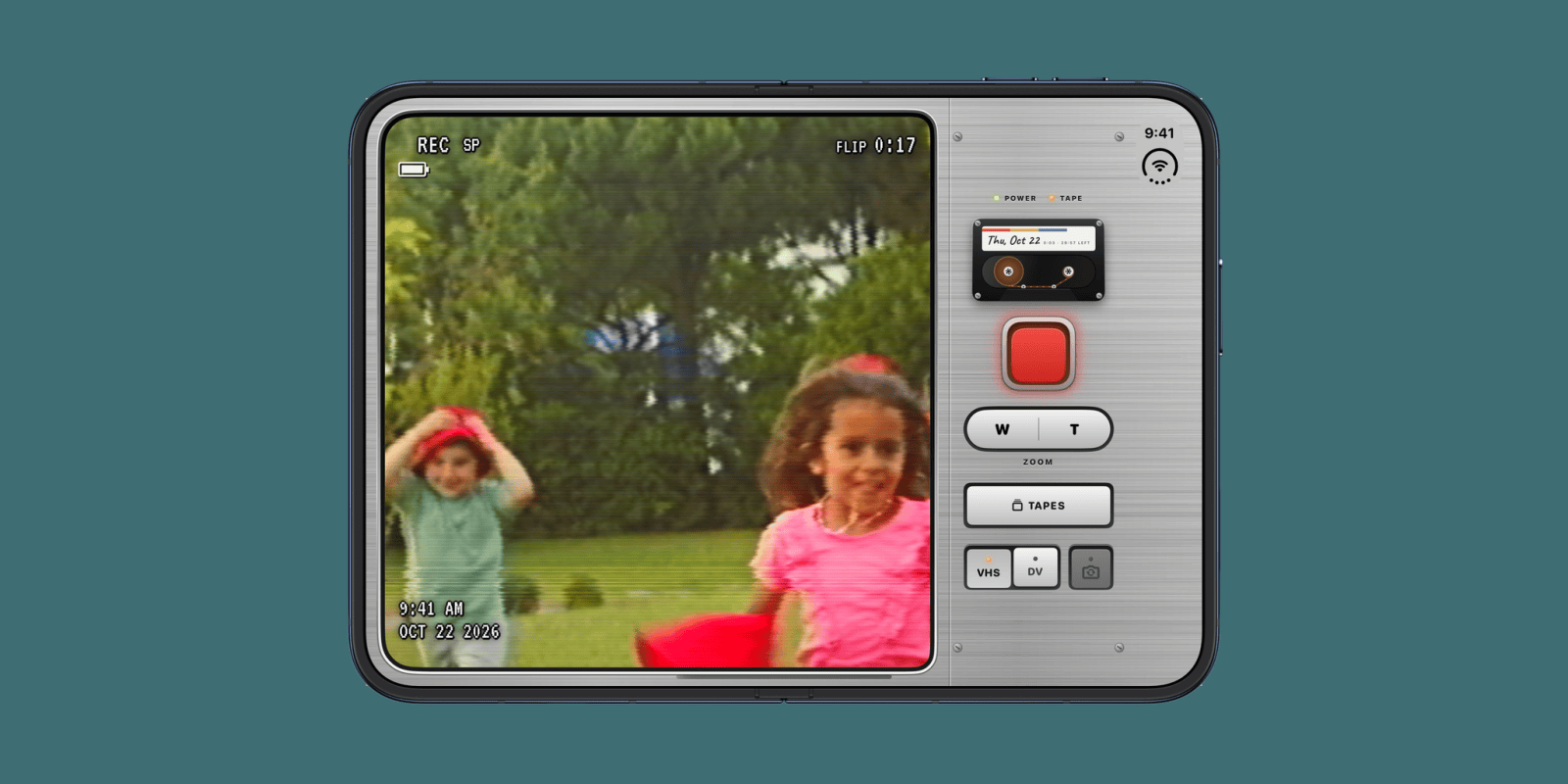
While the application is fully functional across standard slab-style iPhones, running it on the iPhone Duo unlocks a specialized interface that leverages the device’s expanded inner display. The hardware layout allows the app to present a dual-pane or split-screen workspace, mapping a nostalgic, hardware-inspired user interface onto the screen. Users are greeted with digital facsimiles of physical battery indicators, cassette windows, and chunky mechanical buttons that respond with satisfying visual feedback.
The 30-Minute Tape Paradigm
At the heart of Flipcorder’s design philosophy is its departure from infinite digital storage. Modern smartphones encourage "spray-and-pray" recording—capturing massive, uninterrupted blocks of footage that require hours of tedious trimming and editing later.
Flipcorder subverts this paradigm through strict parameters:
- The 20-Second Rule: Individual captures are capped at 20-second bursts. This encourages users to capture the apex of a moment—a laughing glance, a passing train, a sudden downpour—without overthinking or over-recording.
- The Single-Tape Constraint: All clips recorded throughout a session or a day are funneled sequentially onto a single virtual tape.
- Capacity Limit: Each tape holds a maximum of 30 minutes of cumulative footage. Once the tape is full, users face the analog dilemma: cherish the tape as a complete artifact of a specific time period, or intentionally archive/wipe it to start anew.
Dual-Mode Flexibility: Retro Aesthetic Meets High-Definition Fidelity
While the app is celebrated for its authentic emulation of VHS and MiniDV aesthetics—complete with magnetic tape degradation artifacts, color bleeding, and jitter—it does not lock users into low-quality video capture.
Understanding that modern users still value visual clarity, the developers incorporated a dual-mode engine. Creators can choose to record pristine, high-definition video that benefits from the iPhone’s advanced camera sensors while still leveraging the cassette-style compilation workflow. This grants the best of both worlds: crisp modern optics housed within a structured, nostalgic narrative container.
Official Statements and Developer Philosophy
Independent software development is currently navigating a treacherous financial landscape dominated by subscription fatigue. Consumers are increasingly resistant to recurring monthly fees for utility and lifestyle apps.
Speaking on the monetization strategy behind Flipcorder, the independent development team emphasized a commitment to consumer-friendly software practices. Eschewing the prevailing industry trend toward microtransactions, tiered access models, and ad-supported freemium tiers, Flipcorder launched as a straightforward, premium utility.

"We wanted to build an app that respects the user’s attention, wallet, and data," notes the development collective behind Flipcorder. "In a market saturated with apps designed to hook users through endless notifications, subscriptions, and algorithmic feeds, Flipcorder is deliberately quiet. You pay $4.99 once, you own the tool, and there are no ads or in-app purchases standing between you and your memories."
Industry analysts have praised this pricing model as a masterclass in indie sustainability. By pricing the app competitively for a one-time purchase, the developers appeal directly to consumers looking to opt out of subscription creep while still supporting independent creators.
Furthermore, the integration with cutting-edge iOS frameworks (targeting iOS 26 and newer) demonstrates that retro-themed applications do not need to rely on outdated codebases. By building natively on top of Apple’s latest graphic and camera frameworks, Flipcorder ensures buttery-smooth performance, minimal battery drain, and robust hardware acceleration.
Future Outlook: The Trajectory of Indie iOS Innovation
Where Analog Meets Spatial Computing
As we look toward the future of mobile technology, the intersection of retro software design and advanced hardware platforms like spatial computing and foldable/dual-screen devices presents fascinating opportunities. Flipcorder’s seamless adaptation to the iPhone Duo provides a blueprint for how indie developers can harness avant-garde hardware form factors to create deeply atmospheric experiences.
In the coming months, the developer roadmap for Flipcorder reportedly includes expanded tape customization options, additional vintage aesthetic profiles (such as 8mm film grain and Hi8 video artifacts), and enhanced export capabilities that allow users to share their compiled tapes seamlessly across modern social networks or save them directly to the Apple Photos library as cohesive video packages.
The Broader Cultural Impact on Mobile Photography
Flipcorder’s early adoption figures and positive critical reception within the 9to5Mac Indie App Spotlight community suggest that the appetite for mindful, constrained technology is stronger than ever. As consumers grow increasingly wary of the mental health toll exacted by hyper-connected, notification-heavy ecosystems, tools that encourage intentional, offline-feeling documentation will continue to thrive.
By turning smartphone videography into a finite, tactile, and playful experience, Flipcorder proves that the most innovative step forward is sometimes a thoughtful step back. For iPhone users seeking to inject genuine soul, narrative structure, and nostalgic warmth back into their digital scrapbooks, Flipcorder stands out as an essential addition to the modern iOS toolkit.
Flipcorder is available now on the App Store as a one-time $4.99 purchase for iPhone models running iOS 26 and later.