Executive Overview
In the rapidly evolving landscape of global cloud computing, the intersection of human connectivity and hard infrastructure remains the ultimate catalyst for technological progress. While software-defined architectures and automated deployment pipelines dominate modern development, the physical realities of data processing—latency, sovereignty, and regional proximity—continue to shape how enterprises deploy mission-critical workloads.
This duality was brought into sharp focus recently during a landmark three-day technical gathering in São Paulo, Brazil. Bringing together elite builders, engineers, and enterprise architects from across Latin America, the event served as a powerful reminder that the most resilient technological ecosystems are built as much on shared human experiences as they are on silicon and code. Against a backdrop of whiteboard architecture sketches, collaborative coffee-break troubleshooting, and intense deep-dive technical workshops, a broader narrative unfolded: Amazon Web Services (AWS) is fundamentally redefining what it means to bring infrastructure closer to the end user.
Simultaneously, across the Atlantic, AWS announced a major strategic expansion of its global footprint with the launch of a new AWS Local Zone in Athens, Greece. Designed to address the stringent data residency requirements of the European Union while delivering ultra-low, single-digit millisecond latencies, the Athens facility marks a crucial milestone in regional cloud deployment. Supporting advanced compute instances, localized storage classes, and advanced container orchestration, the new Local Zone empowers Greek and broader EMEA enterprises to run performance-intensive workloads entirely in-country.
This report examines these two converging developments—the vibrant grassroots energy of the Latin American developer community and the strategic deployment of localized cloud infrastructure in Athens. Together, they illustrate how AWS is executing a dual-pronged strategy: empowering builders through localized community engagement while engineering the physical infrastructure required to support the next generation of real-time applications.
Detailed Chronology: From the Hubs of São Paulo to the Historic Core of Athens
The past fortnight has been a period of intense activity for AWS, characterized by high-touch regional engagement in the Global South and vital infrastructure deployments in southeastern Europe. Tracing these events reveals a synchronized effort to eliminate barriers—both geographic and technical—for global developers.
Mid-Week: The Latin American Technical Summit in São Paulo
The week commenced in Brazil’s economic powerhouse, São Paulo, where AWS hosted an immersive, three-day technical summit. The gathering convened a diverse cohort of developers, DevOps practitioners, and systems architects from diverse countries across Latin America. For many attendees, the event provided a rare opportunity to step out of virtual silos and engage in face-to-face technical discourse.
- Day One: Focused heavily on architectural foundations, the opening day featured intensive hands-on workshops addressing modern microservices patterns, serverless scaling, and cloud-native security frameworks. Builders utilized live testing environments to model high-throughput distributed systems under simulated failure conditions.
- Day Two: Transitioned into specialized deep-dive sessions, with dedicated tracks for artificial intelligence, machine learning pipelines, and data analytics at scale. Attendees collaborated on collaborative whiteboard challenges, mapping out complex multi-region disaster recovery models and hybrid cloud integrations.
- Day Three: Dedicated to customer and partner success stories, the final day emphasized real-world implementation challenges. Regional enterprises shared case studies detailing how they migrated legacy financial and retail platforms to the cloud, sparking animated debates over coffee breaks and hallway chats regarding optimal database sharding and container orchestration strategies.
The palpable enthusiasm observed in São Paulo underscored a fundamental truth of the tech industry: despite the proliferation of asynchronous communication tools and global video conferencing, physical proximity accelerates learning, fosters unexpected innovations, and fortifies developer loyalty.
Late Week: The Infrastructure Expansion in Athens, Greece
Bridging the energy of the Latin American developer meetups with hard engineering deployments, AWS turned its attention to the Mediterranean, officially launching the new AWS Local Zone in Athens, Greece.

The deployment of the Athens facility represents a carefully calculated engineering timeline designed to integrate seamlessly with existing European cloud corridors:
- Strategic Siting: Athens was selected due to its status as a rapidly growing technology hub and a vital gateway connecting Southern Europe with the Middle East and North Africa.
- Regional Integration: As the second Local Zone in the Europe, Middle East, and Africa (EMEA) region to offer native support for Amazon Simple Storage Service (Amazon S3) and Amazon Elastic Block Store (Amazon EBS) Local Snapshots, the Athens facility provides unprecedented in-country data sovereignty controls.
- Compute and Container Rollout: The infrastructure launch immediately equips local developers with high-performance compute capabilities, specifically deploying Amazon EC2 C7i, M7i, and R7i instances optimized for compute-intensive, memory-intensive, and general-purpose workloads. Furthermore, integration with Amazon Elastic Container Service (Amazon ECS) ensures that modern containerized applications can be deployed locally with zero architectural friction.
Supporting Context & Metrics: Why Proximity Matters
To fully appreciate the significance of the Athens Local Zone and the vibrant participation observed in São Paulo, one must examine the macro-level metrics driving modern cloud infrastructure design.
The Latency Imperative
In modern application architecture, distance is the ultimate enemy of performance. While standard AWS Regions deliver immense computational power from centralized data center campuses, certain workloads cannot tolerate the propagation delay inherent in transmitting data over hundreds or thousands of miles.
| Workload Type | Maximum Tolerable Latency | Primary Operational Impact |
|---|---|---|
| Real-Time Financial Trading | < 5 milliseconds | Risk management, order execution velocity, arbitrage prevention. |
| Telemedicine & Healthcare | < 10 milliseconds | Remote surgical assistance, real-time diagnostic imaging streaming. |
| Media Production & Rendering | < 15 milliseconds | Collaborative remote video editing, live broadcast mixing. |
| Multiplayer Gaming | < 20 milliseconds | Hit registration accuracy, synchronization of game state across clients. |
The AWS Local Zone in Athens directly addresses these thresholds for Greek enterprises. By pushing AWS compute, storage, and database services to the edge of the telecommunications network, organizations can achieve single-digit millisecond latencies for end users located in high-density metropolitan areas, bypassing the traditional routing hops of the public internet.
Data Residency and Regulatory Compliance
Beyond latency, the regulatory environment within the European Union places a premium on data locality. Under frameworks such as the General Data Protection Regulation (GDPR) and evolving national cybersecurity mandates, many government agencies, healthcare providers, and financial institutions face strict legal prohibitions against storing sensitive citizen or transactional data outside national borders.
The integration of Amazon S3 (utilizing the One Zone-Infrequent Access storage class) and Amazon EBS Local Snapshots within the Athens Local Zone provides a robust compliance framework. Enterprises can now ingest, process, store, and back up sensitive data entirely within the borders of Greece. This capability eliminates compliance gray areas, allowing heavily regulated entities to leverage cloud elasticity and advanced machine learning services without violating local data sovereignty laws.
Official Statements and Industry Insights
The dual focus on community enablement and physical infrastructure expansion reflects AWS’s overarching philosophy: technology is most powerful when it is both accessible to the human builder and engineered to meet the rigorous demands of enterprise compliance.
Reflecting on the energy in São Paulo, leadership highlighted the irreplaceable value of grassroots technical communities:
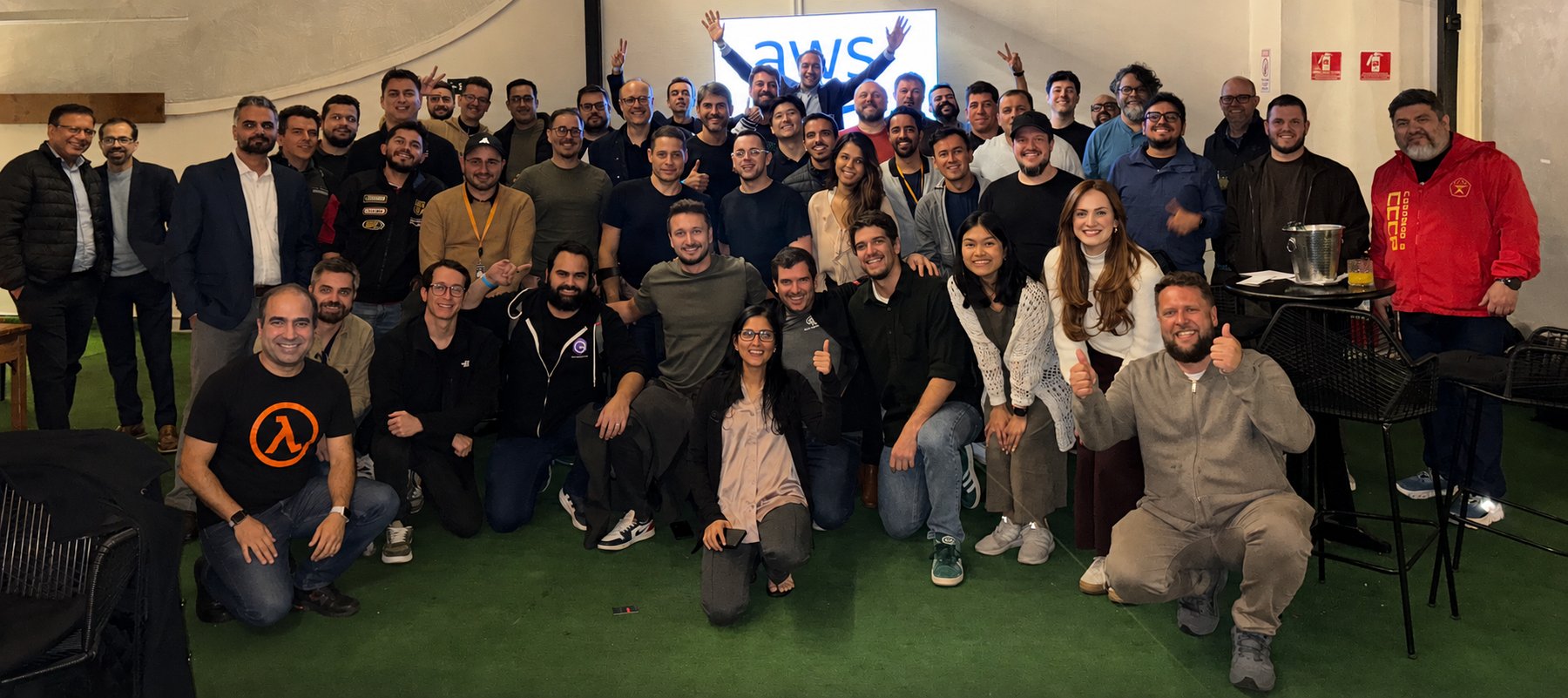
"What struck me most wasn’t any single session, it was the energy of a technical community that so rarely gets to be in the same room. People traded architecture ideas over coffee, sketched out solutions on whiteboards, and left with a longer list of things to try than they arrived with. It’s a good reminder that, for all the tooling we build, the community around it is what makes the technology stick."
This sentiment of enablement extends directly to the infrastructure team’s mission in Athens. By decentralizing core cloud services, AWS aims to democratize high-performance computing for regional enterprises that previously lacked access to low-latency cloud infrastructure.
Industry analysts tracking the EMEA cloud market have praised the Athens deployment as a model for regional resilience. By enabling local data processing while maintaining native compatibility with the broader AWS global network, developers do not need to rewrite applications to leverage edge locations. The APIs, security controls, and deployment scripts used in central AWS Regions apply directly to the Athens Local Zone, ensuring a unified development and operational experience.
Future Outlook: The Horizon of Edge and Community Cloud
As we look toward the remainder of 2026 and beyond, the trajectory of cloud computing points toward two converging horizons: hyper-localized infrastructure and hyper-connected global developer communities.
The Evolution of Local Zones and Edge Computing
The successful launch of the Athens Local Zone signals that AWS will continue to target key metropolitan areas where density, regulation, and latency demands intersect. Future iterations of edge infrastructure are expected to feature even deeper integration with generative AI acceleration hardware, enabling local execution of large language models (LLMs) and real-time computer vision inference at the network edge. For Greek enterprises, this means early access to next-generation AI tooling without the latency penalties associated with transcontinental data transit.
Sustaining Community Momentum
Meanwhile, the enthusiasm generated in São Paulo highlights the critical importance of regional developer engagement. As cloud technologies grow increasingly complex—incorporating sophisticated serverless architectures, zero-trust security models, and autonomous infrastructure management—the role of peer-to-peer learning will only expand. Initiatives such as the AWS Builder Center (builder.aws.com) and localized developer meetups will serve as crucial crucibles for talent development, ensuring that builders in emerging tech markets are equipped to lead the next wave of digital transformation.
Conclusion
The convergence of a passionate Latin American developer community sharing ideas over whiteboards in São Paulo and the quiet, high-precision engineering of a new Local Zone in Athens encapsulates the modern state of AWS. By simultaneously investing in the human element of technology and the physical bedrock of global infrastructure, AWS continues to shrink the distance between imagination and implementation—empowering builders everywhere to turn ambitious ideas into scalable reality.