Executive Overview
The fast-paced evolution of cloud computing demands a continuous, symbiotic relationship between platform providers and the developers who build upon them. In the latest weekly update from Amazon Web Services (AWS), the Developer Experience team has highlighted a robust intersection of community-driven feedback, cutting-edge generative AI integrations, and structural platform updates.
This week’s narrative spans across hemispheres, featuring an intimate look at the AWS Korea User Group (AWSKRUG)—the largest cloud developer ecosystem in the country—followed by a monumental shift in how artificial intelligence coding assistants interact with serverless infrastructure. Most notably, AWS introduced a streamlined, one-click setup prompt tailored for AI coding agents. This new feature equips autonomous tools with foundational AWS Serverless skills and the Serverless Model Context Protocol (MCP) server, bridging the gap between local development environments and cloud-native execution.
Concurrently, AWS addressed an operational disruption that impacted customer visibility into financial management systems. A temporary glitch in AWS Cost Explorer caused inaccurate estimated billing data, triggering erroneous budget and cost anomaly detection alerts. AWS leadership has since resolved the issue, confirmed normal operations across all services, and committed to transparency through internal retrospectives.
This comprehensive report delves into the core developments of the past week, examining the strategic implications of AI-driven infrastructure deployment, community engagement models in the Asia-Pacific region, and the operational resilience required to maintain enterprise-grade cloud services.
Detailed Chronology & Core Developments
Bridging Communities: AWSKRUG and APAC Engagement
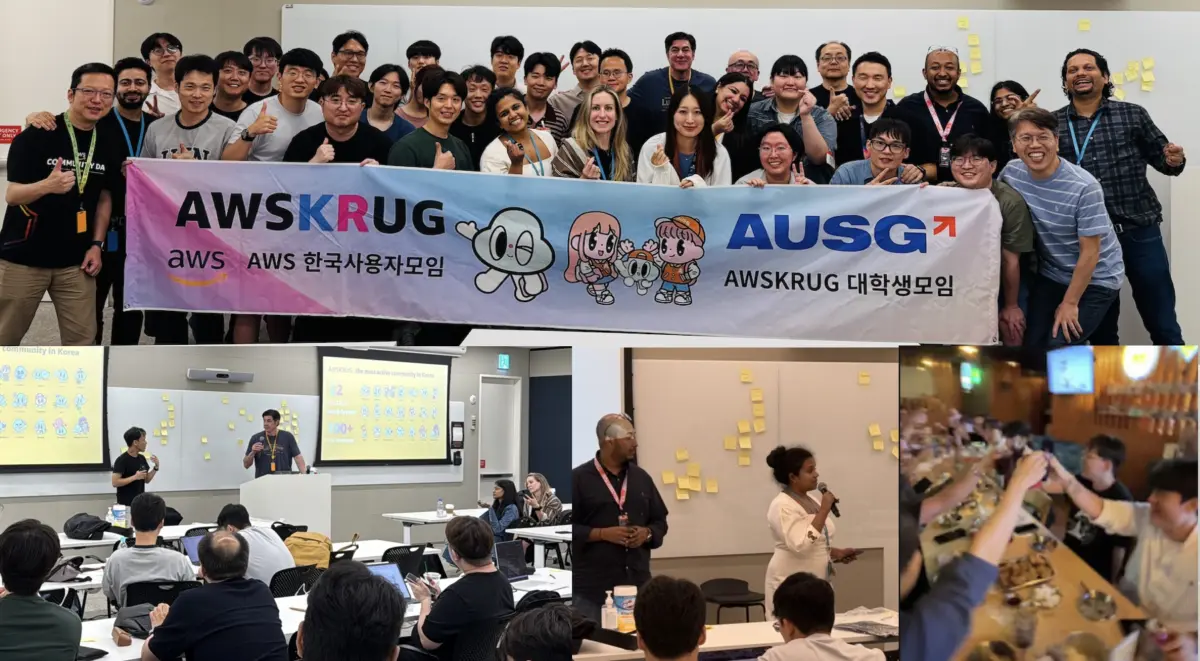
The rhythm of AWS developer advocacy is heavily anchored in direct, boots-on-the-ground communication. Last week, the AWS Developer Experience team traveled to Seoul, South Korea, to engage directly with the leadership of the AWS Korea User Group (AWSKRUG).
AWSKRUG stands as a pillar of cloud education and networking within the Asia-Pacific region. Boasting 20 distinct meetup groups organized dynamically by technical topic and geographical area, the community coordinates over 100 events annually, predominantly centered around Seoul. These gatherings serve as fertile ground for peer-to-peer learning, architecture reviews, and the dissemination of best practices for cloud adoption.
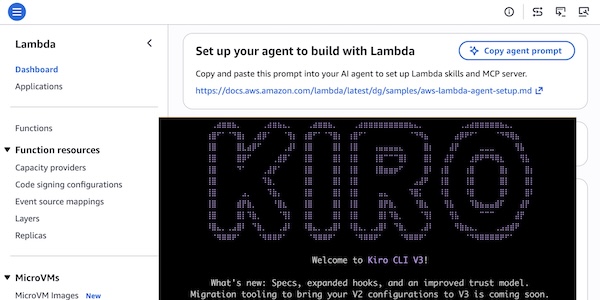
During the Seoul delegation, user group leaders participated in an open, candid feedback session with AWS representatives. The dialogue centered on a retrospective evaluation of the first half of the year—highlighting key community milestones, identifying operational bottlenecks, and submitting direct feature requests to the AWS Developer Experience team. True to local developer culture, the strategic sessions were complemented by an evening of Chimaek (fried chicken and beer), fostering informal yet impactful professional bonds.
These regional visits are not isolated events; they form the bedrock of AWS’s localized product feedback loop. By listening to the nuanced challenges faced by international developer ecosystems, AWS can better tailor documentation, localized support, and tooling to meet global demands.
Revolutionary AI Integration: One-Click Lambda Setup for Coding Agents
While community building sets the human foundation, recent technological rollouts are fundamentally transforming how code is written, tested, and deployed. The standout technical release of the week is the one-click Lambda setup prompt for coding agents, a feature designed to accelerate the integration of generative AI into serverless workflows.
As AI-assisted software engineering matures, developers increasingly rely on AI coding agents—such as Claude Code, Kiro, Cursor, GitHub Copilot, Codex, Devin Desktop, and OpenCode—to draft applications. However, these general-purpose models often lack contextual, deep-domain expertise regarding specific cloud services, frequently resulting in non-idiomatic or insecure code configurations.
The new AWS Lambda prompt solves this friction point by systematically configuring an AI agent with:
- Core AWS Serverless Skills: Embedded architectural blueprints and design patterns optimized for AWS Lambda.
- Serverless Model Context Protocol (MCP) Server: A standardized protocol enabling secure, real-time communication between local AI coding assistants and cloud-hosted data or execution contexts.
By embedding serverless best practices from the initial prompt engineering phase, developers ensure that their AI-generated functions adhere to security, scalability, and performance standards right out of the gate.

Implementation Workflow
Getting started with the new Lambda agent integration requires minimal manual overhead:
- Console Integration: Developers can navigate to the AWS Lambda console and click the dedicated Copy agent prompt button.
- Direct Fetch Method: Alternatively, users can copy the raw markdown setup guide directly via the following command:
fetch https://docs.aws.amazon.com/lambda/latest/dg/samples/aws-lambda-agent-setup.md - Agent Injection: This URL is pasted directly into the user’s preferred AI coding assistant, instantly priming the model with the necessary instructions.
To further expand agent capabilities, AWS also promotes the Agent Toolkit for AWS. This toolkit equips coding agents with real-time, up-to-date AWS knowledge and controlled, safe resource access channels. Developers can initialize the AWS MCP Server for the toolkit by executing:
fetch https://raw.githubusercontent.com/aws/agent-toolkit-for-aws/refs/heads/main/setup-instructions/setup.mdSupporting Context & Metrics
The convergence of serverless computing and generative AI represents a massive paradigm shift in software development velocity. To contextualize the significance of the new Lambda prompt, one must examine the metrics governing modern cloud development:
- Exponential Adoption of AI Assistants: Industry analyses indicate that over 75% of professional developers utilize AI-powered coding assistants or completion tools daily. Integrating direct cloud-context protocols reduces context-switching between web documentation and Integrated Development Environments (IDEs).
- Serverless Scale: AWS Lambda remains a cornerstone of modern microservices architecture, executing trillions of requests monthly. Ensuring that AI agents generate optimized Lambda functions directly impacts global cloud efficiency, cost management, and carbon footprints.
- Community Scale in APAC: With AWSKRUG organizing upwards of 100 events a year across 20 specialized subgroups, South Korea continues to serve as an incubator for high-density developer participation, making it an ideal testing ground for early feedback on developer experience tools.
Official Statements & Operational Transparency
Cloud computing relies fundamentally on trust, transparency, and operational reliability. In addition to celebrating community milestones and developer tooling advancements, AWS addressed a significant operational hiccup that affected financial monitoring dashboards late last week.
Cost Explorer Data Inaccuracy Incident
Over the preceding weekend, a subset of AWS customers experienced an unexpected anomaly within AWS Cost Explorer, which displayed inaccurate estimated billing data. The technical glitch cascaded into related financial management systems, resulting in:
- Erroneous budget threshold alerts sent to enterprise finance and engineering teams.
- False-positive cost anomaly detection notifications.
- Temporarily inflated estimated cost and usage metrics displayed on management dashboards.
Resolution and Corrective Action
AWS engineering teams mobilized quickly to isolate and remediate the root cause. Official statements confirmed that the underlying issue has been completely resolved, and all AWS services—including billing, cost management, and resource analytics—have returned to normal operating parameters.
Recognizing the stress and operational friction unexpected billing alerts cause for financial controllers and engineering managers, AWS issued a formal statement expressing regret:
"We apologize for the concern this incident caused our customers. We are conducting a thorough retrospective to prevent events like this from reoccurring, as well as improving our response when billing incidents occur."
Impacted users and enterprise stakeholders can review the complete incident timeline and post-mortem notes by referencing the official AWS Health Dashboard (Event ID: ARN:AWS:HEALTH:GLOBAL::EVENT/BILLING/AWS_BILLING_OPERATIONAL_ISSUE).
Future Outlook
As the cloud industry looks toward the remainder of the year, the trajectory established by these recent developments points toward hyper-personalized, AI-augmented infrastructure management coupled with tighter, more resilient global feedback loops.
- Deeper AI-Toolchain Native Integration: The introduction of the one-click Lambda prompt and the Agent Toolkit for AWS signals that future cloud services will be built "AI-first," ensuring that autonomous developer agents are treated as primary operators of cloud architecture alongside human engineers.
- Enhanced Regional Collaboration: The success of the AWSKRUG engagement model underscores the importance of localized developer communities. Expect AWS to expand its targeted developer experience feedback tours across other key global tech hubs in EMEA and the Americas.
- Fortified Financial Governance Systems: In the wake of the Cost Explorer reporting anomaly, AWS is expected to roll out heightened validation layers within its billing telemetry pipelines to ensure absolute fidelity in real-time cost tracking and anomaly detection.
Developers and cloud architects are encouraged to stay abreast of ongoing developments by regularly monitoring the What’s New with AWS page, participating in local and virtual gatherings via the AWS Builder Center, and tuning in next Monday for the next installment of the Weekly Roundup.