Executive Overview
As the autumnal chill sweeps across the landscape and the lingering warmth of summer fades into memory, society collectively pivots toward the familiar rhythm of the back-to-season cycle. While not everyone is bound for physical classrooms, lecture halls, or the purchase of fresh stationery, September unfailingly carries the psychological weight of a new beginning. It is an invitation to re-engage with studious habits—whether through reading, writing, creative output, or, quite simply, losing oneself in the dark sanctuary of the cinema.
Few cinematic backdrops are as universally resonant or structurally rich as the educational institution. Schools and universities function as closed ecosystems, complete with their own micro-societies, rigid hierarchies, codes, and rituals. They are the crucibles where we first encounter the intoxicating highs of acceptance and the crushing depths of humiliation. From sports teams and proms to cliques, systemic bullying, and the chaotic awakening of puberty, the academic environment mirrors the broader societal structures we must eventually navigate.
Consequently, filmmakers across generations, languages, and artistic movements have returned to the classroom as a primary setting for exploring the human condition. This curated retrospective moves beyond conventional, sanitized representations of adolescence. Instead, it examines nine distinct cinematic masterpieces that subvert the expected tropes of the "school film." Utilizing experimental techniques, surrealism, social satire, and unflinching realism, these films delve deep into the psychology of teenage rebellion, obsession, and institutional pressure, both inside and outside the classroom gates.
Detailed Chronology: Nine Masterpieces of Academic Subversion
1. Olivia (1951)
- Director: Jacqueline Audry
- Setting: 19th-Century French Finishing School
Directed by Jacqueline Audry in 1951, Olivia stands as a watershed moment in queer cinema. Based on Dorothy Bussy’s semi-autobiographical sapphic novel—originally published under a pseudonym two years prior—the film transports the viewer to a strict French finishing school governed by two rival headmistresses, Miss Julie and Miss Cara. The narrative centers on an earnest young English girl who arrives at the institution and quickly becomes infatuated with the charismatic Miss Julie, who is, in turn, entangled in a complex romantic rivalry with Miss Cara.
Cinematographer Christian Matras captures the unfolding drama of desire and jealousy in stunning, high-contrast black-and-white. Olivia manages to capture the intense, fragile innocence of youthful infatuation with a rare combination of sensuality and camp. Long overdue for widespread rediscovery, it remains a foundational text in the history of lesbian representation on screen.
2. If….ᄎ (1968)
- Director: Lindsay Anderson
- Setting: English Private Boarding School
Few cultural institutions have invited as much blistering satire as the traditional English public school. Lindsay Anderson’s 1968 masterpiece, If….ᄎ, weaponizes this setting to expose the dark underbelly of systemic repression. Set within an old-fashioned world of prefects, corporal punishment, and rigid hierarchical cruelty, the film follows a group of rebellious pupils—led by Malcolm McDowell in a searing feature-film debut—as they become systematically alienated by the institution.
Drawing directly on their own miserable schooldays, Anderson and his screenwriters constructed the fictional College House as a factory of institutionalized sadism designed to crush individuality and breed elite, conformist citizens. Culminating in a shocking, surreal insurrection, this Palme d’Or winner at the 1969 Cannes Film Festival remains one of the most powerful cinematic explorations of authority, rebellion, and anti-authoritarian rage ever produced in Great Britain.
3. The Prime of Miss Jean Brodie (1969)
- Director: Ronald Neame
- Setting: Private Girls’ School, Edinburgh (1930s)
Adapted from Muriel Spark’s acclaimed 1961 novel, Ronald Neame’s The Prime of Miss Jean Brodie features Maggie Smith in a career-defining, tour-de-force performance as a headstrong, unorthodox teacher at a conservative Edinburgh girls’ school. Set against the backdrop of the 1930s, Miss Brodie rejects standard pedagogical approaches, instead using her charm, intellect, and sheer force of personality to mold a select group of young pupils according to her own idiosyncratic, politically ambiguous worldview.
Smith’s portrayal of charismatic manipulation was so intensely magnetic that it genuinely alarmed censors upon its release. The British Board of Film Classification (BBFC) initially slapped the film with an X rating in 1969, explicitly citing concerns that Smith’s performance was so persuasive it might actually influence impressionable young viewers to adopt her radical philosophies of life. Decades later, it remains a masterclass in character study and cinematic magnetism.
4. Peppermint Soda (Coup de Pistolet) (1977)
- Director: Diane Kurys
- Setting: All-Girls Lycée, 1960s France
Diane Kurys’s directorial debut, Peppermint Soda, offers a tender, witty, and acutely observed chronicle of girlhood anxieties against the backdrop of a changing sociopolitical landscape. Based heavily on Kurys’s own adolescence, the film follows 13-year-old Anne and her 15-year-old sister Frédéric as they return from summer holiday to face another grueling academic year at the strict all-girls Lycée Jules-Ferry in 1960s France.
Remarkably, Kurys claimed she had never so much as held a camera prior to production, yet the film displays a profound visual and emotional maturity. It balances the micro-dramas of sisterly rivalry, menstruation, the acquisition of first boyfriends, and student activism with a broader, atmospheric portrait of the rising political unrest that would eventually culminate in the events of May 1968.
5. Gregory’s Girl (1980)
- Director: Bill Forsyth
- Setting: Scottish Comprehensive School
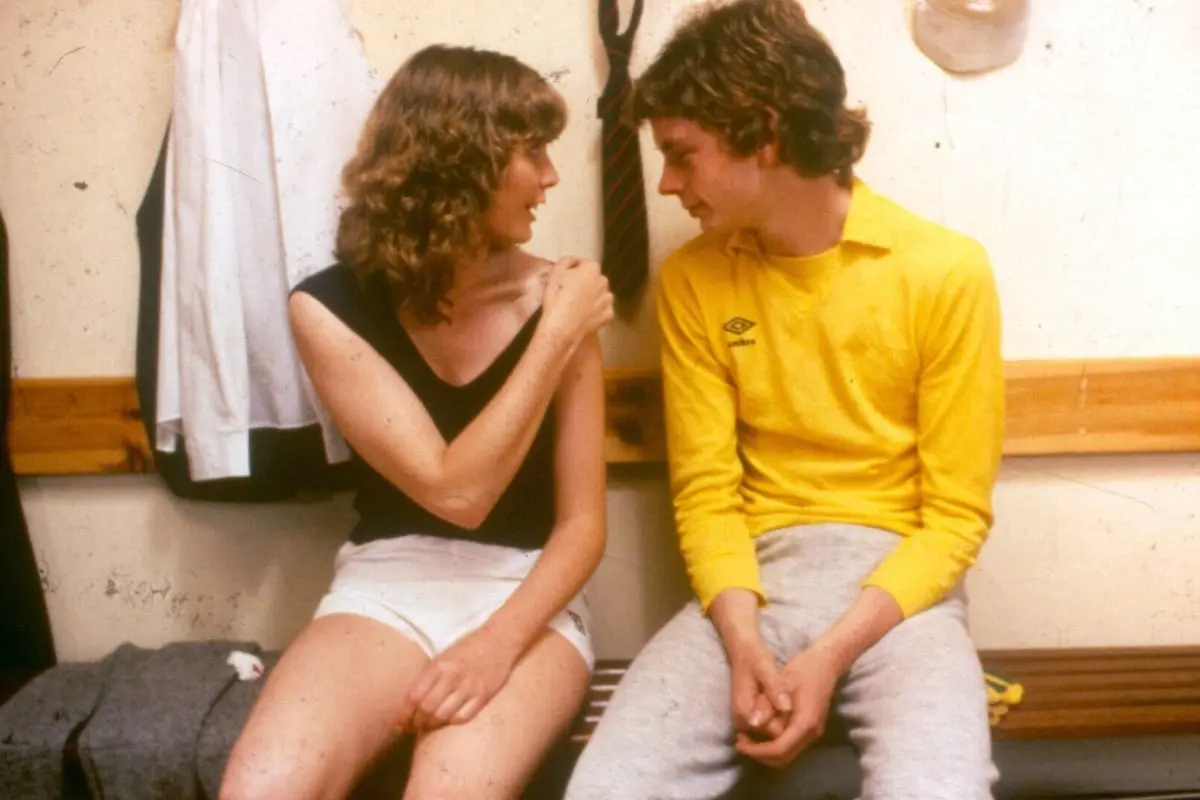
A crown jewel of Scottish cinema, Bill Forsyth’s Gregory’s Girl is an eccentric, deeply humane romantic comedy set in a comprehensive school on the outskirts of Glasgow. The plot revolves around 16-year-old Gregory (John Gordon Sinclair), whose life is upended when Dorothy (Dee Hepburn) successfully beats out the boys to secure a spot on the school football team. As Gregory—along with nearly every other male student—develops an all-consuming crush on Dorothy, the athletic rivalries on the pitch bleed seamlessly into the awkward, tender theater of adolescent romance.
Writing in The Chicago Sun-Times, legendary critic Roger Ebert observed: "The movie contains so much wisdom about being alive and teenage and vulnerable that maybe it would even be painful for a teenager to see it… Maybe only grown-ups should see this movie. You know, people who have gotten over the pains of unrequited love." Decades on, its gentle charm remains universally accessible.
6. School Daze (1988)
- Director: Spike Lee
- Setting: Historically Black College, Atlanta
Released in 1988, Spike Lee’s sophomore feature, School Daze, is a vibrant, politically charged campus musical set during the high-stakes homecoming week at a historically Black university in Atlanta. Drawing heavily on Lee’s own undergraduate experiences, the film features an exceptional ensemble cast—including a young Laurence Fishburne, Giancarlo Esposito, and Lee himself—navigating the intricate sociopolitical minefield of fraternity and sorority hazing rituals, colorism, and classism within the Black collegiate community.
While the film occasionally sacrifices narrative cohesion in favor of stylistic experimentation, dazzling 1980s choreography, and elaborate musical numbers, its intellectual ambition remains staggering. It tackles deeply entrenched intra-community prejudice with sharp wit, resulting in a viewing experience that is as intellectually stimulating as it is riotously entertaining.
7. Welcome to the Dollhouse (1995)
- Director: Todd Solondz
- Setting: Suburban New Jersey Middle School
Todd Solondz’s dark comedy feature debut, Welcome to the Dollhouse, presents a vision of middle school life defined by absolute, unadulterated psychological warfare. Set in suburban New Jersey, the film stars Heather Matarazzo as Dawn Wiener, an unpopular, socially awkward 12-year-old whose daily existence is a relentless gauntlet of bullying, cafeteria trauma, and painful unrequited infatuations.
Crucially, Solondz refuses to frame Dawn as a pure, saintly victim of her environment; she is frequently selfish, awkward, and occasionally cruel in her own right. By refusing to soften the edges of adolescent cruelty, Welcome to the Dollhouse established itself as an essential, bracingly cynical ode to the agonizing reality of never quite fitting in.
8. All About Lily Chou-Chou (2001)
- Director: Shunji Iwai
- Setting: Japanese Secondary School
Shunji Iwai’s All About Lily Chou-Chou is an immersive, highly experimental Japanese drama that captures the suffocating psychological pain and alienation of modern youth. Employing a deeply nonlinear narrative, the film tracks secondary school students Yuichi and Shusuke through an era defined by their shared, obsessive devotion to an ethereal, fictional pop star named Lily Chou-Chou.
Characterized by hazy, glowing visuals, jarring editorial cuts, and a surreal atmosphere, the film was decades ahead of its time in its exploration of early internet culture. In a stroke of conceptual brilliance, director Shunji Iwai launched a real-world companion forum called "Lilyholic" a full year before the film’s premiere—a digital ecosystem that remains active to this day. For generations of cinephiles, discovering this film during their early teens is viewed as a definitive cultural rite of passage.
9. Election (1999)
- Director: Alexander Payne
- Setting: American High School, Nebraska
Closing out this chronological survey is Alexander Payne’s razor-sharp 1999 political satire, Election. Starring Matthew Broderick as Jim McAllister—a well-liked social studies teacher whose life begins to unravel—and Reese Witherspoon as Tracy Flick, an intensely ambitious, hyper-achieving student running for school president, the film uses a local student election as a microcosm for the absurdity of American civic life.
As Tracy’s relentless drive awakens deep-seated pettiness, insecurity, and a competitive streak in Mr. McAllister, he takes the ethically compromised step of propping up a dimwitted jock to run against her. Brilliant, cynical, and relentlessly funny, Payne completely upends the traditional tropes of the American high school movie, transforming adolescent ambition into a biting commentary on power, resentment, and democracy.
Supporting Context & Metrics: The Cinematic Anatomy of the Classroom
To understand why the school film endures as a dominant subgenre, one must analyze the unique structural advantages the setting provides to screenwriters and directors. Statistically, coming-of-age films consistently over-index in terms of long-term cultural retention and audience identification.
| Film Title | Release Year | Primary Setting / Institution Type | Core Theme / Subversive Element |
|---|---|---|---|
| Olivia | 1951 | 19th-Century French Finishing School | Sapphic desire, institutional jealousy |
| If….ᄎ | 1968 | English Private Boarding School | Institutional sadism, anti-authoritarian insurrection |
| The Prime of Miss Jean Brodie | 1969 | Private Girls’ School, Edinburgh | Charismatic manipulation, pedagogical corruption |
| Peppermint Soda | 1977 | All-Girls Lycée, 1960s France | Sisterhood, adolescent anxiety, political awakening |
| Gregory’s Girl | 1980 | Scottish Comprehensive School | Unrequited love, gender role reversal |
| School Daze | 1988 | Historically Black College, Atlanta | Campus politics, colorism, fraternity rituals |
| Welcome to the Dollhouse | 1995 | Suburban New Jersey Middle School | Relentless bullying, suburban alienation |
| Election | 1999 | American High School, Nebraska | Political satire, ambition, petty institutional rivalry |
| All About Lily Chou-Chou | 2001 | Japanese Secondary School | Early internet subcultures, youthful alienation |
As illustrated above, the geographical boundaries of these institutions allow filmmakers to compress societal conflicts into tight, controlled environments. Whether it is the strict classism of a British boarding school or the digital isolation of a Japanese secondary school, the classroom serves as a universal mirror for adult power dynamics.
Official Statements and Critical Reception
The cultural weight of these cinematic texts has long been acknowledged by regulatory bodies, cinematic archives, and academic institutions.
Reflecting on the unprecedented power of performance-driven instruction, an official archival statement from the British Board of Film Classification (BBFC) regarding the 1969 X-rating of The Prime of Miss Jean Brodie noted:
"Maggie Smith’s performance was so powerful that we felt genuine concern about the possibility of young girls being influenced by the philosophy of life that she presented to her pupils."
Similarly, critical consensus has frequently elevated these works from mere teenage dramas to high art. Renowned film critic Roger Ebert famously emphasized the universal emotional truths embedded within these narratives, writing of Gregory’s Girl:
"The movie contains so much wisdom about being alive and teenage and vulnerable that maybe it would even be painful for a teenager to see it… Maybe only grown-ups should see this movie. You know, people who have gotten over the pains of unrequited love."
Future Outlook: The Evolution of the School Film in the Digital Age
As educational institutions themselves undergo rapid transformation—increasingly mediated by remote learning algorithms, digital communication platforms, and shifting socio-economic pressures—the cinematic depiction of school life is inevitably forced to adapt.
The traditional markers of school rebellion (physical pranks, newspaper circulation, hallway fistfights) are giving way to digital obsession, cyber-bullying, and algorithmic alienation, echoing the pioneering anxieties first put on film by works like All About Lily Chou-Chou. Yet, the fundamental human drivers remain entirely unchanged.
As long as schools continue to serve as the primary arena where young people grapple with identity, authority, and desire, filmmakers will continue to turn to the classroom. These nine films remind us that whether we are stepping back onto a campus or simply seeking refuge in the cinematic dark, the lessons learned during our formative years—and the cinematic art forms that interpret them—never truly leave us.