Executive Overview
The rumor mill surrounding Apple’s product pipeline has spent years churning out speculation regarding a potential foldable dual-screen or clamshell device. Whether envisioned as an iPad, a Mac, a cross-platform hybrid, or an entirely new form factor, the concept of a foldable Apple device has captured the imagination of tech enthusiasts and industry analysts alike.
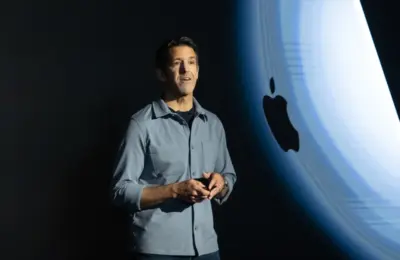
Recent reports indicated that this ambitious project—once championed as a primary focus for Apple executive John Ternus—may have been quietly shelved. However, a closer examination of Apple’s design philosophy, operating system convergence, and emerging hardware patents suggests that writing off the foldable Mac is entirely premature.
While the concept of a clunky "Mac-iPad hybrid" has largely been superseded by software developments like iPhone Mirroring and cross-platform app compatibility, the ultimate destination remains an all-screen foldable MacBook. Achieving this vision requires overcoming significant hurdles in haptic feedback, display physics, and dynamic user interfaces. Before we reach an entirely virtual interface, the industry is likely to witness an interim evolution: dynamic hardware keyboards capable of morphing their physical labels to match active software applications.
Ultimately, the transition to an all-screen foldable Mac is not a question of if, but when. As foundational technologies mature—drawing a direct parallel to the evolution of Apple’s solid-state Force Touch trackpads—the arguments Steve Jobs famously made against static smartphone keyboards in 2007 will finally apply to the personal computer.
Detailed Chronology: The Long Road to the Foldable Form Factor
The narrative surrounding Apple and flexible displays is not a recent phenomenon. For over a decade, rumors have periodically surfaced detailing secretive prototyping phases within Apple Park, exploring how the company might adapt its macOS and iPadOS ecosystems to folding hardware.
Early Concepts and the Hybrid Confusion
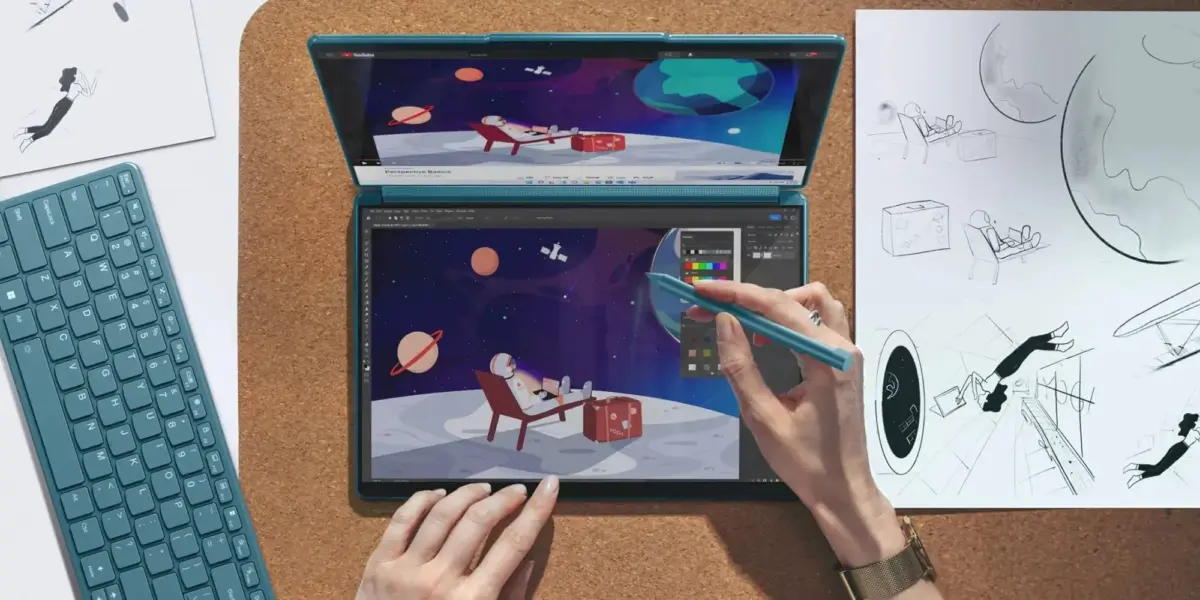
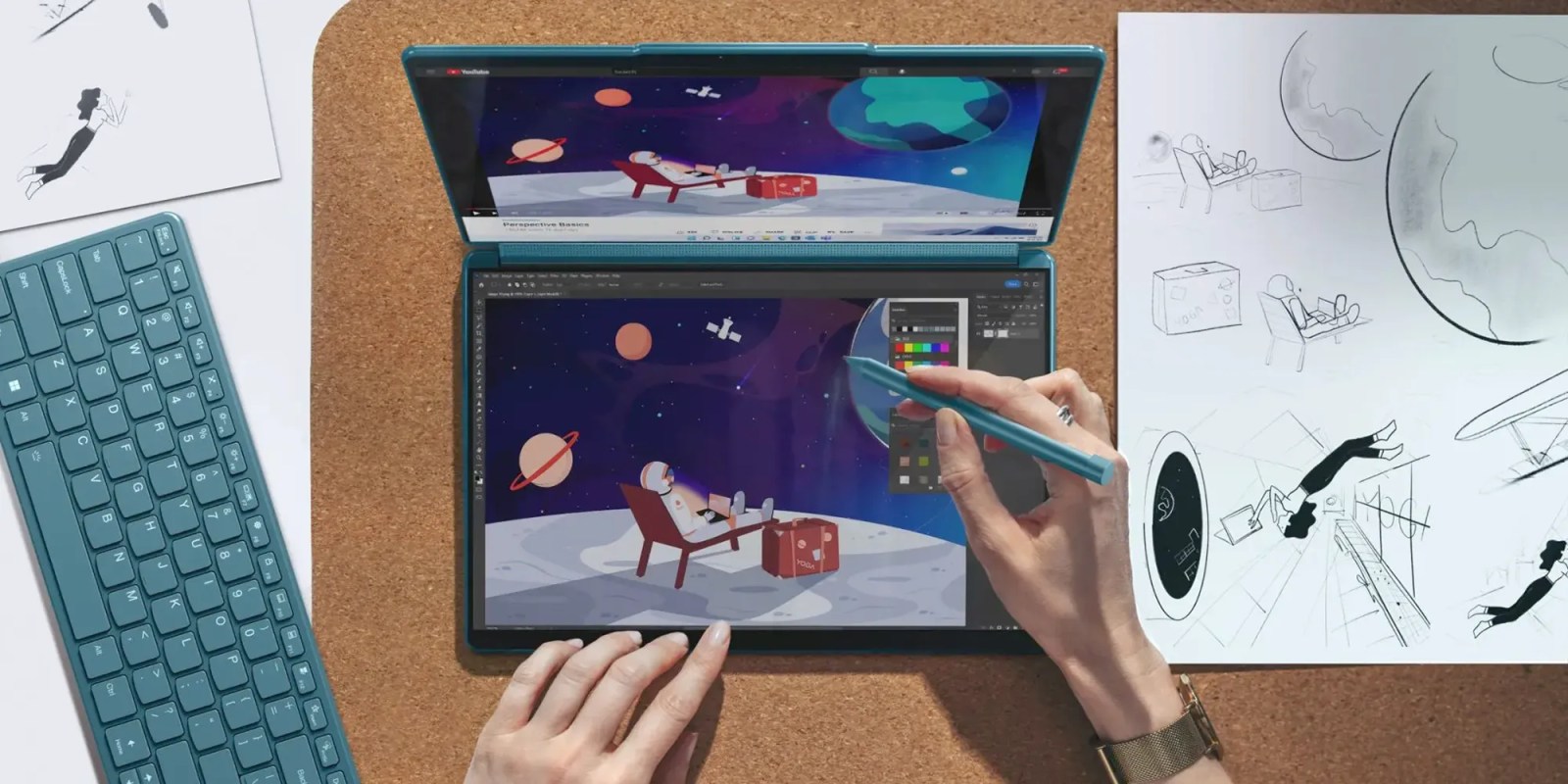
In the early days of foldable device development across the tech industry, manufacturers focused heavily on dual-screen hinges or single, continuous flexible OLED panels resembling oversized booklets (such as the Lenovo Yoga Book series). Apple naturally experimented with these concepts. Analysts and insiders frequently debated whether these prototypes belonged in the iPad family—acting as ultra-portable productivity tablets—or within the Mac lineup as reimagined clamshell laptops.
Over time, however, the need for a strict "hybrid" operating system began to dissolve. Apple addressed the intersection of iOS and macOS not by forcing a clumsy hardware fusion, but by streamlining software integration:
- Universal App Support: Modern Apple Silicon Macs natively run iPad and iPhone applications, bridging the functional gap without requiring a dual-purpose physical chassis.
- OS Convergence: macOS and iPadOS have steadily grown closer in design language, security paradigms, and utility while maintaining distinct interfaces tailored to touch versus cursor-and-keyboard navigation.
- Continuity and Mirroring: Features like iPhone Mirroring allow users to seamlessly bridge mobile and desktop workflows, diminishing the necessity for a physical hardware hybrid.
The Ternus Priority and Recent Cancellation Rumors
Reports emerged claiming that a priority project spearheaded by John Ternus to develop a novel folding device had been canceled. While this news caused momentary panic among speculators hoping for an imminent release, industry veterans note that Apple routinely pauses, resets, or kills early-stage R&D projects when current technology fails to meet the company’s strict standards for user experience, durability, and elegance.
A temporary shelving of a first-generation prototype is a standard operating procedure for Apple. It does not signify the abandonment of a product category; rather, it indicates that the underlying technology is not yet ready for prime time.
Supporting Context & Metrics: The Ergonomic Challenge of Virtual Keyboards
To understand why an all-screen foldable Mac remains on the horizon rather than arriving tomorrow, one must examine the physical and psychological realities of typing. For an all-screen clamshell device to replace a traditional MacBook, its virtual keyboard must overcome three fundamental obstacles that have plagued touch-typing on glass since the dawn of the smartphone era:

- Tactile Orientation: Without physical keys, touch-typists lose their ability to "home" their fingers using the tactile bumps on the ‘F’ and ‘J’ keys, leading to higher error rates.
- Force Feedback: Typing on rigid glass causes repetitive strain and fatigue because the surface absorbs kinetic impact rather than providing a responsive, spring-like bounce.
- Visual Confirmation: Users rely heavily on muscle memory tied to the physical boundaries of individual keys; completely flat screens force a greater reliance on visual confirmation, slowing down workflow.
The Interim Step: Dynamic Hardware Keyboards
Before consumers are asked to completely abandon physical keys, the industry may see a resurgence in dynamic hardware keyboards. The concept of a keyboard whose keys can dynamically remap themselves based on the active application is nearly a decade old.
Early pioneers like the Sonder Keyboard utilized miniature E-Ink displays embedded within individual keycaps to alter labels and functions on the fly. While E-Ink keyboards remained a niche enterprise product due to cost, refresh rates, and durability constraints, the underlying utility remains undeniable.
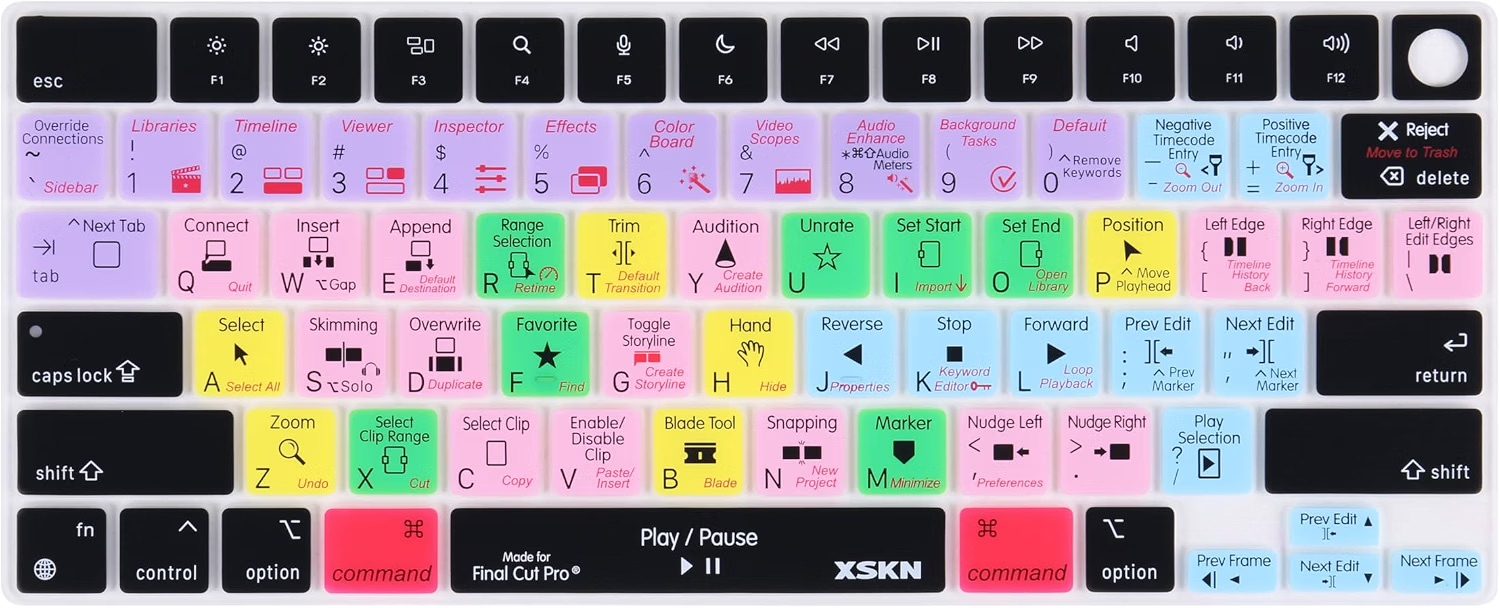
Consider professional software suites like Apple’s Final Cut Pro or Avid Media Composer. Video editors routinely purchase specialized physical keyboards or silicone keyboard overlays adorned with shortcut icons because a standard QWERTY layout is inefficient for timeline scrubbing, trimming, and color grading.
[Traditional QWERTY] ---> [Static Shortcut Overlays] ---> [Dynamic E-Ink / Micro-LED Keys] ---> [Advanced Haptic Soft Glass]A dynamic keyboard—whether implemented via smart individual keycaps or an intelligent hybrid physical-digital interface—would allow a keyboard to instantly transform its layout, symbols, and color-coded functions the moment a user switches from Safari to Adobe Photoshop or Xcode.
Technological Innovations: Soft Keyboards That Feel Like Hard Ones
When Steve Jobs introduced the original iPhone in 2007, he delivered a scathing critique of existing mobile devices:
"What’s wrong with their user interfaces? They all have these keyboards that are there whether you need them or not. And they all have these control buttons that are fixed in plastic and are the same for every application. Well, every application wants a slightly different user interface, a slightly optimized set of buttons, just for it."
That exact philosophy is destined to migrate to the personal computer. To achieve this, Apple and academic researchers have spent years developing technologies designed to make a completely flat, soft glass surface mimic the physical sensation of mechanical keys. Apple holds numerous patents addressing these exact barriers:
- Flexible Display Deformation: Utilizing advanced flexible display substrates rather than rigid structural glass, allowing the screen to physically depress slightly under finger pressure.
- Advanced Haptic Integration: Pairing physical micro-movements with high-precision haptic actuators (similar to the Taptic Engine) to simulate the sharp "click" of a mechanical switch.
- Electrostatic Surface Texturing: Applying targeted electrostatic charges to alter the perceived friction and texture of a glass surface, convincing the human fingertip that physical key boundaries exist on a flat plane.
Breakthroughs in Flat-Panel Haptics
Further validating this trajectory, academic breakthroughs have accelerated the feasibility of pop-up virtual keys. In 2023, researchers at Carnegie Mellon University developed groundbreaking haptic technology utilizing embedded electroosmotic pumps (EEOPs).
These microscopic pumps measure just 1.5 millimeters in thickness and are capable of moving liquids through electrical fields rather than mechanical parts. Paired with a thin liquid reservoir beneath a flexible surface structure, these systems can generate temporary, rigid physical buttons measuring up to five millimeters in height within roughly one second. The resulting buttons possess enough structural integrity and pressure resistance to genuinely feel like solid plastic keys when pressed, before retreating flat when the application demands a full media display.
Future Outlook: A "When, Not If" Proposition
Skeptics often point to the current limitations of foldable screens—such as visible creases, long-term hinge durability concerns, and battery constraints—as proof that the format is a passing fad. However, history offers a compelling precedent within Apple’s own hardware ecosystem: the Mac trackpad.

For years, Apple’s trackpads sounded and felt like mechanical diving boards hinged at the top. In reality, Apple transitioned its entire laptop lineup to solid-state trackpads years ago. These surfaces do not physically click at all; instead, they use precise force sensors paired with haptic feedback to perfectly simulate mechanical clicks. The illusion is so flawless that the vast majority of users remain entirely unaware that their finger is pressing against a completely stationary piece of glass.
When soft keyboard and display technology reaches this exact threshold of sophistication, the paradigm of the laptop will shift permanently.
- In Clamshell Mode: The lower half of the device will transform dynamically into whatever toolset the user requires—a standard QWERTY keyboard for writing, a dedicated mixing board for audio production, a suite of custom macro keys for gaming, or a digital canvas for graphic design.
- In Expanded Mode: When the device is unfolded flat, the user is greeted by an uninterrupted, massive canvas ideal for media consumption, presentations, or expansive multi-window workflows.
The initial first-generation foldable Mac prototypes may have been pushed back, restructured, or temporarily sidelined within Apple’s engineering labs, but this is an inevitability of technological evolution. Apple is notoriously patient, often waiting until component science, software design, and manufacturing economics align to deliver a seamless experience.
The foldable Mac is coming. It is merely a matter of time.