Executive Overview
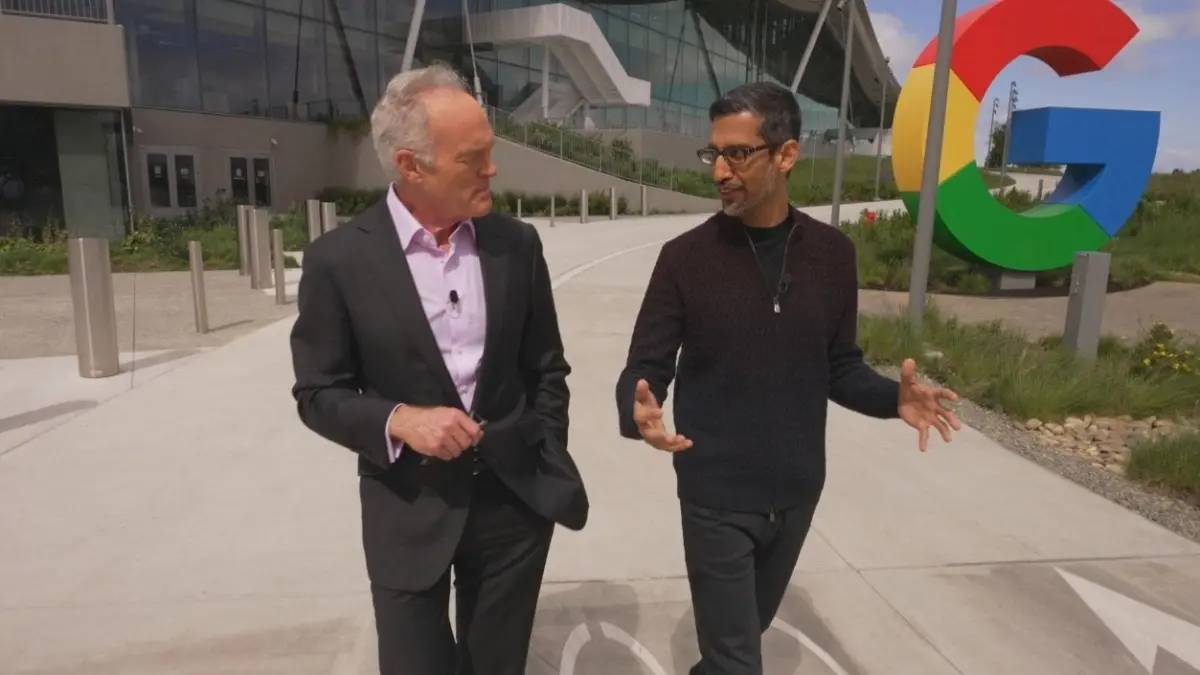
In an era defined by rapid technological breakthroughs and fierce corporate competition, the boundary between legitimate scientific advancement and public relations hyperbole has grown increasingly thin. This tension took center stage following a high-profile segment on CBS’s premier newsmagazine program, 60 Minutes, featuring an in-depth interview with Google CEO Sundar Pichai. The broadcast aimed to demystify the fast-evolving landscape of artificial intelligence (AI), but instead ignited a firestorm within the global AI research community.
At the heart of the controversy was a compelling narrative presented by correspondent Scott Pelley and Google executives: that a Google-developed large language model (LLM) had autonomously learned a completely unseen language—Bengali—without prior instruction, showcasing a mysterious phenomenon known as "emergent properties."
However, prominent AI ethicists, data scientists, and computational linguists immediately pushed back against the broadcast. Experts including Margaret Mitchell, co-founder of Hugging Face’s AI ethics team and former co-lead of Google’s AI ethics group, and University of Washington professor Emily M. Bender utilized social media and public platforms to dismantle the claims. They pointed out a glaring factual omission: the AI model in question, PaLM (Pathways Language Model), was explicitly trained on Bengali data, as documented in Google’s own technical literature.
Critics argue that framing standard machine learning behavior as spontaneous, magical awakening serves corporate PR narratives rather than scientific truth. This incident underscores a broader systemic issue within tech journalism and corporate communications: the tendency to sensationalize AI capabilities, transforming deterministic mathematical models into mythical entities on the precipice of Artificial General Intelligence (AGI). This report provides a detailed chronology of the broadcast, an analysis of the technical metrics involved, an evaluation of official statements from all parties, and a look at the future implications of responsible AI reporting.
Detailed Chronology: From Developer Conference to Primetime Television
To understand how a technical nuance in machine learning training data became a primetime television controversy, one must examine the timeline of events leading up to the 60 Minutes broadcast.
May 2022: Google Introduces PaLM
Google first showcased the Pathways Language Model (PaLM) during its annual Google I/O developer conference. During the event, CEO Sundar Pichai highlighted the model’s expansive multilingual capabilities. On stage, Pichai demonstrated PaLM’s ability to understand and respond to prompts in Bengali, a language spoken by over 260 million people globally.
Pichai remarked at the time on the model’s sophisticated performance, emphasizing that while it had not been explicitly taught parallel translation dictionaries between English and Bengali, it successfully handled tasks across languages. While tech industry insiders understood this as a testament to the zero-shot and few-shot generalization capabilities typical of large-scale transformers, the broader public framing leaned toward impressive feats of machine comprehension.
April 2023: The 60 Minutes Broadcast
Nearly a year later, the narrative resurfaced on a much larger global stage. On a Sunday evening broadcast of 60 Minutes, correspondent Scott Pelley anchored a segment exploring the immense power and opaque nature of modern artificial intelligence.
During the segment, Pelley introduced viewers to what he termed the most mysterious issue in AI: "emergent properties." He stated that some AI systems were teaching themselves skills they were not expected to have, noting that the underlying mechanisms remained poorly understood.
The segment then transitioned to a demonstration of an unidentified Google AI program—subsequently identified as PaLM, the foundational technology powering Google’s AI chatbot, Bard. The broadcast featured a user prompting the software in Bengali, with the program responding fluidly in both Bengali and English. Pelley asserted that the program had "adapted on its own" after encountering a language it was ostensibly not trained to know.
Reinforcing this claim, James Manyika, a Google senior vice president interviewed for the piece, stated: "We discovered that with very few amounts of prompting in Bengali, it can now translate all of Bengali. So now, all of a sudden, we have a research effort where we’re now trying to get to a thousand languages."
The Immediate Backlash
Within minutes of the broadcast concluding, the AI research community mobilized online. Researchers took to Twitter and academic forums to fact-check the assertions made by CBS and Google executives. Margaret Mitchell was among the first to sound the alarm, highlighting the exact documentation that contradicted the segment’s core premise. The ensuing public debate forced both CBS and Google to field intense scrutiny regarding scientific accuracy, journalistic standards, and the deliberate manufacturing of AI mystique.
Supporting Context & Metrics: The Technical Reality of PaLM
To evaluate the validity of the claims made on 60 Minutes, one must examine the empirical data regarding how large language models are constructed, trained, and evaluated.
What is PaLM?
The Pathways Language Model (PaLM) is a 540-parameter dense transformer model trained by Google researchers. Large language models operate by predicting the next token (word, sub-word, or character) based on massive datasets scraped from the internet, books, code repositories, and multilingual web pages.
The Training Data Breakdown
When Google published its technical research paper detailing the architecture and training methodology of PaLM (PaLM: Scaling Language Modeling with Pathways, arXiv:2204.02311), transparency was maintained regarding the composition of the training corpus.
The training dataset comprised a massive multilingual mix of filtered web pages, books, Wikipedia articles, news articles, source code, and social media conversations. A breakdown of the multilingual datasets reveals:
- English: Formed the vast majority of the training corpus.
- Other Languages: Included hundreds of other languages, ranging from high-resource languages like French and Spanish to low-resource languages.
- Bengali: Explicitly included in the training mix, accounting for approximately 0.026% of PaLM’s total training data.
While 0.026% may sound small relative to English, in the context of a massive web-scale dataset containing hundreds of billions of tokens, 0.026% equates to hundreds of millions of words of Bengali text.
Understanding "Emergence" vs. "Retrieval"
In machine learning, "emergent abilities" generally refer to capabilities that are absent in smaller models but present in larger models (e.g., multi-step arithmetic, advanced reasoning, or code generation) when scaling up parameters and compute.
However, applying the term "emergent" to language acquisition—implying that a model spontaneously invented or absorbed a language out of thin air without prior exposure—is scientifically inaccurate. As Margaret Mitchell explained:
"By prompting a model trained on Bengali with Bengali, it will quite easily slide into what it knows of Bengali: This is how prompting works. It is not possible for AI to speak well-formed languages that you’ve never had access to."
When a user prompts a model in a language that constitutes even a fraction of its training data, the transformer architecture activates the internal weights and attention heads associated with that linguistic token space. The model is not "learning" the language from scratch during the prompt; rather, it is recognizing patterns it has already encountered during pre-training and leveraging its generalized cross-lingual transfer learning to generate coherent responses.
Official Statements and Defensive Postures
As the controversy escalated, representatives from both Google and independent academic institutions issued statements clarifying, defending, or sharply criticizing the framing of the segment.
Google’s Clarification
Following inquiries from media outlets, Google spokesperson Jason Post defended the company’s position, asserting that Google never explicitly claimed it withheld Bengali training data entirely.
"While the PaLM model was trained on basic sentence completion in a wide variety of languages (including English and Bengali), it was not trained to know how to 1) translate between languages, 2) answer questions in Q&A format, or 3) translate information across languages while answering questions," Post stated. "It learned these emergent capabilities on its own, and that is an impressive achievement."
Google’s defense hinges on a semantic distinction: while the model saw raw Bengali text during pre-training (basic sentence completion), it was not explicitly fine-tuned or supervised for translation tasks or question-answering pairs in Bengali. Therefore, its ability to successfully translate and converse in Bengali without explicit fine-tuning is classified by Google engineers as an emergent capability.
Academic Pushback: Bender and Mitchell Respond
Independent researchers found Google’s defense insufficient and misleading to the general public. Emily M. Bender, a linguistics professor at the University of Washington known for her outspoken critiques of AI hype, dismantled James Manyika’s claim that the model could now "translate all of Bengali."
"What does ‘all of Bengali’ actually mean?" Bender posted on social media. "How was this tested?"
Bender argued that statements boasting about mastering an entire language obscure the reality of probabilistic text generation and ignore the documented presence of Bengali texts in the training data. Furthermore, Bender criticized the casual conflation of "emergent properties" with Artificial General Intelligence (AGI)—the hypothetical milestone where machines match or exceed human cognitive capabilities across all domains.
"The term ’emergent properties’ seems to be the respectable way of saying AGI," Bender wrote bluntly. "It’s still bullshit."
Margaret Mitchell expanded on this critique, accusing tech corporations and mainstream media outlets of manufacturing a sense of digital sorcery to drive commercial interests.
"Maintaining the belief in ‘magic’ properties, and amplifying it to millions (thanks for nothin @60Minutes!) serves Google’s PR goals," Mitchell tweeted. "Unfortunately, it is disinformation."
Future Outlook: The Imperative for Responsible AI Journalism
The clash over the 60 Minutes segment serves as a watershed moment for how artificial intelligence is communicated to the public. As AI systems become deeply integrated into daily life, the societal implications of misrepresenting their mechanics grow increasingly severe.
The Dangers of AI Mystique
When mainstream media outlets frame statistical pattern-matching algorithms as autonomous, sentient entities capable of miraculous self-education, several negative consequences follow:
- Regulatory Misdirection: Policymakers may draft legislation based on science-fiction myths rather than concrete engineering realities (such as copyright infringement, algorithmic bias, data privacy, and labor displacement).
- Uninformed Consumer Trust: Everyday users may over-rely on AI outputs, assuming models possess deep comprehension or factual infallibility when they are fundamentally probabilistic text predictors prone to hallucinations.
- Corporate Accountability: Exaggerating AI autonomy allows tech companies to deflect responsibility for errors, biases, or harmful outputs by blaming them on mysterious, "un-understandable" emergent behaviors rather than design choices and training data curation.
Moving Toward Empirical Transparency
Moving forward, both the tech industry and science journalism must adopt higher standards of rigor. For developers and corporate communications teams, this means resisting the temptation to use magical metaphors ("black box," "spontaneous awakening," "mind of its own") to describe predictable scaling phenomena. For journalists and broadcasters, it demands rigorous fact-checking, consultation with independent ethicists and linguists rather than relying solely on company executives, and a commitment to demystifying technology rather than sensationalizing it.
Ultimately, the power of large language models like PaLM lies not in magical self-creation, but in the staggering scale of human data, engineering ingenuity, and computational power behind them. Acknowledging the true mechanics of AI does not diminish its impressiveness—it grounds it in reality, paving the way for safer, more accountable technological development.