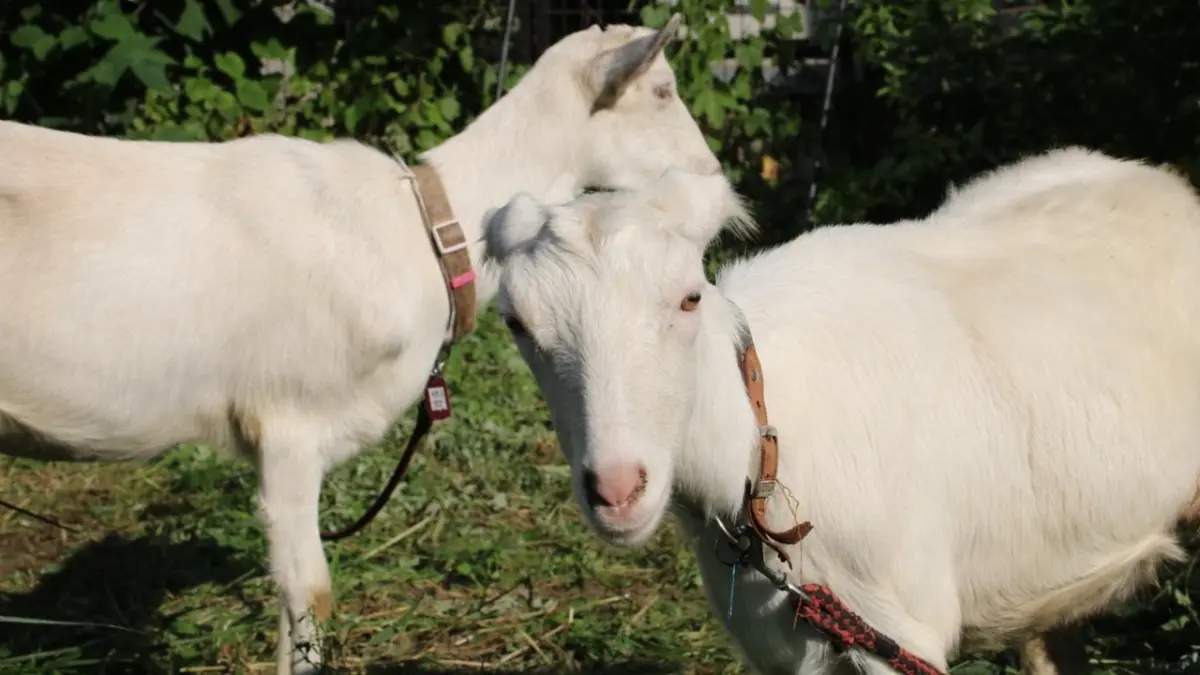
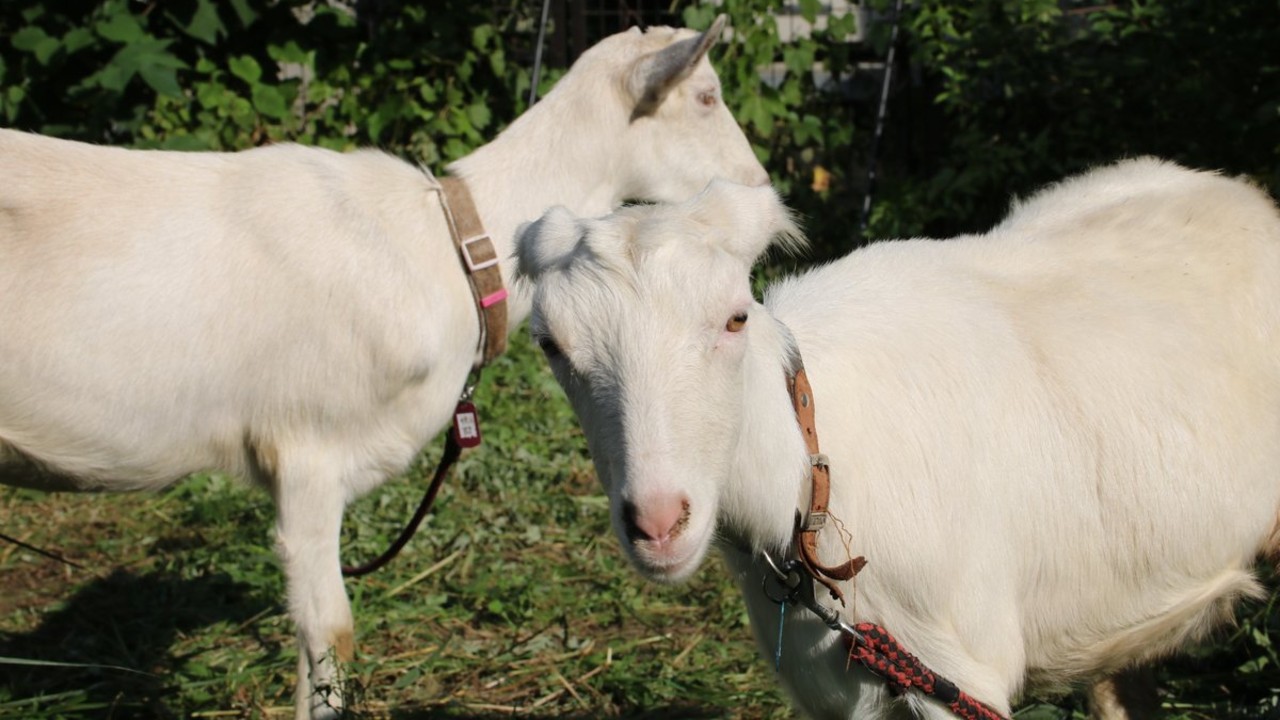
In an era dominated by high-tech automation, artificial intelligence, and corporate restructuring, Japan Rail (JR)—the country’s premier railway network—has captured global attention by embracing a remarkably low-tech, highly organic solution to landscape maintenance. Enter Nagi and Pokke, two hardworking goats officially deployed to manage overgrown vegetation in a railway lot near the Yotsuya station in Shinjuku, Tokyo.
What began as a practical, eco-friendly weed-control initiative quickly mutated into a viral internet phenomenon in late October 2026. Within days of hitting social media platforms like X (formerly Twitter) and Instagram, Nagi and Pokke transcended their modest duties as municipal landscapers to become beloved cultural icons. Capturing the hearts of local kindergarteners, commuters, and international netizens alike, the duo sparked widespread online discourse regarding sustainable urban management, corporate mascot culture, and the simple joy of animals performing mundane tasks with absolute dedication.
This article provides an in-depth journalistic investigation into the Nagi and Pokke phenomenon, tracing its origin, analyzing its viral spread across global digital ecosystems, evaluating the metrics of its digital footprint, and examining what this charming operational pivot says about modern corporate public relations in Japan.
Detailed Chronology: From Railway Lot to Global Viral Sensation
The journey of Nagi and Pokke from anonymous farm animals to digital royalty unfolded rapidly over a single week in October 2026. The timeline of events highlights the unpredictable nature of modern internet virality, where hyper-local human interest stories can transform into global sensations within hours.
October 20, 2026: The Quiet Deployment
The initiative was initially launched without fanfare. Japan Rail, seeking sustainable and quiet methods to clear an overgrown plot of land adjacent to a bustling commuter station in Yotsuya, Shinjuku, contracted the two goats. Grazing animals have occasionally been utilized in Japanese urban environments for eco-friendly weed mitigation—avoiding the noise pollution of lawnmowers and the chemical runoff of herbicides—but the placement of Nagi and Pokke in such a high-traffic urban core was uniquely noteworthy.
October 21, 2026: The Spark on X
The story caught fire on social media when Japanese user and prominent poster @fuuuukatsu shared a news report covering the railway company’s unusual new hires. The post included footage of Nagi and Pokke methodically clearing the thick brush. The tweet struck an immediate chord with the online public, crossing the 15,000-like threshold within just 72 hours. The juxtaposition of a massive, hyper-efficient corporate transit conglomerate employing two goats in the heart of Tokyo proved to be irresistible meme fodder.
October 22–23, 2026: Local Stardom and International Spread
As foot traffic past the Yotsuya lot increased, local residents and commuters began interacting directly with the animals. On October 22nd, X user @ren_Nevermind published a video capturing a delightful scene: local kindergarten children shouting, "Goat-san! Goat-san!" (using the polite Japanese honorific -san for the animals) as they cheered on the grazing duo.
In the accompanying post, @ren_Nevermind noted the cultural shift taking place at the station:
"holy shit. the kindergarten kids are all shouting ‘goat-san! goat-san!’ these goats have already become mascots for the kids. these aren’t just ordinary goats. they’re the official mascots of JR, japan’s largest railway company."
The post quickly surpassed 120 likes—a significant velocity for the niche thread—and catalyzed a wave of international cross-posting. By October 23rd, the story breached Western and South Asian internet bubbles when prominent aggregator pages, including the popular Instagram media brand Ghantaa, picked up the narrative. The Instagram feature garnered over 6,000 likes in less than 24 hours, cementing Nagi and Pokke’s status as global internet celebrities.
Supporting Context & Metrics: The Anatomy of a Wholesome Trend
To understand why Nagi and Pokke resonated so deeply with digital audiences, one must examine the broader socioeconomic and psychological climate of late 2026 internet culture.
The Appeal of "Slow Media" and Wholesomeness
In an internet ecosystem frequently saturated by high-stakes political polarization, algorithmic outrage, and distressing global headlines, wholesome animal content functions as a necessary psychological balm. Nagi and Pokke offered users a narrative of pure, unadulterated innocence. There is no controversy surrounding their employment—only the steady, satisfying visual of two ruminants eating tall grass. This aligns with a broader digital trend toward "slow media," where audiences gravitate away from fast-paced outrage cycles and toward comforting, low-stakes micro-stories.
Urban-Rural Juxtaposition in Tokyo
The setting itself amplified the narrative’s appeal. Shinjuku is one of the busiest, most densely packed commercial and transit hubs on the planet, characterized by neon lights, towering skyscrapers, and the relentless hum of high-speed commuter trains. Placing pastoral farm animals right in the middle of this hyper-modern concrete jungle created an immediate, poetic contrast. It evoked classic pastoral tropes while highlighting Japan’s unique capacity to blend ultra-modern infrastructure with whimsical, community-oriented traditions.
Quantitative Impact and Engagement Metrics
While formal search interest metrics compiled by platforms like Google Trends and Know Your Meme initially flagged the entry for heavy research and evaluation, the social media velocity speaks for itself:
- The Origin Post (@fuuuukatsu): Accumulated over 15,000 likes within three days of publication.
- The Observation Post (@ren_Nevermind): Rapidly scaled to hundreds of direct interactions and hundreds of thousands of organic impressions via retweets and quote-tweets.
- Cross-Platform Syndication: Penetrated high-traffic meme hubs and aggregator feeds across X, Instagram, and specialized Japanese forums, transitioning from a localized news item into a recognized international meme template.
Corporate Public Relations and Eco-Friendly Infrastructure
Beyond the internet culture angle, Nagi and Pokke represent a fascinating case study in modern corporate public relations (PR) and sustainable urban planning.
Green Grazing as Municipal Innovation
Using livestock for vegetation management—often referred to as "targeted grazing"—is not entirely new, but its application by a major corporate entity like Japan Rail in a Tier-1 global metropolis like Tokyo represents a forward-thinking pivot. Traditional landscaping methods in railway zones typically involve heavy machinery, gasoline-powered lawnmowers, and chemical weed killers. These methods contribute to carbon emissions, noise pollution, and chemical runoff into local water systems.
By deploying Nagi and Pokke, JR achieved several corporate and environmental objectives simultaneously:
- Carbon Footprint Reduction: The goats operate entirely on organic fuel (overgrown weeds), producing zero direct carbon emissions.
- Noise Mitigation: Unlike industrial weed-whippers, goats graze in near-total silence, minimizing disruption to surrounding residential neighborhoods and commuters.
- Biodegradable Maintenance: The natural byproduct of their labor serves as organic fertilizer, completing an entirely sustainable ecological loop.
The Power of Unintentional Branding
From a marketing perspective, JR achieved what millions of dollars in traditional ad campaigns struggle to buy: authentic, grassroots affection. Japanese transit companies are already renowned for their elaborate, character-driven mascot culture (often referred to as Yuru-chara). By inadvertently turning two real, living goats into de facto mascots, JR tapped into this cultural affinity. The children calling them "Goat-san" demonstrated how corporate spaces can be humanized through simple, community-facing initiatives. Analysts note that this type of organic PR generates immense goodwill among the public, casting the massive railway conglomerate as approachable, eco-conscious, and charmingly eccentric.
Future Outlook: What’s Next for Nagi and Pokke?
As the initial wave of viral curiosity settles into sustained public interest, questions loom regarding the long-term future of Tokyo’s most famous ovine employees.
Potential for Expansion
Given the overwhelming success of the Yotsuya pilot program, industry insiders and rail enthusiasts are already speculating whether JR will expand the "goat crew" initiative to other underutilized lots across the sprawling Yamanote and Chuo railway lines. Urban agricultural consultants suggest that similar programs could be scaled across multiple transit hubs, turning routine infrastructure maintenance into localized tourist and community attractions.
Mascot Longevity and Merchandise Potential
In Japan, mascot culture frequently translates into commercial longevity. Already, online commentators have joked about the inevitability of official JR merchandise featuring Nagi and Pokke. While the railway company has maintained a straightforward, no-nonsense approach to their employment—treating them primarily as efficient workers rather than corporate properties—the public has clearly adopted them as permanent fixtures of the Shinjuku landscape.
Whether Nagi and Pokke will eventually retire back to a rural farm once the Yotsuya lot is thoroughly cleared, or whether they will be reassigned to greener pastures along the tracks, remains to be seen. What is certain, however, is that these two humble goats have left an indelible hoofprint on the digital and physical landscape of Tokyo, reminding millions around the world that sometimes, the best solution to a modern problem is simply letting nature do what it does best.