Executive Overview
In the high-stakes, fast-paced world of modern endurance athletics, the prevailing narrative has long been one of relentless sacrifice. For decades, the cultural blueprint of a marathon runner has demanded brutal predawn wake-up calls, monastic dietary regimes, and an uncompromising "no pain, no gain" ethos. But as the running boom continues to sweep urban centers globally, a quiet revolution is taking shape—one led by everyday athletes who refuse to let training consume their joy, mental health, or social lives.
Enter Hong, a Berlin-based graphic designer, international flight attendant, and veteran endurance athlete currently preparing for her seventh full marathon. Hong’s journey challenges the traditional archetype of the suffering runner. Once firmly self-identified as a "non-runner," she has spent the last four years methodically transforming her lifestyle—not by stripping away comfort, but by centering it. Balancing a demanding, irregular career in aviation with an ambitious athletic regimen, Hong embodies a new paradigm in modern fitness: the harmonious integration of high-level performance, holistic body maintenance, vibrant community engagement, and unashamed coziness.
This report offers an in-depth, day-by-day examination of Hong’s weekly training architecture. It explores how modern urban runners navigate the friction between professional burnout and athletic ambition, the critical science of active recovery, the psychological impacts of community-led run collectives, and the shifting philosophy of gear and comfort in endurance sports. Hong’s routine provides a compelling blueprint for anyone seeking to push physical boundaries without sacrificing the simple pleasures of daily life.
Detailed Chronology: A Week Inside Hong’s Training Architecture
To understand how a busy professional manages the grueling physical and logistical demands of marathon preparation, one must examine the micro-level execution of her week. Far from an erratic schedule, Hong’s routine is a masterclass in compartmentalization, intuition-led pacing, and uncompromising self-care.
Monday: Combating Fatigue and Finding Rhythm
Mondays are notoriously challenging for the modern workforce, compounded for Hong by her dual professional life as a designer and a flight attendant. Jet lag, irregular sleep cycles, and looming work deadlines create a high-friction environment for athletic training.
"I can’t afford to lose the joy of running, or I won’t stay consistent," Hong explains. To bridge the gap between lethargy and action, she relies heavily on auditory catalysts—specifically, a carefully curated running playlist featuring energetic blends of disco, house, and techno. Music serves not merely as background noise, but as a physiological pacemaker when motivation flags.
Monday also highlights Hong’s adaptive approach to pacing. When unexpected breathlessness hits mid-run, rather than engaging in negative self-talk or forcing a rigid split time, she employs an unconventional tactic: she slows down and begins to sing out loud. This forces diaphragmatic breath control, naturally lowering her heart rate while injecting levity into the workout. Passersby frequently smile or double-take at the singing runner—a reminder that urban running is as much a social performance art as it is solitary conditioning.
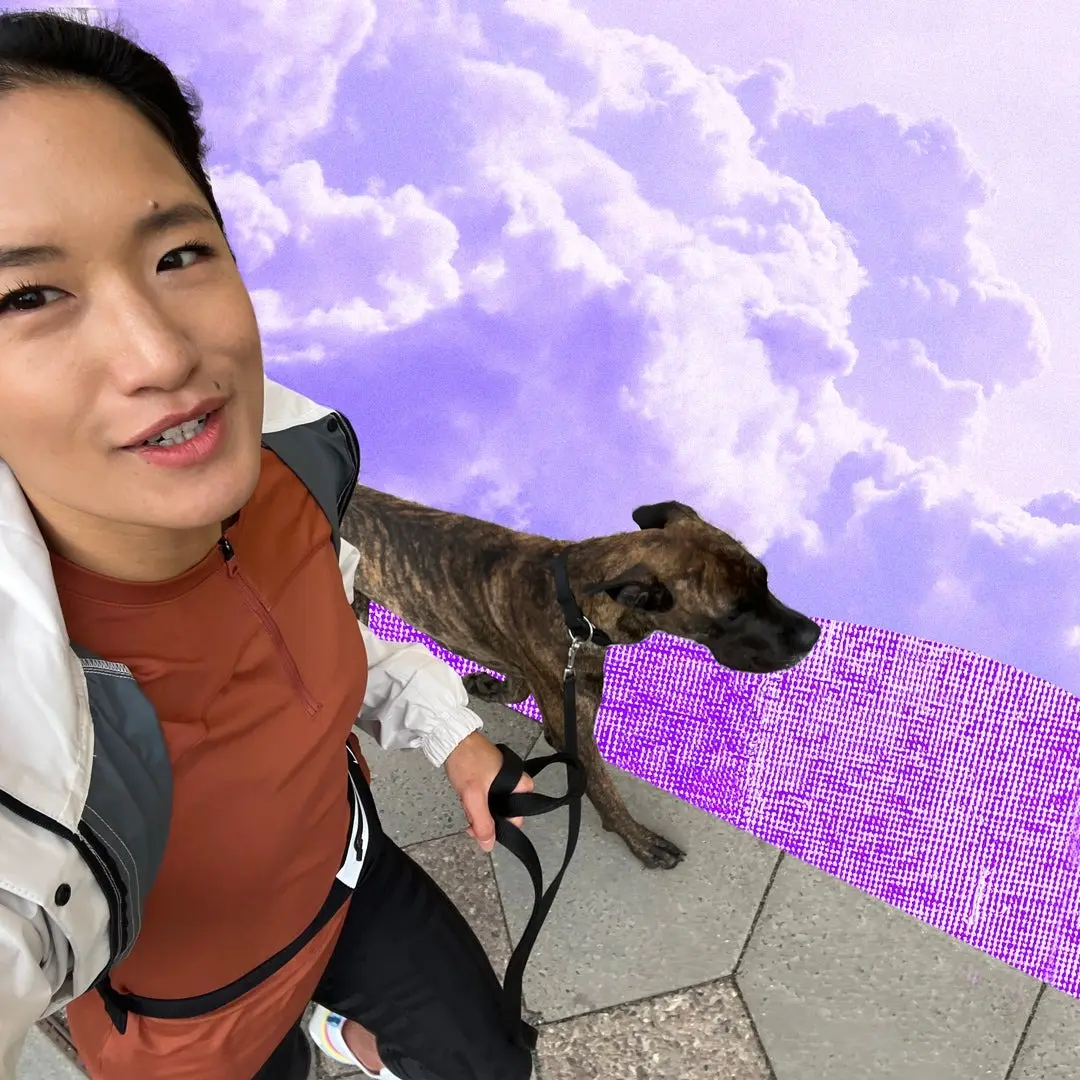
To inject further novelty and companionship into the start of the week, Hong frequently borrows a friend’s dog, Mia. High-energy canine companions change the dynamic of a run entirely. "At the beginning, she pulls me; at the end, I pull her," Hong notes. While she may lack the raw sprinting speed of a high-energy dog, her human endurance wins out over longer distances, creating a symbiotic pacing partnership.
Tuesday: Cross-Training and Injury Mitigation
Tuesday represents a deliberate pivot away from pavement pounding. Recognizing that marathon success is built on a foundation of structural integrity, Hong abstains from running entirely, dedicating her day to yoga, targeted strength training, and professional physiotherapy.
In the science of endurance athletics, strength training is frequently neglected by amateur runners who mistakenly believe that running alone is sufficient conditioning. Hong’s routine integrates core stability, glute activation, and eccentric leg strength to protect her joints against the repetitive impact forces of high-mileage weeks. Combined with regular mobility work and physiotherapy, this holistic approach allows her to safely step outside her comfort zone during intense runs without tipping over into overuse injuries. Crucially, it ensures her body can absorb high training loads and bounce back rapidly.
Wednesday: The Art of the Strategic Pause
For a long-haul flight attendant, time spent on the ground in Berlin is a precious commodity. Wednesday serves as a vital psychological buffer. Rather than packing every waking hour with physical outputs, Hong honors her social and professional life by prioritizing human connection.
On this particular Wednesday, she sidesteps physical workouts entirely in favor of visiting a local art exhibition with friends. This adherence to rest is not accidental; it is a calculated physiological and psychological necessity. Mitigating burnout requires carving out mental space away from heart-rate monitors, split times, and training logs.
Thursday: Pushing Limits and Gear Optimization
If Monday is about finding rhythm and Wednesday is about rest, Thursday is the crucible of the training week: the high-intensity track workout. Preparing for a marathon requires structured speed work—intervals and tempo runs designed to expand the anaerobic threshold and build lactate clearance capacity.
"Some people think marathon runners bounce out of bed at 5:00 AM and effortlessly knock out 20 kilometers," Hong laughs. "I definitely need an extra dose of motivation."
On track days, that motivation is fueled in part by optimal gear selection. Hong relies on performance footwear engineered for both protection and responsiveness, such as the Nike Invincible 3. The choice of footwear is foundational to her philosophy: comfort and high performance are not mutually exclusive. The bouncy, highly cushioned sole provides a secure, forgiving platform across unpredictable urban tracks and varying surfaces, giving her the confidence to push her velocity thresholds to the maximum.
Friday: Active Recovery and Cultural Integration
Recovering from a demanding track session requires more than just passive resting; it demands active flushing of metabolic waste and mental decompression. Friday mirrors Wednesday’s ethos, blending a gentle yoga session with cultural outings in Berlin.
Because her profession frequently removes her from her home city, Hong treats her time in Berlin with intentionality. Immersing herself in the city’s creative art scene acts as a grounding mechanism, anchoring her mental health and reinforcing the balance between her identity as an artist and her identity as an athlete.
Saturday: The Meditative Long-ish Run and Urban Rituals
Saturday morning in Berlin belongs to the Landwehrkanal. Hong’s standard training route takes her along this iconic urban artery, transitioning across asphalt, damp grass, and packed earth.
This run is an exercise in mindfulness. Sometimes accompanied by an engaging long-form podcast, and other times completely silent, Hong uses this time to absorb the ambient soundtrack of the city. Running alongside the canal offers a dynamic visual landscape—watching rowers, cyclists, and fellow pedestrians brings a sense of shared urban community.
The ritual does not end at the final footstep. A crucial component of Hong’s running psychology is the post-run reward: a steaming cup of coffee and a fresh snack from a local market stall in Kreuzberg. This intentional reward loop transforms the grueling elements of training into a celebrated sensory experience.
Sunday: Community Synergy and the Long Run
The pinnacle of the training week occurs on Sunday, executed in tandem with the Joy Run Collective, Hong’s local running community. Long runs are notoriously difficult to sustain in solitude, particularly as weekly mileage climbs and winter temperatures drop.
Running through the Tiergarten with a collective changes the psychological equation entirely. Shared suffering becomes shared triumph. The group dynamic provides a natural drafting effect, psychological encouragement, and accountability that solo runs simply cannot replicate.
True to the community’s holistic culture, the run concludes not with a hurried departure, but with a communal brunch. On this particular Sunday, the host prepares homemade dumplings—a culinary reward that Hong admits she anticipates throughout the entire week’s training blocks.
Supporting Context & Metrics: The Evolution of Modern Urban Running
Hong’s journey reflects broader demographic and cultural shifts within the global running community over the past decade. The sport has undergone a rapid democratization, shedding its historical reputation as an exclusive domain for elite athletes and ascetic fitness purists.
The Rise of the Casual-Performance Athlete
Industry data from major athletic brands and running federations highlights a massive surge in participation among adults aged 25 to 40, with a particularly pronounced growth curve among women. Unlike previous generations driven strictly by competitive podium finishes, contemporary runners are increasingly motivated by holistic wellbeing, community connection, and mental health management.
| Metric / Domain | Traditional Training Paradigm | Modern Holistic Paradigm (Hong’s Approach) |
|---|---|---|
| Primary Motivation | Times, PBs (Personal Bests), Competition | Mental Health, Longevity, Joy, Community |
| View of Rest | A necessary evil / Weakness | An active, mandatory pillar of training |
| Gear Philosophy | Minimalist, rigid, utilitarian | High-cushion, comfort-first, aesthetic expression |
| Social Structure | Solitary suffering; isolated dedication | Run collectives, post-run brunches, cultural integration |
| Dietary Approach | Strict caloric restriction / Fueling-only | Cultural integration, culinary rewards (e.g., dumplings, coffee) |
The Science of Comfort in Injury Prevention
Historically, the running industry preached that discomfort and physical pain were inevitable baptismal rites for endurance athletes. However, modern sports science increasingly validates Hong’s philosophy that comfort directly correlates with injury prevention and longevity.
Advanced footwear technology—characterized by high-energy-return foams, rocker geometries, and impact-absorbing architectures—has fundamentally shifted how runners manage mechanical stress. By minimizing impact trauma through supportive gear, runners can maintain higher weekly mileage without incurring the stress fractures and tendinopathies that historically sidelined amateur athletes. Furthermore, psychological comfort (running with friends, listening to uplifting music, singing to regulate breathing) lowers systemic cortisol levels, improving autonomic nervous system regulation and accelerating recovery times.
Official Perspectives & Expert Commentary
To contextualize Hong’s lived experience within wider athletic science, sports psychologists and running coaches increasingly endorse the integration of lifestyle balance into high-performance training regimens.
Dr. Elena Vance, Exercise Physiologist and Endurance Researcher:
"We are witnessing the obsolescence of the ‘suffering model’ in endurance athletics. When athletes like Hong refuse to sacrifice their social lives, creative outlets, and baseline comfort, they aren’t weakening their resolve—they are actually optimizing their physiological resilience. Chronic high cortisol from overtraining and life stress is the silent killer of running consistency. By embedding joy, community, and active rest into the schedule, athletes build a sustainable psychological framework that supports multi-year athletic longevity."
Marcus Lindqvist, Urban Running Coach and Community Organizer:
"The rise of collectives like the Joy Run Collective in cities like Berlin proves that running has transformed into a cultural touchpoint. It’s no longer just about moving from point A to point B as fast as possible. It’s about the podcast you listened to on the canal, the dog pulling you along the path, and the dumplings you share with friends on a Sunday afternoon. Hong represents the modern runner: fiercely dedicated to her goals, yet entirely unwilling to miss out on life while achieving them."
Future Outlook: The Next Horizon for Urban Endurance
As Hong prepares to toe the starting line of her seventh marathon, her trajectory points toward a broader cultural evolution in how society views aging, fitness, and professional life. Having started her running journey at age 26 and now feeling significantly healthier and more energetic in her thirties than she did in her twenties, she stands as living proof that athletic peaks do not necessarily decline with age when approached sustainably.
The intersection of demanding professional careers—such as aviation and design—with high-level endurance sports will only become more common as remote work, flexible scheduling, and urban wellness movements expand. The future of the marathon is not found in monastic isolation, but in the vibrant intersections of community, art, travel, and personal comfort.
For Hong, the finish line of her seventh marathon is merely another milestone in an ongoing journey. Her core philosophy remains unchanged, serving as an invitation to anyone hesitant to lace up their first pair of shoes: Consistency and comfort do not have to be enemies. You can chase ambitious limits, push your physical boundaries, and enjoy every single step along the way. Next stop: Berlin, and beyond.