Executive Overview
In the fast-paced, high-stakes arena of business-to-business (B2B) enterprise software, startup founders and seasoned executives alike frequently obsess over the usual suspects of corporate decline: aggressive competitors, sudden macroeconomic downturns, product-market fit friction, and long sales cycles. Yet, lurking beneath the surface of quarterly revenue reports and stellar Net Promoter Scores (NPS) is a far more insidious and frequently underestimated threat: Champion Churn.
Coined and highlighted by SaaS industry veteran Jason Lemkin in recent commentary, the phenomenon of champion change represents one of the most subtly stressful, high-risk operational realities in running a company that sells to large enterprises. The narrative is deceptively simple: you are a nimble, agile startup; your enterprise customer is a massive, centuries-old legacy corporation. You assume that once you break through the red tape, secure the contract, and embed your software into their daily operations, you have secured a predictable, long-term annuity.
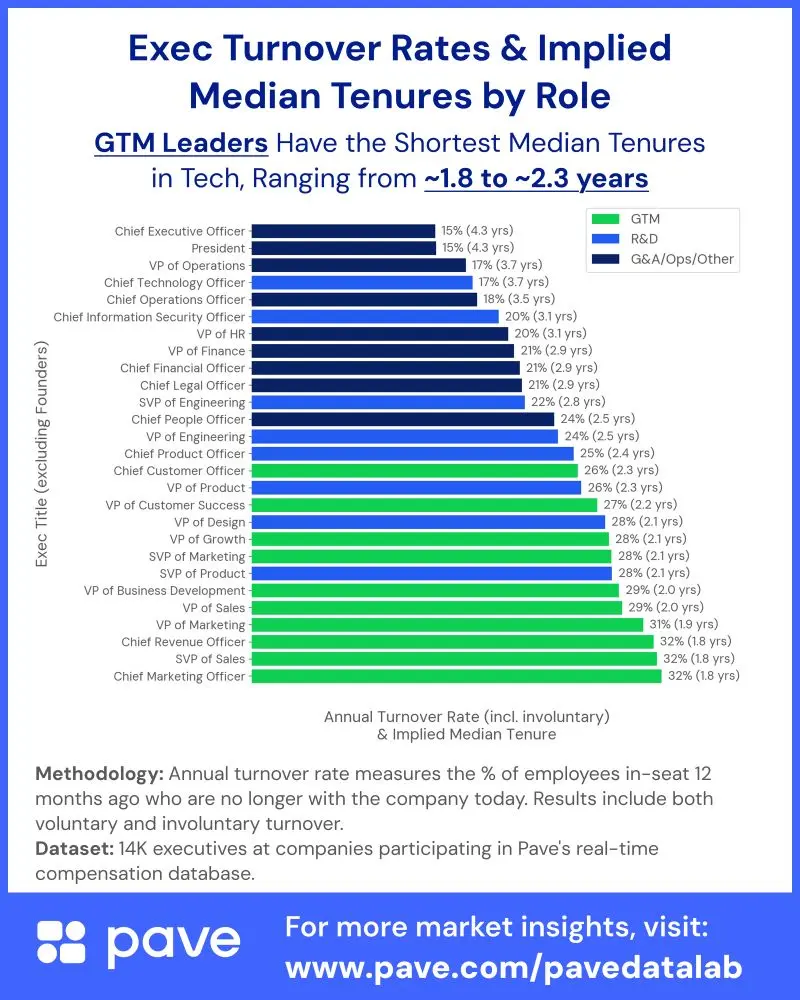
The reality is starkly different. As the years march on, your startup continues to evolve, but the human beings who championed your product inside the enterprise—the internal advocates who shepherded the deal through procurement, fought for your budget, and baked your workflows into their business processes—inevitably move on. Data indicates that the average enterprise stakeholder stays in their role for roughly 24 months, with specific high-turnover personas like Chief Marketing Officers (CMOs) and Chief Revenue Officers (CROs) lasting even shorter durations.
Consequently, once a B2B company scales to manage a portfolio of 10 to 20 key enterprise accounts, the mathematical reality dictates that a top champion is lost every few months. This article explores the mechanics of champion turnover, why the arrival of a new stakeholder often spells immediate danger for incumbent vendors, and the aggressive, tactical strategies founders must deploy to safeguard their hard-earned revenue.
Detailed Chronology: The Lifecycle and Death of an Enterprise Deal
To understand why champion change is so destabilizing, one must trace the lifecycle of a typical B2B enterprise sale and the subsequent stewardship of that account.
Phase One: The Honeymoon and Integration (Months 1–6)
The journey begins with an arduous sales cycle. Your team spends months navigating security reviews, legal evaluations, and proof-of-concept (PoC) trials. Eventually, you find him or her: the internal champion. This individual—often a Director, VP, or Department Head—sees the vision, takes a career risk on a smaller vendor, and pushes the organization to sign.
Once deployed, the software proves its worth. End users love the interface, daily productivity spikes, and your Customer Success Managers (CSMs) build a deep rapport with the champion. The metrics look pristine: high NPS, stellar product usage, and glowing quarterly business reviews (QBRs).
Phase Two: The Institutional Drift (Months 12–18)
As the account enters its second year, things appear stable on the surface. However, subterranean shifts are occurring within the enterprise client. Organizational restructurings, budget contractions, or simply the natural career ambition of your champion begin to alter the landscape. Your champion receives an enticing offer from a fast-growing tech firm or a venture-backed competitor and decides to hand in their resignation.
Phase Three: The Transition and Threat Window (Month 24 and Beyond)
This is where the crisis crystallizes. The moment a new stakeholder steps in to replace your champion, your business is instantly placed on notice—whether you realize it or not.
Industry veterans note that the arrival of a new executive is the most dangerous window for an incumbent B2B vendor. New leaders rarely inherit a team or a tech stack with total neutrality. Particularly in hyper-competitive software markets, an incoming Director, VP, or CIO frequently arrives with a preferred playbook. More critically, they often maintain deep-seated loyalties to alternative vendors from their previous organizations. They want to bring "their people" and "their tools" into the new environment to quickly stamp their authority on the department.
When this happens, stellar NPS scores, customized workflows, and years of diligent relationship-building can become entirely irrelevant. The new stakeholder does not care that your app solved the previous team’s operational bottlenecks; they care about executing their own vision, and your product is merely an incumbent obstacle occupying budget and real estate that they could allocate to their trusted legacy partners.
Supporting Context & Metrics: The Mathematics of Executive Turnover
The vulnerability of B2B accounts to champion churn is not merely anecdotal; it is backed by extensive workforce data tracking executive tenure across major corporations.
[Average Enterprise Stakeholder Tenure: ~24 Months]
       │
       ├── CMOs / CROs: Significantly Shorter (< 18 Months)
       ├── IT Directors / VPs: ~24 - 36 Months
       └── Procurement / Legal Gatekeepers: Variable
A comprehensive review of executive retention data across more than 14,000 corporate leaders paints a sobering picture for software vendors whose Ideal Customer Profiles (ICPs) rely heavily on executive buy-in:

- The 24-Month Ceiling: For the vast majority of mid-to-senior enterprise decision-makers, tenure inside a specific role rarely exceeds two years. Corporate re-organizations, performance pressures, and lateral market moves ensure a continuous churning of the organizational chart.
- The CMO Volatility Factor: Chief Marketing Officers exhibit some of the shortest tenures in the C-suite, often averaging well under 24 months. If a B2B SaaS platform’s primary buyer or champion sits within marketing, vendors must anticipate a complete departmental reset roughly every year and a half.
- The Compounding Effect of Scale: For an early-stage or mid-market B2B company managing a concentrated portfolio of 20 enterprise logos, a 24-month average turnover rate means the business is facing a critical stakeholder departure roughly every 30 to 60 days. Statistically speaking, you are never more than a few weeks away from losing your internal key to the kingdom.
This high turnover rate reframes the core challenge of B2B retention. As Jason Lemkin succinctly summarizes: "You think your Big Co customers are old and established, and you are new and tiny. Yes, it’s true. But as the years go by, you’ll still be there, and your champions at the BigCos will move on. You have to re-sell big customers every 2 years or so."
This realization shatters the myth of "set-and-forget" enterprise ARR (Annual Recurring Revenue). Subscription revenue from large accounts is not a passive annuity; it is a revolving credit line backed by human relationships that must be continuously renegotiated, re-won, and re-validated.
Official Industry Perspectives and Strategic Insights
Navigating champion churn requires a fundamental shift in mindset from traditional customer success to proactive account defense. Industry leaders and seasoned investors advocate for a series of counter-intuitive, high-urgency operational maneuvers when a champion announces their departure.
1. Ditch the Digital Comfort Zone: Get on a Jet
When news breaks that a key champion is leaving, the worst mistake a founder or account executive can make is relying on automated emails, virtual check-ins, or polite LinkedIn messages to figure out what happens next.
Corporate survival requires physical presence. Founders must be willing to swallow their pride, book a flight, and land at the client’s corporate headquarters within 48 to 72 hours of learning about the departure. Sitting down face-to-face with the departing champion to map out the political landscape—and more importantly, securing an introduction to the incoming successor—can be the difference between retaining a multi-million-dollar contract and facing an abrupt churn notification.
2. Bend the Rules on Discounts and Commercial Terms
In the pristine spreadsheets of startup finance departments, pricing discipline is treated as a sacred law. Discounts set a dangerous precedent; contract structures must remain uniform; payment terms must be ironclad.
However, enterprise account defense is a war footing. If a new stakeholder arrives with an agenda to rip and replace your software, strict adherence to internal pricing rules becomes an exercise in self-righteous irrelevance. If you stand to lose an entire logo that took three years to land, founders must be prepared to bend internal rules. Offering aggressive multi-year contract extensions, customized feature build-outs, or temporary price concessions to buy time with the new leadership team is a rational trade-off. Licking your wounds and eating a temporary margin compression is infinitely preferable to being left with zero revenue and an empty pipeline.
3. Build Multi-Threaded Inroads Beyond the Single Champion
The root cause of catastrophic champion churn is single-threading: relying entirely on one friendly executive to maintain your status within the enterprise.
World-class B2B organizations practice aggressive multi-threading from day one. This involves building relationships not just with the executive sponsor, but horizontally across peer groups, vertically down to daily end-users, and laterally into adjacent departments like IT, procurement, and legal. If your champion leaves, but three power-users in the trenches rely on your tool every single day to hit their personal productivity goals, the incoming executive faces immediate internal resistance if they attempt to cancel your contract out of hand.
Future Outlook: The Evolving Playbook for Enterprise Retention
As enterprise procurement cycles become more complex and corporate org charts grow increasingly volatile due to rapid technological shifts, artificial intelligence adoption, and economic uncertainty, the challenge of champion churn is set to intensify.
Looking ahead, successful B2B companies will institutionalize account defense as a core component of revenue operations (RevOps). Rather than treating customer success as a reactive function designed solely to drive product adoption, forward-thinking organizations will deploy predictive analytics to monitor organizational health signals—such as executive job changes tracked via professional networks, shifts in internal corporate communications, and drops in multi-threaded user engagement—long before formal churn notices hit the dashboard.
Furthermore, the playbook for contractor renewals will require founders to treat every renewal cycle as a brand-new enterprise sales pitch. The comfort of past achievements will no longer suffice. Vendors will need to continuously demonstrate real-time return on investment (ROI), articulate forward-looking value propositions that align with the new executive’s strategic priorities, and maintain an agile commercial posture.
Ultimately, champion change is an uncomfortable, stressful reality of building a B2B business. There are no magic software scripts or automated retention sequences that can entirely eliminate the human element of corporate politics. But for founders and executives willing to embrace the unglamorous work of flying across the country, swallowing their commercial pride, and aggressively rebuilding relationships from scratch, the rewards are clear: weathering the storm, protecting hard-earned enterprise logos, and transforming volatile accounts into enduring institutional partnerships.