Executive Overview
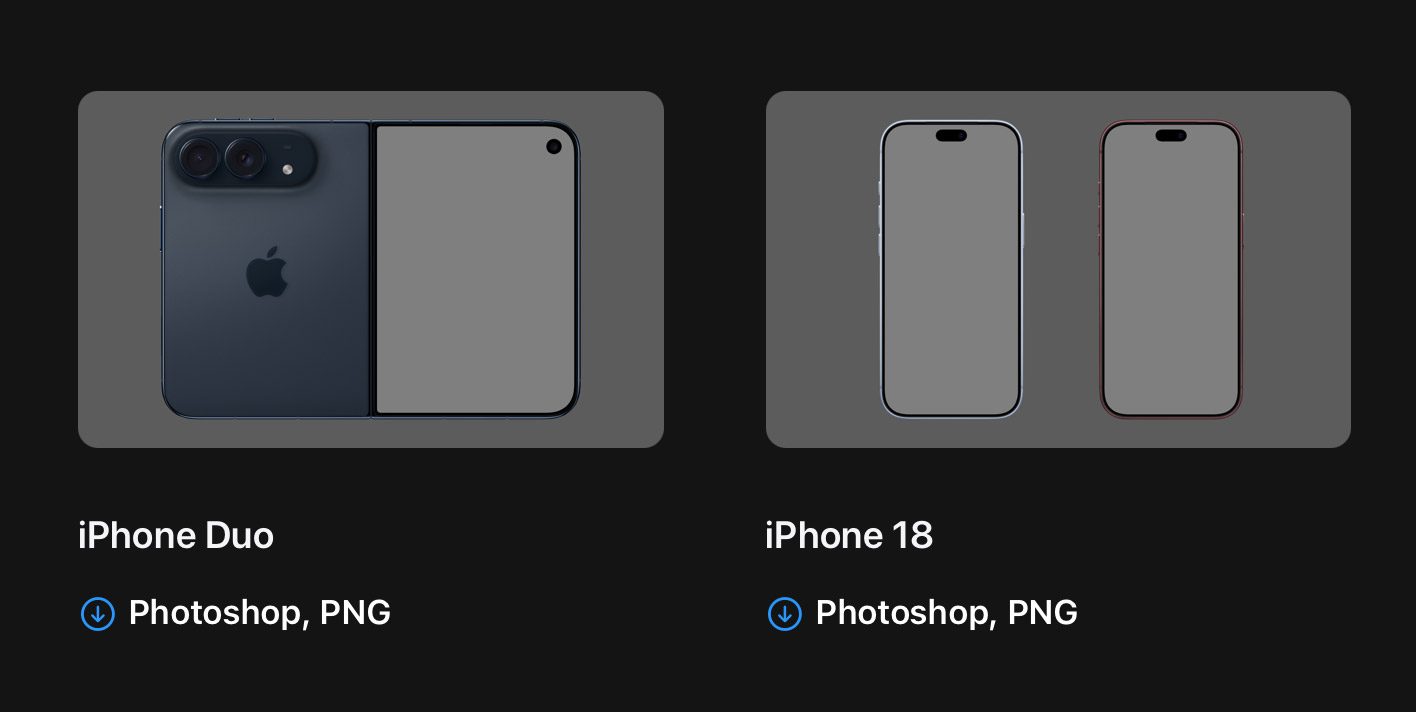
In the wake of its high-profile "Surprise and Shine" keynote event, Apple has moved swiftly to support the developer and design communities by updating its official Apple Design Resources portal. The newly released asset library includes precise, high-fidelity hardware bezels and framing graphics for the newly announced iPhone Duo—Apple’s long-anticipated entry into the foldable device market—and the flagship iPhone 18 Pro.
For UI/UX designers, application developers, and marketing agencies, these official templates are essential. They provide accurate physical constraints, aspect ratios, and interface boundaries required to prototype, test, and showcase software built for Apple’s next-generation form factors. The update underscores Apple’s traditional strategy of empowering its ecosystem partners immediately following hardware announcements, ensuring that apps are ready to take full advantage of new hardware paradigms on Day One.
Detailed Chronology: The "Surprise and Shine" Unveiling
The sequence of events leading up to the release of the updated design assets began early Tuesday morning at Apple Park in Cupertino, California.
- The Keynote Reveal: During the opening moments of the "Surprise and Shine" event, Apple executives took the stage to unveil a hardware lineup that many industry analysts predicted would reshape the mobile landscape. Chief among the announcements was the iPhone Duo, marking Apple’s official debut in the foldable smartphone category, alongside the iterative powerhouse, the iPhone 18 Pro.
- Immediate Post-Event Infrastructure Updates: As the live stream concluded and hands-on areas opened for press and creators, Apple’s software and developer relations teams executed a coordinated backend update. By mid-afternoon, the official Apple Developer portal, specifically the Design Resources section, reflected the morning’s hardware announcements.
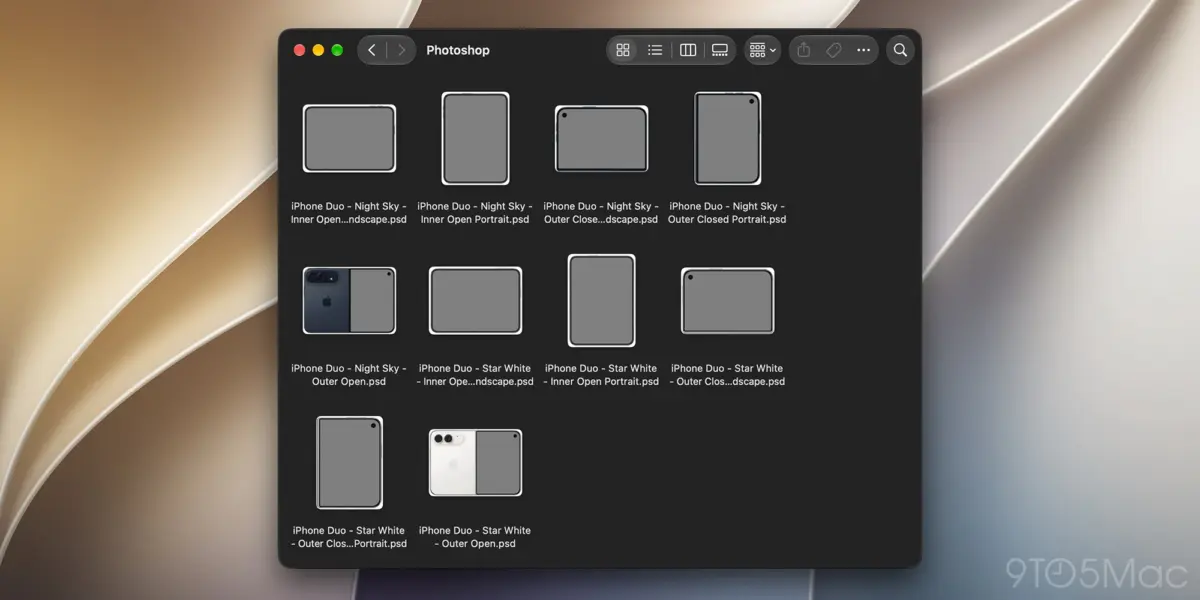
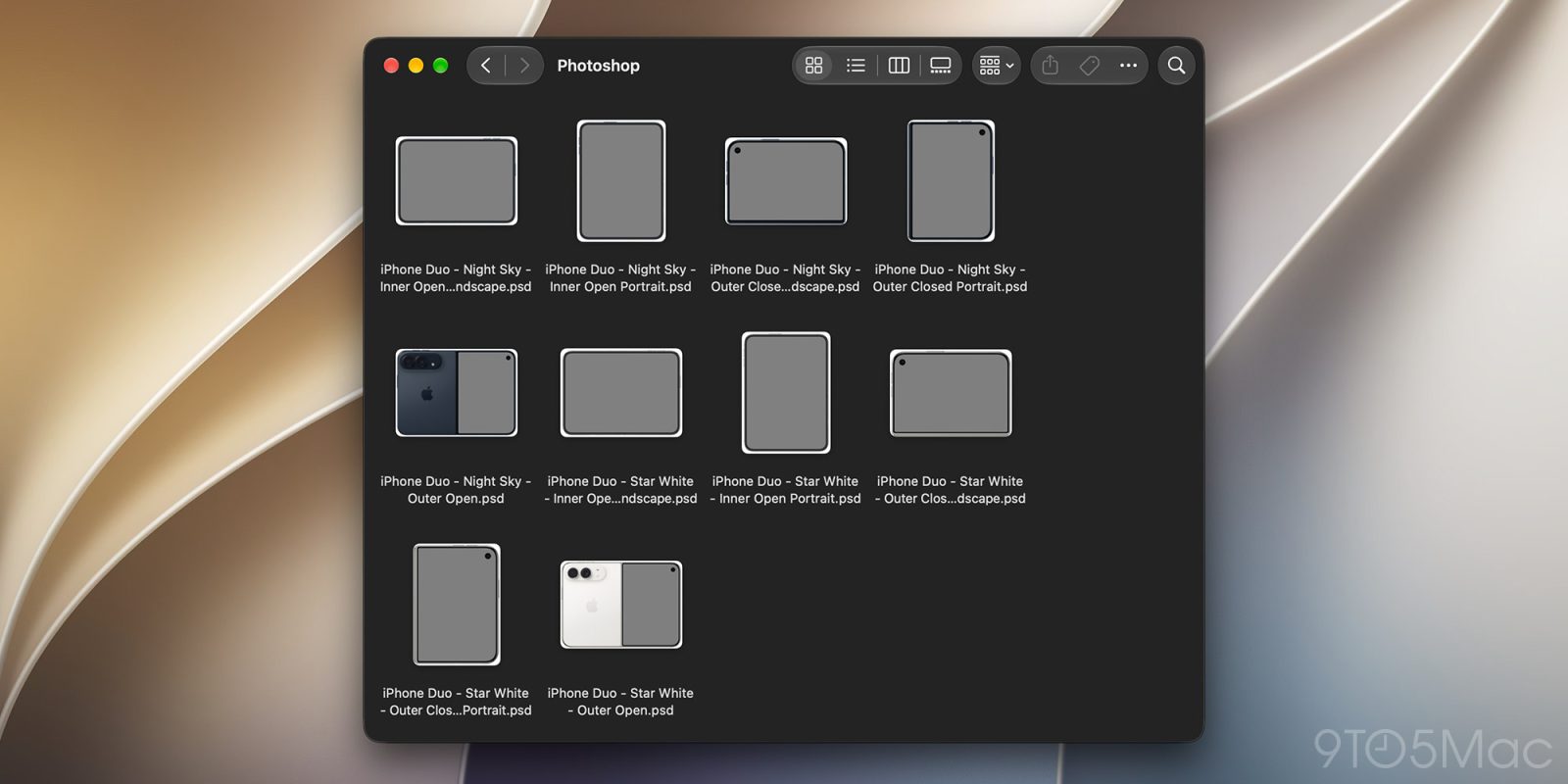
- Resource Deployment: Designers worldwide gained immediate access to professional-grade Photoshop (.psd) files, high-resolution PNG assets, and structured vector frameworks. These files captured the precise physical dimensions, bezel widths, and structural cutouts of both the foldable iPhone Duo and the refined iPhone 18 Pro.
Supporting Context & Metrics: Analyzing the New Hardware Assets
The inclusion of the iPhone Duo and iPhone 18 Pro assets in the design portal offers a granular look at the engineering specifications of these devices. A deep dive into the newly uploaded Photoshop and PNG packages reveals crucial metrics for app layout and human interface design:
The iPhone Duo: Form Factor and Dual-State Flexibility
The design assets for the iPhone Duo confirm its unique dual-state nature. Developers have been provided with templates illustrating the device in both its open (unfolded) configuration and its closed (folded) configuration, spanning all available launch colors.
- Adaptive Canvas Management: The open configuration presents a near tablet-sized workspace, requiring developers to consider adaptive layout strategies similar to those used for iPadOS split-views and multi-window environments.
- Hinge and Crease Considerations: The overlay assets explicitly delineate safe zones, helping UI designers avoid placing critical interactive elements—such as navigation bars or primary action buttons—directly over the central folding axis.
The iPhone 18 Pro: Shrinking the Dynamic Island
While the iPhone Duo represents a radical departure in form factor, the iPhone 18 Pro focuses on refined minimalism. The updated bezel assets for the iPhone 18 Pro highlight a significantly smaller Dynamic Island, reclaiming vital screen real estate at the top of the display.
- Pixel Real Estate: The reduced footprint of the TrueDepth camera cutout means application developers must update their status bar layouts and top-anchored headers to harmonize with the narrower pill-shaped indicator.
- ProMotion and Bezel Symmetry: The Photoshop assets also emphasize ultra-thin, uniform bezels that push closer to the absolute edges of the chassis than any previous generation, reinforcing Apple’s push toward an all-glass aesthetic.
The Ecosystem Impact: Why Developer Resources Matter
The availability of hardware bezels on the Apple Design Resources portal is far more than a convenience for graphic designers creating marketing mockups or App Store screenshots. It is a critical component of Apple’s developer pipeline.
Prototyping for Novel Form Factors
When Apple introduces a completely new hardware category—as it did with the iPad, the Apple Watch, the Vision Pro, and now the foldable iPhone Duo—designers face unprecedented challenges. Traditional rectangular constraints no longer apply when an application must seamlessly transition from a compact outer display to an expansive inner foldable screen. By releasing Photoshop and PNG assets immediately, Apple enables design teams to:
- Simulate how existing iOS interfaces adapt to folding and unfolding mechanics.
- Build bespoke UI components that leverage the expanded canvas of the iPhone Duo.
- Ensure that custom animations and transition states feel native to the new hardware.
Maintaining Design Integrity
Apple has built its brand on meticulous attention to detail. By supplying official assets rather than forcing third parties to rely on guesswork or unverified CAD leaks, Apple ensures that promotional materials, concept art, and application store listings maintain a high standard of visual fidelity. Developers can drop their app screens directly into official frames, guaranteeing accurate corner radii, bezel shadows, and aspect ratios.

Official Statements and Industry Reception
Reactions from the global design and developer community have been overwhelmingly positive, though tempered by the realization that supporting a foldable device requires a significant architectural shift in app design.
Leading digital product agencies noted that the inclusion of closed and open states for the iPhone Duo in the portal signals Apple’s readiness to establish strict Human Interface Guidelines (HIG) for foldables. "Having official assets on Day One saves us weeks of speculative prototyping," said a lead product designer at a major enterprise software firm. "It tells us precisely where the hardware boundaries lie so we can focus on user experience."
Meanwhile, reactions to the iPhone 18 Pro’s smaller Dynamic Island have centered on the long-requested reclamation of screen space. UI designers praised Apple for updating the template assets quickly, noting that testing app compatibility with the new, scaled-down cutout is the top priority for upcoming software updates.

Future Outlook: What Comes Next for Developers
The release of the iPhone Duo and iPhone 18 Pro design assets marks the official starting gun for the next era of iOS development. As developers download these Photoshop and PNG files and begin integrating them into Figma, Sketch, and other design environments, several milestones lie ahead:
- Xcode and Simulator Updates: Following the hardware resource drop, developers anticipate deeper integration within Xcode, allowing for live preview testing of apps across the iPhone Duo’s dual display states.
- Refining the HIG: Apple is expected to publish comprehensive documentation detailing best practices for folding screen interactions, continuity guidelines, and multi-window handling on iOS.
- Day-One App Readiness: With hardware shipping in the coming weeks, the race is on for top-tier app developers to optimize their software portfolios for both the micro-adjustments of the iPhone 18 Pro and the macro-transformation of the iPhone Duo.
For designers eager to begin working with the new hardware profiles, the updated assets are available for immediate download via the official Apple Design Resources portal. As the mobile industry digests Apple’s latest hardware breakthroughs, these digital tools will serve as the blueprint for the next generation of application design.