Executive Overview
In a decisive move targeting the financial architecture sustaining Russia’s wartime economy, the United Kingdom has levied sweeping economic sanctions against Cryptomus, a notorious, chameleonic cryptocurrency platform. Operating under a rotating series of corporate aliases and shadowy operational fronts, Cryptomus has long served as a critical financial lifeline for illicit actors.
According to leading blockchain intelligence firms and cybercrime investigators, the platform has channeled billions of dollars in payments for ransomware syndicates, international drug trafficking rings, darknet marketplaces, high-yield fraud schemes, and specialized cybercrime-as-a-service providers. By doing so, it has effectively functioned as a high-volume pipeline helping Russian entities circumvent stringent international financial restrictions.
The sanctions, formally issued by the U.K. government on October 8, freeze any assets tied to Cryptomus held within British financial institutions and place a blanket prohibition on U.K. companies and citizens providing business services to the platform—virtual or otherwise. Alongside Cryptomus, the U.K. Treasury targeted several associated digital asset payment processors, including VexPay, TokenSpot, and the Tsunami Payments service.
This regulatory crackdown marks a watershed moment in the global fight against crypto-enabled financial crime. Unlike previous penalties—such as a record-shattering CAD $176 million administrative fine levied by Canada that ultimately proved uncollectible—these sanctions carry the heavy legal and operational weight required to choke off access to Western banking infrastructure. Furthermore, it represents a historic first: a "Five Eyes" intelligence-sharing nation (Australia, Canada, New Zealand, the U.K., and the U.S.) has officially sanctioned a digital asset operation incorporated within the jurisdiction of another Five Eyes partner.
Beneath its polished corporate facades and Telegram-based customer support bots, Cryptomus relies on an elaborate shell game. Investigations reveal a corporate lineage tied to fake financial institutions, non-existent regulatory bodies operating out of disputed territories, and a Ukrainian-led web of shell companies designed to evade accountability. This report details the rise, evolution, and regulatory downfall of Cryptomus, exploring the mechanics of its operations, the scale of its illicit transactions, and the broader implications for international cybersecurity.
Detailed Chronology: From Certa Payments to Heleket and U.K. Sanctions
The trajectory of Cryptomus is a masterclass in corporate evasion, characterized by a rapid succession of rebranding efforts designed to outpace law enforcement agencies and financial watchdogs.
2022–2023: Genesis and the Vancouver Facade
Emerging onto the digital landscape in 2022, the platform initially operated under corporate entities known as Certa Payments and Xeltox Enterprises. Positioning itself as a standard cryptocurrency gateway for merchants, Cryptomus quickly evolved into something much darker.
Behind its mainstream interface lay an infrastructure custom-built for the digital underworld. Investigative reporting by KrebsOnSecurity in late 2024 uncovered that Cryptomus shared a physical corporate address in Vancouver, British Columbia, with dozens of other foreign currency dealers and money transfer businesses—none of which maintained an actual physical presence at the location. Despite its nominal Canadian incorporation, the platform’s daily operations were deeply intertwined with Russian cybercrime ecosystems, acting as a primary clearinghouse for dozens of Russian cryptocurrency exchanges and underground websites hawking illicit cyber services.
2025: The Canadian Fine and the Birth of "Heleket"
The platform’s unchecked growth hit its first major hurdle in late 2025 when Canadian authorities hit Cryptomus with a historic administrative penalty: a CAD $176 million fine for severe violations of anti-money laundering (AML) and know-your-customer (KYC) regulations.
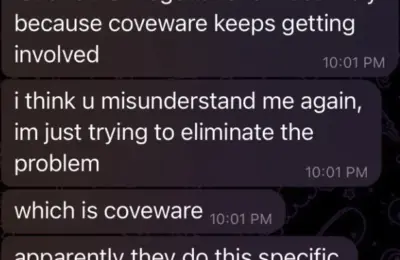
Faced with mounting regulatory pressure and a cratering transaction volume after briefly attempting to institute rudimentary KYC protocols, the platform’s operators executed a tactical pivot. Rather than paying the monumental fine or reforming its business practices, Cryptomus appealed the penalty while simultaneously launching a parallel, no-KYC payment processing service under the brand name "Heleket."
Heleket inherited the exact technical infrastructure, client base, and illicit utility of Cryptomus. When clients or investigators attempted to probe the relationship between the two brands, Heleket’s support agents on Telegram adamantly—and falsely—denied any institutional affiliation with Cryptomus, even as they continued to process millions of dollars in unverified digital assets.
October 2026: The U.K. Drops the Hammer
The cat-and-mouse game came to a crashing halt on October 8, 2026. Recognizing that administrative fines levied against offshore-backed crypto platforms were largely toothless, the United Kingdom stepped in with comprehensive economic sanctions.

Within hours of the U.K. sanctions announcement, the operational impact was immediate. Users attempting to access the platform’s Telegram support bots were greeted by automated error messages stating that the service was suddenly and indefinitely unable to process transactions. For the first time in its operational history, the liquidity pumps powering Cryptomus and Heleket were forcefully disconnected from Western financial access points.
Supporting Context & Metrics: The Scale of the Illicit Economy
To understand why international authorities targeted Cryptomus, one must examine the staggering volume of illicit capital that flowed through its infrastructure. Far from being a peripheral player in the cryptocurrency ecosystem, Cryptomus established itself as a central hub for transnational organized crime.
Billions in Illicit Volume
In April 2026, blockchain analytics firm TRM Labs published a comprehensive intelligence dossier on Cryptomus. The findings were staggering: since its inception in 2022, the platform had processed more than $7 billion in total cryptocurrency transactions.
While a portion of this volume represented legitimate commercial activity, a disproportionately high percentage was tied directly to severe criminal enterprises. TRM Labs identified significant transaction flows associated with:
- Ransomware extortion payments targeting critical infrastructure, hospitals, and corporate networks globally.
- Vendors of Child Sexual Abuse Material (CSAM) seeking anonymous, censorship-resistant payment rails.
- Terrorist financing networks moving funds across geopolitical boundaries.
- Human trafficking operations utilizing decentralized payment methods to launder proceeds.
The Chainalysis Data: Surpassing Traditional Mixers
Further illumination came from blockchain data-crunching giant Chainalysis, which analyzed the platform’s role in supporting Russia’s wartime economy. In an October 8 blog post coinciding with the U.K. sanctions, Chainalysis highlighted the unprecedented scale of Cryptomus and Heleket’s illicit footprint.
"Cryptomus and Heleket have emerged as major payment hubs for illicit activity," Chainalysis noted. "Together, these services received more illicit funds across tracked categories than the mixers in our dataset, and the number of illicit counterparties surged to more than 900 in a single month in late 2025."
This metric is particularly telling. Cryptocurrency mixers—such as the infamous Tornado Cash—have long been the primary tool for cybercriminals looking to launder stolen funds by obscuring their transaction paths. By late 2025, however, Cryptomus and its spin-off Heleket were processing more illicit capital than specialized mixing protocols combined, effectively acting as an open-air clearinghouse for the global cybercrime underground.
Official Statements and Expert Analysis
The coordination behind the U.K. sanctions underscores a growing consensus among international intelligence and cybersecurity agencies: fighting modern financial crime requires dismantling the specialized payment processors that bridge the gap between illicit crypto and fiat currency.
Richard Sanders on Why Sanctions Matter
Richard Sanders, a veteran blockchain analyst and investigator who spent months mapping Cryptomus’s intricate payment infrastructure and transacting directly with its customer base, emphasized the fundamental difference between regulatory fines and economic sanctions.
Writing on LinkedIn following the announcement, Sanders cut straight to the core of the issue:
"A fine doesn’t stop a cryptocurrency payment processor from processing payments. Sanctions kill the operation. The distinction matters."
Sanders noted that Canada’s CAD $176 million penalty, while eye-catching on paper, was ultimately unenforceable and uncollectible given the opaque corporate layering of the business. The U.K. sanctions, by contrast, carry direct legal consequences for any financial entity, insurance provider, or legal firm that interacts with the designated assets or individuals, effectively rendering the corporate shell radioactive.

Furthermore, Sanders highlighted the geopolitical significance of the move. To his knowledge, this marks the first time a "Five Eyes" nation has formally sanctioned a cryptocurrency operation legally incorporated within the borders of another Five Eyes jurisdiction (Canada). This unprecedented cross-border strike signals a new level of intelligence sharing and regulatory alignment among Western allies.
Anatomy of a Ghost: Fake Regulators and the Western Sahara Connection
One of the most bizarre and revealing aspects of the Cryptomus investigation is how the platform derived its institutional authority. When payment processors seek legitimacy, they typically point to licenses issued by recognized sovereign governments or reputable financial regulators. Cryptomus, however, took a radically different approach: it invented its own regulatory reality.
The 25-Year-Old Director and the Sahrawi Shell Game
An in-depth 2024 investigation into the corporate roots of Cryptomus revealed that the sole shareholder of its parent company, Certa Payments, was a 25-year-old Ukrainian woman. Beyond heading Certa Payments, she also served as the director of several other corporate entities, most notably the WS Management and Advisory Corporation.
WS Management and Advisory Corporation billed itself as an exclusive, authoritative regulatory body responsible for issuing and overseeing operational licenses for cryptocurrency exchanges, foreign exchange (forex) brokers, and online gaming businesses.
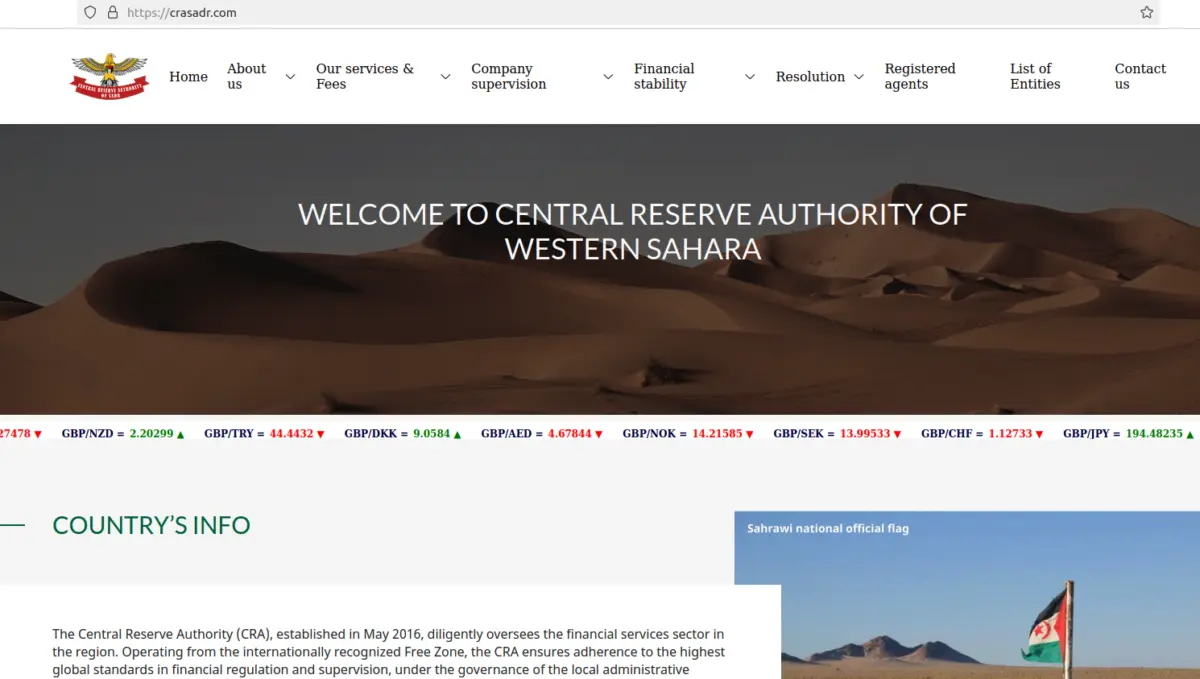
The catch? The jurisdiction it claimed to regulate was the Western Sahara—a disputed region in northwest Africa not widely recognized as a sovereign nation by the United Nations or the international community.
The Phony Central Reserve Authority
The regulatory framework engineered by this network was hosted on a website (crasadr.com), which styled itself as the official portal of the Central Reserve Authority of the Western Sahara. This digital storefront proudly listed the various shell companies and crypto platforms—including Cryptomus—that had purportedly been awarded official licenses to operate financial and gaming services.
Further forensic analysis by cybersecurity researchers uncovered deep technical overlaps within this shadow empire. One of Certa Payments’ former operational domains (certa[.]website) shared a web server with twelve other distinct domains. Among them was rasd-state[.]ws, a secondary infrastructure node tied directly to the fictitious Central Reserve Authority of Western Sahara.
By creating a self-contained loop of fake regulatory oversight backed by a non-existent state authority, the operators of Cryptomus manufactured a veneer of compliance that allowed them to operate with impunity for years, slipping through the cracks of traditional international oversight until blockchain forensics and geopolitical pressure caught up with them.
Future Outlook: The Death Knell for No-KYC Processing?
The U.K.’s targeted sanctions against Cryptomus, Heleket, VexPay, TokenSpot, and Tsunami Payments signal a paradigm shift in how Western governments intend to combat crypto-facilitated cybercrime and sanctions evasion.
For years, rogue payment processors operated under the assumption that geographical arbitrage, frequent re-branding, and the use of shell companies in jurisdictions with lax oversight would protect them from permanent closure. The demise of Cryptomus proves that advanced blockchain analytics—pioneered by firms like Chainalysis and TRM Labs, and validated by independent investigators like Richard Sanders—can successfully pierce through layers of obfuscation to reveal the true operational core of illicit financial networks.
As international law enforcement tightens the noose around underground payment hubs, the cost of doing business for cybercrime syndicates and Russian sanctions-evasion networks is skyrocketing. While new chameleonic platforms will undoubtedly attempt to rise from the ashes of Cryptomus and Heleket, the message from London, Ottawa, and Washington is unequivocal: the era of unchecked, no-KYC cross-border laundering is drawing to a close.