Executive Overview
To the uninitiated observer, Olympic weightlifting is an exercise in primal force—a stark, uncompromising display of human strength defined by just two distinct movements: the snatch, and the clean and jerk. In these explosive events, athletes attempt to lift a heavily loaded barbell from the platform to overhead in a matter of seconds. Yet, beneath the veneer of raw power lies a deeply sophisticated discipline governed by millimeter-precise biomechanics, lightning-fast kinetic speed, high-stakes tactical chess, and unyielding psychological fortitude.
While popular culture often reduces the sport to sheer muscular bulk, elite weightlifting is fundamentally an art of physics and timing. To unpack the hidden complexities of the platform, we spoke with Matthew Tung, a premier competitive weightlifter who proudly represents Hong Kong on the international stage. Tung provides an exclusive, behind-the-scenes breakdown of how these complex lifts actually function, why athletes routinely alter their declared weights in real-time tactical maneuvers, and how a competitor can fail four out of their six total attempts yet still walk away with a gold medal.
This comprehensive report explores the grueling realities of elite Olympic weightlifting, dissects the intricate rules that govern international competition, and examines the valuable takeaways that everyday strength training enthusiasts can glean from athletes who have pushed human physical adaptation to its absolute extreme.
Detailed Chronology: The Anatomy of a Competition and the Mind of a Lifter
To truly understand the weightlifting platform, one must examine the chronological progression of a competition and the rigorous mental framework required to navigate it. A weightlifting meet is not merely a physical test; it is an exhausting marathon of nervous system management, weight management, and split-second decision-making.
The Weigh-In and Pre-Competition Protocol
Long before the first plate is loaded onto the bar, the competition begins in the sauna and the scale room. Weightlifters compete in strict weight classes, requiring rigorous water and dietary management in the days and hours leading up to the official weigh-in, which typically takes place two hours before the start of the session.
Once athletes step off the scale, a frantic recovery window opens. For elite lifters like Matthew Tung, those two hours are a carefully timed regimen of rehydration, carbohydrate loading, and nervous system activation. The goal is to rapidly restore glycogen stores and body weight lost during the cut, while coaxing the central nervous system out of a depleted state and into a condition of hyper-readiness.
The Warm-Up Hall: The Crucible Before the Stage
While spectators only see the drama on the competition platform, the true crucible of weightlifting occurs in the warm-up hall. This chaotic, highly charged environment is where athletes and their coaches wage a psychological war against time and gravity.
Lifters must meticulously estimate their opening attempts based on their physical state that day, factoring in how other competitors are warming up. The warm-up area features a line of platforms where athletes progressively build up to their opening weights. The timing must be exact: warm up too early, and the muscles cool down and lose their explosive potential; warm up too late, and the athlete risks missing their call to the platform, resulting in an automatic zero on that attempt.
Platform Entry and the Two Disciplines
Once called to the platform, the athlete enters a tunnel vision of focus. The competition is rigidly divided into two distinct halves:
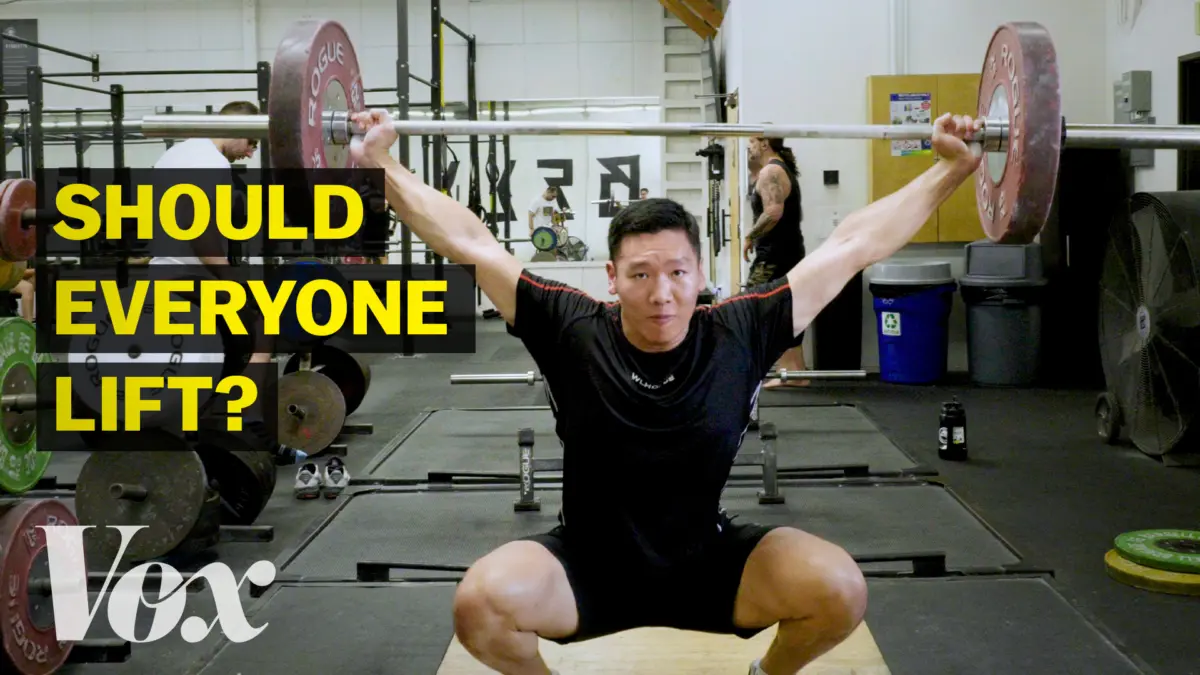
- The Snatch: The first discipline demands that the barbell be lifted from the platform to overhead in a single, uninterrupted, explosive motion. The lifter pulls the bar high while simultaneously dropping into a deep, full-squat position beneath the weight, catching it with locked-out arms. The snatch is a pure expression of speed, mobility, and precision. A fraction of a second too slow in dropping under the bar, or a millimeter off-center in the grip, results in a missed lift.
- The Clean and Jerk: The second discipline is a two-part movement. First, the "clean," where the bar is pulled from the floor to the front rack position across the clavicles, punctuated by a deep front squat recovery. Second, the "jerk," where the lifter dips and drives the barbell overhead using a split or squat jerk technique, locking out the arms and stabilizing the load. The clean and jerk traditionally allows athletes to lift significantly more weight than the snatch, often serving as the decisive phase where competitions are won and lost.
Supporting Context & Metrics: Strategy, Rules, and the Paradox of Victory
Olympic weightlifting is unique among strength sports due to the intense strategic maneuvering permitted by the International Weightlifting Federation (IWF) rulebook. Competitions are rarely won by simply possessing the strongest raw max; they are won by tactical card-play and risk assessment.
The Tactical Chess Match: Changing Weights Mid-Competition
One of the most fascinating aspects of weightlifting—and one of the most confusing for casual viewers—is the rule allowing coaches and athletes to change their declared attempt weights in real-time.
In each round, athletes must submit the weight they intend to attempt. However, coaches are permitted to alter this weight up to two times before the athlete is called to the platform, provided the new weight is equal to or heavier than the previous selection (with specific protocols governing the final attempts). This creates a high-stakes game of bluffing and psychological warfare.
A coach might submit a lighter opening weight to guarantee a successful total on the board, only to jump the weight up dramatically once they see what their rivals are lifting. Conversely, an athlete chasing a medal might declare a massive weight to pressure opponents into missing their lifts, forcing them to exhaust their attempts in panicked, suboptimal states.
The Mathematics of Gold: How to Fail Four Lifts and Win
To the uninitiated, the scoring system can seem counterintuitive. Each lifter receives three attempts in the snatch and three attempts in the clean and jerk, totaling six attempts. Only their highest successful lift in each discipline counts toward their official total.
This structure gives rise to one of the most remarkable anomalies in the sport: an athlete can fail four out of their six total attempts and still win the gold medal.
How does this happen? Consider a scenario where a dominant lifter aims for world-record territory. They select an astronomical weight for their first two attempts in the snatch and miss both. Under immense pressure, they successfully hit their third and final snatch attempt to stay in the game. Moving to the clean and jerk, they repeat the pattern: missing their first two attempts at a record-breaking load, but successfully converting their sixth and final attempt.
If their successful opening weights in both disciplines are still higher than the conservative, safe lifts made by their competitors—who successfully completed all six attempts at lower weights—the high-risk lifter secures the gold. It is a stunning testament to the risk-reward matrix of elite sport: fortune favors the bold, provided they can execute under the absolute threshold of failure.
Official Statements and Expert Insights
To understand the lived experience of navigating this brutal landscape, we turn to the insights of international competitor Matthew Tung. Speaking on the realities of the sport, Tung demystifies the mechanics that separate recreational gym-goers from elite international competitors.
"People look at weightlifting and they see heavy iron," Tung explains. "They see someone straining under a massive load and they assume it’s a pure test of how much muscle you possess. But if you put a standard bodybuilder under an Olympic barbell without specific technical training, they will fail immediately. It is not about brute strength; it is about the efficient transfer of force."
Tung emphasizes that the barbell is merely a resistant medium through which an athlete must express kinetic velocity. "The snatch happens in the blink of an eye. You are generating upward of four to five times your body weight in force against the floor, transitioning from an explosive pull to a deep squat under the bar in less than a second. If your timing is off by even five milliseconds, the physics of the lift will reject you."
Addressing the psychological toll of international competition, Tung highlights the brutal honesty of the platform. "There are no judges’ interpretations, no subjective scoring, and no teammates to pass the ball to. It is just you, the referee’s white lights, and thousands of pounds of gravity. You have to learn to embrace failure because every weightlifter fails thousands of times in training just to earn the right to succeed on the platform."
Future Outlook: The Evolution of Strength and Everyday Takeaways
As the landscape of strength sports continues to evolve through advancements in sports science, biomechanical tracking, and nutritional optimization, Olympic weightlifting is experiencing a renaissance. The rise of functional fitness and mainstream strength training has introduced millions of people to the foundational movements of the snatch and the clean and jerk.
What Everyday Athletes Can Learn from the Elite
While very few individuals will ever step onto an international weightlifting platform, the training methodologies of elite athletes like Matthew Tung offer invaluable lessons for everyday fitness enthusiasts:
- Prioritize Mobility Over Load: Olympic weightlifting demands extraordinary ankle, hip, thoracic, and shoulder mobility. For the general population, incorporating dynamic mobility work can alleviate chronic joint pain, improve posture, and prevent injury.
- Train Speed and Power: Traditional bodybuilding focuses on slow, controlled contractions for muscle hypertrophy. Weightlifting introduces the crucial element of rate of force development—teaching the nervous system to recruit muscle fibers instantaneously. This explosive power is vital for athletic longevity, fall prevention in aging populations, and overall functional fitness.
- Embrace the Process of Failure: Tung’s perspective on missing lifts serves as a powerful metaphor for physical and personal development. In strength training, a missed lift is not a catastrophe; it is diagnostic data. It reveals technical leaks, psychological hesitations, and physical limitations that must be addressed before the next attempt.
The Horizon of the Sport
Looking forward, international weightlifting faces structural challenges regarding its governance and Olympic status, yet the grassroots passion for the sport has never been stronger. With organizations increasingly leveraging advanced data analytics to refine coaching techniques, the absolute limits of human strength are continually being redefined.
As athletes like Matthew Tung continue to push the boundaries of what is possible on the platform, they prove that Olympic weightlifting is far more than a simple contest of lifting heavy things. It is a profound exploration of human potential—a delicate, explosive dance between human will and the unyielding laws of physics.