Executive Overview
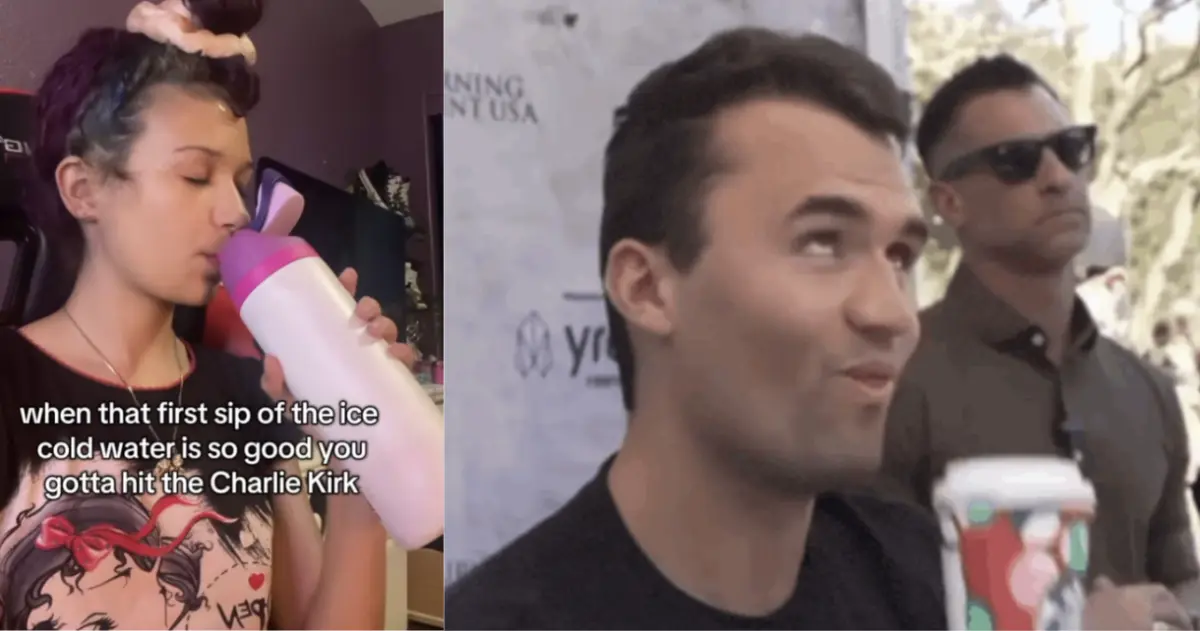
In the digital landscape of the mid-2020s, the boundary between political discourse, real-world tragedy, and internet meme culture has grown increasingly porous. Few pieces of media encapsulate this phenomenon as thoroughly as the "Charlie Kirk Sip" (alternatively known as the "Charlie Kirk Coffee" or "Charlie Kirk Eyeroll" meme). Originating from a tense, unscripted exchange at a university campus debate in March 2025, the clip features conservative political commentator Charlie Kirk challenging a student barista before taking an exaggerated, theatrical sip of a Starbucks beverage and rolling his eyes back in mock or heightened pleasure.
What began as a typical piece of political confrontation content swiftly mutated into a ubiquitous reaction image, video loop, and animated GIF across platforms like TikTok, YouTube, and X (formerly Twitter). However, the trajectory of this meme diverges sharply from standard viral internet humor due to subsequent historical events. Following Kirk’s sudden death in September 2025, the digital footprint of the "Sip" video transformed. No longer just a lighthearted jab at expressive coffee-drinking or partisan theatrics, the clip became a complex vessel for remembrance, gallows humor, internet irony, and retrospective analysis.
By the time social media users marked the one-year anniversary of his passing—colloquially termed the "Kirkiversary"—in September 2026, the clip had cemented its status as a permanent digital artifact. This report examines the origins, viral mechanisms, cultural lifecycle, and psychological weight of the "Charlie Kirk Sip," offering a comprehensive retrospective on how a 51-second clip captured the strange intersection of modern politics and online absurdity.
Detailed Chronology
March 2025: The Genesis on Campus
The roots of the meme trace back to a standard stop on Charlie Kirk’s ongoing college tour circuit. On a late March afternoon in 2025, during a live-streamed debate event at Utah Valley University, a young man stepped up to the microphone during the audience Q&A session. Introducing himself as "Mercury," the student identified as a pansexual Starbucks barista. He engaged Kirk on previous commentary the pundit had made regarding male baristas, modern masculinity, and occupational stereotypes.
Rather than engaging in a granular policy debate, Kirk treated the interaction with palpable skepticism and light antagonism. Doubting Mercury’s professional credentials, Kirk issued an impromptu challenge: if Mercury truly was a barista, he should prove it by making Kirk a latte.
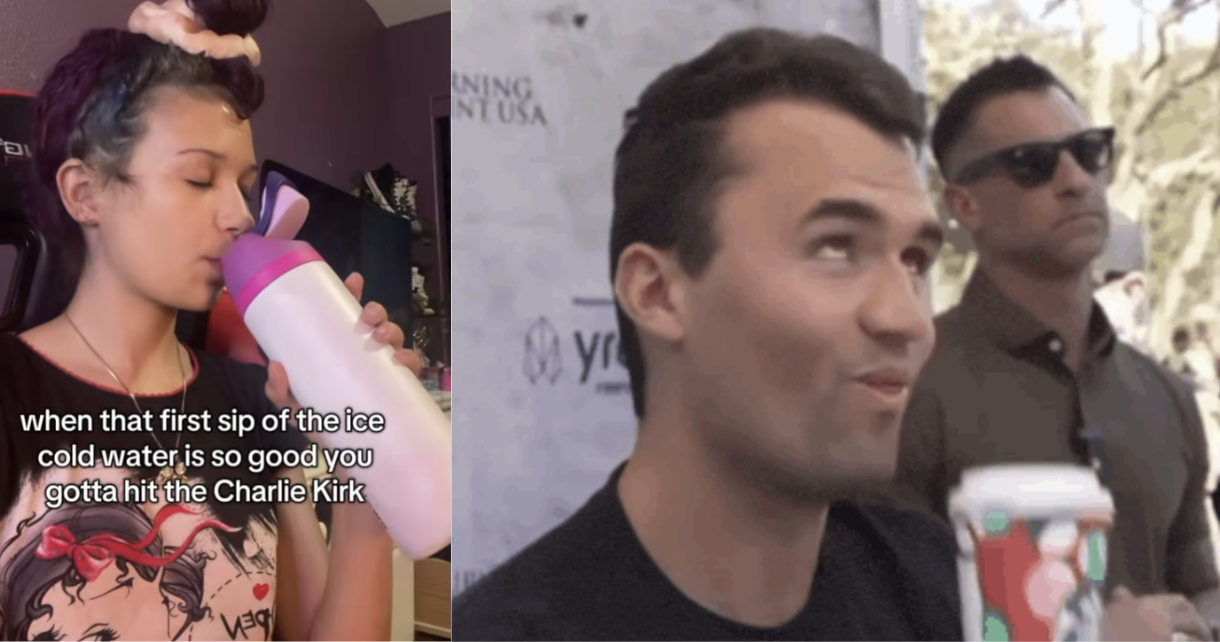
Though the immediate political back-and-forth concluded on familiar partisan talking points, a seemingly minor visual beat captured the attention of the production crew and, subsequently, the internet. At one point during the interaction, Kirk was handed a Starbucks drink. He took a sip, paused, and slowly rolled his eyes backward in an exaggerated display of satisfaction. To observers, the gesture struck a discordant, theatrical note—satirically blending supreme self-satisfaction with camp performance.
March 24, 2025: Official Uploads and Initial Virality
Recognizing the engagement potential of the confrontation, Kirk’s media apparatus moved quickly. On March 24, 2025, the official YouTube channel @RealCharlieKirk published a 51-second clip titled "I Guess so!" which prominently featured the dialogue exchange and the now-infamous eye-roll sip. Simultaneously, the official TikTok account of The Charlie Kirk Show (@thecharliekirkshow) posted the same isolated segment.
The metrics scaled rapidly:
- The TikTok upload crossed 8.4 million views and accumulated over 454,500 likes within its first year of release.
- The YouTube video secured over 1.6 million views and more than 56,000 likes, proving that the content resonated far beyond dedicated political followers into the broader algorithmic feeds of casual scrollers.
September 2025: Tragedy and Transformation
The trajectory of the meme shifted fundamentally in September 2025, following the tragic news of Charlie Kirk’s death resulting from a shooting incident at Utah Valley University. The sudden loss shocked the American political ecosystem and sparked immense online mourning, debate, and memorialization across the ideological spectrum.
In the immediate wake of his passing, internet culture reacted in polarized ways. While political commentators parsed his legacy, a subset of digital users turned to his existing video catalog. The "Charlie Kirk Sip" clip experienced a massive secondary wave of circulation. Stripped of its immediate debate context, the eye-roll reaction image began to function as an ironic meme template. Users repurposed the clip not to comment on the debate itself, but to convey universal sensations of consuming exceptionally good food or drink—ranging from ice water on a hot day to obscure fast-food items—while simultaneously invoking the surreal weight of the commentator’s sudden absence.
November 2025 – August 2026: Institutionalization in Meme Culture
Throughout the final quarter of 2025 and well into 2026, the meme embedded itself deeply into "Hood Irony" and surrealist TikTok subcultures. Videos featuring captions like "I am Charlie Kirk" paired with unusual beverages (such as McDonald’s sprite or obscure tea blends) regularly breached the multi-million view threshold.
- November 16, 2025: TikTok user @ydkme517366 posted a re-contextualized version of the sip that garnered over 2.2 million views and 372,100 likes.
- November 25, 2025: Creator @eloisesayre_08 published a retrospective breakdown of the visual clip, accumulating 5.1 million views and 622,500 likes.
By mid-2026, the clip had transitioned from a contemporary viral video into a standardized template. Content creators deployed downloadable GIFs and Green Screen setups, inserting the silhouette of Kirk’s eye-roll sip into entirely unrelated cinematic and comedic scenarios.
September 2026: The "Kirkiversary" Resurgence
As the calendar rolled over to September 2026, marking one full year since Kirk’s assassination, online communities coined the term "Kirkiversary" to designate the anniversary. Rather than formal solemnity alone, the digital commemoration took on the characteristic dark humor and meme-centric processing typical of Gen Z and Millennial internet spaces.
The "Charlie Kirk Sip" saw a tertiary surge in algorithmic prominence. Users posted retrospective compilations, remixing the sound design of the sip with classical compositions (such as Chopin’s Nocturnes) or trap beats, transforming a partisan political debate prop into a piece of digital performance art.
Supporting Context & Metrics
To understand the macro-scale impact of the Charlie Kirk Sip, one must examine the quantitative footprints left across major algorithmic platforms:
| Platform / Account | Date Posted | Initial Title / Context | Total Views (Approx.) | Total Likes (Approx.) |
|---|---|---|---|---|
| YouTube (@RealCharlieKirk) | March 24, 2025 | "I Guess so!" (51-sec clip) | 1,600,000+ | 56,090+ |
| TikTok (@thecharliekirkshow) | March 24, 2025 | Campus Debate Excerpt | 8,400,000+ | 454,500+ |
| TikTok (@im.a.real.unicorn1) | August 31, 2025 | Iced Water Parody | 701,700+ | 59,200+ |
| TikTok (@ydkme517366) | November 16, 2025 | "I am Charlie Kirk" Parody | 2,200,000+ | 372,100+ |
| TikTok (@eloisesayre_08) | November 25, 2025 | Aesthetic / Musical Remix | 5,100,000+ | 622,500+ |
Sociological Implications
Media analysts note that the longevity of the Kirk Sip highlights a shift in how public figures are memorialized or satirized in the digital age. Unlike traditional political figures whose archival footage remains strictly within news broadcasts or documentary history, contemporary political influencers exist within an ecosystem optimized for remixing.
The juxtaposition of Kirk’s stern, confrontational persona with the effeminate, relaxed archetype of a Starbucks barista created an immediate dramatic irony. When tragedy struck, the internet’s coping mechanism involved flattening these political dichotomies into absurdist reaction content—a phenomenon previously observed with other viral political figures, but rarely with such sustained, multi-platform longevity.
Official Statements & Public Reaction
The intersection of a tragic real-world event and lighthearted meme creation has historically drawn scrutiny from cultural commentators, media ethicists, and political organizations alike.
Following the surge of the meme during the late 2025 mourning period, representatives from Turning Point USA (TPUSA) released a cautious statement addressing the digital legacy of their late founder:
"Charlie dedicated his life to bold, unapologetic public discourse on America’s college campuses. While we recognize that internet culture often recycles moments into humor, we hope that the conversations Charlie sparked—and the principles he stood for—are remembered with the seriousness and gravity they deserve, rather than being entirely reduced to momentary algorithmic trends."
Conversely, digital culture critics and media sociologists have argued that the meme represents an organic, if uncomfortable, democratization of public memory. Speaking on the phenomenon in early 2026, digital media historian Dr. Aris Thorne noted:
"The internet does not grieve the way traditional institutions grieve. When a polarizing public figure passes away, digital natives often process that shock through the native language of the web: irony, repetition, and abstraction. The ‘Kirk Sip’ became a safe vehicle for millions of users to process a complex political reality without breaking the detached emotional armor required to navigate modern social media."
Future Outlook
As the digital ecosystem moves past the one-year mark of the "Kirkiversary," the Charlie Kirk Sip has achieved a permanent, if eccentric, place in internet folklore.
- Archival Permanence: The green-screen templates, audio snippets, and reaction GIFs have been permanently indexed into platforms like Know Your Meme, Tenor, and GIPHY, ensuring that the visual asset will continue to circulate independently of its historical anchor.
- The Evolution of Political Satire: The meme serves as a case study for future political communicators. It demonstrates that in an era dominated by short-form video algorithms, a single unscripted physical tic or facial expression can easily eclipse hours of ideological messaging.
- Generational Memory: For younger generations navigating the political sphere, the clip bridges the gap between serious civic debate and absurd digital humor—permanently binding the image of a political commentator enjoying a coffee cup to the unpredictable currents of 21st-century online culture.