Executive Overview
In the rapidly evolving landscape of artificial intelligence, knowledge workers face an existential narrative: that generative AI will commoditize their professional value, rendering unique insights and specialized labor interchangeable. Most professionals attempt to bridge this gap by writing static prompt instructions or answering superficial questionnaires about their tone, style, and professional backgrounds.
According to AI strategist Max Bernstein, this approach is fundamentally flawed. Standard personalization techniques rely entirely on what a person can consciously articulate in a controlled, structured interview setting—a tiny fraction of how an expert actually thinks and operates.
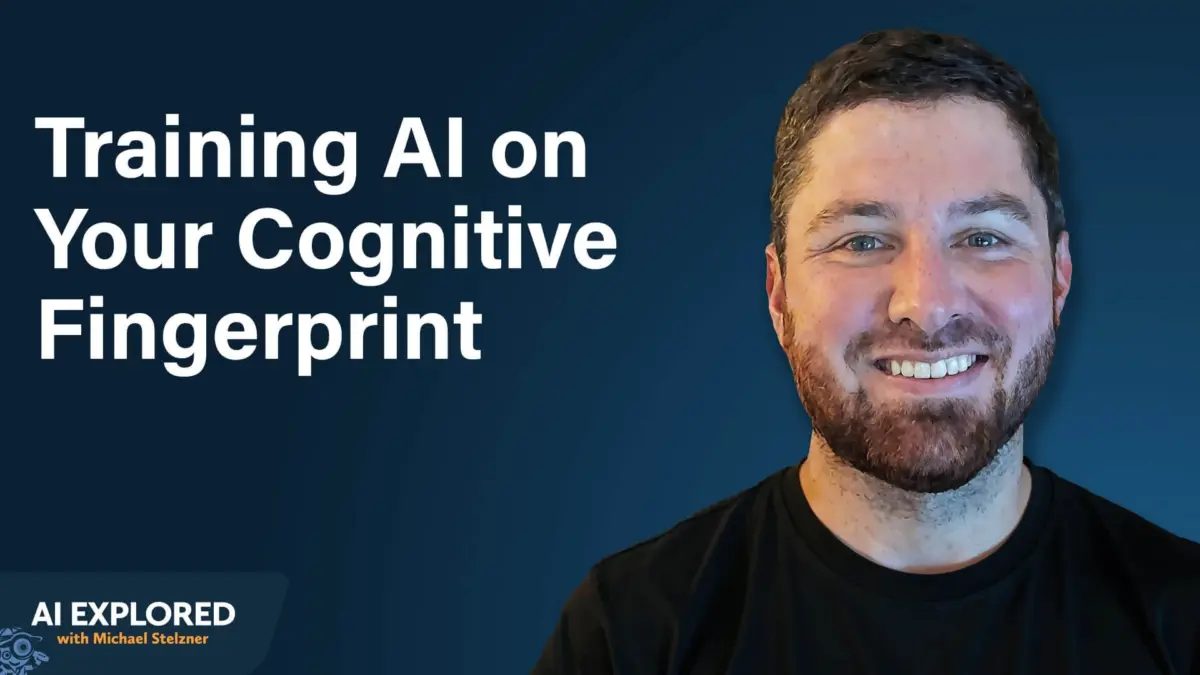
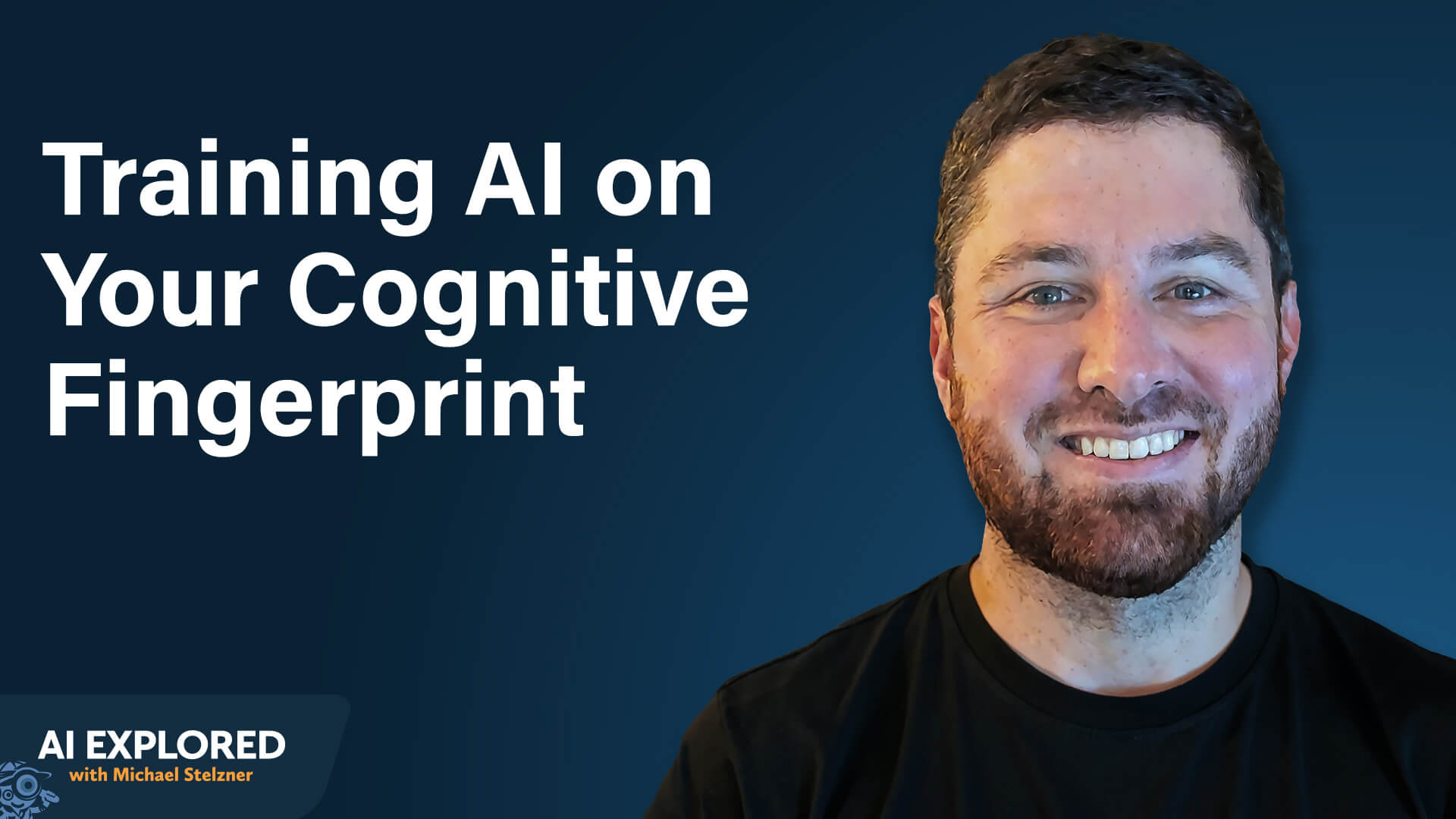
To counter the commoditization of expertise, Bernstein—alongside insights co-created with Michael Stelzner—proposes a transformative methodology: the Cognitive Fingerprint. Grounded in cognitive science and drawing directly from decades-old philosophies regarding "tacit knowledge," this framework turns everyday, unscripted meeting transcripts into a rich, portable AI context document. By extracting four distinct layers of knowledge—declarative, procedural, conditional, and metacognitive—professionals can train AI models to replicate their exact decision-making logic, mental models, and reasoning patterns.
This in-depth investigative report examines the mechanics of the Cognitive Fingerprint framework, details how to collect and structure high-value transcript data, explores the technical implementation across leading LLM architectures, and analyzes the profound implications this methodology holds for the future of individual differentiation and team scaling.
Detailed Chronology: The Evolution of AI Personalization and the Discovery of Tacit Knowledge
The Limitations of Traditional Prompt Engineering
For years, the standard advice for customizing AI tools like ChatGPT, Claude, or Gemini has revolved around explicit prompting. Users are advised to feed conversational models bullet points regarding their industry, writing style preferences, target audience, and preferred vocabulary. While helpful for basic stylistic mimicry, these setups invariably result in robotic output. They sound like polished, generic aggregations of internet data rather than authentic human expertise.
Bernstein’s research reveals that this failure occurs because humans are notoriously poor at self-diagnosing their own cognitive processes. When asked, "How do you approach a complex problem?" a professional will typically offer a rationalized, high-level summary of their workflow. This summary overlooks the nuanced, subconscious shifts in perspective that truly drive expert problem-solving.
Bridging AI with Cognitive Science: The Legacy of Michael Polanyi
To solve this problem, the Cognitive Fingerprint methodology bypasses conscious self-reporting entirely. Instead, it looks backward to a principle coined by philosopher Michael Polanyi decades before the advent of modern neural networks: tacit knowledge.
Polanyi’s foundational observation was simple yet profound—we can know more than we can tell.
True expertise operates largely below the threshold of conscious awareness. It manifests organically during unscripted moments: when an experienced consultant diagnoses a client’s operational bottleneck in real time, when a sales leader dynamically reads a room and adjusts their pitch, or when a strategist thinks out loud while navigating a complex crisis. These are the moments where real expertise lives. By capturing these uncurated interactions via raw transcripts, professionals can bypass the artificial filters of self-assessment and expose the raw neural pathways of their actual decision-making.
Supporting Context & Metrics: The State of AI Adoption and the Anatomy of Expertise
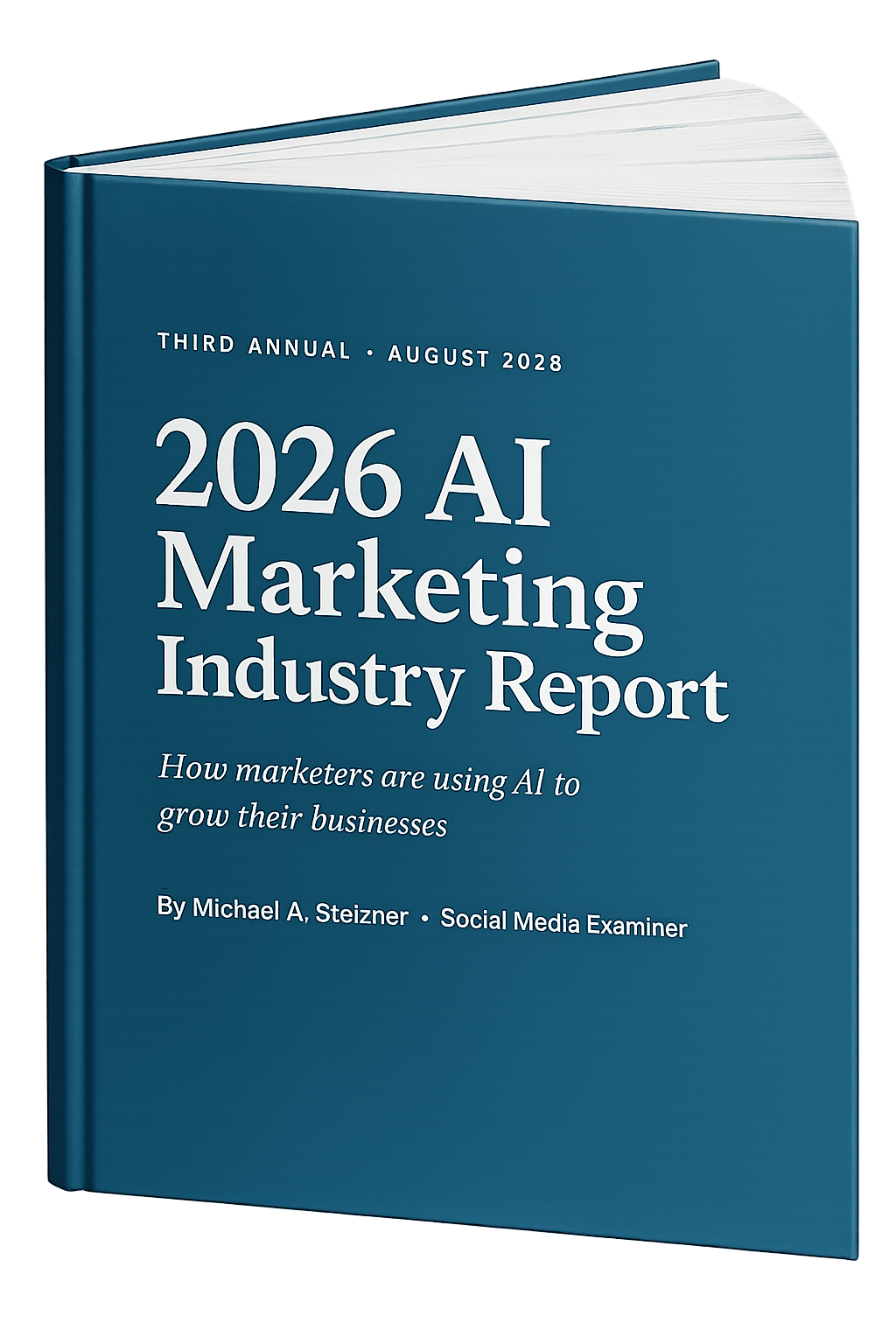
The urgency for sophisticated AI training methods is highlighted by broader industry trends. Recent data from the AI Marketing Industry Report—which surveyed 681 marketers—underscores a stark reality regarding how professionals are integrating these technologies:
- The DIY Learning Curve: A striking 85% of marketers learn AI entirely through self-experimentation.
- Corporate Training Deficit: Only 7% of professionals receive formal AI training from their employers.
- Out-of-Pocket Investment: More than half of all practitioners spend their own personal funds to purchase and test AI software tools.
These figures illustrate an industry grappling with powerful technology in isolation, relying on guesswork rather than structured frameworks. Without a system to anchor AI models to authentic human reasoning, organizations risk drowning in a sea of generic, AI-generated noise.
The Four Layers of Knowledge Inside Every Transcript
To transform raw transcripts into an accurate cognitive profile, Bernstein developed a rigorous four-layer framework. Each layer penetrates deeper into the architecture of human thought, transforming surface-level data into a high-fidelity behavioral mirror.
[ DECLARATIVE ]  --> Surface Layer: Job descriptions, LinkedIn bios ("What you do")
[ PROCEDURAL  ]  --> Method Layer: Step-by-step sequences, SOPs ("How you execute")
[ CONDITIONAL ]  --> Decision DNA: If-then rules, triggers, situational logic ("When & Why")
[METACOGNITIVE]  --> Deepest Layer: Mental models, thinking about thinking ("Why you frame problems this way")
1. Declarative Knowledge (The Surface Layer)
Declarative knowledge represents what someone would state if asked directly about their profession. It is the job-description tier of expertise—the kind of bio text found on corporate websites or LinkedIn profiles. While necessary for basic orientation, it is entirely superficial. Most standard AI personalization attempts begin and end here, which explains why they ultimately fail to sound genuinely human.
2. Procedural Knowledge (The Execution Layer)
This layer captures the procedural mechanics of execution: the step-by-step sequences, methodologies, and standard operating procedures (SOPs) a professional relies on. Where declarative knowledge names the final outcome, procedural knowledge outlines the method. This is the primary layer extracted when teams attempt to build SOP libraries out of operational meeting recordings.
3. Conditional Knowledge (Decision DNA)
Conditional knowledge introduces true personalization. It encompasses the internal decision logic governing actions—the complex if-then reasoning loops that dictate how a professional responds to shifting variables.
- When a specific type of high-stakes client enters a meeting, a particular diagnostic pattern activates.
- Certain project roadblocks trigger distinct diagnostic sequences.
These patterns feel entirely automatic from the inside, but they are actually the result of accumulated, highly specific professional judgment. Bernstein refers to this as your Decision DNA.
4. Metacognitive Knowledge (The Mental Model Layer)
The deepest and most valuable layer for advanced AI training is metacognition: how someone thinks about thinking. This layer houses the foundational mental models that filter raw information before a strategy is even formed.
Interestingly, metacognitive knowledge is the hardest element to self-diagnose. When clients attempt to map out their own mental models prior to analysis, their self-assessments rarely match what their actual transcripts reveal. Uncovering this gap requires external observation—something an expert coach achieves over years of sessions, or which an advanced LLM can synthesize rapidly given a robust corpus of transcript data.
Official Guidelines & Methodology: Building Your Cognitive Fingerprint
Constructing a portable cognitive profile requires a disciplined, step-by-step methodology, moving from data collection to prompt engineering and practical deployment.
Step 1: Collecting the Right Transcripts
Questionnaire responses, stylistic guidelines, and bulleted lists are insufficient for building a fingerprint. The raw material must consist of unscripted recordings where you are actively problem-solving, advising, or reasoning through live challenges.
High-yield transcript sources include:
- Client Calls & Coaching Sessions: The dynamic back-and-forth naturally forces tacit knowledge to the surface.
- Sales Conversations: Captures how a professional reads a room, handles objections, and pivots strategies in real time.
- Brainstorming & Team Meetings: Reveals how raw ideas are generated, filtered, and evaluated.
- Solo Voice Memos: Captured while walking, driving, or processing thoughts between tasks.
What to Avoid: Heavily scripted materials—such as prepared keynote presentations, webinars, or recorded PR interviews—produce packaged knowledge rather than live cognitive processing.
Recommended Transcription Ecosystems
- Virtual Meetings: Tools like Google Meet, Zoom, and Fathom capture automatic transcript records. For deep customization, Granola operates as an audio-only background process, offering preset/custom output templates and deep integrations with team workspaces.
- In-Person Interactions: Wearable hardware devices like Plaud clip directly to clothing or attach to mobile devices to record physical meetings.
- Solo Thinking Sessions: Voice-to-text tools like Wispr Flow allow users to speak context directly into an AI session, leveraging natural spoken cadence which consistently outperforms typed prompts.
Step 2: Prompting AI to Extract the Cognitive Fingerprint
Once a curated set of labeled transcripts (e.g., tagged with notes like "client coaching session" or "product brainstorm") is uploaded to a dedicated project environment—such as a ChatGPT Project, Claude Project, or Gemini Gem—the extraction phase begins.
The core prompt instructs the AI to analyze each transcript simultaneously across all four knowledge layers:
- Identify instances of declarative statements.
- Map procedural workflows and execution sequences.
- Extract conditional decision logic (if-then triggers).
- Uncover underlying metacognitive mental models and flag blind spots or unstated assumptions.
As additional transcripts are fed into the system, the AI builds cumulatively upon previous findings, confirming patterns or noting exceptions. The final output is a comprehensive fingerprint document typically running 20 to 30 pages in length.
Step 3: Deployment and Portability
The ultimate advantage of the Cognitive Fingerprint document is its portability. Because the AI landscape evolves rapidly—with new foundational models launching regularly and prompting methods shifting—relying on platform-specific settings is restrictive.
By maintaining a master fingerprint file, a user can instantly load this context layer into any newly released LLM or AI workspace. The tool immediately gains access to your conditional logic, mental models, and specialized problem-framing styles, allowing the model to produce outputs that accurately reflect your professional approach rather than generic defaults.

Future Outlook: Implications for Teams, Intellectual Property, and Differentiation
The implementation of cognitive profiling signals a profound paradigm shift for knowledge workers, marketers, and enterprise teams.
1. Amplified Personal Confidence and Articulation
One of the most frequently reported side effects of this process is an immediate boost in professional self-awareness. When intuitive expertise is translated into structured, explicit language, professionals gain a clearer understanding of their own value proposition. This clarity makes it significantly easier to articulate complex differentiators to clients and stakeholders.
2. Streamlining Intellectual Property Creation
With the implicit logic of an expert made explicit, the friction of content creation vanishes. Frameworks embedded within a mature fingerprint file can be instantly leveraged to build structured coaching programs, proprietary sales methodologies, facilitation guides, and comprehensive educational courses without starting from a blank page.
3. Enterprise Scaling and Team Dynamics
When applied across an entire organization, cognitive profiling moves past individual productivity. By compiling fingerprint files across a team, leadership can visualize organizational cognitive diversity:
- Who operates primarily through analytical frameworks?
- Who responds best to narrative structures?
- Who generates breakthrough ideas in unstructured brainstorms versus structured sprints?
This granular visibility transforms how projects are assigned, how cross-functional teams are constructed, and how internal groups systematically compensate for individual blind spots.
As artificial intelligence continues to commoditize basic information retrieval and routine content generation, true competitive advantage will belong to those who can capture, refine, and scale the deeply human, tacit architecture of their own minds.