Executive Overview
The announcement of World of Warcraft: Forever at BlizzCon has ignited a fierce debate across the MMORPG community. Rather than pursuing the industry-standard trajectory of building a clean-slate sequel—a path successfully traveled by franchises like ArenaNet’s Guild Wars—Blizzard Entertainment is doubling down on its 25-year-old titan.
World of Warcraft: Forever is not merely another iteration of the Season of Discovery experiments; it is a full-scale, ground-up reimagining of the classic-era game. Featuring overhauled class talent trees, completely new raid tiers, and modernized technical frameworks, the project aims to bridge the gap between nostalgic old-school design and modern quality-of-life updates.
Yet, this strategic choice immediately begs a fundamental question: Why is Blizzard spending massive developmental resources to retrofit a quarter-century-old codebase rather than building World of Warcraft 2?
Speaking to industry outlets, principal designer Kris Zierhut illuminated Blizzard’s rationale, pointing to decades of compounding engine optimizations, graphical overhauls, and server architecture improvements. However, this decision also forces developers and players alike to confront the heavy price of technical debt, the loss of modern game mystery, and the evolving appetite of an aging MMO demographic. This report explores the mechanics, philosophies, and market realities driving Blizzard’s monumental gamble.
Detailed Chronology: From Vanilla Roots to Forever
To understand why World of Warcraft: Forever exists, one must trace the timeline of how Blizzard has managed its flagship intellectual property over the past two decades.
- November 2004: World of Warcraft launches, utilizing an engine derived from the Warcraft III RTS framework. It captures the global gaming consciousness and sets the benchmark for modern theme-park MMORPGs.
- 2007–2018: Through successive expansions (The Burning Crusade, Wrath of the Lich King, through Battle for Azeroth), the game’s back-end code undergoes continuous, piecemeal upgrades. Rendering systems, lighting pipelines, and character models are systematically modernized to keep pace with industry standards.
- August 2019: Driven by years of fan demand for a pure, unadulterated experience of the original game, World of Warcraft Classic launches. It proves that an appetite for early-era mechanics remains potent, even in an era of hyper-optimized retail gameplay.
- Late 2023: Blizzard introduces the Season of Discovery, marking a shift from strict preservation to active experimentation. Classic zones, raids, and classes are injected with rune-based abilities and wild new playstyles.
- The BlizzCon Reveal: Blizzard pulls back the curtain on World of Warcraft: Forever. Billed as an all-encompassing reimagining of classic-era Azeroth, it blends the beloved pacing and world design of the 2004 original with modern netcode, updated high-definition assets, optional transmog, and brand-new raid content—alongside controversial monetization additions, such as $30 optional elf character variations and expansion-locked races.
Rather than moving past its legacy with a clean break, Blizzard has weaponized its history, choosing to continually refine the existing platform rather than abandon it.
Supporting Context & Metrics: The Engine Argument vs. The Technical Debt Trap
The Case for Continuous Iteration
At the heart of Blizzard’s decision lies a pragmatic calculation regarding engine efficiency and capital expenditure. Rebuilding an MMORPG from scratch is one of the most perilous endeavors in software development. Franchises that have attempted true sequels often face catastrophic churn, splintered communities, and years of content drought while the new engine catches up to the feature-rich complexity of its predecessor.
According to Kris Zierhut, the engine powering modern World of Warcraft is an engineering marvel born of continuous refinement:
"One of the things that’s singularly great about WoW is we have this game and this world and this design that has been continuously developed for the last 25 years… We’ve also made the way the engine draws things move more efficiently. The way the server runs, handling players and moving them around, and all the things that handle spells and combat, all of that’s been made more efficient and better over the years. We have this incredible engine and server infrastructure driving the game that is second to none. Why would you throw that away and start over?"
From a purely technical standpoint, Zierhut’s argument is unassailable. The current server architecture handles massive world events, thousands of concurrent players across seamlessly integrated phasing zones, and complex combat calculations with a reliability that few competitors can match.
The Burden of Technical Debt
Conversely, sticking with a 25-year-old foundation introduces profound vulnerabilities. Continuous patching over decades results in immense technical debt—a sprawling labyrinth of legacy code where fixing one seemingly unrelated element can have catastrophic downstream effects.
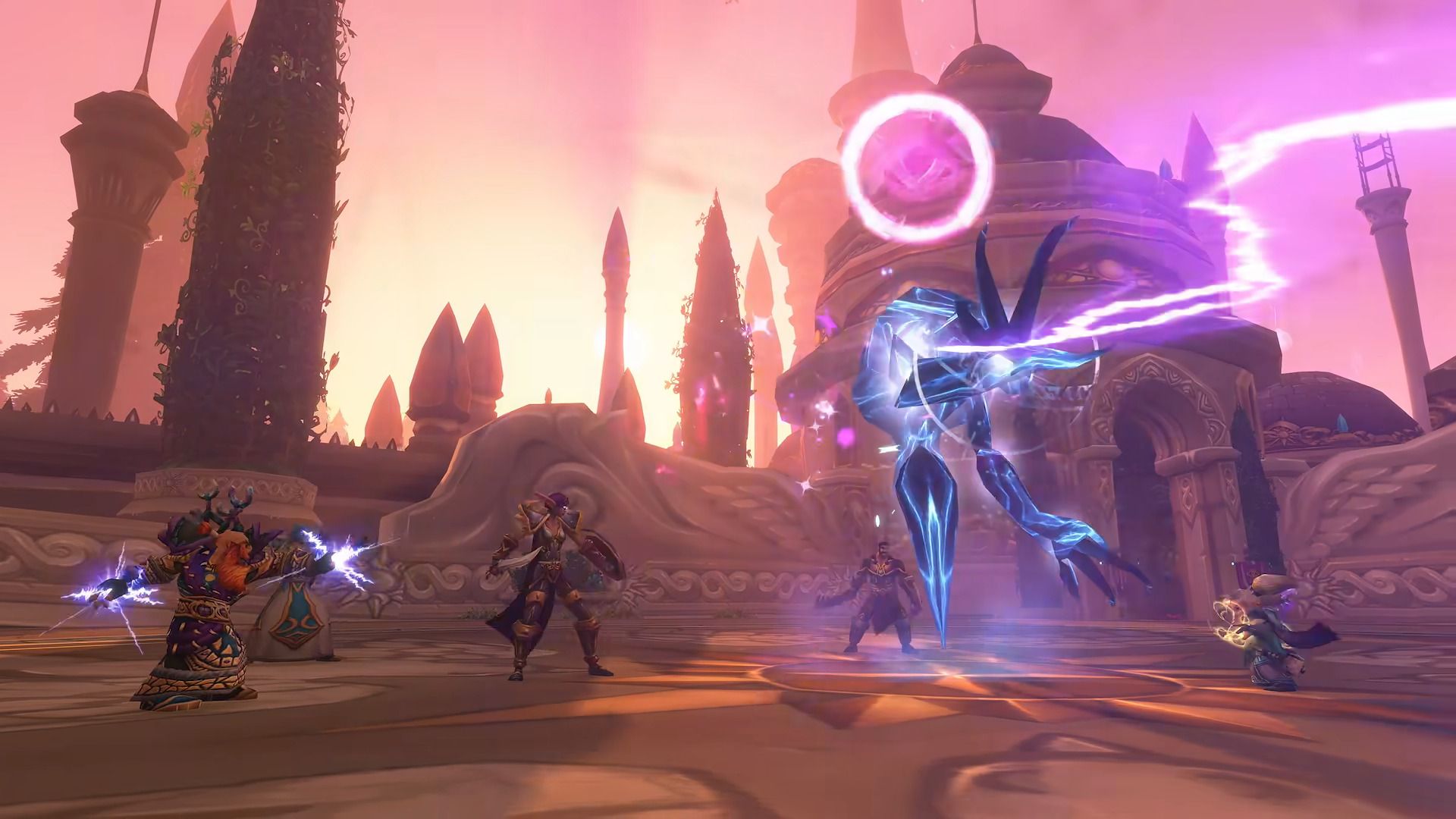
This reality was starkly demonstrated during a recent patch cycle when game director Ion Hazzikostas revealed that an attempt to fix a broken elevator inside a 13-year-old raid inadvertently borked major backend systems, including the long-awaited player housing mechanics. When codebases grow this old and interconnected, developers spend significant cycles merely keeping the digital house from collapsing under its own weight, rather than innovating freely.
A direct sequel, by contrast, provides a blank canvas to challenge foundational assumptions. For instance, when ArenaNet developed subsequent iterations in the Guild Wars franchise, they radically altered combat pacing, movement physics, and systemic design to establish an entirely modern action-RPG framework. A World of Warcraft 2 could have similarly rewritten the rules of MMO design, discarding outdated tab-targeting paradigms or shedding the baggage of twenty years of lore retcons.
Official Statements and Community Perspectives
The announcement of World of Warcraft: Forever has triggered a complex psychological response from the community, dividing players between cynical resignation and hopeful nostalgia.
The Problem of the "Optimized" MMO Experience
Modern gaming culture has fundamentally altered how players interact with persistent online worlds. In the era of high-speed datamining, alpha testing leaks, and hyper-efficient Theorycrafting, community members strip away the mystery of an expansion weeks before it launches. Every raid encounter, optimal DPS rotation, and loot drop percentage is calculated down to the decimal point.
Critics argue that attempting to recapture the magic of classic-era design in the modern information age is a fool’s errand. We have "loved these games to death," optimizing every ounce of wonder and serendipity out of them.
The Yearning for Friction
And yet, a counter-movement within the MMORPG space openly craves friction. Writing in PC Gamer’s ongoing MMO coverage, critics and columnists have repeatedly pointed out that while modern MMOs are objectively streamlined and well-designed, they often lack the soul-stirring weight of older iterations:
"It’s hard to argue that the MMOs of today aren’t better designed than their older iterations. And yet, it’s the moments when I step off the treadmill where they still feel the most magical."
If World of Warcraft: Forever can successfully navigate this paradox—offering an alternate timeline not just for the game’s lore, but for modern MMO design philosophy—it could satisfy players who yearn for a game that isn’t afraid to "waste your time" in exchange for authentic communal immersion.
Future Outlook: A New Paradigm or a Risky Gamble?
As Blizzard prepares to roll out World of Warcraft: Forever, the project stands as a litmus test for the longevity of the MMORPG genre as a whole. By rejecting the traditional sequel model, Blizzard is betting that players care more about the living, breathing history of Azeroth than the pristine novelty of a fresh engine.
However, the road ahead is fraught with commercial and cultural hurdles. The inclusion of aggressive monetization tiers—such as charging $30 for alternative elf models or locking high-profile races behind premium expansion tiers—threatens to alienate a player base that is already sensitive to corporate overreach.
Ultimately, World of Warcraft: Forever will succeed or fail based on its ability to walk a razor-thin tightrope. If it can deliver the technical polish and fluid responsiveness of retail WoW while capturing the deliberate, community-driven friction of classic-era gameplay, Blizzard may have successfully invented a new paradigm for aging online services. If it falls short, it risks being remembered as an expensive, nostalgic detour—a monument built on top of ancient code, straining under the weight of its own history.