Executive Overview
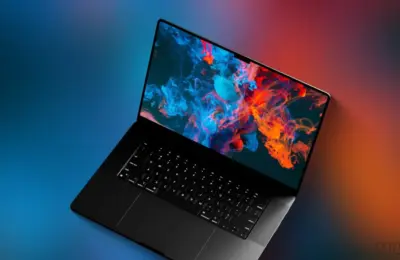
The personal computing landscape is on the precipice of its most significant transformation in half a decade. Apple is preparing to pull back the curtain on a revolutionary redesign of its flagship MacBook Pro lineup—the first major structural and aesthetic overhaul since 2021. Breaking away from long-held product philosophies, industry insiders and supply chain leaks point toward an unyielding trifecta of modern upgrades: brilliant OLED display technology, intuitive touch support, a dramatically lighter form factor, and the tantalizing possibility of built-in cellular connectivity.
The upcoming unveiling is scheduled for an exclusive hands-on media and influencer experience dubbed "Pro and Tell," taking place on October 28 in Los Angeles. Eschewing the traditional, globally broadcasted keynote video format, Apple is opting for an intimate, tactile showcase. This event will not only introduce the reimagined OLED MacBook Pro running on next-generation M5 Pro and M5 Max architectures, but it is also expected to spotlight an array of parallel hardware refreshes, including an OLED iPad mini, a redesigned iMac, and a 14-inch base model MacBook Pro powered by the emerging M6 chip.
At the epicenter of consumer curiosity, however, is the long-rumored introduction of cellular support to the Mac family. For years, the absence of native 5G in MacBooks forced professionals and digital nomads to rely on cumbersome mobile hotspots or tethering. Now, powered by Apple’s proprietary in-house modem technology, the prospect of an always-connected Mac is closer than ever. As the clock winds down to the Los Angeles showcase, the tech community remains gripped by a single question: Will Apple finally bridge the gap between iPhone connectivity and professional computing power?
Detailed Chronology: The Road to the October 28 "Pro and Tell" Event
Understanding how Apple arrived at this pivotal hardware crossroads requires tracing a deliberate, multi-year pipeline of technological development, internal testing, and strategic leaks. The evolution of this week’s announcements spans hardware experimentation dating back to the height of the M-series transition.
2024: The Initial Inquiries into Cellular Macs
The foundation for a cellular-enabled laptop was quietly laid in late 2024. In December of that year, prominent Bloomberg reporter Mark Gurman dropped a bombshell report indicating that Apple had actively begun investigating the integration of cellular modems into the MacBook lineup, targeting a potential commercial release as early as 2026.
According to Gurman’s sources, Apple was utilizing early internal iterations of its custom-designed second-generation cellular modem—commonly referred to in supply chain circles as the C2 modem—to test data throughput, power efficiency, and thermal management within a laptop chassis. This move signaled a strategic pivot away from third-party silicon components, such as Qualcomm modems, aligning with Apple’s broader corporate mandate for vertical integration.
August 2025: Concrete Testing Configurations Surface
The timeline accelerated significantly in August 2025. Reports surfaced from industry analyst Filipe Esposito detailing that Apple had ramped up real-world testing configurations. Crucially, these tests involved prototypes of an M5 Pro-based MacBook Pro coupled with Apple’s initial C1 modem architecture.
The appearance of the M5 Pro chip in these testing phases provided a vital clue. While market watchers initially speculated that cellular capabilities might debut alongside the subsequent M6 generation, the linkage to the M5 Pro hinted at an earlier hardware integration path. With the new MacBook Pros arriving with M5 Pro and M5 Max configurations, the groundwork laid during these 2025 testing phases positions Apple to flip the switch on cellular connectivity if supply and carrier partnerships align.
October 2026: The "Pro and Tell" Experience Takes Shape
By mid-October 2026, the tech industry received official confirmation of an impending hardware drop when Apple announced its "Pro and Tell" experience for October 28 in Los Angeles. Breaking from tradition, Apple elected to bypass a glossy, pre-recorded digital stream in favor of a closed-door, hands-on experiential format.
By inviting select media members and influential creators directly to Los Angeles for real-time interaction with the hardware, Apple is signaling profound confidence in the physical, tactile changes coming to the MacBook Pro. The inclusion of touch support—a feature once explicitly rejected by the late Steve Jobs as "ergonomically terrible" for vertical screens—represents a monumental philosophical about-face, necessitated by the convergence of iPadOS and macOS ecosystems, as well as shifting consumer expectations.
Supporting Context & Metrics: Under the Hood of the New Ecosystem
To fully appreciate the magnitude of this week’s announcements, one must examine the technological architecture underpinning the new devices. The transition from legacy LCD panels and non-touch displays involves a complex symphony of advanced display manufacturing, custom silicon engineering, and wireless communication design.
The OLED Transition and Weight Reductions
For years, MacBook Pro displays have relied on advanced Mini-LED backlighting (Liquid Retina XDR), which offered exceptional brightness and local dimming zones. However, OLED (Organic Light-Emitting Diode) technology represents a generational leap forward. OLED panels provide true blacks, infinite contrast ratios, instantaneous pixel response times, and vastly superior energy efficiency when rendering dark-mode interfaces.
Simultaneously, the removal of bulky backlight layers enables a significantly slimmer and lighter physical chassis. Apple’s engineering teams have reportedly shaved millimeter margins off the profile of the new MacBook Pro, addressing longstanding consumer critiques regarding the hefty weight of the 14-inch and 16-inch workstation models.
The C2 Modem and the Always-Connected Future
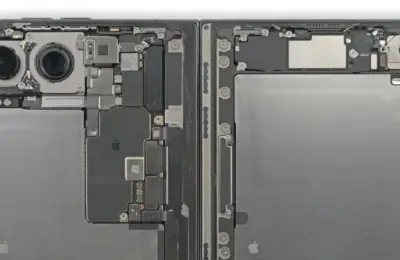
If cellular connectivity officially debuts in the MacBook Pro line this week, it will almost certainly rely on Apple’s custom C2 modem technology—the same advanced silicon slated to power flagship mobile devices like the iPhone 18 Pro and the rumored iPhone Duo.
Building a modem into a laptop presents unique engineering challenges that differ substantially from smartphones:
- RF Interference: Laptops feature larger metallic enclosures, complex internal routing, and high-speed data buses that can create electromagnetic interference with cellular frequencies.
- Thermal Constraints: Unlike iPhones, which rely entirely on passive cooling, MacBook Pros utilize active thermal management (fans) in Pro configurations, requiring antenna placements that maintain structural integrity without degrading signal reception.
- Battery Drain: Operating a continuous cellular data connection on a laptop places a heavier sustained load on the power source compared to intermittent smartphone usage. Apple’s custom silicon efficiency, paired with high-density battery cells, aims to mitigate this drain, ensuring all-day battery life remains intact.
Comprehensive Hardware Matrix
Beyond the headline-grabbing MacBook Pro, the October 28 event will feature a broad spectrum of upgraded devices:
| Device Category | Expected New Features / Upgrades | Processor Architecture |
|---|---|---|
| MacBook Pro (14" & 16") | OLED Display, Touch Support, Lighter Design, Optional Cellular (C2 Modem) | M5 Pro / M5 Max |
| MacBook Pro (14" Base) | Standard Display Refinements | M6 Chip |
| iPad mini | OLED Screen Technology | Upgraded A-Series or M-Series |
| iMac | Aesthetic and Internal Component Refinement | M6 Chip |
Official Statements and Industry Insights
While Apple has maintained its customary pre-event secrecy regarding the final specification sheets, industry analysts and supply chain monitors have offered valuable perspectives on the strategic calculus driving these updates.
Apple’s decision to adopt touchscreen functionality on the Mac has been a subject of intense debate for over a decade. In past earnings calls and developer conferences, company executives maintained that desktop operating systems are fundamentally optimized for mouse and keyboard interactions. However, market research indicates that an entire generation of users raised on iPads and touch-enabled Windows laptops now intuitively reach for computer screens to scroll, zoom, and select items.
Industry analysts note that Apple’s internal testing of the C1 and C2 modems reflects a multi-year strategy to eliminate reliance on external suppliers like Qualcomm. By developing custom cellular silicon optimized specifically for macOS power management, Apple can offer seamless ecosystem features—such as instantaneous, zero-configuration cellular tethering, enhanced Find My tracking even when the laptop is powered down, and reliable background syncing—without requiring users to manually configure personal hotspots.
Mark Gurman of Bloomberg highlighted the stakes of the upcoming Los Angeles showcase, noting:

"Apple is entering a phase where form factor innovations are no longer optional to maintain market dominance. By bringing OLED, touch, and potentially cellular to the Mac, they are breaking down the historical barriers that separated the iOS and macOS user experiences."
Future Outlook: What the Cellular, Touchscreen Mac Means for the Industry
The introduction of an OLED, touch-enabled, and potentially cellular MacBook Pro marks a watershed moment in personal computing. As these devices land in the hands of media and creators in Los Angeles on October 28, the ripples will be felt across the entire consumer electronics ecosystem.
Re-defining the Pro Workflow
For enterprise workers, creative professionals, and field journalists, an always-connected cellular MacBook Pro eliminates the friction of Wi-Fi dead zones. Whether uploading massive raw video files from a remote location or downloading heavy code repositories on a cross-country flight, the traditional dependency on tethered smartphones or public Wi-Fi networks becomes obsolete.
Furthermore, the integration of touch support alongside traditional trackpad and keyboard inputs bridges the usability gap for creative applications. While core precision work will undoubtedly remain anchored to physical input devices, touch-based scrubbing, timeline manipulation, and document navigation offer intuitive shortcuts that accelerate daily workflows.
Competitive Pressures on Competitors
For years, Windows laptop manufacturers—including Microsoft, Dell, and Lenovo—have offered touchscreens and cellular (LTE/5G) connectivity as standard options in their flagship enterprise lines. Apple’s delayed entry into these spaces was intentional, predicated on waiting until display technology (OLED) and custom silicon efficiency (Apple Silicon and in-house modems) reached maturity.
Now that Apple is entering the market with its vertically integrated hardware and software ecosystem, competing PC makers will face renewed pressure to elevate their display standards and power-efficiency metrics.
Looking Ahead to the M6 Generation and Beyond
As the tech world digests the hardware announcements emerging from Los Angeles, attention will quickly pivot toward the broader rollout of the M6 generation. While this week’s event leans heavily on the M5 Pro and M5 Max architectures for the professional tier, the inclusion of base-level M6 chips in smaller form factors signals that Apple’s silicon pipeline is operating at a relentless pace.
Whether cellular support proves to be a day-one reality for every configuration or rolls out selectively across specific carrier partnerships, one truth remains undeniable: the era of the static, non-touch, Wi-Fi-bound laptop is officially drawing to a close. Apple is charting a bold, interconnected future where the Mac is as mobile, responsive, and versatile as the device in your pocket.