Executive Overview
The debut of Apple’s first foldable device—widely designated as the iPhone Duo—has been nothing short of a seismic event in the consumer electronics landscape. As millions of tech enthusiasts and industry analysts scrutinize the company’s long-awaited entry into the foldable market, the renowned repair advocacy and teardown experts at iFixit have released their comprehensive, end-to-end teardown analysis. The verdict offers a fascinating paradox: while the iPhone Duo achieves a record-setting repairability score of 5 out of 10—the highest ever awarded by iFixit to a foldable smartphone—it simultaneously uncovers structural and mechanical complexities that may explain the early, troubling wave of hardware failures reported by everyday users.
From an intricately engineered waterdrop hinge to specialized nano-texture display layers and oval-shaped subpixel arrangements, the iPhone Duo is an exercise in bleeding-edge materials science. However, as iFixit’s CT scans, microscopic imagery, and stress tests reveal, the tight tolerances required to build a ultra-thin foldable device leave very little room for error. This deep-dive report examines the mechanical marvels of Apple’s folding architecture, investigates the hardware culprits behind popping and cracking screens, and evaluates what this groundbreaking teardown means for the future of Apple hardware design.
Detailed Chronology: The Disassembly Journey
Phase One: The Dust Test and Initial Impressions
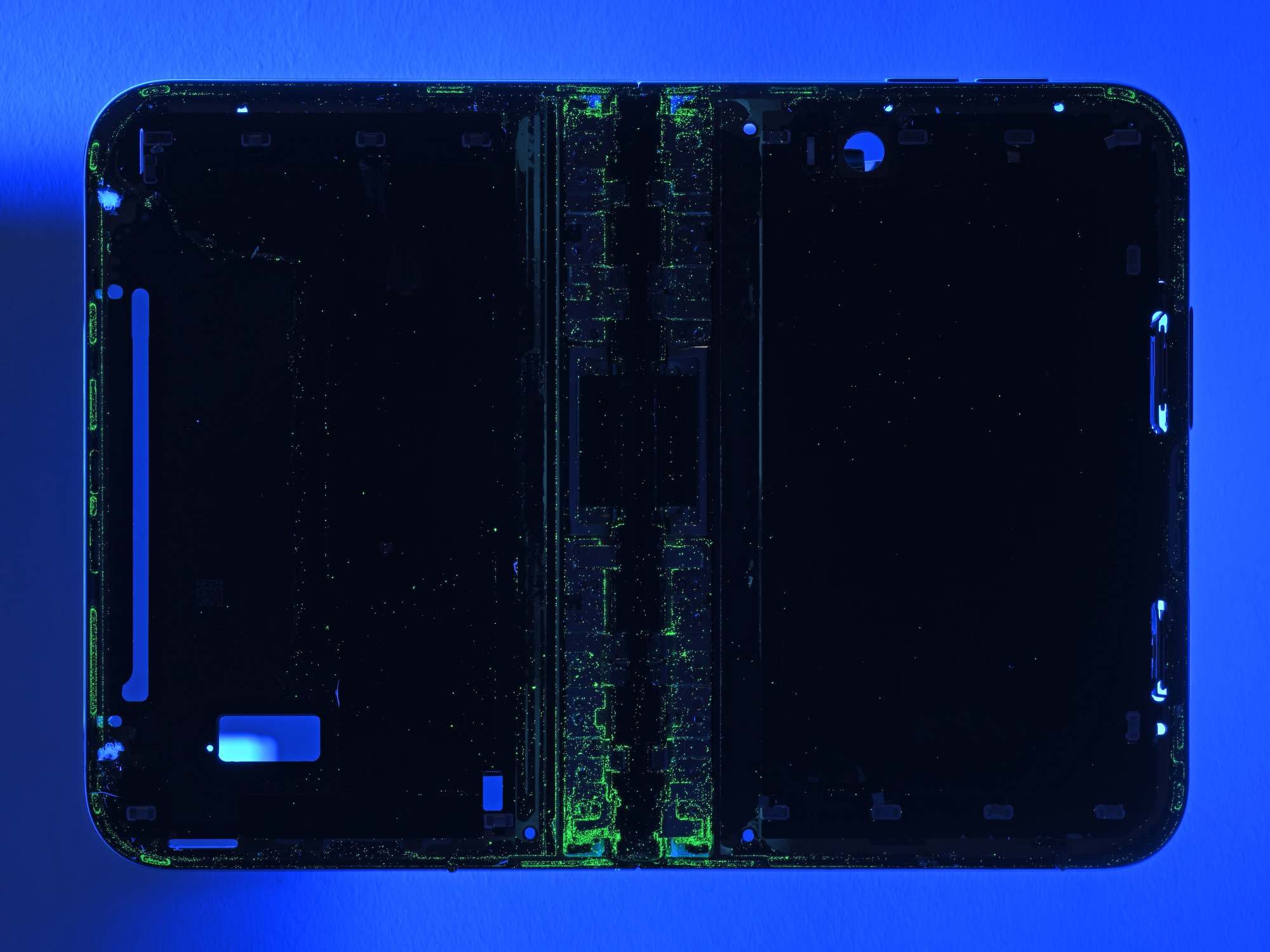
The iFixit teardown process commenced with the organization’s signature diagnostic rituals, beginning with a controlled fluorescent dust test. Designed to simulate hostile real-world environments where particulate matter infiltrates pocketed mobile devices, this test immediately yielded noteworthy observations.
The iPhone Duo ships with an official IP68 dust- and water-resistance rating, signifying that it is entirely dust-tight and capable of surviving complete submersion in up to 6 meters of water for up to 30 minutes. Yet, almost immediately after undergoing the dust chamber evaluation, the device’s central hinge began emitting a distinct, concerning "crunching" sound during articulation.
Despite this auditory warning sign, subsequent disassembly revealed that the ingress of dust into the primary mechanical core was remarkably low—especially when benchmarked against legacy foldable offerings from competing manufacturers. Apple’s internal gaskets, barrier seals, and labyrinthine pathways appeared to do an admirable job of keeping microscopic debris at bay, even if the tactile feedback suggested that internal friction points were being stressed.
Phase Two: Engineering the Waterdrop Hinge
The crown jewel of the iPhone Duo’s physical architecture is undoubtedly its hinge mechanism. For years, industry patent watchers tracked Apple’s iterative filings concerning flexible display physics, tension distribution, and gear assemblies. Now exposed in the wild, the hardware lives up to the anticipation.
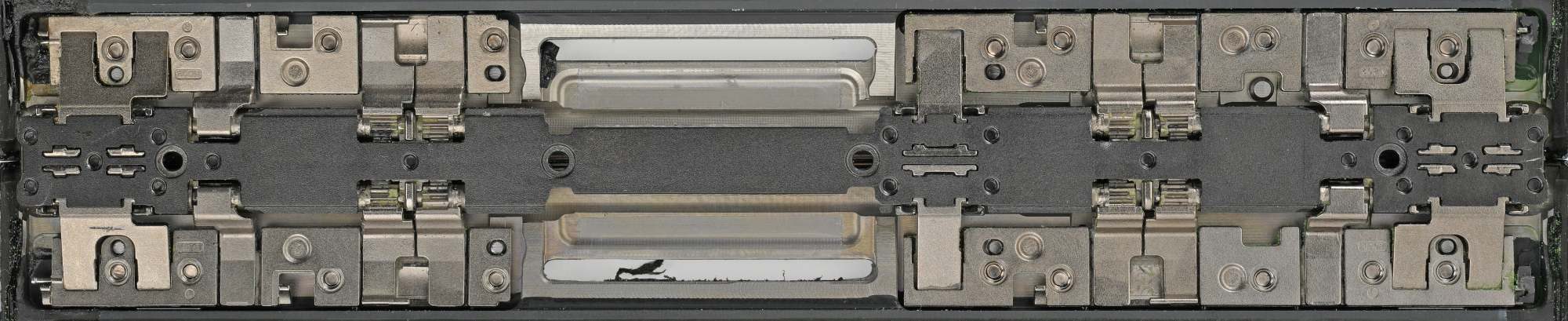
The hinge is an elaborate symphony of micro-gears, tension springs, and interconnected metal carriage joints. It utilizes a classic waterdrop design—a geometry now standard across the premium foldable segment—which permits the internal flexible OLED panel to roll into a wide, teardrop-shaped loop rather than creasing sharply along a single axis. This approach drastically mitigates localized material fatigue.
Furthermore, Apple integrated custom-molded curved guide rails to choreograph the precise sliding motion of the metal chassis halves. These guides actively manage the tension vector applied to the display surface as the device transitions between folded and unfolded states, minimizing shear forces across the fragile organic light-emitting diode layers.
Phase Three: Uncovering Battery Architecture and Internal Layout
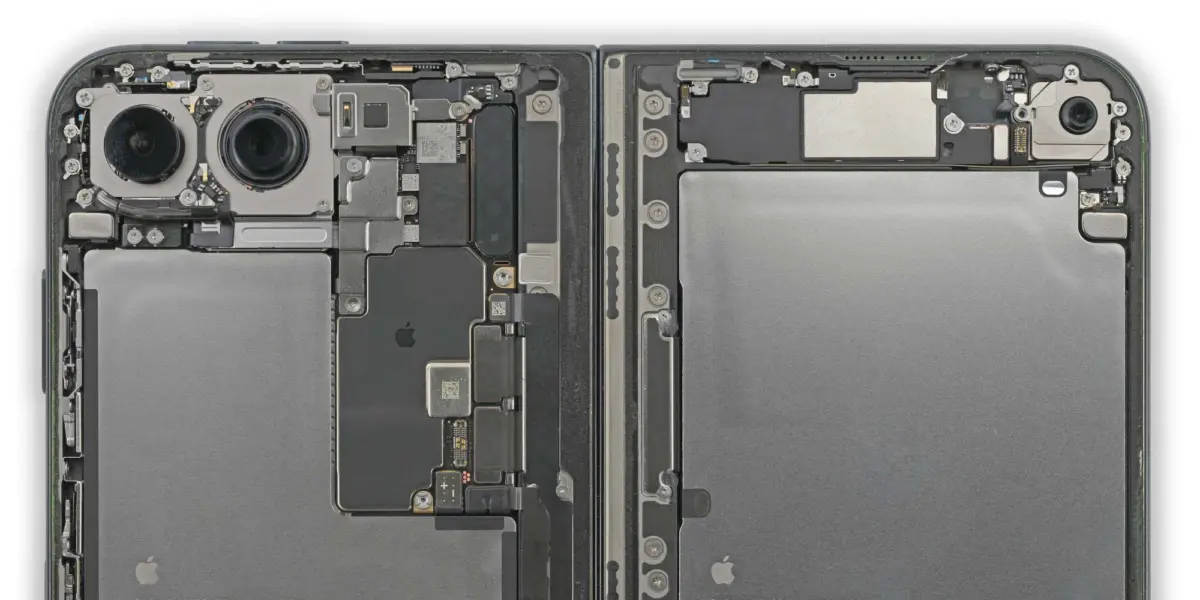
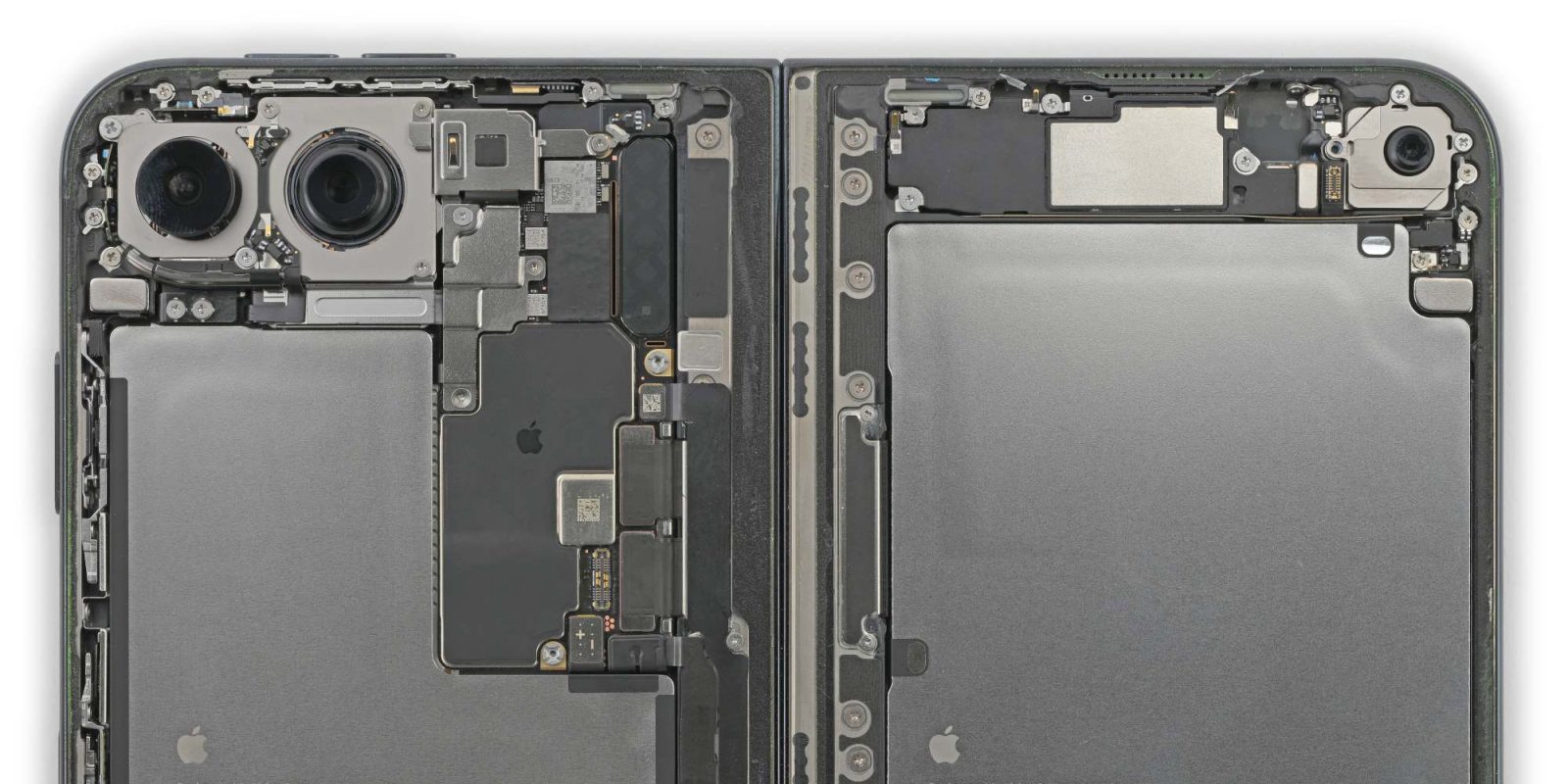
Beneath the exterior glass panels lies a thoughtfully partitioned internal layout. Apple has split the power storage demands across the device’s two symmetrical halves:
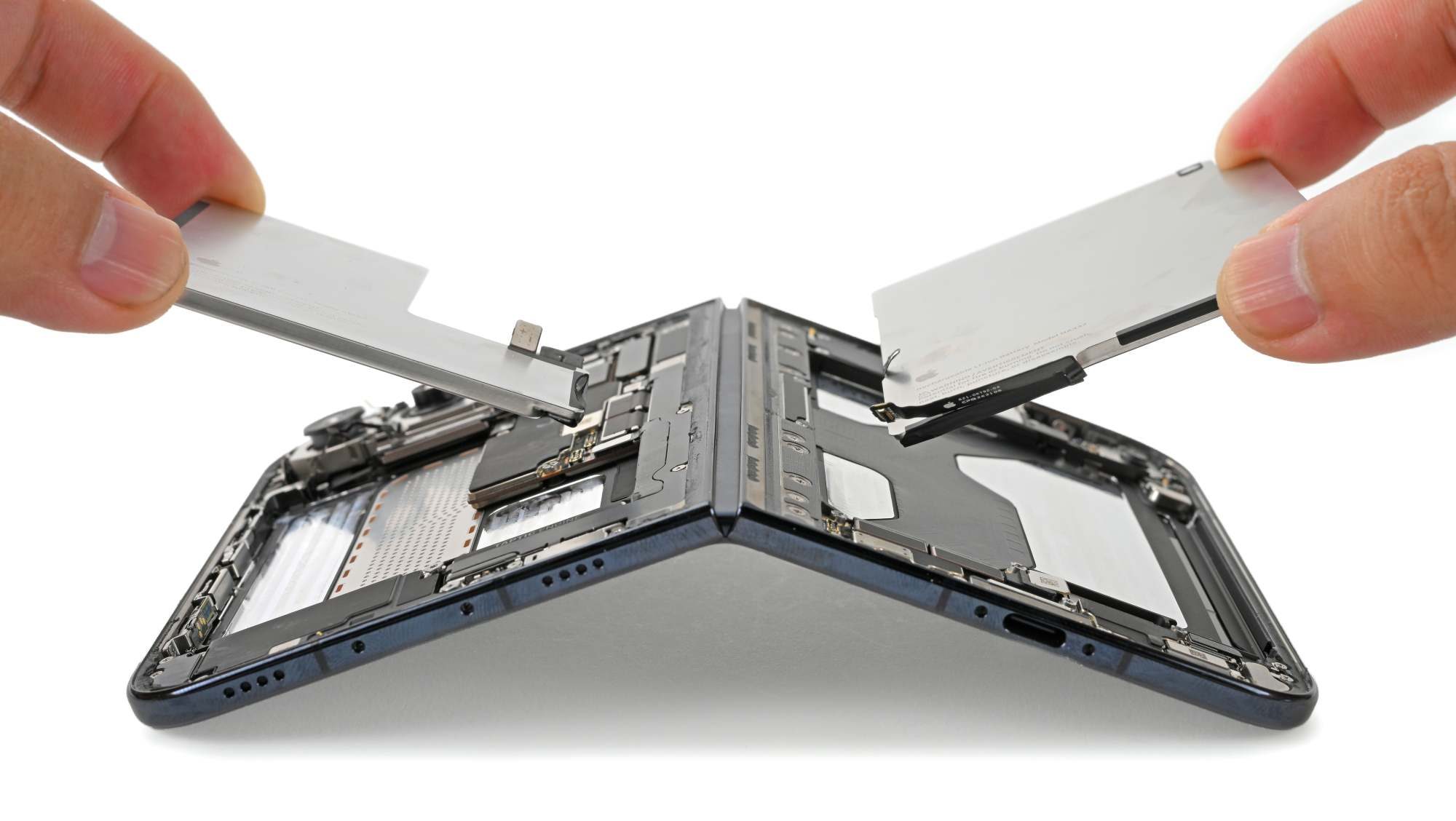
- The Primary Battery Cell: Situated directly beneath the rear glass panel, boasting a capacity of 11.567 Wh.
- The Secondary Battery Cell: Positioned beneath the outer cover display, providing 7.506 Wh of energy.
- Total Combined Capacity: 19.073 Wh.
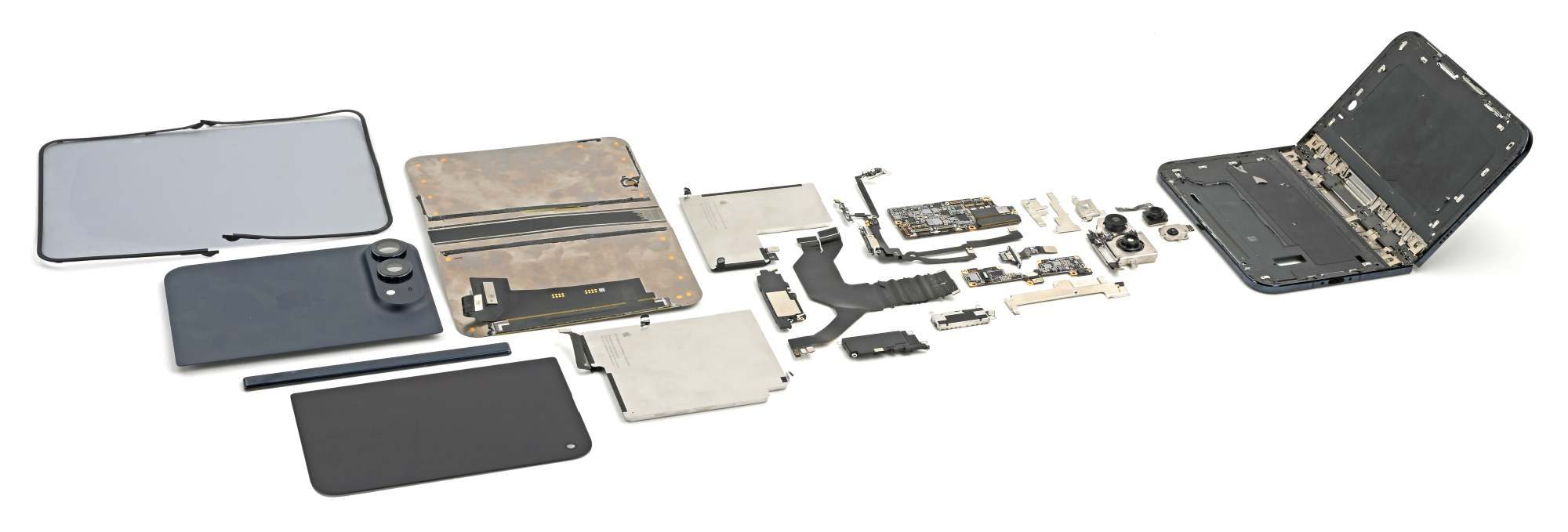
In a major win for both end-users and professional repair technicians, iFixit lauded Apple’s adoption of electrically releasable adhesive strips for both battery cells. Rather than requiring technicians to apply hazardous heat guns, harsh chemical solvents, or dangerous prying force, the batteries can be safely decoupled using low-voltage electrical currents. iFixit characterized this as the single best battery-removal methodology seen to date within the foldable smartphone tier.
Supporting Context & Metrics: Decoding the Hardware Anomalies
Investigating the Screen Failure Phenomenon
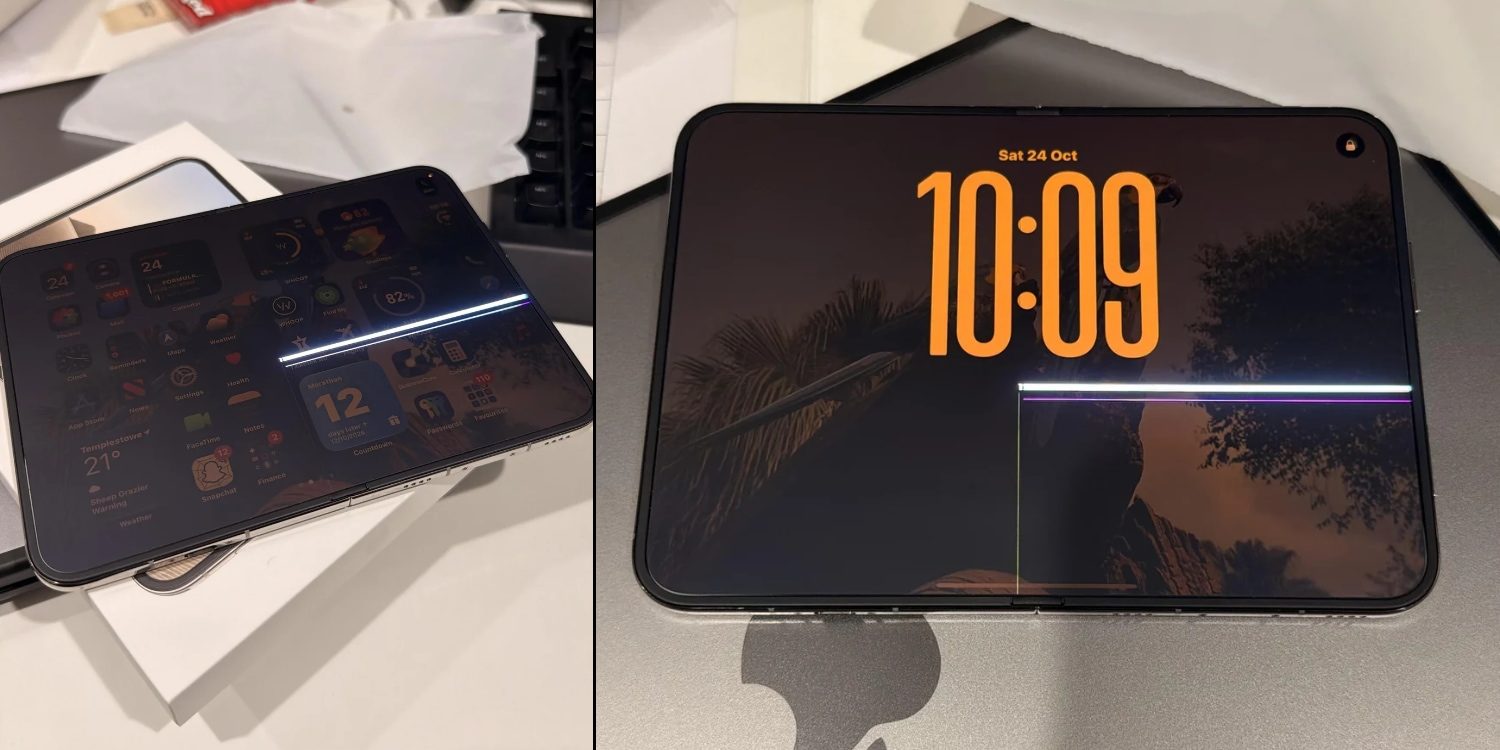
While the repairability score of 5/10 represents a historic milestone for foldables, the hardware joy has been tempered by real-world friction. In the weeks following the iPhone Duo’s global release, early adopters flooded online communities with reports of sudden, catastrophic display failures. Users frequently described a distinct popping or crunching noise during normal folding operations, instantly followed by the appearance of bright, vertical colored lines bleeding across the internal flexible canvas.
Leveraging high-resolution CT scans, microscopic analysis, and 3D CAD modeling derived from Apple’s patent portfolio, iFixit successfully isolated several structural regions that are prime suspects for these failures:
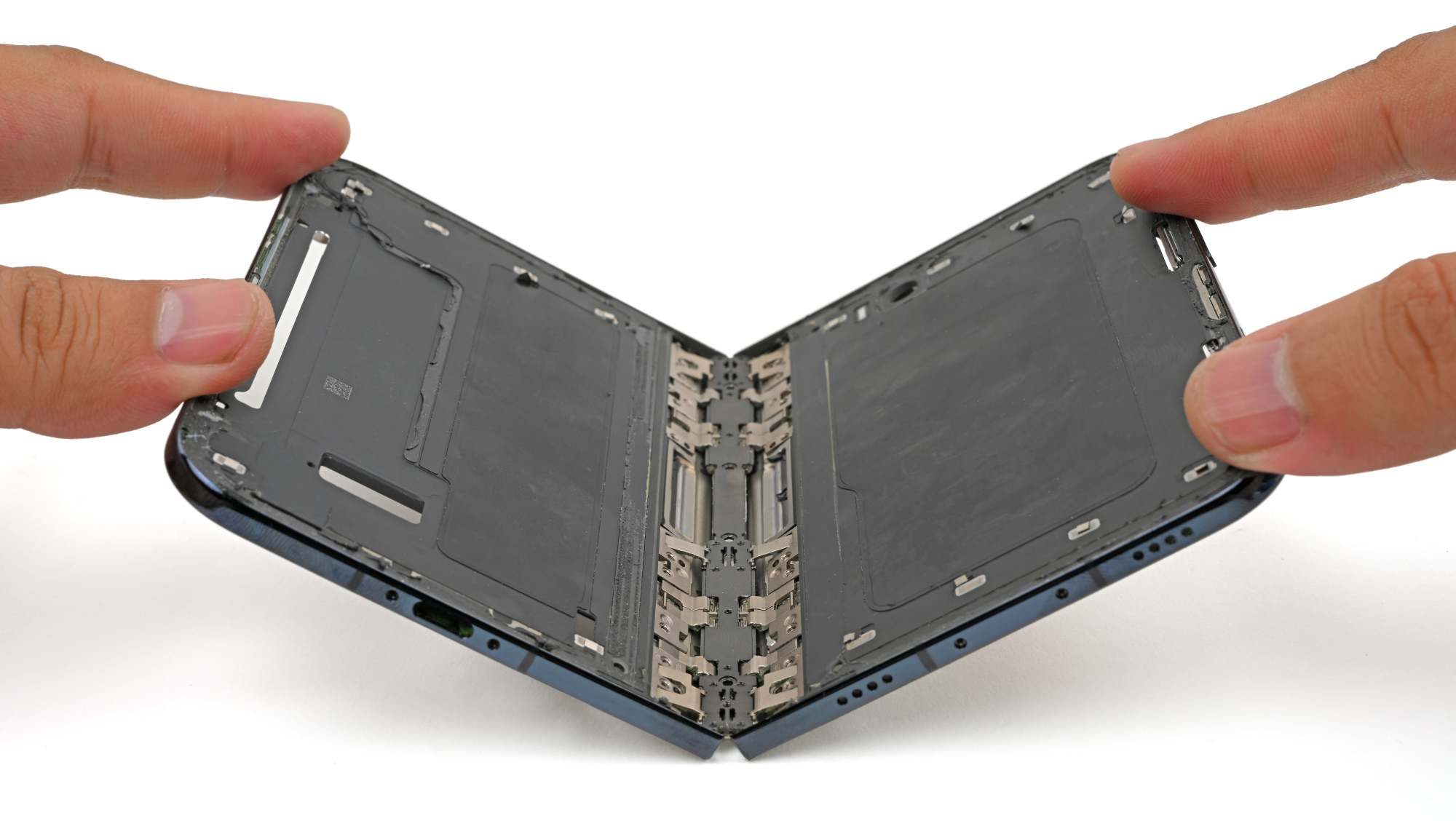
- The Cable Pass-Through Vulnerability: A disproportionate number of screen fractures localize near the transition zone where the flexible data cable bridges the gap between the two housing halves and interfaces with the central hinge support.
- Retraction Lag in the Central Support Bar: iFixit’s 3D models suggest that a metallic central support bar—designed to rise and provide structural backing to the screen when open—may occasionally fail to retract cleanly during the closing motion. When this synchronization slips, the bar applies direct, crushing pressure to the undersides of the delicate display stack.
- Interference from Curved Guide Rails: The aforementioned curved metal rails rise above surrounding baseline components during the folding cycle. If mechanical tolerances drift even fractions of a millimeter due to drops, manufacturing variance, or particulate buildup, these rails can physically collide with the flexible display substrate.
While the teardown could not definitively pinpoint a single smoking gun, the intersection of dense structural edges, converging metal components, and tight folding radii provides a compelling engineering roadmap for why these localized failures are manifesting.
Microscopic Analysis: Nano-Texture and Pixel Geometry
Beyond structural stability, iFixit’s microscope cast light on Apple’s proprietary optical solutions designed to conquer the notoriously difficult foldable display crease.
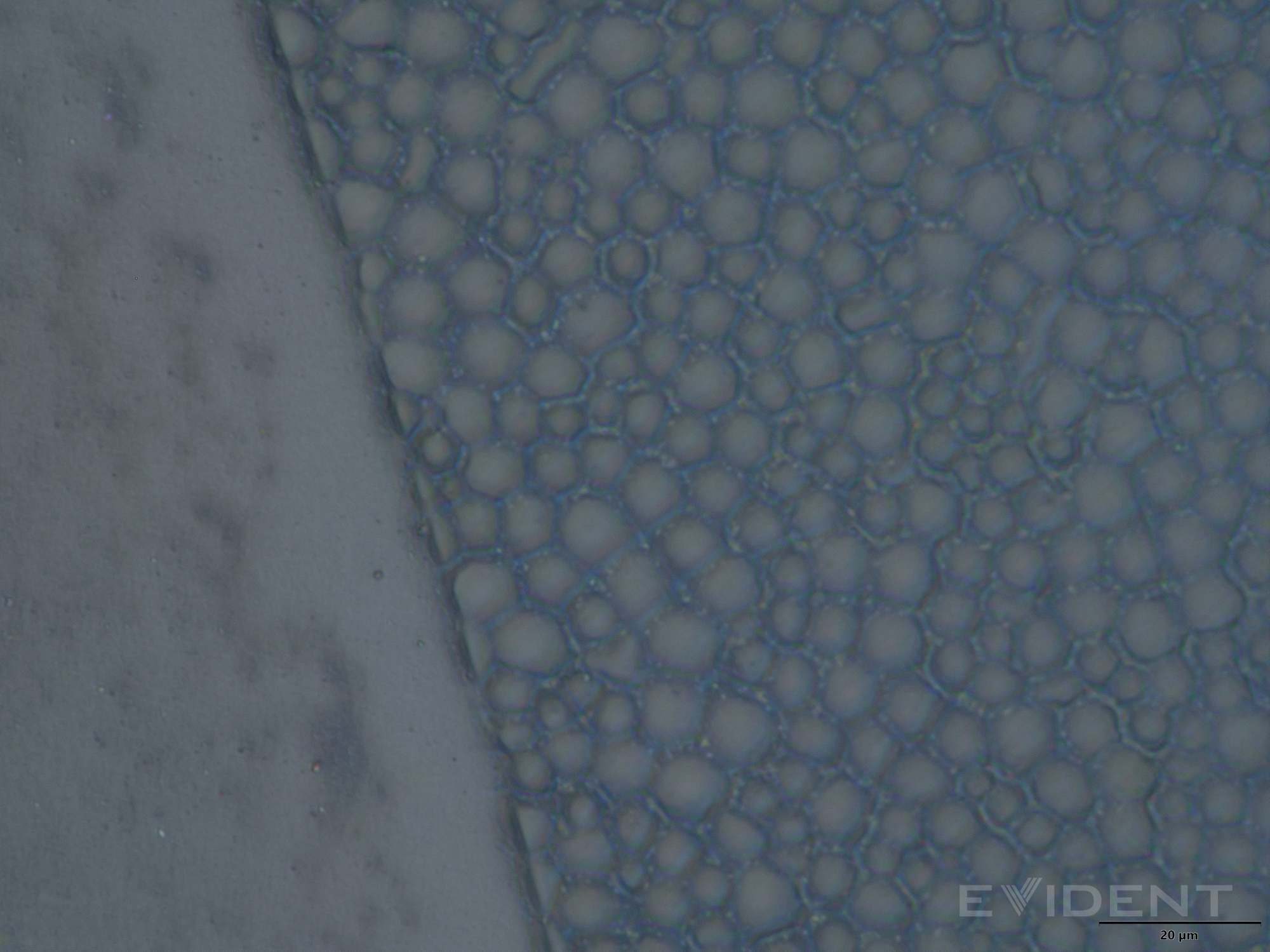
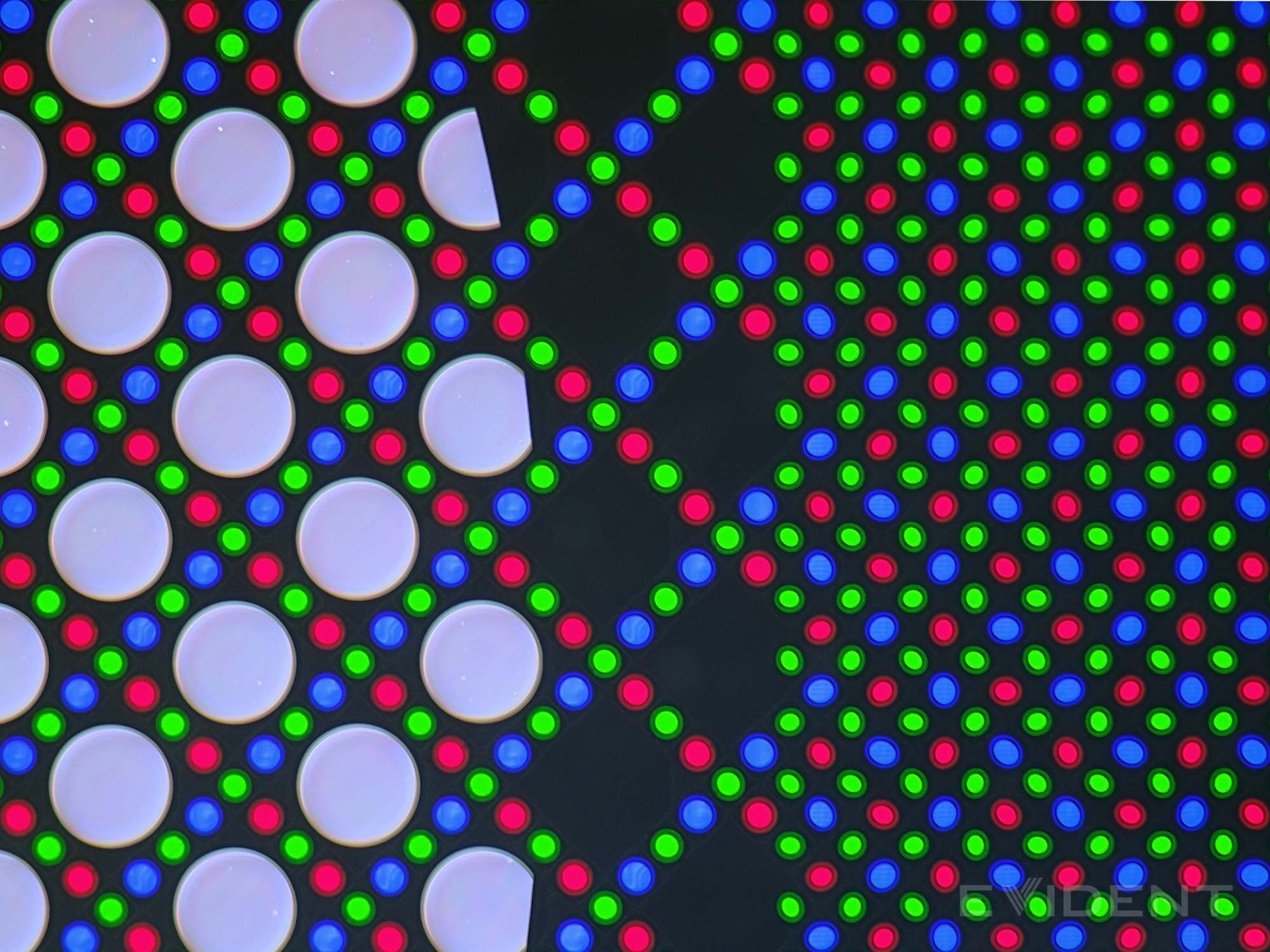
- Nano-Texture Surface Treatment: Under extreme magnification, the inner display’s protective layer reveals a dense array of microscopic, rounded bumps. Apple’s engineering team designed this nano-texture finish to intentionally scatter ambient light, effectively diffusing reflections and rendering the central fold visually obscure under harsh office or outdoor lighting.
- Asymmetrical Subpixel Layout: In a surprising discovery, examination of the organic light-emitting pixels revealed that many subpixels are oval-shaped and oriented along multi-directional axes rather than adhering to a uniform grid. Referencing Apple patents, iFixit notes that this non-standard matrix helps mitigate optical diffraction artifacts, ensuring that light passing through the display’s fold does not create distracting rainbow artifacts or shimmering distortions.
- Under-Display Camera Array: Similar to the technology pioneered in the iPhone 18 Pro’s under-display infrared sensors, the iPhone Duo modifies its pixel grid directly above the inner selfie camera. By increasing the interstitial gaps between pixels and rounding their geometry, Apple permits sufficient ambient light to penetrate the sensor without sacrificing display uniformity in surrounding areas.
Official Statements and Industry Reception
Apple has maintained a measured posture regarding both the early user support tickets and the broader durability discussions surrounding its first folding product. Company representatives have emphasized that the iPhone Duo underwent rigorous stress testing encompassing hundreds of thousands of fold cycles under extreme environmental parameters.
Furthermore, Apple’s decision to design the device with modularity in mind—such as utilizing mechanical clips rather than aggressive industrial adhesives to secure the inner screen bezels and outer display assemblies—signals a structural pivot toward regulatory compliance and long-term serviceability.
Industry analysts view the 5/10 iFixit score not merely as a numerical grade, but as a cultural watershed. For years, foldable devices from Android pioneers were notoriously closed systems, earning near-zero repairability scores due to the extreme risk of tearing fragile plastic OLED panels during disassembly. Apple’s willingness to implement modular bezels, electrical battery adhesives, and serviceable display brackets establishes a new baseline expectation for durability and end-of-life recycling across the entire mobile sector.
Future Outlook: What the iPhone Duo Teardown Portends for Mobile Engineering
The iFixit teardown of the iPhone Duo paints a vivid portrait of an industry caught between breathtaking innovation and unforgiving physical limitations. Building a device that marries the pocketability of a standard smartphone with the sprawling digital canvas of a tablet requires compromises at every layer of the supply chain.
For Apple, the findings validate the immense engineering hurdles overcome to bring the Duo to market. The waterdrop hinge mechanism, the optical wizardry of the nano-texture folding glass, and the thoughtful modular internal architecture demonstrate that Cupertino’s engineering apparatus remains at the vanguard of consumer hardware development.
However, the structural vulnerabilities highlighted near the central hinge support and cable pass-throughs serve as a sobering reminder that foldable physics remain an ongoing engineering battleground. As Apple prepares subsequent hardware revisions and software optimizations to mitigate mechanical stress points, supply chain partners and competitors alike will be closely watching.

If Apple can successfully iron out the mechanical tolerances causing early display fractures—while retaining the admirable repairability ethos highlighted in iFixit’s report—the iPhone Duo will be remembered not just as Apple’s first foldable experiment, but as the device that established the blueprint for the next decade of mobile computing.