Executive Overview
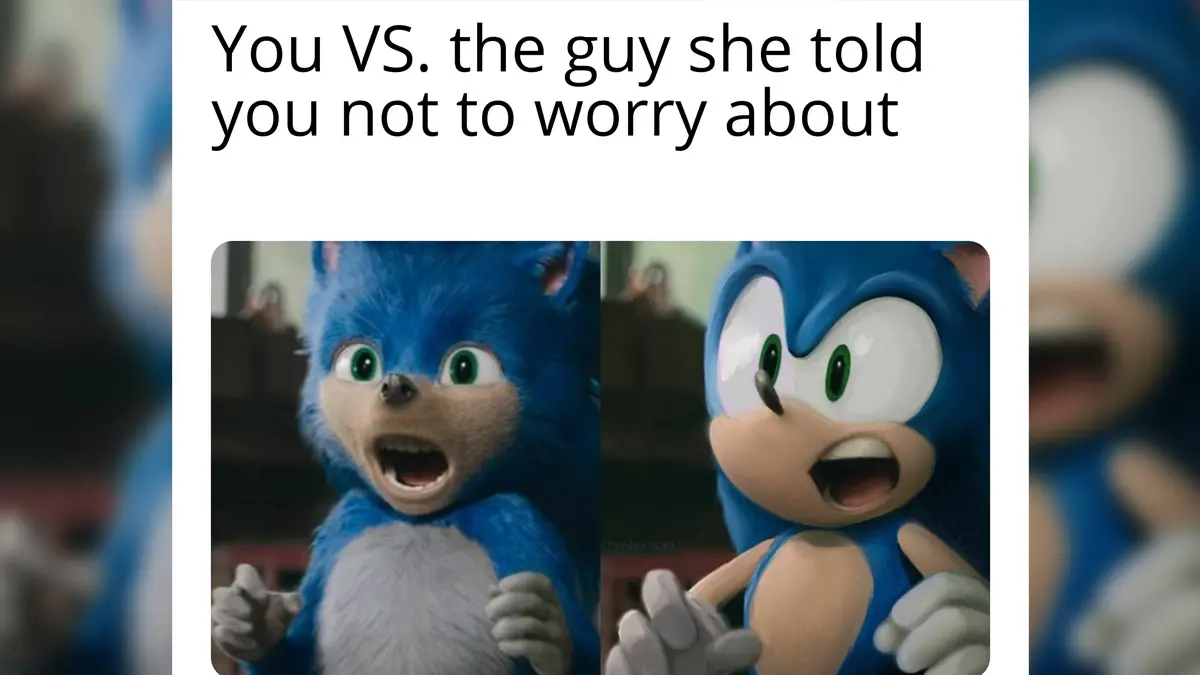
In the sprawling, fast-paced ecosystem of internet culture, few tropes manage to distill universal human anxieties into a single, highly adaptable format quite like the "You vs. The Guy She Told You Not to Worry About" meme. Emerging quietly in the autumn of 2015 before exploding into a dominant viral phenomenon in August 2016, this side-by-side comparison format captured the zeitgeist of modern dating insecurities, hyper-masculinity, and self-deprecating internet humor.
At its core, the meme relies on a simple yet devastatingly effective juxtaposition: on the left side, labeled "You," sits an awkward, plain, disheveled, or objectively inferior subject—be it a cartoon character, a low-resolution photo of an animal, or an unflattering picture of a celebrity. On the right side, labeled "the guy she told you not to worry about," stands the epitome of desirability, whether through exaggerated physical prowess, slick styling, impossible wealth, or absurdist pop-culture status.
While initially rooted in the classic romantic trope of the threatened boyfriend, the internet quickly hijacked the format. It transformed the template into a canvas for absurdism, surrealism, and cultural satire, utilizing everyone from internet icons like Harambe and Guy Fieri to high-profile athletes and niche pop-culture references. Media outlets of the era quickly took notice, dissecting the trend through lenses ranging from lighthearted internet commentary to deeper psychological explorations of "fragile masculinity as a meme." This comprehensive retrospective examines the origins, trajectory, cultural resonance, and enduring legacy of one of 2016’s defining internet sensations.
Detailed Chronology
The Genesis: October 2015
Long before algorithms and corporate social media teams weaponized self-deprecating humor, the foundational blueprint of the meme was established on a relatively quiet corner of Twitter. On October 25, 2015, user @AmBlujay published what is widely recognized as the earliest known iteration of the format.
While the initial post lacked the explosive, multi-platform acceleration that would define the trend nearly a year later, it planted the essential structural seeds. By pairing an everyday, unimpressive subject against a superior counterpart under the thinly veiled guise of romantic paranoia, @AmBlujay inadvertently authored a template for a generation of digital satirists. Over the course of the following months, the post quietly accumulated thousands of retweets and likes—a respectable tally for the era, but merely a precursor to the tidal wave that loomed on the horizon.
The Incubation Period: Late 2015 – Mid-2016
In the months immediately following @AmBlujay’s post, the format did not immediately dominate timelines. Instead, it entered an incubation phase. Copied selectively by early adopters and memetic tinkerers, the joke format lingered on the peripheries of Twitter and meme-aggregating forums.
Users began experimenting with the formula, testing the comedic boundaries of what constituted "you" versus "the other guy." During this period, the meme served as a localized inside joke among certain digital subcultures. However, the inherent relatability of romantic anxiety—coupled with the infinite malleability of the image-macro format—guaranteed that it was only a matter of time before the concept reached critical mass.
The August 2016 Explosion
The true inflection point for the phenomenon arrived in the first week of August 2016. On August 7, 2016, the format experienced a massive, synchronized surge across Twitter, transforming overnight from a niche template into an inescapable viral fad.
Users began flooding the platform with custom iterations incorporating iconic pop-culture references, historical figures, and internet royalty. Memetic heavyweights such as Harambe the Gorilla—who dominated the digital landscape that summer—and culinary personality Guy Fieri were rapidly pressed into service as the idealized "other guy."
The sheer volume and velocity of the trend forced platform curators to act. Within days, "You vs. the guy she told you not to worry about" was officially anointed as a "Twitter Moment," cementing its status as a certified cultural phenomenon. Publications specializing in internet culture, most notably The Daily Dot, began publishing deep dives into the trend by August 9, analyzing how millions of internet users were collectively externalizing their insecurities through humor.

Supporting Context & Metrics
Quantitative Impact and Engagement
By modern standards, the metric milestones achieved by the early iterations of the meme might appear modest, yet in the context of 2016 social media architecture, they represented significant digital velocity. The foundational October 2015 post by @AmBlujay steadily climbed to nearly 4,000 retweets and over 1,550 likes by August 2016, buoyed entirely by the late-stage revival of the format it helped spawn.
When the trend peaked during the first week of August 2016, individual tweets utilizing the side-by-side comparison format routinely pulled in tens of thousands of engagements. Hashtag aggregations and search impressions spiked exponentially, driven by the participation of verified accounts, pop-culture brands, and everyday users alike.
The Evolution of Content Categories
As the meme scaled, the scope of its visual comparisons expanded far beyond traditional romantic paranoias, branching into distinct sub-genres of humor:
- Pop Culture & Celebrity Parodies: Creators pitted unexpected celebrity lookalikes or contrasting artistic personas against one another. A classic example paired the avant-garde art icon Tilda Swinton on the right against Radiohead frontman Thom Yorke on the left, playing on specific aesthetic contrasts.
- Athletic Rivalries: Sports fans utilized the template to pit athletes against their positional rivals or to contrast an athlete’s unpolished rookie appearance with their prime, highly polished counterpart—such as Stephen Curry compared to Kyrie Irving.
- Absurdist and Metamodern Humor: The format quickly transcended human subjects altogether. Cartoon characters (such as swamp frogs contrasted against high-fashion iterations of Kermit the Frog) and internet meme icons (like Harambe compared to a sponge-based facsimile) pushed the joke into pure surrealism.
- Self-Referential Variations: Prominent internet figures and WWE personalities, such as Vince McMahon contrasted with an exaggerated, ultra-buff version of himself, leaned into the comedy of body dysmorphia and hyper-masculine posturing.
Official Statements & Journalistic Analysis
The rapid mainstream adoption of the meme did not escape the attention of digital sociologists and tech journalists, who viewed the phenomenon as a revealing mirror of contemporary digital masculinity.
On August 9, 2016, The Daily Dot published an influential analysis of the trend, framing it explicitly through the lens of modern gender roles and internet psychology. The publication famously diagnosed the meme as an manifestation of "fragile masculinity as a meme."
According to cultural critics of the time, the genius—and underlying psychological utility—of the meme lay in its defensive irony. By mocking one’s own perceived physical, social, or financial inadequacies through extreme exaggeration, male internet users could preemptively disarm real-world insecurities. Instead of suffering silently from the anxieties associated with romantic competition, millions of users weaponized self-deprecation, turning their collective vulnerabilities into a shared digital joke.
Furthermore, media analysts noted that the meme democratized anxiety. While the premise originated from a stereotypically heterosexual male panic over romantic inadequacy, the internet quickly subverted the gender dynamics. Women, non-binary users, and queer creators rapidly adopted the format to mock everything from consumer choices to pop-culture tropes, stripping away the toxic undertones of the original premise and replacing them with universal, relatable absurdity.
Future Outlook & Enduring Legacy
While the frenetic pace of internet culture ensures that individual viral formats eventually fade from the front lines of social media feeds, the structural DNA of the "You vs. The Guy She Told You Not to Worry About" meme left a permanent mark on digital discourse.
The format effectively codified the side-by-side comparison as a master-template for internet humor. Long after the specific August 2016 Twitter Moment dissolved into the archives, the structural mechanics of the joke—contrasting a baseline, flawed reality against an absurdly elevated ideal—survived. Modern iterations of "Expectation vs. Reality" memes, corporate marketing comparisons, and political satirical formats all trace their immediate lineage back to the groundwork laid by @AmBlujay and the millions of users who riffed on the theme in the summer of 2016.
Ultimately, the meme serves as a fascinating historical artifact of mid-2010s internet culture. It demonstrated the web’s unique ability to take a deeply uncomfortable, intensely personal human emotion—fear of inadequacy in romance—and transmute it, through collective collaboration and absurdist humor, into a global laughing matter. In doing so, it proved that no matter how insecure we might feel about the "other guy," we are all more than willing to laugh at ourselves along the way.