Executive Overview
The modern soundscape is undergoing a profound and chaotic transformation. Thanks to the rapid democratization of powerful generative artificial intelligence tools, the once-unassailable boundary between a real performance and a synthetic simulation has evaporated. Across platforms like YouTube, Instagram, and TikTok, music lovers are increasingly stumbling upon tracks where their favorite artists appear to be singing or rapping entirely new material—often without their knowledge, consent, or compensation.
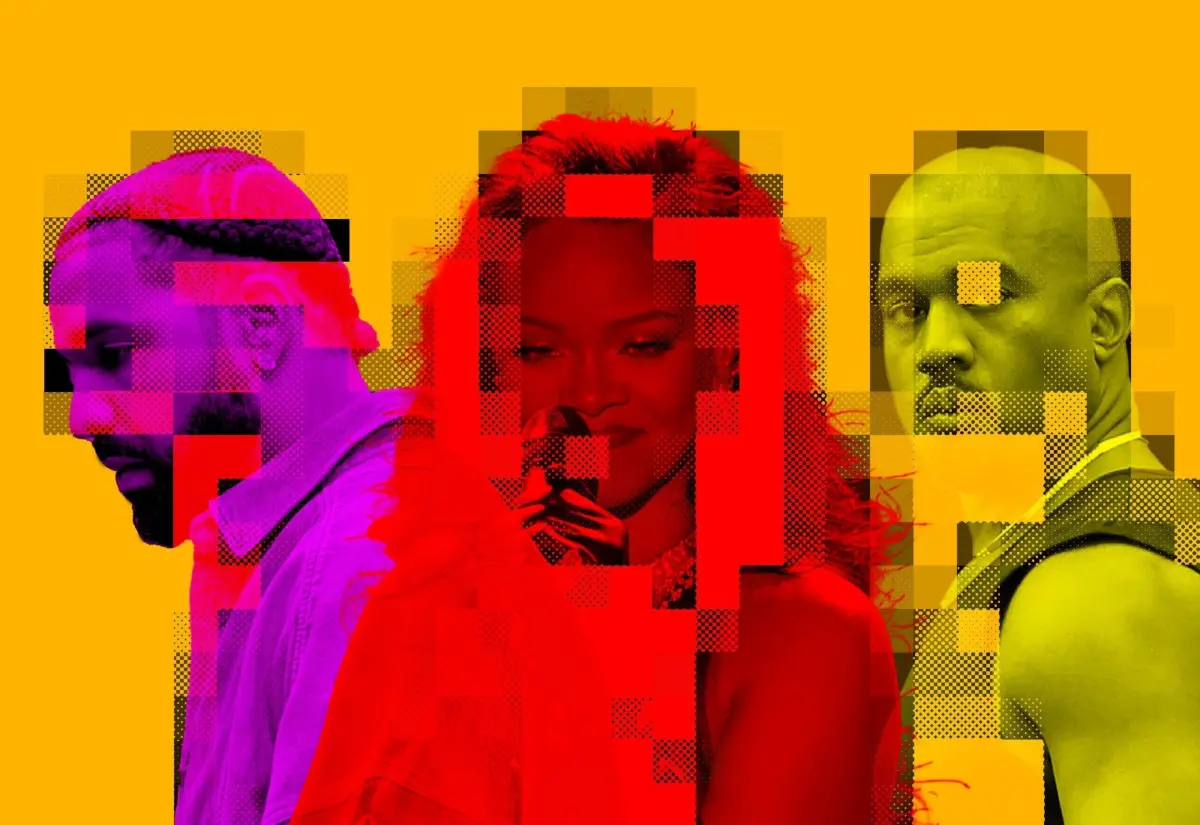
From superstar DJs premiering unreleased AI-generated Eminem vocals live in concert to viral sensations like "Heart on My Sleeve"—a hyper-realistic collaboration between simulated versions of Drake and The Weeknd—synthetic audio has crashed into the mainstream. While fans revel in the novelty of hearing Kanye West cover indie-pop anthems or Freddie Mercury lead an AI choir, the upper echelons of the music industry are sounding the alarm. Major record labels, legal scholars, and artists are grappling with an existential threat that challenges the foundational definitions of copyright, likeness, and intellectual property.
As technology outpaces legislation, the music business stands at a dangerous and thrilling crossroads. This report investigates the technological boom driving the AI music phenomenon, the passionate hobbyist communities fueling its growth, the heavy-handed corporate pushback, and the murky legal vacuum that threatens to reshape the future of global entertainment.
Detailed Chronology: From Novelty Experiments to a Cultural Phenomenon
The rise of generative AI in music did not happen overnight, but its trajectory over the last several months has been meteoric, shifting from a niche technical exercise into a dominant cultural talking point.
Early 2023: The Flashpoint of Public Debut
The friction between artificial intelligence and the traditional music establishment intensified sharply in early 2023. In February, superstar DJ and producer David Guetta electrified a live concert audience by dropping a track featuring an AI-generated vocal performance modeled directly after Eminem. Guetta’s stunt was designed as a technological proof-of-concept, but it underscored an uncomfortable reality: creators could now clone the distinct cadence, tone, and emotional delivery of iconic musicians with chilling accuracy.
Around the same time, French hip-hop act AllttA released "Savages," a track incorporating synthetic vocals modeled after Jay-Z. Reviewers and culture critics marveled at how the familiar, weathered rasp of Jay-Z added an ineffably compelling weight to the composition, even though the artist himself had never stepped near a microphone for the project.
The Spring Wave: Virality and Friction
As user-friendly open-source voice conversion models proliferated, the floodgates opened. A wave of faux cover songs and original tracks created by relative unknowns began flooding social media algorithms.
The tipping point arrived with "Heart on My Sleeve," a meticulously produced track that tricked millions of listeners into believing Drake and The Weeknd had dropped a surprise collaboration. The song went viral across TikTok and streaming platforms before industry insiders began whispering that the track might be a sophisticated marketing stunt cooked up by a technology startup.
While fans celebrated the ingenuity, artists grew increasingly hostile. Drake publicly denounced an AI-generated cover of him rapping Ice Spice’s hit "Munch (Feelin’ U)," declaring on Instagram that it was "the final straw." Meanwhile, artists like Rihanna became unwitting vessels for AI creators, having their digital likenesses mapped onto covers of songs originally performed by Beyoncé, Katy Perry, and Maroon 5.
Corporate Retaliation and Copyright Crackdowns
Faced with a rising tide of unauthorized digital impersonations, the music industry mobilized. Universal Music Group (UMG)—home to major powerhouses like Drake and Rihanna—reportedly reached out to major streaming distributors, including Spotify and Apple Music, demanding proactive measures to block AI developers from scraping copyrighted material to train their models.
Simultaneously, copyright holders began issuing aggressive takedown notices across YouTube and SoundCloud, wiping out popular AI music channels overnight. Yet, despite these legal roadblocks, the decentralized nature of the technology ensures that the cat-and-mouse game between creators and corporations is only just beginning.
Supporting Context & Metrics: The Technology and Communities Fueling the Boom
To understand how easily pop stars can be cloned, one must look beneath the hood of the tools driving the movement. The phenomenon is largely anchored by open-source projects and hyper-engaged internet subcultures.
The Engine: So-Vits-SVC and Open-Source Cloning
At the heart of the current amateur AI music boom is So-Vits-SVC (Soft-Voice-to-Voice Singing Voice Conversion), an open-source machine learning framework hosted on platforms like GitHub. The software has captured the imagination of digital creators worldwide, boasting dedicated communities and viral hashtags on TikTok that have accumulated millions of views.
So-Vits-SVC allows users to input isolated vocal tracks (acapellas) of a target artist, feeding the system enough raw audio data to map out the unique sonic fingerprint of their voice. Once trained—a process that can take anywhere from a few hours to a few days—the AI model can take any vocal recording (whether sung by an amateur hobbyist or generated via text-to-speech) and instantly skin it with the acoustic qualities of the targeted superstar.
Inside the Fan Communities
The application of these tools is largely driven by dedicated online subcultures operating on platforms like Discord and Reddit.
Take "YeezyBeaver," a 22-year-old creator from Oklahoma whose YouTube channel became a viral destination for hearing Kanye West ("Ye") perform an eclectic array of pop and rock covers. His most popular creation—a surprisingly earnest and charming cover of the Plain White T’s hit "Hey There Delilah" sung in Kanye’s unmistakable autotuned timbre—was born from a simple link shared on a Ye-focused Discord fan server containing a pre-trained voice model and step-by-step instructions.
Similarly, an American college student operating under the online pseudonym "pieawsome" became deeply involved in the internet’s "Kanye unreleased community"—a network dedicated to collecting and cataloging the hip-hop mogul’s archival, unfinished material.
"I realized we had enough Kanye material where we could probably make an AI model out of it to finish some of the songs," pieawsome explained.
After chopping up acapella segments from leaked, unreleased audio and training a So-Vits-SVC model, pieawsome shared his creation on Discord. Within days, the model was circulating wildly through underground networks, eventually culminating in tracks like a synthetic Ye cover of Ice Spice’s "Munch," which even caught the approving eye of superstar Travis Scott on Instagram.
Comedy, Anime, and the Absurdist Frontier
For other young creators, the medium serves as a canvas for surrealist humor and cross-genre mashups. Jered Chavez, a 19-year-old student at the University of South Florida, made waves on Instagram by publishing a mind-bending video featuring simulated versions of Drake, Kanye West, and Kendrick Lamar singing "Fukashigi no Karte," the closing theme song to the cult-favorite anime series Rascal Does Not Dream of Bunny Girl Senpai.
Chavez noted that leaning into comedy is an intentional creative choice. By pushing the boundaries of absurdity, he hopes to set his content apart while navigating the murky ethical tightrope of utilizing someone else’s likeness without explicit permission.
Official Statements and Legal Perspectives
As generative AI continues to blur the lines between homage, fanfiction, and outright theft, legal experts and industry leaders are sharply divided on how to classify—and police—these new creations.
The Hobbyist Defense: Fanfiction and Modding
Many amateur creators view their work through a lens of benign participation, comparing AI voice modeling to long-standing cultural traditions of creative remixing.
"It’s our version of that," pieawsome argued, drawing parallels to video game modding or writing derivative fanfiction based on a bestselling book series. "That may be a good thing. It may be a bad thing. I don’t know. But it’s kind of an inevitable thing that was going to happen."
Jered Chavez echoed these sentiments regarding personal accountability, emphasizing that because the legal framework is so nascent, creators must rely on their own internal moral compass. "The responsibility lies in the judgment of the people that are making [AI-generated music]," Chavez said. "I try to use my best judgment. This is kind of new territory for everyone."
The Industry Alarm: Identity Theft and Existential Threats
Conversely, traditional music executives and legal analysts view the technology as a clear and present danger to the livelihoods of working artists.
Jonathan Bailey, former chief technology officer of music technology firm Soundwide, offered a stark assessment of the legal and moral implications:
"I think you can make a persuasive argument that using AI to reanimate Jay-Z’s voice to have him rap or sing something he never created is kind of a form of identity theft."
Financial analysts share this anxiety. A recent report by a prominent market analyst for BNP Paribas Exane labeled generative AI music an "existential threat" to the traditional business models of major record labels, warning that unmonitored voice cloning could devalue master recordings and disrupt standard royalty streams.
Legal Limbo: Why Lawyers Are Holding Their Fire
Despite the high stakes, navigating the courtroom remains treacherous due to a complete lack of established legal precedent. High-profile entertainment attorneys—such as Donald Passman of Gang, Tyre, Ramer, Brown & Passman, Inc., who has represented legendary icons like Adele and Taylor Swift—have largely declined to comment publicly on the matter. Passman noted that the technology is "way too new," expressing reluctance to take definitive public stances that might conflict with positions he and other litigators will inevitably be forced to take in courtrooms in the near future.
Future Outlook: Navigating the Brave New World of Synthetic Sound
The genie cannot be put back into the bottle. The open-source nature of voice-conversion software ensures that generative AI tools will remain accessible to anyone with an internet connection and a modest computer setup. Consequently, the music industry is forced to evolve rapidly to survive the synthetic revolution.
The Battle for Digital Governance
In the coming years, we can expect a dual-pronged approach from major entertainment conglomerates:
- Aggressive Litigation: Record labels will likely test existing right-of-publicity laws, trademark statutes, and copyright protections to sue commercial developers of unauthorized voice-cloning software, setting landmark legal precedents.
- Technological Countermeasures: Streaming platforms and digital distributors will invest heavily in audio-watermarking and automated fingerprint-scanning technology designed to intercept and purge AI-generated soundalikes before they can be monetized or widely distributed.
The Question of Posthumous Artistry
One of the most ethically fraught frontiers of generative AI music is the recreation of deceased legends. While living artists can voice their displeasure—as Drake did regarding the Ice Spice cover—artists who have passed away cannot grant or withhold consent.
While platforms like BohemianRhapsod.ai allow fans to conduct choirs of AI-generated Freddie Mercury vocals through Queen’s most famous hits, it raises deeply unsettling questions about artistic legacy. Without living stewards to guide how an artist’s digital ghost is utilized, the industry risks descending into a chaotic free-for-all where dead musicians are endlessly conscripted into performing posthumous commercial tracks of dubious quality and intent.
Conclusion: A Paradigm Shift in Creativity
Ultimately, the generative AI music boom represents an irreversible paradigm shift. Whether viewed as an exciting democratization of music creation or a terrifying vector for identity theft and copyright erosion, synthetic audio is here to stay.
As fans continue to embrace the playful ambiguity of hearing their favorite stars cover the impossible, the legal and creative institutions of the music world must race to establish a sustainable framework. Until then, artists, hobbyists, and major labels alike will continue navigating an uncharted wilderness where the only rule is that the sound of music will never be the same again.