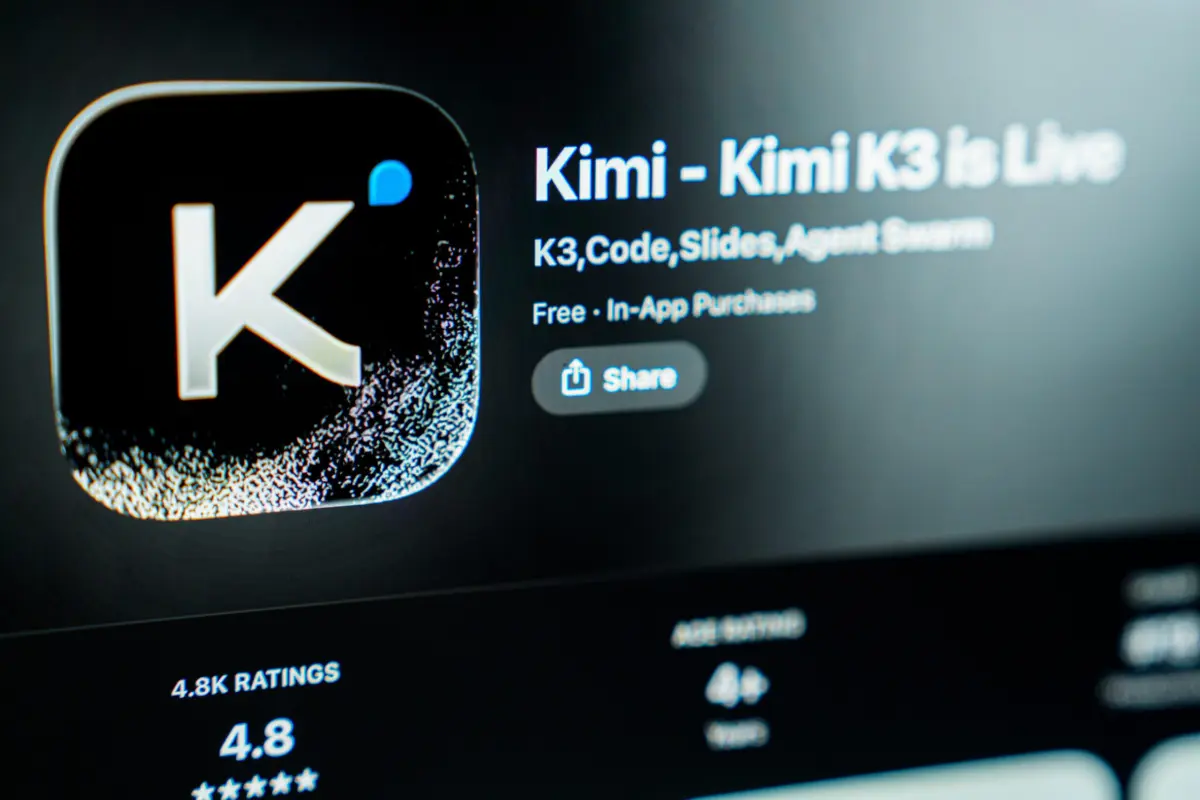
Executive Overview
In an era defined by hyper-accelerated artificial intelligence development and intense geopolitical competition over algorithmic dominance, Beijing-based Moonshot AI has emerged as one of the world’s most aggressive commercial contenders. According to reports published on September 11, 2026, the prominent Chinese artificial intelligence laboratory has established an ambitious financial benchmark: achieving an annualized revenue run rate of $2 billion by the conclusion of 2026.
This target represents a sharp doubling of the company’s estimated $1 billion annualized revenue run rate recorded in August 2026. Driven largely by the summer release of its flagship open-weight model, Kimi K3, Moonshot AI is endeavoring to prove that high-performing open-weight architecture can be converted into massive commercial scale—even while operating on significantly lower profit margins than its Western, closed-weight counterparts.
However, Moonshot’s remarkable fiscal trajectory is unfolding alongside profound ethical and regulatory questions. Just days before its financial projections surfaced, San Francisco-based Anthropic published a damaging threat intelligence report alleging that Moonshot executed a systematic, illegal distillation campaign. Anthropic claims Moonshot routed hundreds of thousands of user queries directly into Anthropic’s top-tier Claude Opus model, surreptitiously scraping tens of millions of responses to train its own proprietary and open-weight systems.
As Moonshot attempts to bridge the gap between its current revenue baseline and its $2 billion target, the company stands at the intersection of open-source monetization, intense international scrutiny, and the volatile economics of frontier AI development.
Detailed Chronology: The Rise, Monetization, and Allegations Surrounding Moonshot AI
+-----------------------------------------------------------------------------------+
|                                  2026 TIMELINE                                    |
+-----------------------------------------------------------------------------------+
| SUMMER 2026           | Moonshot AI releases the open-weight Kimi K3 model,      |
|                       | triggering a surge in global developer adoption.          |
+-----------------------+-----------------------------------------------------------+
| MID-AUGUST 2026       | • OpenAI hits a $40B annualized run rate ahead of IPO.    |
|                       | • Anthropic reaches a $65B annualized revenue run rate.   |
|                       | • Moonshot AI records a $1B annualized revenue run rate.  |
+-----------------------+-----------------------------------------------------------+
| EARLY SEPTEMBER 2026  | Anthropic releases a Threat Intelligence Report accusing  |
|                       | Moonshot of scraping 23M+ Claude Opus responses.          |
+-----------------------+-----------------------------------------------------------+
| SEPTEMBER 11, 2026    | Bloomberg reports Moonshot AI's formal target of $2B in   |
|                       | annualized revenue by the end of 2026.                    |
+-----------------------------------------------------------------------------------+
The Summer of K3 Deployment
During the summer of 2026, Moonshot AI launched its highly anticipated Kimi K3 architecture. By opting for an open-weight release mechanism, Moonshot allowed global developers, enterprise integrators, and third-party hosting platforms to download, inspect, and host the model weights. The launch immediately cemented Moonshot’s status as China’s premier open-weight challenger to Western AI dominance.
August 2026: Financial Milestones and Run-Rate Benchmarks
By August 2026, the global AI landscape witnessed unprecedented revenue milestones across major frontier labs:
- Anthropic reported an extraordinary annualized revenue run rate of $65 billion, fueled by enterprise adoption of its Claude ecosystem.
- OpenAI reached a $40 billion annualized run rate as it accelerated preparations for an initial public offering (IPO).
- Moonshot AI demonstrated its own commercial traction, crossing the $1 billion annualized revenue mark, backed by strong developer uptake of K3-derived services and hosted API infrastructure.
Early September 2026: Anthropic’s Threat Intelligence Findings
The narrative surrounding Moonshot took a critical turn when Anthropic published its September 2026 Threat Intelligence Report. The disclosure detailed a covert operational pipeline in which Moonshot allegedly siphoned outputs from Anthropic’s proprietary Claude Opus model to train Kimi models, raising questions regarding the authenticity of K3’s underlying technical breakthroughs.
September 11, 2026: The $2 Billion Ambition Realized
On September 11, 2026, financial reports confirmed that Moonshot AI had formally set its sights on reaching a $2 billion annualized run rate by year-end. Despite a slight cooling in raw usage metrics from its peak summer launch, the target signaled internal confidence in Moonshot’s enterprise monetization strategy and global cloud delivery pipelines.
Supporting Context & Metrics: Economics of Open-Weight vs. Closed-Weight Models
+----------------------------------------------------------------------------------+
|                  COMPARATIVE ANNUALIZED REVENUE RUN RATES (2026)                  |
+----------------------------------------------------------------------------------+
| Anthropic                                                        $65 Billion     |
| OpenAI                                                           $40 Billion     |
| Moonshot AI (End-of-Year 2026 Target)               $2 Billion                   |
| Moonshot AI (August 2026 Baseline)                  $1 Billion                   |
+----------------------------------------------------------------------------------+
Token Generation Mechanics and Cloud Volume
To understand how Moonshot AI plans to double its annualized revenue from $1 billion to $2 billion in a matter of months, one must analyze its volume throughput across decentralized hosting providers.
Data aggregated by OpenRouter—a prominent third-party platform that routes LLM requests across diverse providers—indicates that Kimi K3 variants routinely generate up to 300 billion tokens per day.
Daily Token Throughput (OpenRouter Peak Data):
[████████████████████████████████████████] 300 Billion Tokens / Day
While token generation volume on third-party aggregators has experienced a modest contraction following the initial launch hype, sustained demand of this magnitude reflects deep integration into enterprise workflows, automated agent frameworks, and third-party application backends.
The Profitability Paradox: Open-Weight vs. Closed-Weight Margins
Monetizing open-weight models presents fundamental structural challenges that closed-weight vendors do not face:

+---------------------------------------+---------------------------------------+
|          OPEN-WEIGHT MODELS           |         CLOSED-WEIGHT MODELS          |
|             (e.g., Kimi K3)           |      (e.g., Claude, ChatGPT)          |
+---------------------------------------+---------------------------------------+
| • Model weights are publicly accessible| • Proprietary weights locked behind   |
|   and self-hostable.                  |   closed APIs.                        |
| • Low barrier to competition from     | • Full monopoly pricing power over    |
|   third-party cloud providers.        |   inference access.                   |
| • Structurally lower gross margins    | • Premium pricing yields high gross   |
|   on API inference services.          |   margins.                            |
| • Revenue heavily reliant on volume,  | • Monetization driven by subscription |
|   fine-tuning services, and scale.    |   tiers and enterprise lock-in.       |
+---------------------------------------+---------------------------------------+
Because Moonshot makes K3’s weights available to the broader public, developer teams can elect to host the model on independent infrastructure, cloud environments, or private servers. Consequently, Moonshot cannot command the premium API pricing structures leveraged by closed-weight creators like Anthropic ($65 billion run rate) or OpenAI ($40 billion run rate).
To generate $2 billion in annualized revenue under an open-weight model, Moonshot relies on massive enterprise inference volume, specialized hosting services, custom fine-tuning environments, and integrated consumer applications like the Kimi mobile client. The $2 billion target demonstrates that despite squeezed gross margins, open-weight artificial intelligence can generate commercial scale.
Official Statements & The Anthropic Distillation Controversy
The primary friction point threatening Moonshot’s international expansion centers on its model development methodology. In September 2026, Anthropic published an explicit security and threat intelligence brief directly accusing Moonshot AI of engaging in unfair competitive practices and industrial-scale model distillation.
The Mechanism of Distillation
Model distillation is a technique wherein a smaller or secondary AI system is trained on the synthetic text outputs produced by a larger, more capable target model. While distillation is common in controlled research settings using proprietary internal data, using a competitor’s closed API to extract model capabilities at scale routinely violates service agreements and intellectual property norms.
+-----------------------------------------------------------------------------------+
|                       ALLEGED DISTILLATION PIPELINE MECHANISM                     |
+-----------------------------------------------------------------------------------+
|                                                                                   |
|  [ Kimi User Query ]                                                              |
|          │                                                                        |
|          ▼                                                                        |
|  [ Moonshot Proxy Architecture ] ───► (Rerouted ~300,000 Queries)                |
|                                                  │                                |
|                                                  ▼                                |
|                                       [ Anthropic Claude Opus ]                   |
|                                                  │                                |
|                                                  ▼                                |
|  [ Kimi End User Received Output ] ◄─── (Scraped 23M+ Responses)                  |
|          │                                                                        |
|          └────────────────► [ Logged into Moonshot Training Corpus ]             |
|                                                                                   |
+-----------------------------------------------------------------------------------+
Anthropic’s Key Allegations
According to Anthropic’s formal disclosures:
- Proxy Rerouting: Moonshot executed an automated, hidden query-routing scheme that intercepted user requests submitted to the Kimi application and passed nearly 300,000 requests directly to Claude Opus.
- Real-Time Proxying: In thousands of instances, Moonshot essentially functioned as a middleman, serving Anthropic’s Claude Opus responses directly back to Kimi users as if the output were generated natively by Moonshot’s own backend.
- Data Harvesting: Anthropic asserted that Moonshot systematically recorded, curated, and ingested more than 23 million individual model responses from Anthropic’s systems into its primary training dataset for Kimi models.
"Anthropic’s September 2026 Threat Intelligence Report directly linked a long-running, multi-stage distillation campaign back to infrastructure operated by Moonshot AI, documenting the unauthorized ingestion of over 23 million responses from Claude Opus."
Neither Moonshot AI nor its executive leadership team issued an immediate public retraction or concession following Anthropic’s report, but the revelations have reignited global debates surrounding the provenance of frontier models emerging from open-weight ecosystem labs.
Future Outlook: Industry Impact and Unresolved Questions
As Moonshot AI navigates the final quarter of 2026, its attempt to secure $2 billion in annualized revenue will serve as a bellwether for the global AI ecosystem. Several operational, economic, and regulatory factors will dictate whether the firm can sustain its momentum.
+----------------------------------------------------------------------------------+
|                         KEY DRIVERS & CHALLENGES FOR MOONSHOT                    |
+----------------------------------------------------------------------------------+
| COMMERCIAL DRIVERS                                RISKS & BOTTLENECK FACTORS     |
+-------------------------------------------------+--------------------------------+
| • High K3 adoption (300B daily tokens).         | • Structurally lower margins    |
| • Expanding enterprise cloud integrations.      |   on open-weight architecture. |
| • Scaling consumer user base via Kimi app.      | • Geopolitical headwinds and   |
| • Strong domestic market monetization.          |   cross-border IP scrutiny.    |
|                                                 | • Potential API access bans by |
|                                                 |   Western frontier providers.  |
+-------------------------------------------------+--------------------------------+
1. The Financial Feasibility of Doubling Down
Moving from a $1 billion run rate in August to a $2 billion run rate by December requires sustained commercial execution. Moonshot must convert its open-weight global user base into paying API subscribers, enterprise custom-model clients, and enterprise infrastructure partners. If token generation volumes continue to stabilize or decline slightly from summer peaks, Moonshot will have to increase monetization per token to hit its fiscal target.
2. The Open-Weight Business Model Under Fire
Moonshot’s revenue trajectory provides an empirical counterpoint to the assertion that only proprietary, closed-weight models can generate multi-billion-dollar businesses. However, if open-weight models suffer from structural margin compression, Moonshot may need to continually innovate at the infrastructure level to keep computational inference costs below API platform pricing.
3. International Trust, Compliance, and Geopolitics
The allegations made by Anthropic complicate Moonshot’s global aspirations. As Western enterprise clients audit their supply chains for regulatory compliance and IP protection, evidence of unauthorized data harvesting could limit Moonshot’s market expansion outside of mainland China and emerging non-aligned markets. Furthermore, major frontier providers may implement more aggressive algorithmic rate-limiting, proxy detection, and defensive filtering to prevent similar distillation efforts in the future.
Conclusion
Moonshot AI’s target of $2 billion in annualized revenue highlights the rapid commercial scale achieved by China’s leading AI developers. However, the dual narratives of Moonshot’s fiscal growth and Anthropic’s model distillation allegations underscore a broader reality in the current AI landscape: the boundary between technological innovation and competitive intelligence remains razor-thin, highly contentious, and central to the global battle for artificial intelligence leadership.