Executive Overview
Apple is quietly laying the groundwork for a major expansion into the gaming hardware sector. According to recent software code discoveries and corroborating reports from industry insiders, the technology titan is actively developing its own proprietary line of game controllers tailored for the iPhone, iPad, Mac, and Apple TV ecosystem. While Apple has long served as a curated storefront for third-party accessories—such as the popular Backbone One and SteelSeries Nimbus+—the company is now preparing to capture a direct stake in the lucrative mobile and console-adjacent gamepad market.
Recent deep dives into macOS beta code revealed references to two distinct unreleased controller hardware identifiers: T6502 and T1057. Alongside these model numbers, the codebase unveiled advanced feature sets including directional pads (D-pads), thumbsticks, high-definition haptic feedback motors, and integrated motion-tracking capabilities via accelerometers and gyroscopes.
Industry analysts, most notably Bloomberg’s Mark Gurman, suggest that these upcoming accessories may ultimately debut under Apple’s Beats subsidiary. Operating under the Beats umbrella would allow Apple to target competitive price points using accessible yet durable materials, perfectly positioning the hardware to capture mainstream consumers. This strategic initiative arrives at a pivotal juncture for the company. As Apple silicon continues to blur the lines between mobile processors and desktop-class hardware, high-end AAA titles are increasingly finding their way to iOS, iPadOS, and macOS. By introducing a first-party controller ecosystem, Apple aims to eliminate the friction holding back mobile gaming, transforming its hardware lineup into a unified, formidable competitor in the modern interactive entertainment landscape.
Detailed Chronology: From Code Snippets to Industry Leak
The trajectory of Apple’s secretive gaming hardware initiative can be traced through a series of subtle software breadcrumbs, developer discoveries, and insider leaks that have gradually exposed Cupertino’s hardware ambitions.
The Early Rumors and MFi Precedents
For years, Apple’s strategy regarding gaming peripherals relied almost exclusively on software standards rather than proprietary hardware. Through the Made for iPhone (MFi) certification program—and later through native support for Sony PlayStation DualShock and Microsoft Xbox Wireless Controllers—Apple established robust cross-compatibility. Users could pair console controllers effortlessly via Bluetooth to iPhones, iPads, Macs, and Apple TV units.
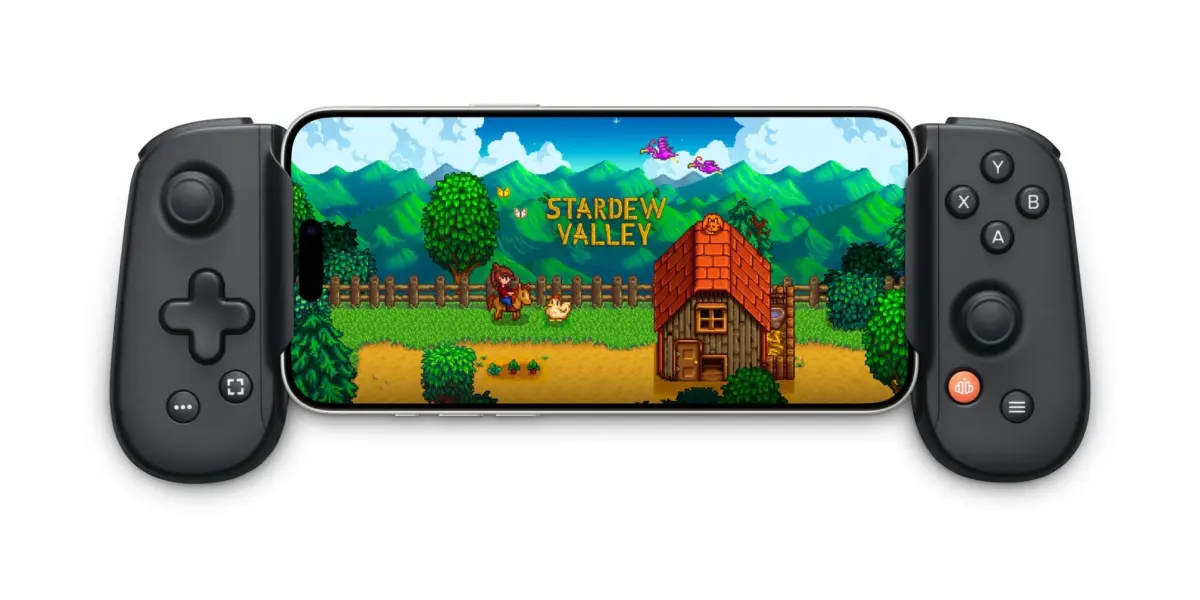
However, the portable form factor remained underserved by Apple itself. Third-party manufacturers stepped in to fill the void. Devices like the Backbone One and Razer Kishi transformed iPhones into portable Nintendo Switch-style handhelds, proving that a massive appetite existed for dedicated mobile gaming hardware within the iOS ecosystem. Despite the success of these third-party options, Apple retained no direct control over the hardware experience, missing out on crucial profit margins and the ability to tightly integrate physical controls with proprietary software features.
The macOS Beta Code Discovery
The first concrete evidence that Apple was moving beyond a purely software-centric approach emerged from developer communities dissecting early macOS beta software packages. Within the operating system’s internal frameworks, sleuths uncovered undocumented device profiles and strings referencing dedicated input peripherals.

These references pointed directly to two distinct unreleased hardware configurations designated by the internal model identifiers T6502 and T1057. The presence of two separate model numbers strongly suggests that Apple is either working on two distinct form factors—such as a traditional handheld controller akin to a console gamepad and a mobile-clamping telescopic controller similar to the Backbone—or iterating through distinct generational prototypes.
Further inspection of the code frameworks revealed telemetry and configuration files supporting advanced input methods. Developers found explicit parameters for multi-axis thumbsticks, traditional D-pads, force-feedback haptic motor calibrations, and spatial orientation data. The inclusion of accelerometer and gyroscope references indicates that Apple’s hardware engineers are designing these controllers to support motion-controlled gameplay, gesture tracking, and advanced aiming mechanics natively across supported devices.
Mark Gurman and the Beats Connection
Following the community discoveries, Bloomberg’s senior technology correspondent Mark Gurman corroborated the findings, injecting substantial weight into the rumors. Gurman reported that the hardware project is actively progressing behind closed doors within Apple’s accessory development divisions.
Crucially, Gurman noted that the project is currently being overseen by executives within the Beats organization. This organizational alignment provides a clear window into Apple’s go-to-market strategy. While flagship Apple-branded accessories frequently command premium price points and utilize exotic materials (such as machined aluminum or advanced textiles), the Beats brand has historically allowed Apple to target youth-oriented demographics, fitness enthusiasts, and mainstream consumers with aggressive pricing strategies and rugged, everyday-carry designs.
By leveraging the Beats brand identity, Apple can position the controllers as stylish, lifestyle-oriented gaming accessories rather than ultra-niche enthusiast peripherals, lowering the barrier to entry for casual and core gamers alike.
Supporting Context & Metrics: The Evolution of Apple Gaming
To understand why Apple is investing engineering resources into dedicated game controllers now, one must examine the rapid, systemic shifts occurring across the company’s hardware and software ecosystems over the past several years.
The Apple Silicon Revolution and AAA Gaming
For decades, Mac and iOS gaming was largely dismissed as casual territory, dominated by puzzle titles, free-to-play microtransaction economies, and casual arcade games via Apple Arcade. However, the introduction of Apple Silicon—ranging from the M-series Mac processors to the ultra-powerful A-series chips found in recent iPhone Pro models—fundamentally altered the technical ceiling of mobile hardware.

With hardware-accelerated ray tracing, unified memory architectures, and graphical performance rivaling dedicated current-generation gaming consoles and mid-tier PCs, Apple devices became technically capable of running demanding, modern AAA titles. Over the past two years, publishers like Capcom, Kojima Productions, and Ubisoft have brought major critical heavyweights directly to the App Store and Mac App Store. Titles such as Resident Evil Village, Resident Evil 4, Death Stranding, and Assassin’s Creed Mirage have proven that Apple hardware can handle complex open-world environments, advanced physics simulations, and cinematic storytelling.
| Metric / Dimension | Traditional Mobile Gaming Era | Modern Apple Silicon Era (Current) |
|---|---|---|
| Primary Processors | Mobile-class ARM chips with integrated graphics | High-performance Apple Silicon (A-series Pro / M-series) |
| Graphics Capabilities | Standard rasterization, mobile optimization | Hardware-accelerated Ray Tracing, MetalFX Upscaling |
| Software Library | Casual, puzzle, free-to-play gacha games | Ported AAA console and PC blockbusters |
| Control Paradigm | On-screen touch controls, basic third-party gamepads | Universal Bluetooth support, incoming first-party gamepads |
| Ecosystem Target | iPhone and iPad focus | Unified cross-platform (iPhone, iPad, Mac, Apple TV 4K) |
Despite these technological triumphs, a persistent user experience bottleneck remained: control fidelity. While touch controls are entirely adequate for casual arcade titles, they fail miserably when attempting to play fast-paced action games, first-person shooters, or complex role-playing games that require split-second analog precision and tactile feedback. Relying on users to supply their own third-party controllers creates market fragmentation, complicating developer optimization and discouraging casual players from purchasing premium games. A first-party controller ecosystem solves this fragmentation cleanly.
The Apple TV 4K Living Room Ambition
Another critical beneficiary of the incoming controllers will be the Apple TV 4K. For years, Apple has attempted to position its streaming set-top box as a viable casual gaming machine, launching services like Apple Arcade to populate the platform with curated content. However, the lack of a standardized, Apple-sanctioned controller bundled with or explicitly marketed for the Apple TV has hindered its adoption as a serious gaming console.
By introducing an Apple- or Beats-branded controller, the company provides a cohesive living room input solution. Imagine an Apple TV bundle featuring the new controller and a subscription to Apple Arcade or high-end game titles—a direct challenge to traditional console ecosystems from Sony, Microsoft, and Nintendo.
Official Statements and Industry Perspectives
While Apple has maintained its customary corporate silence regarding unannounced products, industry stakeholders, accessory manufacturers, and software developers have offered compelling insights into the potential ramifications of a first-party controller.
Third-party manufacturers who currently dominate the iOS controller landscape—such as Backbone, Razer, and SteelSeries—will undoubtedly face new competitive pressures if Apple enters the hardware arena directly. However, industry analysts suggest that an official Apple or Beats controller will likely expand the overall market pie rather than cannibalize existing sales.
A senior analyst tracking mobile accessory markets noted:

"When Apple validates a product category with its own branded hardware, it signals to mainstream consumers that the platform is a first-class citizen. For years, mobile gaming has suffered from a perception gap—users viewed phones as casual devices. By introducing dedicated gaming peripherals, Apple legitimizes mobile and tablet gaming as an AAA-tier medium, which ultimately drives consumers to seek out compatible accessories across the board."
From the software development side, game studios porting complex titles to iOS and macOS have privately expressed enthusiasm. Developing control schemes that seamlessly map across unpredictable third-party hardware arrays presents constant engineering challenges. An official reference controller designed explicitly around Apple’s low-latency Game Controller framework (GameController.framework) provides developers with a reliable baseline for layout, haptic feedback profiles, and button mapping.
Furthermore, integration with Apple’s ecosystem features—such as instantaneous device switching, low-latency Bluetooth protocols, and seamless pairing animations akin to AirPods—could establish a gold standard for user experience that third-party alternatives struggle to match.
Future Outlook: What to Expect Next
As rumors solidify and code references continue to multiply in developer betas, attention now turns to when Apple will officially unveil the T6502 and T1057 hardware models.
Launch Timelines and Announcements
Given that references have already surfaced in active macOS beta environments, industry watchers anticipate that Apple could formally announce the new controllers during an upcoming hardware showcase. While Apple frequently reserves its major autumn iPhone events for flagship handsets, spring hardware cycles or dedicated software developer conferences (WWDC) often serve as launchpads for ecosystem accessories and audio gear. Given the strong association with the Beats brand, an unceremonious press release followed by an immediate retail rollout via the online Apple Store remains entirely plausible.
Strategic Implications for the Gaming Industry
Apple’s methodical, calculated entry into the gaming controller market represents more than just a minor hardware refresh—it is a clear declaration of intent. Cupertino is systematically constructing all the necessary pillars for a dominant gaming ecosystem:
- Unmatched Silicon Performance: Industry-leading power efficiency and graphical horsepower via Apple Silicon.
- Robust Software APIs: Advanced developer tools like Metal, MetalFX Upscaling, and comprehensive game porting toolkits.
- Curated Content Libraries: Growing selections of AAA console ports and the expansive Apple Arcade subscription catalog.
- First-Party Input Hardware: Dedicated, low-latency, haptic-enabled controllers designed under the Beats or Apple banners.
When these elements finally converge, Apple will no longer merely be a digital storefront hosting games built for other platforms. It will possess a fully integrated, vertically aligned gaming empire capable of delivering premium, console-grade entertainment directly to billions of pocket-sized screens and living room displays worldwide.