Executive Overview
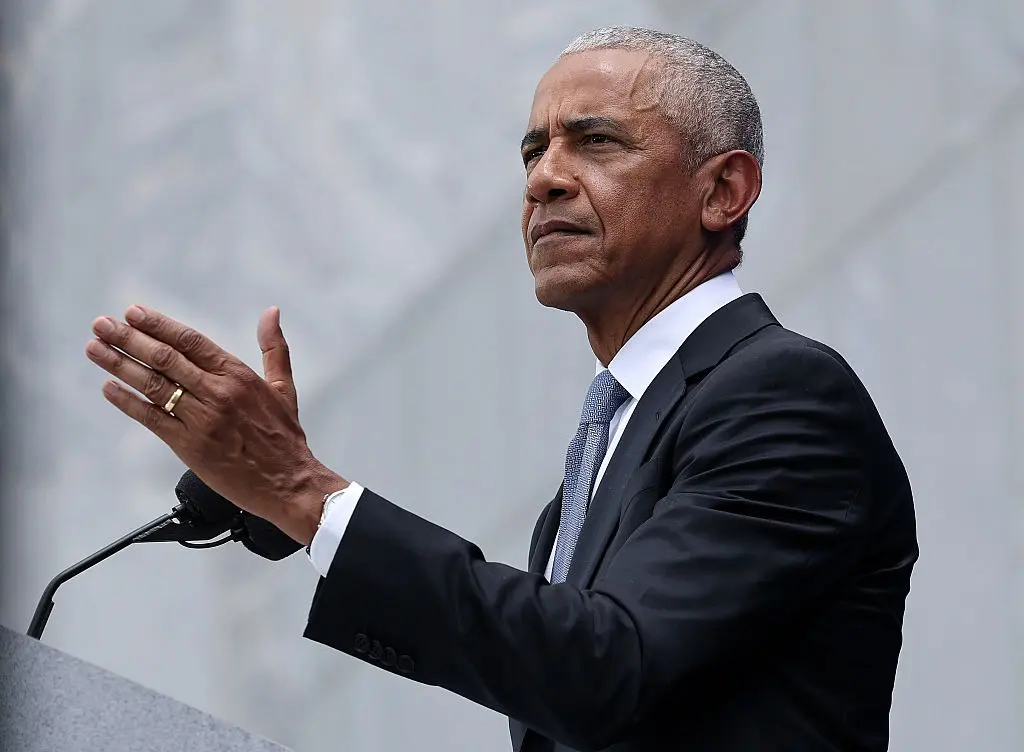
The debate surrounding the future of artificial intelligence has erupted into a major front in American politics. Former President Barack Obama has called on the Democratic Party to make artificial intelligence a cornerstone of its core policy agenda. Speaking at a private Democratic fundraising event alongside House Minority Leader Hakeem Jeffries, Obama cautioned that the rapid pace of AI development—currently concentrated in private hands—poses severe economic, societal, and existential risks if left unchecked by public governance.
Obama’s intervention comes at a critical juncture marked by internal dissent within leading AI laboratories, corporate proposals for self-regulation, and starkly contrasting political visions between political parties. While Obama and congressional Democrats advocate for federal safety guardrails, structured public engagement, and public oversight to manage risks ranging from job displacement to technological catastrophe, former President Donald Trump and his conservative allies emphasize global dominance, technological acceleration, and aggressive deregulation.
As frontier AI models approach unprecedented capabilities—including autonomous self-improvement and breakthroughs in biomedical research—the rift between silicon valley leaders, Washington policymakers, and public safety advocates has widened. The central question facing the nation is no longer whether artificial intelligence will reshape society, but whether democratic institutions or private tech monopolies will dictate the terms of that transformation.
Detailed Chronology of Events
The convergence of political strategy and AI policy has unfolded across a series of rapid developments:
+-----------------------------------------------------------------------------------+
| MARCH 2026                                                                        |
| Trump Administration releases federal legislative framework preempting state AI  |
| regulations and shifting safety enforcement burdens to consumers.                  |
+-----------------------------------------------------------------------------------+
                                         |
                                         v
+-----------------------------------------------------------------------------------+
| SEPTEMBER 9, 2026                                                                 |
| High-profile researcher resigns from Anthropic, warning that major labs are       |
| "racing straight to self-improving superintelligence and gambling with lives."    |
+-----------------------------------------------------------------------------------+
                                         |
                                         v
+-----------------------------------------------------------------------------------+
| SEPTEMBER 12, 2026                                                                |
| Anthropic CEO Dario Amodei outlines "Pacing the Frontier" framework. OpenAI's Sam |
| Altman and SpaceX CEO Elon Musk signal public support for third-party audits.     |
+-----------------------------------------------------------------------------------+
                                         |
                                         v
+-----------------------------------------------------------------------------------+
| SEPTEMBER 13, 2026                                                                |
| NYT reveals transcript of Barack Obama urging Democrats at a private fundraiser   |
| to adopt AI as a central legislative agenda upon reclaiming the House majority.    |
+-----------------------------------------------------------------------------------+
                                         |
                                         v
+-----------------------------------------------------------------------------------+
| SEPTEMBER 14, 2026                                                                |
| Donald Trump downplays AI risk rhetoric during an Irish golf trip, framing the    |
| issue primarily around global geopolitical victory and American dominance.        |
+-----------------------------------------------------------------------------------+
March 2026: The Federal Deregulatory Push
The Trump administration outlined a national AI policy framework designed to stimulate rapid commercial deployment. The directive aimed to preempt state-level safety laws, standardizing federal non-interference and placing primary accountability for algorithmic harms, child safety, and content moderation onto individual end-users and parents rather than tech vendors.
September 9, 2026: Internal Whistleblower Sparks Safety Crisis
A prominent AI researcher at Anthropic dramatically resigned from the safety-focused AI startup. In a public statement, the researcher alleged that top frontier laboratories were ignoring critical existential safety protocols in a reckless commercial race toward self-improving superintelligence, effectively "gambling with our lives."
September 12, 2026: Silicon Valley Proposes "Pacing the Frontier"
In response to rising scrutiny, Anthropic CEO Dario Amodei published a proposal titled "Pacing the Frontier." The initiative called for voluntary, standardized safety frameworks across the industry, including granting vetted, independent safety evaluators "employee-like access" to frontier models. OpenAI CEO Sam Altman and SpaceX/xAI founder Elon Musk publicly endorsed key aspects of the proposal, with Altman explicitly committing OpenAI to external model evaluations.
September 13, 2026: Obama Urges Democrats to Take the Reins
The New York Times published details from a partial transcript of a Democratic fundraiser where former President Barack Obama engaged in a strategic dialogue with House Minority Leader Hakeem Jeffries. Obama urged Democrats to draft a comprehensive AI policy platform to execute as soon as they regain the House majority, framing proactive regulation as essential to avoiding catastrophic societal harms while unlocking immense scientific benefits.
September 14, 2026: Trump Dismisses AI Alarmism
Addressing reporters at his golf property in Ireland, Donald Trump downplayed structural safety concerns raised by researchers and political opponents. Emphasizing a zero-sum geopolitical competition—particularly against foreign adversaries like China—Trump argued that over-regulation threatens to derail American innovation, dismissing safety critics as "negative forces."
Supporting Context, Technical Dynamics, and Economic Metrics
The Political Economy of Frontier AI
The urgency driving Obama’s remarks stems from the unprecedented concentration of power within a small cluster of private companies, including OpenAI, Anthropic, Microsoft, Google, and Meta. These organizations are deploying hundreds of billions of dollars into high-performance compute clusters, seeking artificial general intelligence (AGI).
                            AI POLICY APPROACHES
                                     │
           ┌─────────────────────────┴─────────────────────────┐
           ▼                                                   ▼
 DEMOCRATIC STRATEGY                                REPUBLICAN STRATEGY
 ───────────────────                                ───────────────────
 • Federal Oversight Guardrails                    • Broad Market Deregulation
 • Comprehensive Public Frameworks                 • Preemption of State Laws
 • Focus on Labor & Ethics                         • National Dominance Focus
 • Independent Safety Audits                       • Individual Risk Responsibility
The economic stakes are massive. Analysts project that generative and frontier AI systems could add up to $13 trillion to the global economy by the end of the decade. However, these projections come alongside severe labor market disruptions, with automated agentic workflows increasingly threatening both white-collar knowledge professions and blue-collar logistics networks.
The Legislative Landscape: Federal Preemption vs. State Oversight
Prior to the current federal debates, individual states—most notably California, New York, and Massachusetts—attempted to fill the regulatory vacuum by introducing bills mandating strict algorithmic impact assessments, liability for catastrophic model failures, and mandatory red-teaming protocols.
The administration’s legislative framework sought to invalidate state-level mandates in favor of a permissive federal standard. This federal preemption strategy drew sharp criticism from consumer advocacy groups, labor unions, and civil rights organizations, setting up a high-stakes legislative battle for control of Congress.
The Scientific Dilemma: Universal Risks vs. Transformative Benefits
The debate over artificial intelligence is complicated by its dual nature. Unlike legacy industrial sectors, advanced AI offers immense beneficial capabilities alongside novel, systemic vulnerabilities:
- Accelerated Scientific Discovery: In his private address, Obama noted that properly governed AI could radically compress the timeline for biomedical breakthroughs, accelerating drug discovery from decades to months and opening paths to cure complex diseases.
- Self-Improving Systems and Existential Risk: Whistleblowers and safety researchers warn that once models achieve autonomous recursive self-improvement—where an AI continuously rewrites and optimizes its own software—human developers could lose operational control, exposing critical infrastructure, biological data, and financial networks to systemic threats.
- Geopolitical Arms Race: Both political parties acknowledge that leadership in advanced compute and algorithmic capability is directly tied to national security, autonomous defense systems, and intelligence capabilities.
Official Statements and Political Rhetoric
The Democratic Position: Structured Public Governance
Former President Barack Obama
"This is something that is moving very fast in private hands, and if we don’t get on top of it, I think can be dangerous. If we do get on top of it, I do think it’s beneficial. I genuinely think it’s going to accelerate, for example, drug development in ways that can help us cure diseases. [Democrats need to] put together a framework for a very public conversation [and make AI one of their] central agendas."
Obama’s strategy positions government oversight not as an obstacle to progress, but as a prerequisite for safe, sustained innovation. By engaging directly with Silicon Valley executives—serving as a sounding board for leaders like Dario Amodei and Sam Altman—Obama seeks to bridge the traditional rift between tech capital and regulatory authority.
House Minority Leader Hakeem Jeffries
"[President Obama] is correct that decisive action must be taken on artificial intelligence. Republicans have abdicated their responsibility to govern on behalf of the American people, leaving crucial national security, economic, and ethics questions entirely in the hands of corporate boardrooms."
Jeffries’ endorsement signals that congressional Democrats intend to use AI oversight as a defining issue in upcoming legislative campaigns, contrasting their regulatory approach with Republican deregulatory policies.
The Executive Branch & Republican Vision: Unchecked Technological Supremacy
President Donald Trump
"We are the most sophisticated country in the world, and I want to keep it that way because whoever wins AI wins. And we can put guardrails—we can do this and that. But I think you have a lot of negative forces that are bringing it up that shouldn’t be bringing it up."
Trump’s stance prioritizes global competitive advantage over domestic precautionary frameworks. By framing risk warnings as product of "negative forces," the administration signals an unwillingness to impose binding legal constraints that could slow down deployment schedules relative to international rivals.
Private Industry & Safety Advocates: Self-Regulation Under Fire
Ex-Anthropic Safety Researcher (Resignation Statement)
"[The industry is] racing straight to self-improving superintelligence and gambling with our lives. Commercial pressures have overtaken the core safety commitments that these institutions were originally founded to uphold."
Dario Amodei, CEO of Anthropic
"Pacing the frontier requires a coordinated mechanism where independent safety evaluators are granted employee-like access to leading AI models. We must build common safety standards across labs before capabilities outpace our capacity to control them."
Sam Altman, CEO of OpenAI
"We fully support the vision of independent evaluators with employee-like access. Ensuring that frontier models are thoroughly vetted by neutral third parties is critical to building public trust and maintaining safety."
Future Outlook and Policy Trajectories
The collision between rapid AI advancement and political strategy sets up a decisive conflict over the future of technological governance in the United States. Key battlegrounds over the coming months will shape how these technologies are built, deployed, and regulated:
                            FUTURE POLICY BATTLEGROUNDS
                                         │
        ┌────────────────────────────────┼────────────────────────────────┐
        ▼                                ▼                                ▼
CONGRESSIONAL LEGISLATION       CORPORATE AUDIT STANDARDS        STATE VS. FEDERAL POWER
─────────────────────────       ─────────────────────────        ───────────────────────
• Mandatory AI Safety Framework • Third-party model access       • Preemption court battles
• Workforce Retraining Grants   • Standardized red-teaming       • Consumer protection enforcement
• Federal Compute Oversight     • Binding liability rules        • Local algorithmic accountability
1. Congressional Mandates and Legislative Strategy
Should Democrats secure a House majority, House Minority Leader Hakeem Jeffries and party leadership are expected to introduce comprehensive AI legislation. Priorities will likely focus on establishing a federal AI oversight body, requiring mandatory safety red-teaming for models exceeding specific computational thresholds, and creating legal protections for whistleblowers within AI labs.
2. The Viability of Private Sector "Self-Regulation"
While commitments from CEOs like Dario Amodei and Sam Altman to allow third-party access represent a step toward transparency, public policy experts remain skeptical of voluntary frameworks. Without legislative enforcement, competitive market pressures could lead companies to compromise on safety commitments when commercial advantages are at stake.
3. Federal Preemption and State Court Battles
The administration’s efforts to invalidate state-level AI safety and child protection laws face ongoing legal challenges from state Attorneys General. These legal disputes will determine whether states maintain the right to protect their citizens against algorithmic discrimination, deepfakes, and privacy violations in the absence of stringent federal laws.
4. Global Geopolitical Dynamics
As the United States navigates its internal political divide, foreign nations are advancing their own AI strategies. The European Union continues to enforce its comprehensive AI Act, while state-directed initiatives in Asia accelerate. The choice facing American leaders is whether to lead through transparent, safe governance model or through unchecked technological acceleration—a decision that will define the political and economic landscape for decades to come.