Executive Overview
As the global smartphone market continues to mature, annual device iterations often focus on incremental software updates and minor cosmetic adjustments. However, the release of the Apple iPhone 18 Pro has broken this mold, introducing a sweeping hardware overhaul led by a groundbreaking variable aperture system. Alongside the cutting-edge 2nm A20 Pro chip, an enhanced vapor chamber cooling architecture, and a streamlined Dynamic Island, the camera array stands as the definitive crown jewel of Apple’s latest flagship release.
To evaluate how these theoretical hardware specifications translate to real-world creative workflows, renowned commercial photographer and tech reviewer Tyler Stalman published his comprehensive annual review of the iPhone 18 Pro. Testing the device against older generational hardware—specifically comparing its photographic output to the iPhone 15 Pro, while utilizing footage captured primarily on the iPhone 17 Pro—Stalman’s critique offers an authoritative, granular look at Apple’s most ambitious mobile imaging tool to date.
Stalman’s analysis traverses the physical mechanics of the new iris mechanism, the creative implications of expanded Photographic Styles, the utility of Apple Reference Image, and the fine line between authentic photography and hyper-advanced artificial intelligence editing. While he lauds the iPhone 18 Pro as a significant leap forward in closing the gap between computational photography and traditional dedicated cameras, his review also provides essential warnings regarding color reflections, AI-driven authenticity, and professional-grade video workflows.
Detailed Chronology & Review Breakdown
The release of the iPhone 18 Pro was accompanied by the customary lifting of media review embargoes, flooding the digital landscape with first-impressions, teardowns, and benchmark tests. Stalman’s video review dropped directly into this wave, offering a specialized, practitioner’s lens on the device’s capabilities.
The Physical Build: Color Choices and Practical Realities
Kicking off his review with industrial design considerations, Stalman addressed the physical chassis of the phone. While expressing a personal fondness for the striking "Cosmic Orange" finish introduced with the iPhone 17 Pro, he issued a practical warning for professional photographers and videographers: highly reflective or vibrant finishes can bounce unwanted color casts into glass reflections when shooting through windows or reflective environments. For working professionals who frequently shoot through storefronts, vehicles, or architectural glass, Stalman suggests opting for more neutral finishes like Burgundy or Black to maintain color neutrality in high-stakes scenarios.
Deconstructing the Variable Aperture
Undoubtedly, the headline feature of the iPhone 18 Pro is its mechanical variable aperture system. Stalman characterizes the addition as a pivotal "step along the way to making [the iPhone] a serious camera."
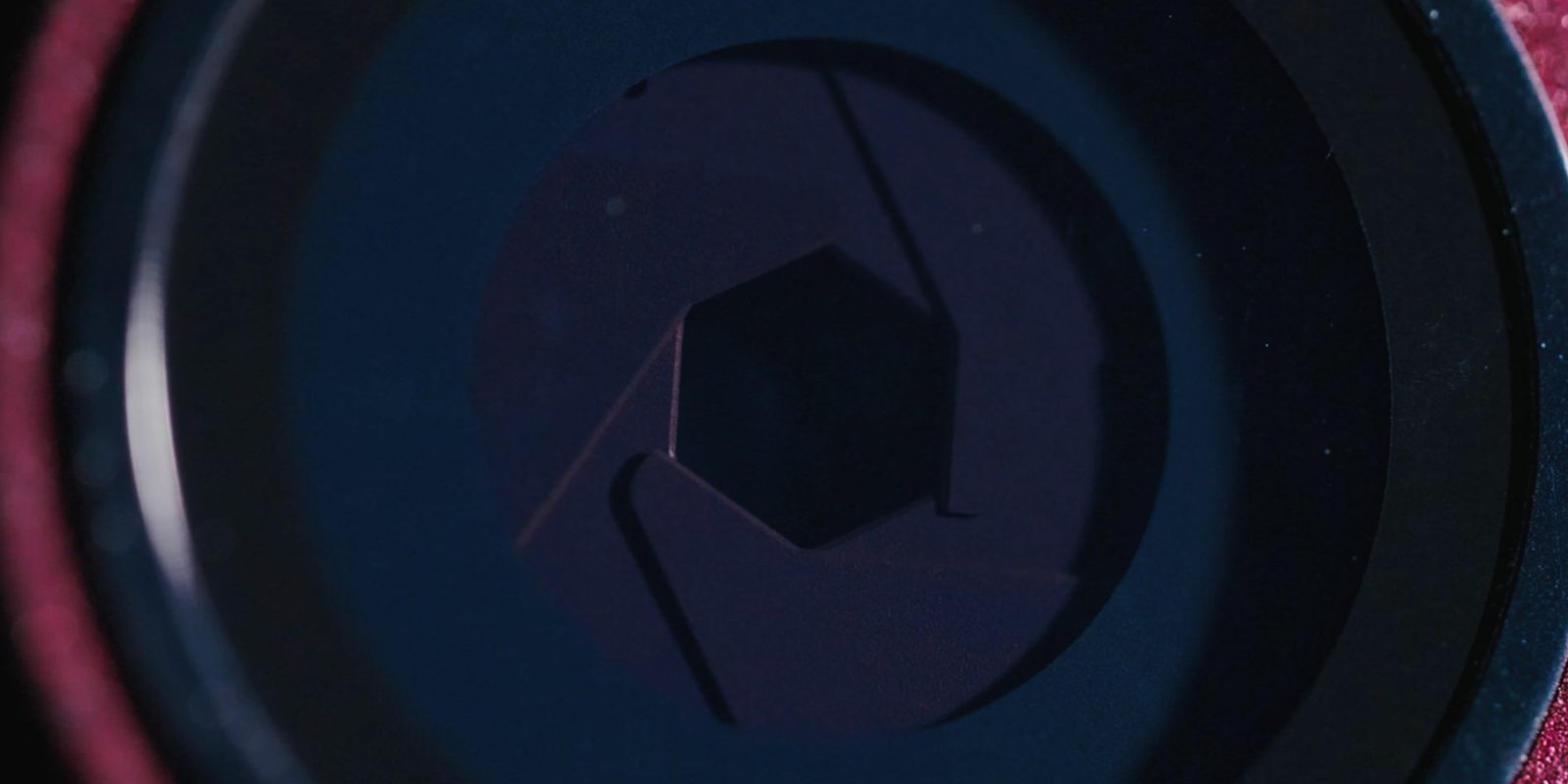
Historically, smartphones have relied on fixed apertures, forcing sensors to control exposure entirely through shutter speed and ISO adjustments, often resulting in digital noise or aggressive computational smoothing in low-light environments. The iPhone 18 Pro’s wider $f/1.48$ aperture introduces a physical mechanism capable of altering the amount of light striking the sensor. Stalman notes that this optical widening allows significantly more light to flood the sensor naturally, keeping ISO values lower in dim conditions and successfully mitigating the dependency on heavy Night mode processing.
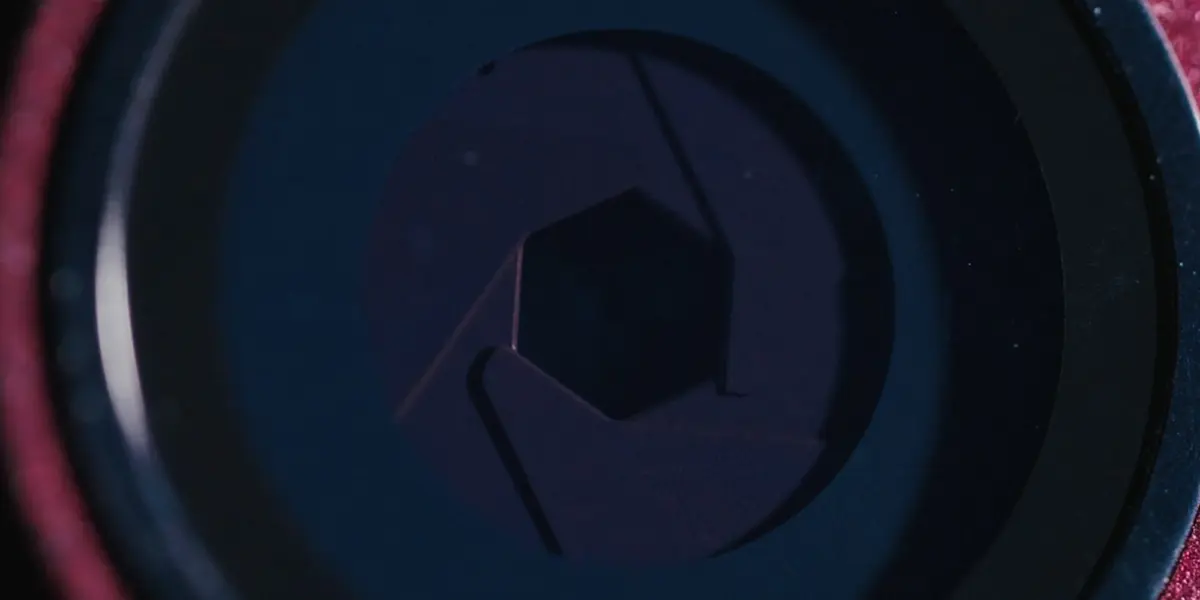
Visually highlighting the mechanics of the system, Stalman’s review features close-up shots of the physical iris mechanism opening and closing. He points out a fascinating engineering nuance: unlike traditional standalone camera lenses, where aperture blades are traditionally embedded deep within the optical barrel, Apple’s implementation positions the aperture blades directly above the primary lens element. This unorthodox placement underscores the unique spatial constraints and engineering triumphs required to pack mechanical photography controls into a slim smartphone profile.
Focal Lengths and the Sweet Spot of Zoom
Addressing the telephoto capabilities, Stalman evaluates the 4x optical zoom lens—a focal length first introduced in the previous generation. Reflecting on the older 5x zoom found on the iPhone 16 Pro, Stalman suggests that the 5x reach frequently felt "a little too tight" for everyday street and portrait photography. The refined 4x optical range, preserved in the iPhone 18 Pro, strikes a more versatile balance for dynamic composition without forcing the photographer to unnaturally step backward from their subject.
The Double-Edged Sword of Generative AI Editing
As computational photography gives way to generative artificial intelligence, the iPhone 18 Pro introduces powerful editing utilities such as Clean Up, Extend, and Reframe. While Stalman acknowledges that these tools are technically impressive and produce remarkably convincing results, he sounds a cautionary note regarding artistic authenticity.
When AI can seamlessly invent background elements, expand aspect ratios, or erase complex objects, the resulting image risks losing its anchor to reality. For journalistic, documentary, and purist photographers, Stalman emphasizes that these aggressive modifications push mobile capture past the threshold of pure documentation into the realm of digital illustration.
Supporting Context & Metrics: Software, Textures, and Cinematic Control
Beyond the physics of the new variable aperture, Stalman’s review dives deeply into Apple’s updated software ecosystem, exploring how the new imaging pipeline handles textures, color profiles, and professional video recording formats.

Photographic Styles and Texture Controls
Apple expanded its Photographic Styles ecosystem for the iPhone 18 Pro, introducing nuanced texture controls that allow creators to manipulate the rendering of skin, highlights, and shadows at the pixel level. Stalman put these new effects—specifically Soft Skin, Glow, and Film—through rigorous stress tests, adjusting their intensity sliders from 0 to 100 to evaluate their behavioral thresholds.
- Soft Skin: Stalman observed that this setting executes a remarkably subtle reduction in harsh skin details. Unlike older beauty filters that smear facial features with an aggressive digital blur, Soft Skin respects facial contours while gently smoothing blemishes.
- Glow: This effect introduces a diffused highlight characteristic, successfully mimicking the aesthetic of a physical black mist filter mounted onto a traditional cinema lens.
- Film: Praised for its authentic-looking grain structure and optical halation, the Film effect earned high marks from Stalman, though he expressed a minor critique: he wishes Apple offered granular control over the density and weight of the film grain itself, rather than relying solely on generalized intensity scaling.
Advanced Video: Apple Log 2 and Cinematic Mode
For videographers, the iPhone 18 Pro brings updates to Cinematic mode alongside the introduction of Apple Reference Image and the next-generation Apple Log 2 profile.
While Cinematic mode continues to receive algorithmic improvements for edge detection and rack-focus transitions, Stalman maintains that professional filmmakers seeking absolute grading control should bypass consumer profiles in favor of Apple Log. The introduction of Apple Log 2 further widens the dynamic range envelope, positioning the iPhone 18 Pro as an increasingly viable B-camera or crash-cam for professional documentary and commercial video productions.
Comparative Analysis: iPhone 18 Pro vs. Legacy Hardware
To contextualize the generational leap, Stalman’s visual comparisons primarily anchor the iPhone 18 Pro against the iPhone 15 Pro, illustrating a three-year progression in sensor technology, computational photography, and optical design.
| Feature / Metric | iPhone 15 Pro (Legacy Reference) | iPhone 18 Pro (Current Flagship) | Stalman’s Assessment & Impact |
|---|---|---|---|
| Aperture System | Fixed Aperture ($f/1.78$) | Variable Aperture ($f/1.48$ max) | Major Leap: Physical iris allows natural light control, lowering ISO and reducing Night mode reliance. |
| Telephoto Reach | 3x Optical Zoom | 4x Optical Zoom (Refined) | Improved Versatility: 4x avoids the overly tight framing associated with previous 5x implementations. |
| Processing Architecture | A17 Pro (3nm) | A20 Pro (2nm) + Vapor Chamber | Thermal Stability: Sustained performance under heavy processing loads and advanced computational tasks. |
| Video Profiles | Apple Log | Apple Log 2 + Reference Image | Professional Grade: Enhanced dynamic range headroom for high-end color grading and matching. |
| Photographic Styles | Basic Tone/Warmth adjustments | Texture Controls (Soft Skin, Glow, Film) | Creative Granularity: Deeper, adjustable aesthetic manipulation directly in the capture pipeline. |
Official Statements and Industry Reception
The tech and photography sectors have responded warmly to Apple’s pivot toward hardware-level optical controls in the iPhone 18 Pro. Industry analysts note that by stepping away from purely software-reliant computational tricks and reintroducing mechanical optical elements—such as the variable aperture—Apple is directly answering long-standing criticisms from professional creators.
While Apple has heavily marketed its integrated artificial intelligence toolset, independent reviewers like Stalman serve as an important balancing voice. By emphasizing that tools like Clean Up and Extend threaten photographic authenticity, critical reviews help steer consumer expectations, ensuring that users understand the distinction between capturing a real-world moment and generating a synthetic composite.

Furthermore, companion reviews—such as those published by 9to5Mac—reinforce Stalman’s findings, highlighting that while the jump from the iPhone 17 Pro to the 18 Pro is largely defined by internal architectural refinement and thermal management via the new vapor chamber, the imaging pipeline upgrades represent a generational milestone for mobile content creators.
Future Outlook: The Evolution of Mobile Imaging
Tyler Stalman’s review of the iPhone 18 Pro captures a fascinating inflection point in the evolution of consumer technology. For over a decade, smartphone manufacturers attempted to overcome the physical limitations of thin chassis designs through aggressive software processing, often resulting in an artificial "computational look" that alienated traditional photographers.
With the integration of a physical variable aperture system, advanced texture controls, and expanded log-format video capabilities, the iPhone 18 Pro signals a philosophical shift back toward optical physics. Apple is no longer merely simulating professional photography via algorithms; it is engineering mechanical camera infrastructure into a pocket-sized device.
As mobile sensors continue to grow in physical size and optical systems become increasingly sophisticated, the barrier between dedicated mirrorless cameras and flagship smartphones will continue to blur. For working professionals, the iPhone 18 Pro is no longer viewed as a mere compromise for casual snapshots; it is rapidly solidifying its place as an indispensable, primary tool in the modern creator’s kit.